



Anyone running a Pyrometer gauge?
Thread Starter
Racer


Joined: May 2004
Posts: 392
Likes: 0
From: VA
 Anyone running a Pyrometer gauge?
Was wondering if anyone here is running one of these gauges, or an EGT gauge and if so what kind of temps are you trying to tune with. I have already heard various debates on where to mount it but still wondering on where the temps should be at WOT blasts. It seem to be that anything above 1200F could melt a piston. Thanks in advance as I have yet to see this topic mentioned on here yet.

Le Mans Master


Joined: Jan 2002
Posts: 9,036
Likes: 13
From: Edmonton AB
EGT is still valid but kind of old school in this era of inexpensive wide-band
O2 gauges.
Here is one member that has EGT on the car

Here is the thread: [Pics]: SloRvette's new Stealth Ram beast.
.
O2 gauges.
Here is one member that has EGT on the car
Here is the thread: [Pics]: SloRvette's new Stealth Ram beast.
.
Thread Starter
Racer
Joined: May 2004
Posts: 392
Likes: 0
From: VA
I also have a INNOVATIVE wideband O2 sensor, just trying to get some feedback on the egt gauge, the more for datalogging the better, thanks. The diesel and turbo guys seem to really like the pyrometer gauges.

Race Director

Joined: Sep 2005
Posts: 13,269
Likes: 0
From: Sharpsburg Georgia
GA Events Coordinator
Originally Posted by Sinister87
I also have a INNOVATIVE wideband O2 sensor, just trying to get some feedback on the egt gauge, the more for datalogging the better, thanks. The diesel and turbo guys seem to really like the pyrometer gauges.
Le Mans Master
Joined: Jan 2002
Posts: 9,036
Likes: 13
From: Edmonton AB
Originally Posted by SloRvette
Their biggest use is for balancing cylinder to cylinder temps. There
are way to many variables to give you a set temp to tune for.
are way to many variables to give you a set temp to tune for.
stock, are there many 'tuning' options available that would facilitate
cylinder balancing or are the choices limited?
Without being able to change cylinder-to-cylinder A/F ratios or spark
events through the EFI, it would seem that more labour/time-intensive
approaches would be required.
.
Thread Starter
Racer
Joined: May 2004
Posts: 392
Likes: 0
From: VA
Thanks for the reply's, as I know there are many different ways to tune. I guess what I'm really asking is for those that have actually installed one on thier vehicle and wanting to know what temps you tried to abide by. Also, if installed on any one cylinder, which one and how close to the head. Again, thanks for any info. I'm not trying to get into a debate on the right way and wrong way to tune a vehicle, this just happens to be one of the tools I have and trying to get the most out of it. 

Heel & Toe
Joined: Aug 2004
Posts: 15
Likes: 0
From: corinth ms
When useing this on a drag only car i tried to never cross 1100 deg.
1200 deg will give your headers a nice molten aluminum coating inside.
just remeber when running close to the edge as the temp & other
weather factors change these temps can change fast so need to tune
at the track.
1200 deg will give your headers a nice molten aluminum coating inside.
just remeber when running close to the edge as the temp & other
weather factors change these temps can change fast so need to tune
at the track.
Corvette Stories
The Best of Corvette for Corvette Enthusiasts

Top 10 Most Expensive Corvettes Ever Sold on Bring A Trailer
Brett Foote
10 Things Every Corvette Owner Needs (2026 Edition)
Michael S. Palmer
8 Most "Only Corvette Owners Understand" Quirks and Problems
Pouria Savadkouei
10 Reasons the C6 Z06 is Still A Performance Benchmark After 20 Years
Joe Kucinski
How Much Horsepower Every Corvette Engine "LOST" in 1972
Joe Kucinski
Top 10 DOs and DON'Ts for Protecting Your Convertible Top!
Michael S. Palmer
Top 10 Most Explosive Corvettes Ever Made: Power-to-Weight Ratio Ranked!
Joe Kucinski
150 hp to 1,250 hp: Every Corvette Generation Compared by the Specs That Matter
Joe Kucinski
8 Coolest Corvette Pace Cars (and Replicas) of All Time
Verdad Gallardo
Le Mans Master
Joined: Jan 2002
Posts: 9,036
Likes: 13
From: Edmonton AB
Originally Posted by Sinister87
...I'm not trying to get into a debate...
a debate. It was to draw out a bit more info from someone more
knowledgable/experienced than me to help point out a few more angles
to the topic.
Some members in the forum have aftermarket EFI systems that provide
sequential injection and let them tune cylinder by cylinder. Carbed cars
don't give quite the same control (unless they have a venturi per
cylinder) but they do give you some control to tune clusters of cylinders
through jetting. A batch-fire EFI system like the OEM Bosch unit on my
L98 seems to be the least flexible of these three.
Now, you don't say what your combination is. If it has a stock EFI with
batch-fired injectors then I feel that it is necessary to tune to the
lowest common denominator (the leanest cylinder) because you can't
do much easily** to change the imbalance between the lean cyl and
the other richer cylinders.
Where to mount the probe(s)? IMO, a probe should be mounted as
close as practical to the target cylinder. This helps improve accuracy
and speed of the reading displayed.
How many probes? For a given set-up, you might find information that
indicates cylinder X is the one that always runs lean - if so, place a
probe in the primary for this cylinder. However, if your set-up is
different, then you can't be sure that cyl X runs lean on your car -
maybe a different manifold, headers or whatever means that on your
car, cyl Y runs lean. Keeping in mind that you need to tune for the
lowest common denominator, you'll need to install thermocouples in all
eight primaries to be able to determine what the EGTs are in your case.
Or risk melting stuff.
The ** asterisks:
If you are stuck with or commited to a batch-fire EFI, then you need
to find other ways of adjusting A/F ratios. These could include
selective porting work, mixing/matching rocker arm ratios, custom
cam grinds, even simple stuff like blocking port flow with gasket overhang.
The caveat:
My experience with EGTs was with multicylinder 2-strokes, Mikuni carbs
and expansion chambers. I can tell you that if the needles went much
beyond 1350ºF on my setup, then I was going to be facing a cold walk
back across the lake. Like I said up top, it is up to others with more
direct C4 experience to say how applicable my info is to your situation.
I still think that WB-O2 is an improvement, at least for those of us who
are not at ten-tenths. For those who are and who have the supporting
systems to optimize cylinder balance, Innovate has a deal allowing you
to place O2 sensors in each primary and log up to 16 cylinders
simultaneously.
HTH and I'm keen to hear from others.
.

Drifting


Joined: Aug 2001
Posts: 1,500
Likes: 0
From: Holliston MA
Cruise-In VII Veteran
Nice post Slalom. You pretty much hit it on the stock batch fires. The only other thing I could think of is to have the injectors flowed and then match flow rates to richer or leaner cylinders.
My car has a sequential FAST so I have control of individual cylinder fueling and timing.
I've seen 1480's WOT NA with no issues. Ignition timing plays a big role in where EGT's will fall. 1000 to 1100 at part throttle cruise. 600 to 800 at idle.
My car has a sequential FAST so I have control of individual cylinder fueling and timing.
I've seen 1480's WOT NA with no issues. Ignition timing plays a big role in where EGT's will fall. 1000 to 1100 at part throttle cruise. 600 to 800 at idle.
Thread Starter
Racer
Joined: May 2004
Posts: 392
Likes: 0
From: VA
Slalom4me, that was a great write up and I appreciate you taking your time explaining what you have learned. I'm not trying sound ungratefull. I am running a batch fire injection and just have one probe, this is on an minirammed, 383 87 t/a. I understand what you have explained above would be ideally how one might tune but then again as of now this is one of the tools I have to tune with so I'm just trying to base that off of what others have experienced and again what I have for now, with the same setup and one probe. Ideally, in a perfect world we would all be driving 800hp street cars with a/c and power everything but again this is what I have for now and I'm trying to get feedback from others that have installed an egt gauge and what has worked for them. I'm sure If I call Chris @ TPIS he could give me a vaild opinion on which cylinder usually runs the leanest on these engines, which I probably will do but I was trying to get some feedback from the forums also, as I don't post on here much and wanted some vaild opinions on what others here have tried on these engines and what works for them. Again, thanks for the technical writeup, much appreciated. 
Last edited by Sinister87; Mar 1, 2006 at 01:52 PM.
Le Mans Master
Joined: Jan 2002
Posts: 9,036
Likes: 13
From: Edmonton AB
Glad to help a bit.
What's up with the Innovate WB-02?
You've already made the investment in hardware, installation and learning
curve. Why not use this to gather data? There is also their LC-1 Wideband
Controller - haven't done it, but I think you can use one of the LC-1 analog
outputs as a source for one of the three optional inputs that DataMaster
can log.
If it didn't matter that the A/F values weren't together with other
parameters, you could just video the LM-1 display.
.
Originally Posted by Sinister87
I also have a INNOVATIVE wideband O2 sensor, just trying to get some
feedback on the egt gauge, the more for datalogging the better
feedback on the egt gauge, the more for datalogging the better
You've already made the investment in hardware, installation and learning
curve. Why not use this to gather data? There is also their LC-1 Wideband
Controller - haven't done it, but I think you can use one of the LC-1 analog
outputs as a source for one of the three optional inputs that DataMaster
can log.
If it didn't matter that the A/F values weren't together with other
parameters, you could just video the LM-1 display.
.
Le Mans Master
Joined: Jan 2002
Posts: 9,036
Likes: 13
From: Edmonton AB
Back on the Exhaust Temperature Gauge.
On second thought, you don't have to ask for opinions or run individual
thermocouples. As long as you have time and don't mind drilling all
primaries, you can log runs with the thermocouple in each of the
primaries to determine what is happening in your specific combo.
If you are reasonably good at reading plugs then you should be able to
narrow down which cylinders to start with.
I would start with a rich configuration and work towards the lean side
cautiously. Detailed records (including atmospheric conditions) ought
to be kept. Double check results across the leanest cylinders
periodically or when really getting to the fine edge.
Good luck whichever route you take. Post back with your experiences.
.
On second thought, you don't have to ask for opinions or run individual
thermocouples. As long as you have time and don't mind drilling all
primaries, you can log runs with the thermocouple in each of the
primaries to determine what is happening in your specific combo.
If you are reasonably good at reading plugs then you should be able to
narrow down which cylinders to start with.
I would start with a rich configuration and work towards the lean side
cautiously. Detailed records (including atmospheric conditions) ought
to be kept. Double check results across the leanest cylinders
periodically or when really getting to the fine edge.
Good luck whichever route you take. Post back with your experiences.
.
Thread Starter
Racer
Joined: May 2004
Posts: 392
Likes: 0
From: VA
Yeah, as far as the wideband goes, I am waiting on buying a welder so I can weld in the bung before the cat. I do have the tailpipe extension but with catted cars this throws off the reading. So as of right now it's pointless. This is something I learned after I already had purchased the system, also I got it so I could hook it to my laptop and datalog my runs but as luck would be the case, my laptop is outdated and I can't find the correct hookup with the cables they give you in the kit, so once I get my funds together I will be buying that welder. Yes I know I could have it done @ the local muffler shop cheap but I like trying to do as much on my own as possible good or bad.
Drifting


Joined: Jun 2001
Posts: 1,704
Likes: 459
From: Mass Mass
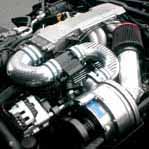
I forgot where I ran accross this image, but it shows the typical relationship between EGT and other engine factors. It made it clearer to me why an EGT alone can be difficult to figure on which side of the rich and lean side you are on.
BTW I have one in the first cylinder pipe, cause that was the cylinder that burned up when I experimented with a too lean mixture.

BTW I have one in the first cylinder pipe, cause that was the cylinder that burned up when I experimented with a too lean mixture.