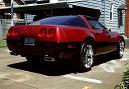



Tornado insert

Thread Starter
Instructor

Joined: Sep 1999
Posts: 220
Likes: 0
From: Alberta, Canada
 Tornado insert
Just an update on the Tornado intake insert in my Murano. Most of you won't belive it and won't want to hear it but I believe it did work for mileage improvement. I ran it for about 4 months and averaged about 25 MPG (Imp gallons). After I took it out I averaged about 23 MPG. For me, at current gas prices, that is about $6.42/week. At that it pays for itself in about 3 months. After that it is a pure savings. Not bad as gas prices go up.
I have to be honest, I didn't notice any improved power or performance, just better gas mileage.
I wouldn't put one in the Vette. I am not concerned about mileage there and with no performance improvement it would seem inappropriate.
I have to be honest, I didn't notice any improved power or performance, just better gas mileage.
I wouldn't put one in the Vette. I am not concerned about mileage there and with no performance improvement it would seem inappropriate.

4th Gear
Joined: Mar 2006
Posts: 4
Likes: 0
Sorry to come in as a newbie and be the bad actor, but there is no way that a "tornado" can actually improve performance. It is nothing more than a restriction in the inlet tract. This is mostly a matter of concern at very high rates of flow (i.e. WOT).
It IS possible that you may see a change in mileage. This can happen for two reasons: you are running at lower power/speed (for whatever reason, mostly because you are probably aware that there is some supposed gas-saving device present), or, you PCU is seeing some change in values that is putting it into a more favourable mixture/timing part of the engine map (fairly unlikely, but it IS possible). Any supposed benefit from setting up a different airflow path would be lost in entering the plenum.
Does it not occur to people that all of the time and dollars spent by the OEM and the aftermarket to clean up the airflow to get more mass of air into a cyclinder is totally defeated by adding some kind of obstruction to the system?
It IS possible that you may see a change in mileage. This can happen for two reasons: you are running at lower power/speed (for whatever reason, mostly because you are probably aware that there is some supposed gas-saving device present), or, you PCU is seeing some change in values that is putting it into a more favourable mixture/timing part of the engine map (fairly unlikely, but it IS possible). Any supposed benefit from setting up a different airflow path would be lost in entering the plenum.
Does it not occur to people that all of the time and dollars spent by the OEM and the aftermarket to clean up the airflow to get more mass of air into a cyclinder is totally defeated by adding some kind of obstruction to the system?

Team Owner


Joined: Mar 2001
Posts: 54,124
Likes: 30
From: Cincinnati, Oh USA
I agree with PMD !!!!!!! Your test was poorly controlled. You can easily see 2 mpg variations even driving the same route everyday, and the pyschological factor to the driver knowing the device is installed affects the outcome. A neutral, unbiased test with an engine on a test stand will prove that putting a restriction in the air inlet will REDUCE the specific fuel consumption (mpg).
Thread Starter
Instructor
Joined: Sep 1999
Posts: 220
Likes: 0
From: Alberta, Canada
Originally Posted by jfb
I agree with PMD !!!!!!! Your test was poorly controlled. You can easily see 2 mpg variations even driving the same route everyday, and the pyschological factor to the driver knowing the device is installed affects the outcome. A neutral, unbiased test with an engine on a test stand will prove that putting a restriction in the air inlet will REDUCE the specific fuel consumption (mpg).
Anyway, I don't want to get into a P%%ing contest again. We went through this a while back. I was just trying to keep everyone updated and possibly add some information to members of the forum whether you believe it or not.
4th Gear
Joined: Mar 2006
Posts: 4
Likes: 0
Originally Posted by Snuffy
You are absolutelty wrong. Averaged out over a reasonable time period of several months the result is valid. I will be the first to admit that the numbers are not real accurate but it was an observation.
Anyway, I don't want to get into a P%%ing contest again. We went through this a while back. I was just trying to keep everyone updated and possibly add some information to members of the forum whether you believe it or not.
Anyway, I don't want to get into a P%%ing contest again. We went through this a while back. I was just trying to keep everyone updated and possibly add some information to members of the forum whether you believe it or not.
On top of that, repealing the laws of nature and physics are beyond the reach of schlock aftermarket scheisters.
Corvette Stories
The Best of Corvette for Corvette Enthusiasts

8 Coolest Corvette Pace Cars (and Replicas) of All Time
Verdad Gallardo
Top 10 Corvette Engines RANKED by Peak Torque (70+ Years of Muscle!)
Joe Kucinski
Corvette ZR1X Will Be Pacing the Indy 500, And Could Probably Race, Too!
Verdad Gallardo
Top 10 Corvettes Coming to Mecum Indy 2026!
Brett Foote
Top 10 C9 Corvette MUST-HAVES to Fix These C8 Generation Flaws!
Michael S. Palmer
10 Revolutionary 'Corvette Firsts' Most People Don't Know
Joe Kucinski
5 Reasons to Upgrade to an LS6-Powered Corvette; 5 Reasons to Stay LT2
Michael S. Palmer
2027 Corvette vs The World: Every C8 vs Its Closest Competitor
Joe Kucinski
10 Most Common Corvette Problems of the Last 20 Years!
Joe Kucinski



Race Director


Joined: Jan 2005
Posts: 10,641
Likes: 13
From: Slidell Louisiana
I agree with the self fullfilling prophecy aspect of this test. Someone wants something to work at saving gas. So he/she/it drives for a month or so and subconsiously eases on the gas. Now to prove these results removes the gas tank magnets/tornado/whatever and presses the gas it just a little harder from a start, big surprise there's gas mileage decrease.