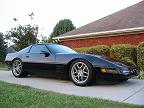


Best AFPR for my LT4?

Thread Starter
Melting Slicks


Joined: Jan 2005
Posts: 2,604
Likes: 0
From: Phoenix, Arizona
 Best AFPR for my LT4?
Want to add one but the question is, which one to buy & where?
Currently looking at the Holley AFPR that Jegs has advertised for $137.99 w/ free shipping.
What are your thoughts?
http://www.jegs.com/webapp/wcs/store...tegoryId=11175
Anyway, did a "search" but got tired of reading about everything but AFPR's...
Thx in advance for the help,
Jeff
Currently looking at the Holley AFPR that Jegs has advertised for $137.99 w/ free shipping.
What are your thoughts?
http://www.jegs.com/webapp/wcs/store...tegoryId=11175
Anyway, did a "search" but got tired of reading about everything but AFPR's...
Thx in advance for the help,
Jeff

Race Director


Joined: May 2001
Posts: 14,165
Likes: 9
Honestly, I would stay away from nearly anything that Holley makes. They make some pretty parts, but they really should stick to carbs, their CQ is lacking in many areas.
Not that you asked at all, but why do you need one? It is much better to adjust your fuel in your tune than it is to mess with the fuel pressure. Tweaking fuel pressure alone is a "hack" way to tune at best.
Not that you asked at all, but why do you need one? It is much better to adjust your fuel in your tune than it is to mess with the fuel pressure. Tweaking fuel pressure alone is a "hack" way to tune at best.
Thread Starter
Melting Slicks
Joined: Jan 2005
Posts: 2,604
Likes: 0
From: Phoenix, Arizona
Originally Posted by Nathan Plemons
Not that you asked at all, but why do you need one? It is much better to adjust your fuel in your tune than it is to mess with the fuel pressure. Tweaking fuel pressure alone is a "hack" way to tune at best.
Race Director
Joined: May 2001
Posts: 14,165
Likes: 9
If your stock FPR is working, there is absolutely no reason to replace it and mess with the fuel pressure. The AFPR only allows you to make global changes to your air / fuel ratio. During normal closed loop operation your computer will either have to add or subtract fuel to compensate which will screw up your BLM values, and it will mess up your fuel economy readings on the computer, etc.
Say you're running fine at WOT at 4000 RPM but rich at 5000 RPM's. If you drop the fuel pressure enough to bring it into line at 5000 RPM's, you've just made it lean at 4000 RPM's. The much better solution is to modify the computer to have it just trim down the fuel at 5000 RPM's and not mess with 4000 RPM's.
There are a lot of "tuners" out there who will sell you a bunch of gimmicks, but the ones who really know what they are doing will tell you that you don't need it. The only reason you might want to raise your fuel pressure is to get more flow out of a set of smaller fuel injectors, but even this should be accompanied with a new computer program.
If the car is running right, don't mess with it.
Say you're running fine at WOT at 4000 RPM but rich at 5000 RPM's. If you drop the fuel pressure enough to bring it into line at 5000 RPM's, you've just made it lean at 4000 RPM's. The much better solution is to modify the computer to have it just trim down the fuel at 5000 RPM's and not mess with 4000 RPM's.
There are a lot of "tuners" out there who will sell you a bunch of gimmicks, but the ones who really know what they are doing will tell you that you don't need it. The only reason you might want to raise your fuel pressure is to get more flow out of a set of smaller fuel injectors, but even this should be accompanied with a new computer program.
If the car is running right, don't mess with it.

Le Mans Master

Joined: Feb 2006
Posts: 8,753
Likes: 9
From: Louisiana
Not the hijack:
My 86 is running rich in all phases. I had thought about getting a AFPR because my fuel pressure is 42 psi. If I could lower the pressure to say 36 psi it should help with the rich situation..right?
My 86 is running rich in all phases. I had thought about getting a AFPR because my fuel pressure is 42 psi. If I could lower the pressure to say 36 psi it should help with the rich situation..right?
Race Director
Joined: May 2001
Posts: 14,165
Likes: 9
Originally Posted by RRT vette
Not the hijack:
My 86 is running rich in all phases. I had thought about getting a AFPR because my fuel pressure is 42 psi. If I could lower the pressure to say 36 psi it should help with the rich situation..right?
My 86 is running rich in all phases. I had thought about getting a AFPR because my fuel pressure is 42 psi. If I could lower the pressure to say 36 psi it should help with the rich situation..right?
If you're running 42 PSI all the time, I would start by checking to see if the vacuum line going to your regulator is cracked or broken. You can try using a vacuum pump to pull a vacuum on the regulator to see if you can manually lower the pressure, etc. If the regulator is working properly and it's still too rich, then you might consider getting an adjustable regulator, otherwise you're treating a symptom, not a cause.
Thread Starter
Melting Slicks
Joined: Jan 2005
Posts: 2,604
Likes: 0
From: Phoenix, Arizona
Originally Posted by Nathan Plemons
If your stock FPR is working, there is absolutely no reason to replace it and mess with the fuel pressure. The AFPR only allows you to make global changes to your air / fuel ratio. During normal closed loop operation your computer will either have to add or subtract fuel to compensate which will screw up your BLM values, and it will mess up your fuel economy readings on the computer, etc.
Say you're running fine at WOT at 4000 RPM but rich at 5000 RPM's. If you drop the fuel pressure enough to bring it into line at 5000 RPM's, you've just made it lean at 4000 RPM's. The much better solution is to modify the computer to have it just trim down the fuel at 5000 RPM's and not mess with 4000 RPM's.
There are a lot of "tuners" out there who will sell you a bunch of gimmicks, but the ones who really know what they are doing will tell you that you don't need it. The only reason you might want to raise your fuel pressure is to get more flow out of a set of smaller fuel injectors, but even this should be accompanied with a new computer program.
If the car is running right, don't mess with it.
Say you're running fine at WOT at 4000 RPM but rich at 5000 RPM's. If you drop the fuel pressure enough to bring it into line at 5000 RPM's, you've just made it lean at 4000 RPM's. The much better solution is to modify the computer to have it just trim down the fuel at 5000 RPM's and not mess with 4000 RPM's.
There are a lot of "tuners" out there who will sell you a bunch of gimmicks, but the ones who really know what they are doing will tell you that you don't need it. The only reason you might want to raise your fuel pressure is to get more flow out of a set of smaller fuel injectors, but even this should be accompanied with a new computer program.
If the car is running right, don't mess with it.

I did have my PCM re-tuned after the HC install and the car seems to run great and on a recent dyno run my AFR seemed fine. With that said, I guess you sensibly talked me out of the purchase...

Corvette Stories
The Best of Corvette for Corvette Enthusiasts

Every 2027 Corvette Engine Explained
Joe Kucinski
Designer Imagines A Corvette That Looks More Like a Corvette Than the Corvette
Verdad Gallardo
10 Ugly Corvettes That We Still Kinda Love
Joe Kucinski
Top 10 Most Expensive Corvettes Ever Sold on Bring A Trailer
Brett Foote
10 Things Every Corvette Owner Needs (2026 Edition)
Michael S. Palmer
8 Most "Only Corvette Owners Understand" Quirks and Problems
Pouria Savadkouei
10 Reasons the C6 Z06 is Still A Performance Benchmark After 20 Years
Joe Kucinski
How Much Horsepower Every Corvette Engine "LOST" in 1972
Joe Kucinski
Top 10 DOs and DON'Ts for Protecting Your Convertible Top!
Michael S. Palmer
Safety Car

Joined: Dec 2002
Posts: 3,655
Likes: 24
From: Charleston SC
Originally Posted by Nathan Plemons
If your stock FPR is working, there is absolutely no reason to replace it and mess with the fuel pressure.

Aeromotive is the best AFPR for the LT1 cars but I removed mine long ago and it is still collecting dust in a box over in my storage shed. As Nathan said all corrections can be made via the tune and there is no reason to touch the stock FP. First thing you really should do is take a look at your A/F ratio before you change anything. A wideband is the best but logging data with TTS or Freescan will also work.
Race Director
Joined: May 2001
Posts: 14,165
Likes: 9
Originally Posted by FD2BLK
Aeromotive is the best AFPR for the LT1 cars but I removed mine long ago and it is still collecting dust in a box over in my storage shed.
Safety Car
Joined: Jul 2001
Posts: 4,871
Likes: 15
From: Detroit's West Side MI
Originally Posted by Nathan Plemons
Doesn't the Aeromotive require modifications to the fuel rail covers? I know Aeromotive certainly has the best looking unit out there, but I've heard of fitment issues.
However, after I bought it I heard a few stories of them leaking and not holding pressure. I bought it during my rich condition issue earlier this year, and now that the issue is solved I'll probably go back to stock.