


P / S pump, what is this?


Thread Starter
Burning Brakes


Joined: Apr 2005
Posts: 1,109
Likes: 2
 P / S pump, what is this?
After some problems with my power steering pump I decided to take no more chances and get a Turn one steering pump.
I am thrilled to know that this are very reliable pumps, specially on track days.
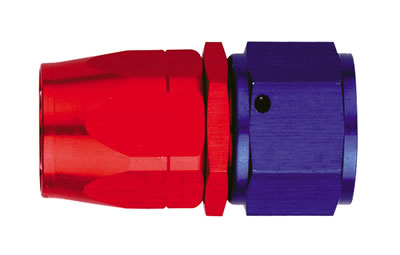
But I have a doubt, what does AN/ -6 outlet mean?
I think it is some sort of conection, but what are the benefits and what is built in as OEM in the P S pump?
Thanks
Roberto
I am thrilled to know that this are very reliable pumps, specially on track days.
But I have a doubt, what does AN/ -6 outlet mean?
I think it is some sort of conection, but what are the benefits and what is built in as OEM in the P S pump?
Thanks
Roberto

Race Director


Joined: Jun 2004
Posts: 13,963
Likes: 709
From: WI

Le Mans Master


Joined: Sep 2006
Posts: 6,050
Likes: 147
From: Phoenix AZ
2021 C4 of the Year - Modified Finalist
outlet
the -6 refers to the diameter of the hose in 1/16" increments. The -6 is a 3/8 hose in aircraft terminology. It is adapted to anything that uses the AN braided hose stuff.
AN stands for airforce-navy spec back in world war II.
This differenciates the difference between MS stuff that is similar, but has different flange sealing surfaces internally to the fittings.
AN stands for airforce-navy spec back in world war II.
This differenciates the difference between MS stuff that is similar, but has different flange sealing surfaces internally to the fittings.


Melting Slicks


Joined: Dec 1999
Posts: 2,816
Likes: 2
From: Austin, TX
The benefit of changing to an AN connection is not the unit of measure. The use of AN fittings along with braided stainless hose will provide a more secure / durable connection than the stock hoses. If you look in the roadracing section, you'll find several posts about C4 P/S hoses failing during track use (even for relatively short 20-30-minute sessions). That's the reason many people change them out to A/N fittings with stainless hose.

Le Mans Master
Joined: Jan 2002
Posts: 9,036
Likes: 13
From: Edmonton AB
AN 37º (Air Force - Navy Aeronautical Standard)
JIC 37º (Joint Industry Conference)
SAE 45º (Society of Automotive Engineers)
From the The Wikipedia entry cited above by Aardwolf:
JIC 37º (Joint Industry Conference)
SAE 45º (Society of Automotive Engineers)
From the The Wikipedia entry cited above by Aardwolf:
Note that 37° AN and 45° SAE fittings and tooling are
not interchangeable due to the different flaring angles. Mixing
them can cause leakage at the flare.
From a document published by Parker-Hanifinnot interchangeable due to the different flaring angles. Mixing
them can cause leakage at the flare.
Fitting Solutions Series – No. 11
History
Parker pioneered the flare fitting technology in the 1920's with the
introduction of the inverted flare fitting followed by the Parker Triple
Fitting in early 1930's. They were adopted by Air Corps (a part of the
U.S. Army at that time) as AC-810 and AC-811. As the operating
pressures increased, inverted flare did not perform as well as Triple
Fitting, and its use started declining. The ease of manufacture of Triple
Fitting provided additional advantage that resulted in quick acceptance
of it in various industrial and military applications.
The Triple Fitting was a patented three-piece design similar to current
Triple-Lok, except it had 30° flare angle instead of the 37°. This fitting
design was the forerunner of the current AN and SAE 37° flare fittings.
The U.S. Air Force, with help from Wright Patterson Air Force base,
developed a fitting with 37° flare angle, before WWII, which became
known as the "AN" fitting. This fitting had precision 3A/3B threads. The
use of "AN" fittings proliferated from the 1930's through the 1960's to
include most branches of U.S. Military, Military Contractors, General
Aviation and Commercial Aviation. These fittings were even adopted for
use in many land/sea applications of the U.S. Military as well, leading to
confusion between AN and its industrial counterpart, the SAE 37° fitting.
After the war, several versions of 37° flare fittings flooded the industrial
market, creating a nightmare for the users. The Joint Industry Conference
(JIC), an organization of manufacturers, decided to standardize on the
"AN" design, except with 2A/2B thread class for ease in manufacturing.
These fittings came to be known, throughout the world, as "JIC" fittings.
The JIC wanted the prestige of SAE for the fitting standard. They
convinced SAE to take on the task and helped in the development of
the standard. Thus, the SAE standard 37° flare fitting became part of
SAE J514 in 1950. The fitting became an ISO standard, ISO 8434, in
1986, replaced by ISO 8434-2 in 1996.
.
History
Parker pioneered the flare fitting technology in the 1920's with the
introduction of the inverted flare fitting followed by the Parker Triple
Fitting in early 1930's. They were adopted by Air Corps (a part of the
U.S. Army at that time) as AC-810 and AC-811. As the operating
pressures increased, inverted flare did not perform as well as Triple
Fitting, and its use started declining. The ease of manufacture of Triple
Fitting provided additional advantage that resulted in quick acceptance
of it in various industrial and military applications.
The Triple Fitting was a patented three-piece design similar to current
Triple-Lok, except it had 30° flare angle instead of the 37°. This fitting
design was the forerunner of the current AN and SAE 37° flare fittings.
The U.S. Air Force, with help from Wright Patterson Air Force base,
developed a fitting with 37° flare angle, before WWII, which became
known as the "AN" fitting. This fitting had precision 3A/3B threads. The
use of "AN" fittings proliferated from the 1930's through the 1960's to
include most branches of U.S. Military, Military Contractors, General
Aviation and Commercial Aviation. These fittings were even adopted for
use in many land/sea applications of the U.S. Military as well, leading to
confusion between AN and its industrial counterpart, the SAE 37° fitting.
After the war, several versions of 37° flare fittings flooded the industrial
market, creating a nightmare for the users. The Joint Industry Conference
(JIC), an organization of manufacturers, decided to standardize on the
"AN" design, except with 2A/2B thread class for ease in manufacturing.
These fittings came to be known, throughout the world, as "JIC" fittings.
The JIC wanted the prestige of SAE for the fitting standard. They
convinced SAE to take on the task and helped in the development of
the standard. Thus, the SAE standard 37° flare fitting became part of
SAE J514 in 1950. The fitting became an ISO standard, ISO 8434, in
1986, replaced by ISO 8434-2 in 1996.








