




 Idea!
Idea!
Priming LT1 After Intake Installation

Thread Starter
Melting Slicks


Joined: Jun 2002
Posts: 2,705
Likes: 30
From: Chesapeake Beach Maryland
2015 C5 of Year Finalist
 Priming LT1 After Intake Installation
I know I can prime the engine before installation of the intake manifold and will do that, but it is likely that the engine will still sit for some time after priming before engine startup. The intake will be installed by then.
I was hopeing that there was another way to pump oil through the system with the engine assembled. I have read posts where this could be done, but can't fine them or any details to what tools and fittings would be needed to accomplish this.
I was hopeing that there was another way to pump oil through the system with the engine assembled. I have read posts where this could be done, but can't fine them or any details to what tools and fittings would be needed to accomplish this.

Race Director


Joined: Jan 2002
Posts: 12,264
Likes: 88
From: O'Fallon Missouri
Once the intake is on, I will pull the fuel pump fuse and coil wire. Then turn the engine over until I see oil pressure. Let it sit for about a minute to cool the starter, and turn it over again for about 20 seconds. Connect the coil wire, reinstall the fuel pump fuse, cross my fingers, and let her fire. 
After being down for several months, I restarted my car on Christmas Day. It always puts a smile on my face how easy these cars restart after downtime.
After being down for several months, I restarted my car on Christmas Day. It always puts a smile on my face how easy these cars restart after downtime.

Le Mans Master


Joined: Oct 2004
Posts: 5,841
Likes: 19
From: CLT, North Carolina
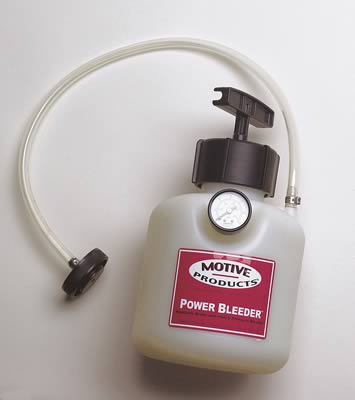
Motive Products Power Bleeder. They don't work well for brakes but they are absolutely super for priming the oil. install a pipe thread to hose adapter in the block oil pressure sending unit port, hook up the hose, fill the bleeder with Mobil1 and pump up pressure.
No more dry starts!!
No more dry starts!!
Thread Starter
Melting Slicks
Joined: Jun 2002
Posts: 2,705
Likes: 30
From: Chesapeake Beach Maryland
2015 C5 of Year Finalist
Thanks, that seems like the easiest way. I had thought about that but it seemed so downstream from where I am today. Actually, I think it will be easier to do it this way rather than try to use a pump or something to push it through.
Well I posted this before reading Greg's post about using the power bleeder. I have one of those, and didn't even think of using it. Great idea!
Well I posted this before reading Greg's post about using the power bleeder. I have one of those, and didn't even think of using it. Great idea!
Last edited by biggrizzly; Dec 29, 2007 at 10:56 PM.
Thread Starter
Melting Slicks
Joined: Jun 2002
Posts: 2,705
Likes: 30
From: Chesapeake Beach Maryland
2015 C5 of Year Finalist
Motive Products Power Bleeder. They don't work well for brakes but they are absolutely super for priming the oil. install a pipe thread to hose adapter in the block oil pressure sending unit port, hook up the hose, fill the bleeder with Mobil1 and pump up pressure.
No more dry starts!!
No more dry starts!!
Corvette Stories
The Best of Corvette for Corvette Enthusiasts

5 Best & 5 Worst Corvette Daily Drivers
Joe Kucinski
The Headlights of Every Corvette Generation Explained
Joe Kucinski
5 Best & 5 Most Overrated Corvette Track Packages of All Time!
Joe Kucinski
Every 2027 Corvette Engine Explained
Joe Kucinski
Designer Imagines A Corvette That Looks More Like a Corvette Than the Corvette
Verdad Gallardo
10 Ugly Corvettes That We Still Kinda Love
Joe Kucinski
Top 10 Most Expensive Corvettes Ever Sold on Bring A Trailer
Brett Foote
10 Things Every Corvette Owner Needs (2026 Edition)
Michael S. Palmer
8 Most "Only Corvette Owners Understand" Quirks and Problems
Pouria Savadkouei

Le Mans Master
Joined: Oct 2004
Posts: 5,841
Likes: 19
From: CLT, North Carolina
Sure it can if you don't want to pull your distributor. For L98 engines I think it would be better to remove the distributor and drive the oil pump with a dummy shaft through. Engaging the engine oil pump with a drill on a dummy shaft will give you a more positive prime than using a pressurized jug. The jug of oil with a hand pump method is what you have to do sometimes with an LT1 in the car when it is not practical to remove the intake manifold. Your goal is to get the galleys in the block full of oil and air trapped in the new oil filter and galleys to the filter often delays this from happening. I think using the starter to crank a dry engine over to get pressure before switching 12 volts to the ignition should be avoided if possible but it may not hurt anything if you built the engine and you know that you have adequate assembly lube in all the critical places.

Team Owner

Joined: Oct 2004
Posts: 81,241
Likes: 3,063
From: altered state
St. Jude Donor '05
Some pack the oil pump gears with grease so when you turn the key that thing primes instantly. Cant remember if its white grease or not, its been awhile. At least this way you arent turning the motor over forever dry trying to get pressure.
Le Mans Master
Joined: Oct 2004
Posts: 5,841
Likes: 19
From: CLT, North Carolina

Race Director
Joined: Jan 2002
Posts: 12,264
Likes: 88
From: O'Fallon Missouri
think using the starter to crank a dry engine over to get pressure before switching 12 volts to the ignition should be avoided if possible but it may not hurt anything if you built the engine and you know that you have adequate assembly lube in all the critical places.
