




Radiator Time need some suggestions

Melting Slicks


Joined: Apr 2007
Posts: 2,616
Likes: 111

I started to see raising temps with my stock radiator about 3 years ago. I took it to a buddy that owns a radiator shop and he flushed it and cleaned it real good. My car never sees over 170 on the highway and over 190 sitting still in traffic on 90+ days.
I am perfectly happy with the radiator as stock - you might want to get it cleaned or just replace it with a new stock unit. That is much cheaper and if a stock one works on my motor, it should work on 99% out there perfectly fine.
Just my thoughts on the subject. Our Chevelle has a Bcool and its definately a nice unit, but why spend 400+ beans on something that is really not needed.
I am perfectly happy with the radiator as stock - you might want to get it cleaned or just replace it with a new stock unit. That is much cheaper and if a stock one works on my motor, it should work on 99% out there perfectly fine.
Just my thoughts on the subject. Our Chevelle has a Bcool and its definately a nice unit, but why spend 400+ beans on something that is really not needed.
 I must agree to some point on this. I have a 420 hp engine running 10.6:1 compression with an new EOM type unit that I paid much less than $400.00 for. I have a 180 degree therm. and it runs no more than 186 degrees on the highway in the hot summer months here in the mid-west when the temps. get over 90 degrees with high humidity; much cooler in the fall months. I was told when I did my engine build that expensive radiators are better suited for older muscle cars that could use the more efficient technology. I'm glad I did not spend the $ on the radiator since I had plenty of cash going in other directions. You do need to check for debris in the radiator area now and then.

Thread Starter
Racer


Joined: May 2007
Posts: 424
Likes: 0
ya i just want to make sure my car is not going to get extremely hot like it did last summer on the hot days even if i am sitting in traffic. But if replacing the stock radiator with stock that would be nicee

Drifting

Joined: Nov 2005
Posts: 1,361
Likes: 0
From: Downriver Mi.
Did you pull the rad to see if it has a bunch of debris in front of it?Bet that is your problem,you can also have your fans adjusted to come on sooner by chip or sensor.then pop a good 180* stat in it.
Last edited by MR NICE; Feb 25, 2008 at 06:18 AM.

Drifting
Joined: Jun 2007
Posts: 1,454
Likes: 15
From: Martinsburg WV
Corvette Stories
The Best of Corvette for Corvette Enthusiasts

Top 10 Most Expensive Corvettes Ever Sold on Bring A Trailer
Brett Foote
10 Things Every Corvette Owner Needs (2026 Edition)
Michael S. Palmer
8 Most "Only Corvette Owners Understand" Quirks and Problems
Pouria Savadkouei
10 Reasons the C6 Z06 is Still A Performance Benchmark After 20 Years
Joe Kucinski
How Much Horsepower Every Corvette Engine "LOST" in 1972
Joe Kucinski
Top 10 DOs and DON'Ts for Protecting Your Convertible Top!
Michael S. Palmer
Top 10 Most Explosive Corvettes Ever Made: Power-to-Weight Ratio Ranked!
Joe Kucinski
150 hp to 1,250 hp: Every Corvette Generation Compared by the Specs That Matter
Joe Kucinski
8 Coolest Corvette Pace Cars (and Replicas) of All Time
Verdad Gallardo
Burning Brakes


Joined: Jan 2003
Posts: 755
Likes: 32
From: Roswell Georgia
If the core leak is next to one of the tanks, it could be a gasket giving up the ghost. A skilled radiator shop can fix that problem, but the money would be better spent buying a new radiator. If the leak is in a tube, the answer is no. It's cheaper to buy a new radiator than fix the old one. (Brazing/welding aluminum tube is an art form that few have mastered. Most just cut & seal off the ends of the tube where the leak was.) In an emergency, you can try JB Weld and other such patches, be eventually, the best solution is a new radiator.
DeWitt's makes a great aftermarket, all aluminum radiator; however, if you just want a stock-type replacement with a lifetime guarantee at a good price, try www.radiator.com.
DeWitt's makes a great aftermarket, all aluminum radiator; however, if you just want a stock-type replacement with a lifetime guarantee at a good price, try www.radiator.com.


Safety Car


Joined: Aug 2006
Posts: 4,147
Likes: 452
From: Port St. Lucie West Florida
I have a DeWitts in my 95 LT1. I noticed that the temp is just about the same as my stock radiator. I am using the stock 180 dg. thermostat. (about 200 dg. water temp.) If I wanted it cooler I would use a 160 stat. but that is no good in NY weather
 thanks


Le Mans Master

Joined: Jul 1999
Posts: 8,683
Likes: 6
From: Phoenix AZ
I put a Ron Davis in mine. They're not cheap, but they are incredibly well-made. I was nothing but impressed when I picked it up and inspected it. This is similar to the one I have after a quick Google Image search;
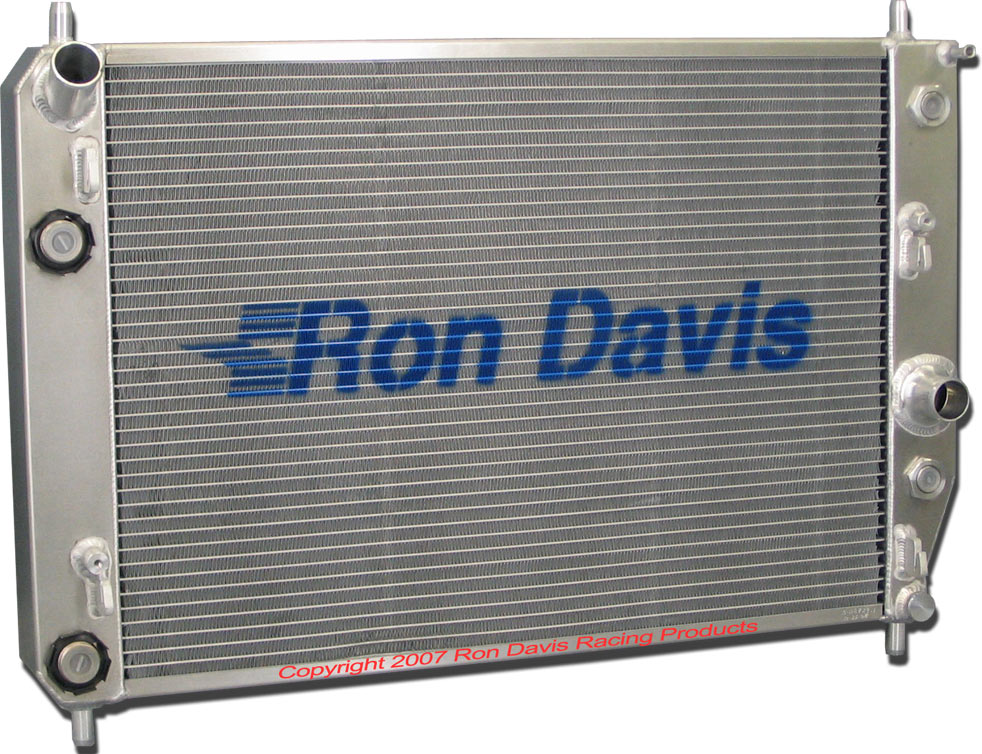
I needed something with better cooling than the stock unit because of the HOT Phoenix summers, when it 120+ degrees outside.
I needed something with better cooling than the stock unit because of the HOT Phoenix summers, when it 120+ degrees outside.

Race Director


Joined: Feb 2003
Posts: 11,672
Likes: 20
From: Lake Wylie SC


Race Director
Joined: Feb 2003
Posts: 11,672
Likes: 20
From: Lake Wylie SC
There is more to the story. This company said it would ship the radiator so that it would get here within 3-4 days. The UPS tracking notice said it won't be here until Mar 17. That's 5 days from now. Then they said the reason it will be late is that it was on back order, but their site shows in stock. I would not order from these guys, unless you feel lucky. I'll post a buyer's alert if they screw it up any more.
I'll post a buyer's alert if they screw it up any more.

Former Vendor
Joined: Jan 2000
Posts: 5,593
Likes: 631
From: Brighton
Just so you guys know, I received an e-mail from Tom Dewitt and he didn't answer the question if a core leak can be fixed in an all aluminum radiator. My thought is: why spend $400 plus on a radiator that can't be fixed if it leaks in the core? And we all know how well these C4s can suck things into it.
The method to repair would depend a lot on the type and cause of the leak and the person doing the repair. The cooling tubes are .017 wall aluminum and most people wouldn't even think of trying to weld on these and the shops that try usually blow a hole 10X as big as the leak. My welders have welded punctures many times but it does take a very skilled aluminum welder and hi-tech machines.
Two part epoxy is designed to bond to aluminum and it is a very reliable repair as a second option. Most radiator shops choose this method because there is no risk of making the leak any worse. There are epoxies specifically designed for this however, I found that the simple piston pump package you can get at the hardware store works very well. I do not recommend JB weld on aluminum as it is way to hard and does not expand with the aluminum. While some may cringe at the thought of a "patch" fix, epoxy was used by Ford motor company as a standard practice in making the aluminum radiators for many years and Griffin still does today. Our manufacturing process provides better brazing results than was done in the past and therefore we do not need to use epoxy.
If anyone decides to use epoxy, make sure the area is clean and dried. I would drain the radiator and have it pressure tested to verify the exact location of the leak. The most common mistake in epoxy repairing is everyone uses way too much. One drop will fix 99% of the leaks. I would clean the area with a good aluminum cleaner and blow it off with air. Then heat the area with a propane torch to burn off any left over anti-freeze. Just warm it up, you are not going to weld anything. A heat gun works really well. While the spot is still warm, put a drop on the hole or leak area, the heat will make the epoxy flow like water. You can also use a vacuum to "suck" the epoxy into the hole, but that not manditory. Let it fully harden according the instructions and retest. Remember, one to two drops is all it takes.
