


Problem with the combustion leak test

Thread Starter
Safety Car


Joined: Jan 2004
Posts: 3,759
Likes: 8
 Problem with the combustion leak test
I rented the combustion leak tester kit from Autozone and got some blue fluid there to test for combustion leak in coolant, which would indicate a blown head gasket as I've got an 89.
With the car cold, I pulled the pressure relief valve on the radiator cap, and noticed a couple of burps in the overflow tank. Don't know if that means anything. I haven't driven it for a week or so.
So, I removed the radiator cap and siphoned out a third or so of the coolant out the radiator. I started the car and let it warm up with the radiator cap off. I was doing other stuff while the engine was running. At some time after the engine came to temp, I noticed coolant was squirting out the radiator cap opening. I put the cap on while the engine was still running.
After a few minutes, I took the cap off and no coolant was squirting. A few minutes later or so, coolant started squirting out the radiator cap opening, so at that point, I shut the car off.
So, is that normal, or does that mean something is wrong?
I did the combustion leak test on my Firebird a week before with no problems, but I did it differently. I let the engine come to temp, then I opened the radiator cap and siphoned out some of the coolant. Then I did the combustion check.
With the car cold, I pulled the pressure relief valve on the radiator cap, and noticed a couple of burps in the overflow tank. Don't know if that means anything. I haven't driven it for a week or so.
So, I removed the radiator cap and siphoned out a third or so of the coolant out the radiator. I started the car and let it warm up with the radiator cap off. I was doing other stuff while the engine was running. At some time after the engine came to temp, I noticed coolant was squirting out the radiator cap opening. I put the cap on while the engine was still running.
After a few minutes, I took the cap off and no coolant was squirting. A few minutes later or so, coolant started squirting out the radiator cap opening, so at that point, I shut the car off.
So, is that normal, or does that mean something is wrong?
I did the combustion leak test on my Firebird a week before with no problems, but I did it differently. I let the engine come to temp, then I opened the radiator cap and siphoned out some of the coolant. Then I did the combustion check.
Drifting

Joined: Mar 2008
Posts: 1,756
Likes: 0
From: Wichita KS
Sounds like the engine block is low and when the thermostat opens, it sucks in water and drains the radiator. But by then the water in the block is heated up past boiling and when the cold radiator water hits the hot water in the block, it all boils out.
I would say the thermostat is either barely opening or not opening. Install a new thermostat and see if it starts acting right.
I would say the thermostat is either barely opening or not opening. Install a new thermostat and see if it starts acting right.

Le Mans Master


Joined: Apr 2000
Posts: 5,589
Likes: 0
From: DrunkDefender
CI 1-2-3-4-5-6-7-8 Veteran
CI-IV AutoX Champ
CI-IV Burnout Champ
St. Jude Donor '07-'10
If you are worried about head gaskets have you ran a compression test yet? You should be around 120-130psi if stock.
Thread Starter
Safety Car
Joined: Jan 2004
Posts: 3,759
Likes: 8
Thread Starter
Safety Car
Joined: Jan 2004
Posts: 3,759
Likes: 8
Sounds like the engine block is low and when the thermostat opens, it sucks in water and drains the radiator. But by then the water in the block is heated up past boiling and when the cold radiator water hits the hot water in the block, it all boils out.
I would say the thermostat is either barely opening or not opening. Install a new thermostat and see if it starts acting right.
I would say the thermostat is either barely opening or not opening. Install a new thermostat and see if it starts acting right.
What brand thermostat should I get? I'll replace it when I pull the throttle body to clean it.
Last edited by samsonb; Mar 27, 2009 at 04:00 PM.
Thread Starter
Safety Car
Joined: Jan 2004
Posts: 3,759
Likes: 8
How are you supposed to do the combustion leak test if coolant keeps squirting out? I know they say combustion going into the coolant can cause excessive pressure in the coolant system.
I have been told on a cold engine to start it, and feel the upper radiator hose. If it is stiff, then that mean combustion is getting in the coolant system??
I have also been told to get a coolant pressure tester. Put it on the radiator, start the engine and rev it up. If the needle pegs, then combustion is getting in the coolant system. How does this test sound?
Ok, good compression. No white smoke, just the usual blue on start up. No coolant loss. No overheating. No apparent coolant in the oil. Though, I do have crud in the coolant system. All my spark plugs appear to be carbon fouled, I would have figured a couple of them would be clean if there was a leak.
1234

5678


Corvette Stories
The Best of Corvette for Corvette Enthusiasts

5 Best & 5 Worst Corvette Daily Drivers
Joe Kucinski
The Headlights of Every Corvette Generation Explained
Joe Kucinski
5 Best & 5 Most Overrated Corvette Track Packages of All Time!
Joe Kucinski
Every 2027 Corvette Engine Explained
Joe Kucinski
Designer Imagines A Corvette That Looks More Like a Corvette Than the Corvette
Verdad Gallardo
10 Ugly Corvettes That We Still Kinda Love
Joe Kucinski
Top 10 Most Expensive Corvettes Ever Sold on Bring A Trailer
Brett Foote
10 Things Every Corvette Owner Needs (2026 Edition)
Michael S. Palmer
8 Most "Only Corvette Owners Understand" Quirks and Problems
Pouria Savadkouei
Le Mans Master

Joined: Feb 2000
Posts: 9,715
Likes: 27
From: Kempner Texas
With the engine idling and the cap off, at some point coolant will begin to spew out, back-flow; that's normal.
You didn't say (or I missed it somehow), what it is you're trying to do.
Are you experiencing a coolant issue? White smoke out of the muffler indicates coolant getting into the combustion chamber.
Black smoke out of the muffler is an indication of a too rich air/fuel mixture.
Blue smoke out of the muffler is usually a sign oil getting into the combustion chamber.
Each has a different cause.
If you're experiencing a blue smoke out of the exhaust and probably using more oil than normal, my first thought is failed valve stem seal(s). This is a common occurrence and installing new ones isn't to hard to do. Just set aside an afternoon.
If you're losing coolant and there's no sign of an external leak - puddles on the floor or in the engine compartment - it's probably a intake or head gasket leak problem.
To diagnose that, you need to borrow a coolant system PRESSURE tester. Screw it on where the cap goes, pump up the coolant system (engine off) to no more than 20 psi and see if the pressure holds. If it doesn't, I put my money on a leaking gasket.
It would help a lot if you explained what's going on with the engine that caused you to begin diagnostics.
Jake
West Point ROCKS!
You didn't say (or I missed it somehow), what it is you're trying to do.
Are you experiencing a coolant issue? White smoke out of the muffler indicates coolant getting into the combustion chamber.
Black smoke out of the muffler is an indication of a too rich air/fuel mixture.
Blue smoke out of the muffler is usually a sign oil getting into the combustion chamber.
Each has a different cause.
If you're experiencing a blue smoke out of the exhaust and probably using more oil than normal, my first thought is failed valve stem seal(s). This is a common occurrence and installing new ones isn't to hard to do. Just set aside an afternoon.
If you're losing coolant and there's no sign of an external leak - puddles on the floor or in the engine compartment - it's probably a intake or head gasket leak problem.
To diagnose that, you need to borrow a coolant system PRESSURE tester. Screw it on where the cap goes, pump up the coolant system (engine off) to no more than 20 psi and see if the pressure holds. If it doesn't, I put my money on a leaking gasket.
It would help a lot if you explained what's going on with the engine that caused you to begin diagnostics.
Jake
West Point ROCKS!
Thread Starter
Safety Car
Joined: Jan 2004
Posts: 3,759
Likes: 8
With the engine idling and the cap off, at some point coolant will begin to spew out, back-flow; that's normal.
You didn't say (or I missed it somehow), what it is you're trying to do.
Are you experiencing a coolant issue? White smoke out of the muffler indicates coolant getting into the combustion chamber.
Black smoke out of the muffler is an indication of a too rich air/fuel mixture.
Blue smoke out of the muffler is usually a sign oil getting into the combustion chamber.
Each has a different cause.
If you're experiencing a blue smoke out of the exhaust and probably using more oil than normal, my first thought is failed valve stem seal(s). This is a common occurrence and installing new ones isn't to hard to do. Just set aside an afternoon.
If you're losing coolant and there's no sign of an external leak - puddles on the floor or in the engine compartment - it's probably a intake or head gasket leak problem.
To diagnose that, you need to borrow a coolant system PRESSURE tester. Screw it on where the cap goes, pump up the coolant system (engine off) to no more than 20 psi and see if the pressure holds. If it doesn't, I put my money on a leaking gasket.
It would help a lot if you explained what's going on with the engine that caused you to begin diagnostics.
Jake
West Point ROCKS!
You didn't say (or I missed it somehow), what it is you're trying to do.
Are you experiencing a coolant issue? White smoke out of the muffler indicates coolant getting into the combustion chamber.
Black smoke out of the muffler is an indication of a too rich air/fuel mixture.
Blue smoke out of the muffler is usually a sign oil getting into the combustion chamber.
Each has a different cause.
If you're experiencing a blue smoke out of the exhaust and probably using more oil than normal, my first thought is failed valve stem seal(s). This is a common occurrence and installing new ones isn't to hard to do. Just set aside an afternoon.
If you're losing coolant and there's no sign of an external leak - puddles on the floor or in the engine compartment - it's probably a intake or head gasket leak problem.
To diagnose that, you need to borrow a coolant system PRESSURE tester. Screw it on where the cap goes, pump up the coolant system (engine off) to no more than 20 psi and see if the pressure holds. If it doesn't, I put my money on a leaking gasket.
It would help a lot if you explained what's going on with the engine that caused you to begin diagnostics.
Jake
West Point ROCKS!
The reason why I was doing diagnostics is cause I have an 89 Vette. At some point, you will get a head gasket leak, I figured it would be a good idea to see if they are leaking. Reason cause is I plan on replacing the valve cover gaskets, that will be alot of work. So, if the head gaskets are leaking, I might as well replace those since the rest will be torn apart.
I have no white smoke.
No apparant coolant in the oil.
No apparant coolant loss.
It runs fine.
No sign of coolant leak via spark plugs.
Good compression.
When I did the combustion leak test on the Firebird, coolant wasn't squirting out the radiator.
On the Vette, I did notice while running, the upper radiator hose was rock hard. You couldn't even squeeze it a little.
I think what I will do is put a coolant pressure tester on the radiator, start the car and let it get to temp. Then check to see what coolant psi I'm getting. I'll also do some revs and have someone watch to see if the psi climbs when I rev. If I'm getting high coolant psi readings, then that would tell me extra pressure is getting in the coolant system. Which would indicate a head gasket or head problem.

Safety Car
Joined: Oct 2008
Posts: 4,689
Likes: 4
From: Yucaipa CA
What I was trying to do is a combustion leak test. I can't do the test if coolant is squirting out the radiator.
The reason why I was doing diagnostics is cause I have an 89 Vette. At some point, you will get a head gasket leak, I figured it would be a good idea to see if they are leaking. Reason cause is I plan on replacing the valve cover gaskets, that will be alot of work. So, if the head gaskets are leaking, I might as well replace those since the rest will be torn apart.
I have no white smoke.
No apparant coolant in the oil.
No apparant coolant loss.
It runs fine.
No sign of coolant leak via spark plugs.
Good compression.
When I did the combustion leak test on the Firebird, coolant wasn't squirting out the radiator.
On the Vette, I did notice while running, the upper radiator hose was rock hard. You couldn't even squeeze it a little.
I think what I will do is put a coolant pressure tester on the radiator, start the car and let it get to temp. Then check to see what coolant psi I'm getting. I'll also do some revs and have someone watch to see if the psi climbs when I rev. If I'm getting high coolant psi readings, then that would tell me extra pressure is getting in the coolant system. Which would indicate a head gasket or head problem.
The reason why I was doing diagnostics is cause I have an 89 Vette. At some point, you will get a head gasket leak, I figured it would be a good idea to see if they are leaking. Reason cause is I plan on replacing the valve cover gaskets, that will be alot of work. So, if the head gaskets are leaking, I might as well replace those since the rest will be torn apart.
I have no white smoke.
No apparant coolant in the oil.
No apparant coolant loss.
It runs fine.
No sign of coolant leak via spark plugs.
Good compression.
When I did the combustion leak test on the Firebird, coolant wasn't squirting out the radiator.
On the Vette, I did notice while running, the upper radiator hose was rock hard. You couldn't even squeeze it a little.
I think what I will do is put a coolant pressure tester on the radiator, start the car and let it get to temp. Then check to see what coolant psi I'm getting. I'll also do some revs and have someone watch to see if the psi climbs when I rev. If I'm getting high coolant psi readings, then that would tell me extra pressure is getting in the coolant system. Which would indicate a head gasket or head problem.
my 90 upper hose got very hard like yours when its thermostat was stuck. easy way to tell if thats the problem is run the engine and if the radiator is cool yet everything else is hot, then must be thermostat not opening much like what mine did. if the upper hose gets soft after awhile of being shut off then its leaking pressure somewhere.
Thread Starter
Safety Car
Joined: Jan 2004
Posts: 3,759
Likes: 8
as the coolant gets hotter though pressure will increase. if its losing exhaust gases into the radiator simply pressurizing the cooling sytem will tell you if its leaking. I just did my head gaskets and it can now hold 16psi indefinitely.
my 90 upper hose got very hard like yours when its thermostat was stuck. easy way to tell if thats the problem is run the engine and if the radiator is cool yet everything else is hot, then must be thermostat not opening much like what mine did. if the upper hose gets soft after awhile of being shut off then its leaking pressure somewhere.
my 90 upper hose got very hard like yours when its thermostat was stuck. easy way to tell if thats the problem is run the engine and if the radiator is cool yet everything else is hot, then must be thermostat not opening much like what mine did. if the upper hose gets soft after awhile of being shut off then its leaking pressure somewhere.
Though, the bottom hose doesn't have a spring. So, when I flush out the coolant, I may replace the bottom hose with one from the dealer, as I believe those have a spring inside. It looks like I'll have to remove the idler pully to get to the clamp at the water pump.
I'll pressure test the coolant system this weekend if it isn't raining. And I'll start the car with the guage on the radiator to see if I get any excessive pressure readings.
And I'll probably replace the thermostat again anyways. Probably put in a 195 Robertshaw.

Race Director


Joined: Sep 2003
Posts: 16,839
Likes: 341
From: Database Error Indiana
Josh, the R&Ring valve covers are just the tip of the iceburg compared to head gaskets. Doesn't look like you have a head gasket problem anyway. VC gaskets are not that bad to do. I would be finding out why the plugs are black. Wild guess would be O2 sensor.

Le Mans Master
Joined: Dec 2000
Posts: 7,839
Likes: 22
From: San Diego, Ca
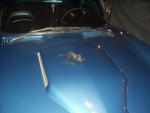
Cylinders are numbered 2 4 6 8 on the right; 1 3 5 7 on the left. Your plugs show that at least 2 cylinders are lean - the rest look to be rich - particularly #6 as identified by your photo. My guess is that you have a lean condition or something after the MAF and when that air hits the O2, it causes the ECM to fatten up the mix. A scan would confirm this. Lean conditions are caused by vacuum, intake and exhaust leaks; plugged injectors, or water/coolant in the combustion chamber (and it doesn't take much) or a partially open EGR valve. Your radiator looks clean. Checking your coolant for exhaust contamination doesn't take a hot engine or an engine that's even running so I don't know what or how the kit you bought works. A pressure test should be performed on a cold engine - just pump it up and see if it holds. Doing it on a hot engine is tough because even with a small leak, it could still be above atmospheric and when you open it up, you'll get a geyser. Better to check compression hot and cold - just loosen the plugs a 1/4 turn after the cold test so they're easy to take out for the hot test. You might also check vacuum - you want a steady needle.
Pro

Joined: Feb 2009
Posts: 589
Likes: 1
From: PA
You don't have a problem. You're chasing one that you think you have. You said, no white smoke in the exhaust, no water in the oil, the car runs fine. Your plugs are fine too, they're normal looking.
Get a new radiator cap. Problem solved. Drive and enjoy your car.
Get a new radiator cap. Problem solved. Drive and enjoy your car.
Safety Car
Joined: Oct 2008
Posts: 4,689
Likes: 4
From: Yucaipa CA
 Doing the head gaskets is a pain in the butt!!!!! But if you have the ambition I say go for it, especially if it has higher miles. Be smart if you do the head gaskets and have the heads surfaced by a professional and not someone with one of those belt sanding machines.
I wouldn't run the motor with a pressure tester on the car !!!!!! because when you take the system to 16psi and then the coolant warms up it will naturally gain more pressure. When I tested my cooling system just the hot sun caused my sytem to increase the pressure a bit without the motor running , so imagine what the running engine will cause it to do ..... Without the radiator cap on it can build high pressures potentially rupturing the plastic radiator etc. etc.
I would think if indeed you were forcing engine compression into the cooling system and the cooling system was exceeding 16psi constantly, you would hear the radiator cap releasing it through the overflow bottle. I'm pretty sure it would be making a gurgling sound a lot.
A sure sign is like everyone says loss of coolant all the time .... if you have coolant going in on the drivers side, you can be sure you will see the o2 sensor rusty looking (mine was) But no matter what you will see white smoke out the pipes but sometimes it's not always real noticeable, after the motor is shutdown it may lock up when you try to start it, of course water in the oil.
good luck
Thread Starter
Safety Car
Joined: Jan 2004
Posts: 3,759
Likes: 8
Listen to him Doing the head gaskets is a pain in the butt!!!!! But if you have the ambition I say go for it, especially if it has higher miles. Be smart if you do the head gaskets and have the heads surfaced by a professional and not someone with one of those belt sanding machines.
I wouldn't run the motor with a pressure tester on the car !!!!!! because when you take the system to 16psi and then the coolant warms up it will naturally gain more pressure. When I tested my cooling system just the hot sun caused my sytem to increase the pressure a bit without the motor running , so imagine what the running engine will cause it to do ..... Without the radiator cap on it can build high pressures potentially rupturing the plastic radiator etc. etc.
I would think if indeed you were forcing engine compression into the cooling system and the cooling system was exceeding 16psi constantly, you would hear the radiator cap releasing it through the overflow bottle. I'm pretty sure it would be making a gurgling sound a lot.
A sure sign is like everyone says loss of coolant all the time .... if you have coolant going in on the drivers side, you can be sure you will see the o2 sensor rusty looking (mine was) But no matter what you will see white smoke out the pipes but sometimes it's not always real noticeable, after the motor is shutdown it may lock up when you try to start it, of course water in the oil.
good luck
Doing the head gaskets is a pain in the butt!!!!! But if you have the ambition I say go for it, especially if it has higher miles. Be smart if you do the head gaskets and have the heads surfaced by a professional and not someone with one of those belt sanding machines.I wouldn't run the motor with a pressure tester on the car !!!!!! because when you take the system to 16psi and then the coolant warms up it will naturally gain more pressure. When I tested my cooling system just the hot sun caused my sytem to increase the pressure a bit without the motor running , so imagine what the running engine will cause it to do ..... Without the radiator cap on it can build high pressures potentially rupturing the plastic radiator etc. etc.
I would think if indeed you were forcing engine compression into the cooling system and the cooling system was exceeding 16psi constantly, you would hear the radiator cap releasing it through the overflow bottle. I'm pretty sure it would be making a gurgling sound a lot.
A sure sign is like everyone says loss of coolant all the time .... if you have coolant going in on the drivers side, you can be sure you will see the o2 sensor rusty looking (mine was) But no matter what you will see white smoke out the pipes but sometimes it's not always real noticeable, after the motor is shutdown it may lock up when you try to start it, of course water in the oil.
good luck
And I plan on draining and flushing the coolant. I have an oil cooler on mine. Could I pop the oil cooler line off to drain the block? I can get to those hoses unlike the drain plugs and/or knock sensor. I just need to get the tool to remove the oil cooler clamps. Or would the oil cooler hoses not drain the block?

Team Owner


Joined: Dec 1999
Posts: 34,873
Likes: 487
From: Lacey WA RVN 68-69
NCM Sinkhole Donor
If you look at the routing of the oil cooler hoses, they just go from a t-fitting near the water pump to the cooler and back. One is on one of the heater lines. The cooler itself doesn't get any coolant directly from the block. To drain the block, you will need to remove knock sensors.
As far as the hoses themselves, I don't think that they are available anymore and they are molded hoses. If the end splits while you are removing it, you will be looking for a replacement. there is an AC Delco catalog that shows all sorts of molded heater hoses and it's possible that you could find a similar one.
It would actually be a good idea to replace all of the coolant hoses if you are going to do a flush but again, finding all of the molded hoses for the car could be problematic. But looking at the pic of the radiator and the coolant traces, the coolant looks clear so maybe just removing the lower hose and draining the radiator will be enough. Then next year, drain only the radiator.
If your existing lower hose doesn't have an internal speing, chances are it's a generic parts store replacement. The spring is needed to prevent the lower hose from collapsing.
FWIW, I can let my 87 idle with the pressure cap off for almost any amount of time with the cap removed once it hits operating temp. From your overflowing description, it sounds like you have (or had) a stuck thermostat. If anything, when the thermostat opens the coolant level in the radiator should drop quickly.
As far as the hoses themselves, I don't think that they are available anymore and they are molded hoses. If the end splits while you are removing it, you will be looking for a replacement. there is an AC Delco catalog that shows all sorts of molded heater hoses and it's possible that you could find a similar one.
It would actually be a good idea to replace all of the coolant hoses if you are going to do a flush but again, finding all of the molded hoses for the car could be problematic. But looking at the pic of the radiator and the coolant traces, the coolant looks clear so maybe just removing the lower hose and draining the radiator will be enough. Then next year, drain only the radiator.
If your existing lower hose doesn't have an internal speing, chances are it's a generic parts store replacement. The spring is needed to prevent the lower hose from collapsing.
FWIW, I can let my 87 idle with the pressure cap off for almost any amount of time with the cap removed once it hits operating temp. From your overflowing description, it sounds like you have (or had) a stuck thermostat. If anything, when the thermostat opens the coolant level in the radiator should drop quickly.
Thread Starter
Safety Car
Joined: Jan 2004
Posts: 3,759
Likes: 8
If you look at the routing of the oil cooler hoses, they just go from a t-fitting near the water pump to the cooler and back. One is on one of the heater lines. The cooler itself doesn't get any coolant directly from the block. To drain the block, you will need to remove knock sensors.
As far as the hoses themselves, I don't think that they are available anymore and they are molded hoses. If the end splits while you are removing it, you will be looking for a replacement. there is an AC Delco catalog that shows all sorts of molded heater hoses and it's possible that you could find a similar one.
It would actually be a good idea to replace all of the coolant hoses if you are going to do a flush but again, finding all of the molded hoses for the car could be problematic. But looking at the pic of the radiator and the coolant traces, the coolant looks clear so maybe just removing the lower hose and draining the radiator will be enough. Then next year, drain only the radiator.
If your existing lower hose doesn't have an internal speing, chances are it's a generic parts store replacement. The spring is needed to prevent the lower hose from collapsing.
FWIW, I can let my 87 idle with the pressure cap off for almost any amount of time with the cap removed once it hits operating temp. From your overflowing description, it sounds like you have (or had) a stuck thermostat. If anything, when the thermostat opens the coolant level in the radiator should drop quickly.
As far as the hoses themselves, I don't think that they are available anymore and they are molded hoses. If the end splits while you are removing it, you will be looking for a replacement. there is an AC Delco catalog that shows all sorts of molded heater hoses and it's possible that you could find a similar one.
It would actually be a good idea to replace all of the coolant hoses if you are going to do a flush but again, finding all of the molded hoses for the car could be problematic. But looking at the pic of the radiator and the coolant traces, the coolant looks clear so maybe just removing the lower hose and draining the radiator will be enough. Then next year, drain only the radiator.
If your existing lower hose doesn't have an internal speing, chances are it's a generic parts store replacement. The spring is needed to prevent the lower hose from collapsing.
FWIW, I can let my 87 idle with the pressure cap off for almost any amount of time with the cap removed once it hits operating temp. From your overflowing description, it sounds like you have (or had) a stuck thermostat. If anything, when the thermostat opens the coolant level in the radiator should drop quickly.
Today, I had the engine running from a cold startup and pulled the cap on and off every so often. The level did drop some and I filled it up with distilled water every so often when the level dropped. When I did filled it up, and some of the coolant comes out, I did notice some little specs every so often. Probably rust and some other crud that you can see on the radiator fins. I'm hoping that is just those pellets from the dealer, as the color of the crud is the same. I'm getting a flexible pressure washer wand to put on my garden hose. I'm gonna flush the inside of the radiator out, and hope that removes most of the crud. Probably would be best to remove it, but I'll try it in the car with the lower radiator hose removed first.
When I got it a few years ago, I think the thermostat was stuck open if I remember right. I noticed the temp stayed at 150* while driving around all the time. I replaced the thermostat, and I think it might have been barely stuck open. I did replace it again a few months ago with a 195.
Anyways, today after the temp got to 180*, I felt the upper hose and it was a little warm. So, the thermostat must have started to crack open sometime shortly after 180*. I could tell coolant was flowing at 190* or so by feeling the upper hose.
During this time, I was pulling the cap on and off checking the level with no problems. I did turn the heat on, and the coolant dropped more. I turned the heat off, and topped the radiator off. This was passed the 200* mark and no coolant coming out. Though, I did notice some small bubbles in the coolant one time I pulled the cap after it hit the 200* mark. Could the bubbles just be air in the system? I know when the engine was running last time and I had the cap off, I lost over a gallon of coolant. So, I say some air got in the system when that happened.
Well, the temp crepped up to 222*, and at that time the radiator cap was hot. I barely turned it, and hot coolant started coming out. I turned the cap to close it and turned the car off.
I lifted the red lever on the cap to relieve the pressure as I was getting a low coolant light again and the coolant filled up the overflow bucket. When cold, the level in the overflow was at the cold mark.
So, it looks like the coolant comming out of the radiator is happening at the 210-220 mark. I know I had the cap off at 200* and no coolant comming out.
Thread Starter
Safety Car
Joined: Jan 2004
Posts: 3,759
Likes: 8
Ok, I had the Firebird and let it idle to temp at 220*. I pulled the release valve on the radiator cap, and just a couple of burps went in the overflow bucket. I took the cap off, and there was no coolant flying out. The coolant level was an inch or so low, but I say that was what flowed out when I released the pressure.
So, something must be wrong with the Vette. As when I did the same thing to the Vette, the overflow bucket filled all the way to the top when I released the pressure at the radiator cap. The level was at the cold line when cold.
And with all that pressure and coolant released, when I tried to take the cap off, coolant started coming out. Tommorrow, I'm gonna start the car with the cap off and let the thermostat open. Then I'll watch and see how well the coolant is flowing through the fin tubes. I'll probably rev it a few times when I start it and with the cap off. I was told if you do this and coolant flies out, then it is the head gaskets.
I got a coolant pressure tester from Advance Auto Parts, but none of the adapters fit the radiator. So, I'm gonna rent one from Autozone.
So, something must be wrong with the Vette. As when I did the same thing to the Vette, the overflow bucket filled all the way to the top when I released the pressure at the radiator cap. The level was at the cold line when cold.
And with all that pressure and coolant released, when I tried to take the cap off, coolant started coming out. Tommorrow, I'm gonna start the car with the cap off and let the thermostat open. Then I'll watch and see how well the coolant is flowing through the fin tubes. I'll probably rev it a few times when I start it and with the cap off. I was told if you do this and coolant flies out, then it is the head gaskets.
I got a coolant pressure tester from Advance Auto Parts, but none of the adapters fit the radiator. So, I'm gonna rent one from Autozone.