


Head Gasket Q




Thread Starter
Pro

Joined: Jan 2009
Posts: 686
Likes: 4
From: Austin Texas

Thanks.
I've seen new stock gaskets when placed against a new stock head, metal adjacent to the comb. chambers are't perfectly matched to the diameter of the big ole holes in the gasket - typically some head material extends beyond the dimension of the big ole hole in the gasket, in an inconsistent fashion.
I suppose I should have asked, does the bore in the gasket always have to match that of the bore, i.e., are there folks who run a gasket with larger diameter than the bore ? If so, why ?
I've seen so much talk about quench & other factors, it wouldn't surprise me if there wasn't some obscure reason to go slightly larger.
I've seen new stock gaskets when placed against a new stock head, metal adjacent to the comb. chambers are't perfectly matched to the diameter of the big ole holes in the gasket - typically some head material extends beyond the dimension of the big ole hole in the gasket, in an inconsistent fashion.
I suppose I should have asked, does the bore in the gasket always have to match that of the bore, i.e., are there folks who run a gasket with larger diameter than the bore ? If so, why ?
I've seen so much talk about quench & other factors, it wouldn't surprise me if there wasn't some obscure reason to go slightly larger.



Team Owner

Joined: Aug 2005
Posts: 34,988
Likes: 515
From: Riverside County Southern California
Co-winner 2020 C4 of the Year - Modified
2018 Corvette of Year Finalist
2017 C4 of Year
2016 C7 of Year Finalist
St. Jude Donor '09 thru '20

Thread Starter
Pro
Joined: Jan 2009
Posts: 686
Likes: 4
From: Austin Texas
You're probably right, but.....
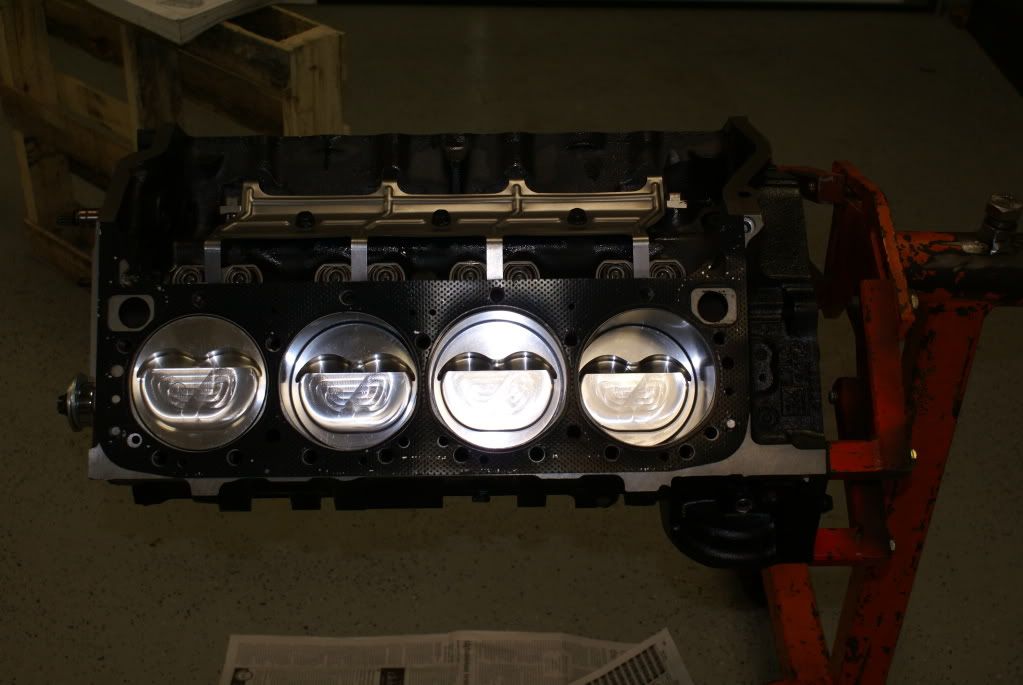
If the same stock gasket is good for a hole that's 4.000 and a hole that's 4.030, then when used on the 4.000 hole there is extra deck within the interior circumference of the gasket, between the head and the deck.
Some discuss the effects of the size of the volume between the top of the upper compression ring and the top of the piston, between the piston wall and cylinder bore (sort of a dead volume that doesn't burn much). Others discuss quench distance, which is between the top of the piston and portions of the cylinder head. Each of these are tiny volumes, the quench having a profound impact on detonation / knock resistance. The amount of deck that's within the inner circumference of the gasket should be ignored no less than the dead volume and the quench distance. It seems likely that some really serious engine builder somewhere would optimize or eliminate it. If I could, I'd make the i.d. of the big hole in the gasket to be less than 0.005" larger than the cyl bore, maybe 0.002. I meticulously grind sharp edges out of the chambers, around the seats & even the plug threads, and after all those details, considering other factors like gasket diameter are a heck of a lot easier than putting a seat at the right place on the valve & getting everything else right !!
If the same stock gasket is good for a hole that's 4.000 and a hole that's 4.030, then when used on the 4.000 hole there is extra deck within the interior circumference of the gasket, between the head and the deck.
Some discuss the effects of the size of the volume between the top of the upper compression ring and the top of the piston, between the piston wall and cylinder bore (sort of a dead volume that doesn't burn much). Others discuss quench distance, which is between the top of the piston and portions of the cylinder head. Each of these are tiny volumes, the quench having a profound impact on detonation / knock resistance. The amount of deck that's within the inner circumference of the gasket should be ignored no less than the dead volume and the quench distance. It seems likely that some really serious engine builder somewhere would optimize or eliminate it. If I could, I'd make the i.d. of the big hole in the gasket to be less than 0.005" larger than the cyl bore, maybe 0.002. I meticulously grind sharp edges out of the chambers, around the seats & even the plug threads, and after all those details, considering other factors like gasket diameter are a heck of a lot easier than putting a seat at the right place on the valve & getting everything else right !!
Last edited by ChrisWhewell; Apr 25, 2012 at 12:10 AM.



