



VATS help please.
Thread Starter
Instructor


Joined: Dec 2009
Posts: 212
Likes: 2
From: El Paso Texas
 VATS help please.
I have used the search function and found some good info, but I still have some questions so im hoping I can get some help here.
My car is an automatic 92. I get the usual no start, no click of the starter symptoms of VATS at random times, but it does tend to happen after long drives. I then have to wait at least an hour for the car to start.
I have already had the ecm portion of vats tuned out, but it didnt solve the problem. I know that the next step is to bypass the starter interrupt relay. However, I could not find information as to which wires had to be joined together on a 92. So what I did was replace the relay.
After I did that, the car worked fine all week to and from work. However, that weekend VATS left me down again.
So my questions are:
1. In order to completely bypass Vats on a 92, does one just need to get vats tuned out and bypass the starter interrupt relay? Or is there another step.?
2. On a 92, is the starter interrupt relay the one located directly to the left of the steering column?
3. If so, on a 92, what are the colors of the wires that must be joined together?
4. With the symptoms I described, and knowing that vats has been tuned out and I replaced the starter interrupt relay, does this lead you to believe that the ignition lock cylinder is at fault, or maybe the neutral safety switch? (My transmission was replaced recently)
Thank you for any and all help. I would really appreciate it.
My car is an automatic 92. I get the usual no start, no click of the starter symptoms of VATS at random times, but it does tend to happen after long drives. I then have to wait at least an hour for the car to start.
I have already had the ecm portion of vats tuned out, but it didnt solve the problem. I know that the next step is to bypass the starter interrupt relay. However, I could not find information as to which wires had to be joined together on a 92. So what I did was replace the relay.
After I did that, the car worked fine all week to and from work. However, that weekend VATS left me down again.
So my questions are:
1. In order to completely bypass Vats on a 92, does one just need to get vats tuned out and bypass the starter interrupt relay? Or is there another step.?
2. On a 92, is the starter interrupt relay the one located directly to the left of the steering column?
3. If so, on a 92, what are the colors of the wires that must be joined together?
4. With the symptoms I described, and knowing that vats has been tuned out and I replaced the starter interrupt relay, does this lead you to believe that the ignition lock cylinder is at fault, or maybe the neutral safety switch? (My transmission was replaced recently)
Thank you for any and all help. I would really appreciate it.
Safety Car


Joined: Apr 2011
Posts: 3,660
Likes: 22
If VATS has been deleted from the ECM...its done. Key or whatever isn't the problem. To be certain the delete was complete you can bypass the enable relay. Get the FSM out to see the drawings and what to jumper.
There are LOTS of other thinsg that dio this besides VATS. The most misunderstood piece of automotive technology since PCV.
A faulty starter solenoid that gets hot and cannot make clean contact WILL do this. A multitude of corroded or dirty connections in ANY ignition circuit WILL do this. Bet it happens more often after a good rain too? Heat, humidity work together to create increased resistance in contacts and increase or accellerate corrosion on contact surfaces.
Start by taking the battery cables OFF the starter and clean & tighten the connections there and to ground. Consider pulling the starter and solenoid. Solenoids get wet, hot and dirty and then hang.
Clean the harness grounds by the oil filter. Pull the fuses and clean. Get some electrical contact cleaner and douch the ignition switch on the column...BUT be damn sure its plastics safe ! NOT the key....the switch below. Thats an excellant place for this problem...the column switch where all the magic happens when the key is turned.
IF this were a VATS issue ( doubt it) it resets in somewhere between 4 to 15 minutes. If you try to start too soon it resets for up to 15 min again. So, if you sit for 20 and it still does not crank,. odds are that it is a heat related issue with the starter or a dirty connection somewhere. C4 wire harnesses are extremelty fragile and prone to failures of all kinds. The ECM manages by resistance values of the smallest amounts and yet the harness is installed with a wrap of black tape on multiple splices in the main trunk line. This was such an issue in the 80s that the DOT (or some fed agency) complained to GM about the minimum service life required by law for American made cars...specifically the harness quality and the insulations ability to survive the 10 yr min. I saw the report yrs ago. Cannot remember if it was a service bulletin or just a 'notice' from the gov. It was regarding the poor quality of the Corvette wire harness though..
There are LOTS of other thinsg that dio this besides VATS. The most misunderstood piece of automotive technology since PCV.
A faulty starter solenoid that gets hot and cannot make clean contact WILL do this. A multitude of corroded or dirty connections in ANY ignition circuit WILL do this. Bet it happens more often after a good rain too? Heat, humidity work together to create increased resistance in contacts and increase or accellerate corrosion on contact surfaces.
Start by taking the battery cables OFF the starter and clean & tighten the connections there and to ground. Consider pulling the starter and solenoid. Solenoids get wet, hot and dirty and then hang.
Clean the harness grounds by the oil filter. Pull the fuses and clean. Get some electrical contact cleaner and douch the ignition switch on the column...BUT be damn sure its plastics safe ! NOT the key....the switch below. Thats an excellant place for this problem...the column switch where all the magic happens when the key is turned.
IF this were a VATS issue ( doubt it) it resets in somewhere between 4 to 15 minutes. If you try to start too soon it resets for up to 15 min again. So, if you sit for 20 and it still does not crank,. odds are that it is a heat related issue with the starter or a dirty connection somewhere. C4 wire harnesses are extremelty fragile and prone to failures of all kinds. The ECM manages by resistance values of the smallest amounts and yet the harness is installed with a wrap of black tape on multiple splices in the main trunk line. This was such an issue in the 80s that the DOT (or some fed agency) complained to GM about the minimum service life required by law for American made cars...specifically the harness quality and the insulations ability to survive the 10 yr min. I saw the report yrs ago. Cannot remember if it was a service bulletin or just a 'notice' from the gov. It was regarding the poor quality of the Corvette wire harness though..

Melting Slicks

Joined: Aug 1999
Posts: 2,240
Likes: 42
From: Baltimore, MD USA
The Starter Enable relay has 4 wires going to it.
Two are Yellow which is 12 volts from the ignition switch when
the switch is in Start. One Yellow wire goes to the normally open relay
contact. The other Yellow wire provides 12 volts for the primary of
the relay coil.
Yellow/Black wire is the relay output contact and goes to the
Transmission position switch.
When the transmission is in Park or Neutral, 12 volts passes thru the switch
and out of the switch via a Purple wire which goes to the starter solenoid.
To bypass the relay.
Remove the relay from its socket.
Use a piece of wire or paper clip and insert it into the relay
socket from either of the Yellow wires to the Yellow/Black wire.
The Black/Yellow wire is the wire the CCM grounds to enable the relay.


Two are Yellow which is 12 volts from the ignition switch when
the switch is in Start. One Yellow wire goes to the normally open relay
contact. The other Yellow wire provides 12 volts for the primary of
the relay coil.
Yellow/Black wire is the relay output contact and goes to the
Transmission position switch.
When the transmission is in Park or Neutral, 12 volts passes thru the switch
and out of the switch via a Purple wire which goes to the starter solenoid.
To bypass the relay.
Remove the relay from its socket.
Use a piece of wire or paper clip and insert it into the relay
socket from either of the Yellow wires to the Yellow/Black wire.
The Black/Yellow wire is the wire the CCM grounds to enable the relay.

Race Director

Joined: Apr 2004
Posts: 17,066
Likes: 3
From: Milpitas ca
Make a spare key. Everyone needs one.
Years ago I would have a no start when the engine got hot. I began parking in shade and under trees to cool down engine faster and that helped a lot. I replaced the ECM and the problem went away immediately and never returned. I think the problem is the ECM. Switched it out with another 92/93 owner to check. If it is the ECM another problem would arise as the 92/93 ECM's are hard to locate.
Years ago I would have a no start when the engine got hot. I began parking in shade and under trees to cool down engine faster and that helped a lot. I replaced the ECM and the problem went away immediately and never returned. I think the problem is the ECM. Switched it out with another 92/93 owner to check. If it is the ECM another problem would arise as the 92/93 ECM's are hard to locate.
Thread Starter
Instructor
Joined: Dec 2009
Posts: 212
Likes: 2
From: El Paso Texas
Thank you guys for all the help, I really appreciate it. 
I dont think its my starter, since its actually really new, my original failed not too long ago, and I had to replace it.
If its not vats, then I do believe it could be the ignition switch, or probably even a contact somewhere like you said.
To bypass the relay, could I, instead of using the paper clip method, join the two wires together?
If I do it your way, I leave the relay off, correct.
Also, as far as the spare key goes, since vats has been tuned out of the ecm, I dont need a key with a pellet right?
I dont think its my starter, since its actually really new, my original failed not too long ago, and I had to replace it.
If its not vats, then I do believe it could be the ignition switch, or probably even a contact somewhere like you said.
To bypass the relay, could I, instead of using the paper clip method, join the two wires together?
If I do it your way, I leave the relay off, correct.
Also, as far as the spare key goes, since vats has been tuned out of the ecm, I dont need a key with a pellet right?
Last edited by F.G.; May 25, 2012 at 11:45 PM.
Melting Slicks
Joined: Aug 1999
Posts: 2,240
Likes: 42
From: Baltimore, MD USA
can be eliminated by connecting the relay input and output
wires together.
You can leave the relay in or take it out it makes no difference
as long as you connect either of the two Yellow wires to the Yellow/Black
wire.
How you connect the wires together is your choice. You can
solder the wires together, or remove the relay and push a wire the
same gauge or larger as the wires you're shorting together into the relay socket. Using this method you don't hack up the wiring.
needed. The Key cylinder or key pellet can not be the problem.
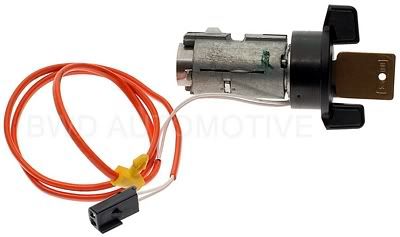
To verify Vats has been removed, disconnect the small two pin connector at the base of the steering column. That''s the two wires from the key cylinder. Unplug the two pin connector.
If the engine cranks Vats has been turned off. If it doesn't crank, Vats was not disabled.
When Vats is enabled, when you insert the key and turn the ignition On
the Security light in the dash cluster should be out. If it's on, the
Starter Enable relay is disabled and the starter won't crank the engine.
You have to wait at least 4 minutes before you try again.
The transmission switch is located around the shifter area.
There would be no reason if they removed the transmission
to disturb that area.
Did you have this problem before the transmission was worked on?
Purchase a volt meter. When the problem occurs you should be
able to follow the 12 volts for the starter circuit and find out
where the problem is.
Here's a picture of the key cylinder and what the wiring harness
looks like.
Last edited by Hooked on Vettes; May 26, 2012 at 06:21 AM.
Corvette Stories
The Best of Corvette for Corvette Enthusiasts

Top 10 Most Expensive Corvettes Ever Sold on Bring A Trailer
Brett Foote
10 Things Every Corvette Owner Needs (2026 Edition)
Michael S. Palmer
8 Most "Only Corvette Owners Understand" Quirks and Problems
Pouria Savadkouei
10 Reasons the C6 Z06 is Still A Performance Benchmark After 20 Years
Joe Kucinski
How Much Horsepower Every Corvette Engine "LOST" in 1972
Joe Kucinski
Top 10 DOs and DON'Ts for Protecting Your Convertible Top!
Michael S. Palmer
Top 10 Most Explosive Corvettes Ever Made: Power-to-Weight Ratio Ranked!
Joe Kucinski
150 hp to 1,250 hp: Every Corvette Generation Compared by the Specs That Matter
Joe Kucinski
8 Coolest Corvette Pace Cars (and Replicas) of All Time
Verdad Gallardo
Thread Starter
Instructor
Joined: Dec 2009
Posts: 212
Likes: 2
From: El Paso Texas
Thank you a lot, this is very helpful.
I will bypass the starter relay tomorrow.
Also, this happened only once before the transmission was worked on, but it did start after a few minutes.
I will bypass the starter relay tomorrow.
Also, this happened only once before the transmission was worked on, but it did start after a few minutes.


Thread Starter
Instructor
Joined: Dec 2009
Posts: 212
Likes: 2
From: El Paso Texas
Alright guys, im looking at the relays that are under my dash right now, and the relay in the middle is the one with the yellow and black/yellow wires, not the one thats closest to the steering column. So is the middle one the one i need to bypass?
Melting Slicks
Joined: Aug 1999
Posts: 2,240
Likes: 42
From: Baltimore, MD USA
Go by the color of the wires that go to the relay socket.
Should be 2 Yellow wires, 1 Yellow/Black wire and 1 Black/Yellow
wire.
Those relay sockets slide off of the mounting bracket and
can be moved to different positions.

Melting Slicks
Joined: Aug 1999
Posts: 2,240
Likes: 42
From: Baltimore, MD USA
The two red arrows point to what looks like two Yellow wires with a Black dot?
How many Large Yellow wires are there total?

Two of the large Yellow wires should already be connected together.
You would connect the large Yellow/Black wire to either of the
other two large Yellow wires.
The small Black/Yellow wire is what the CCM grounds to enable
the relay. You don't need to touch that wire.
Go look at the wires again.
How many Large Yellow wires are there total?
You would connect the large Yellow/Black wire to either of the
other two large Yellow wires.
The small Black/Yellow wire is what the CCM grounds to enable
the relay. You don't need to touch that wire.
Go look at the wires again.
Last edited by Hooked on Vettes; May 26, 2012 at 07:30 PM.

Melting Slicks
Joined: Aug 1999
Posts: 2,240
Likes: 42
From: Baltimore, MD USA
Did you disconnect the two pin connector for the ignition key
cylinder and verify the engine will crank with out reading
the key pellet?
Does the Security light stay on if you turn the ignition On.
Since the Starter has been replaced recently (disconnect the negative battery cable)
jack the car up and verify the Purple wire at the Starter solenoid and the cable from
the Battery for the Starter motor are tight.
.
cylinder and verify the engine will crank with out reading
the key pellet?
Does the Security light stay on if you turn the ignition On.
Since the Starter has been replaced recently (disconnect the negative battery cable)
jack the car up and verify the Purple wire at the Starter solenoid and the cable from
the Battery for the Starter motor are tight.
.
Last edited by Hooked on Vettes; May 26, 2012 at 08:17 PM.