


 Very good advice but being proactive and asking questions beforehand is always good.
1990 Corvette Engine Freshen Up
Thread Starter
Racer


Joined: Mar 2011
Posts: 304
Likes: 0
From: Victoria Australia
 1990 Corvette Engine Freshen Up
I finally bit the bullet and decided to resolve the infamous L98 head gasket issue on the piston 7 and 8 area. I have enlisted a workshop whom I have every confidence in to carry out the work correctly (They resolved a cam timing issue on my quad cam Ford V8). I am well aware of my mechanical abilities and this is beyond me. This is my first experience with a small block Chevy and hoping what I hear about this engine being tough as nails and easy to work on is true.
Here is what the car is doing. No over heating on either short runs or long runs or even accelerating hard, no oil dilution with coolant in either the oil or radiator. My issue is the coolant is unable to return when its cold as small amount exhaust gases are going into the coolant. This is confirmed with bubbles present from a cold start when I take the cap off the surge tank.
My shop will do a thorough test on compression and leak down to confirm the head gasket before pulling the heads off. My gut feel is that the operation will require a very light surface skim of the head (as well as pressure testing) and new head gaskets. Perhaps new valve steam seals if found to be faulty. I do see some smoke just on start up after the car has been in storage for a month.
My car has done approximately 43k miles so not expecting new valves or springs and certainly do not expect the bottom end/pistons to be worn. I have a full head gasket kit with every conceivable seal to do the job as well as a new water pump, bottom hose and new plugs.
Have researched various topics and one I have noted is the dimpling of the back of the block so the silicon has something to grab when the intake manifold is installed to ensure no leaks. Is there any other tips I should note and maybe relay to my shop?
Wish me luck, hoping it comes back all nice and ready to fight another day.
Here is what the car is doing. No over heating on either short runs or long runs or even accelerating hard, no oil dilution with coolant in either the oil or radiator. My issue is the coolant is unable to return when its cold as small amount exhaust gases are going into the coolant. This is confirmed with bubbles present from a cold start when I take the cap off the surge tank.
My shop will do a thorough test on compression and leak down to confirm the head gasket before pulling the heads off. My gut feel is that the operation will require a very light surface skim of the head (as well as pressure testing) and new head gaskets. Perhaps new valve steam seals if found to be faulty. I do see some smoke just on start up after the car has been in storage for a month.
My car has done approximately 43k miles so not expecting new valves or springs and certainly do not expect the bottom end/pistons to be worn. I have a full head gasket kit with every conceivable seal to do the job as well as a new water pump, bottom hose and new plugs.
Have researched various topics and one I have noted is the dimpling of the back of the block so the silicon has something to grab when the intake manifold is installed to ensure no leaks. Is there any other tips I should note and maybe relay to my shop?
Wish me luck, hoping it comes back all nice and ready to fight another day.
Last edited by XR_Strider_GuY; Jun 3, 2012 at 10:15 AM.

Le Mans Master


Joined: Oct 2008
Posts: 9,758
Likes: 49
From: Houston Texas
My advise if you trust the shop like you said.. just let them do their thing. If someone who didn't know anything about building an engine came to me with what john doe told me on the inter-web I would be tempted to charge them the good old " This guy is going to be a pain in the a$$" shop fee. Its just a SBC let them do their job. 

Pro


Joined: Oct 2011
Posts: 703
Likes: 76
From: leesburg fl
St. Jude Donor '12
I have seen a post on this forum in the past about the head gasket on the L98. Is this a problem on all L98 because I have a 90 with 32000 miles on it. This may be something for me to budget starting now. Before the head gasket goes out. Maybe it would be good to do the repair before it goes?

Burning Brakes

Joined: Jun 2008
Posts: 892
Likes: 1
From: New Smyrna Beach Florida
I have seen a post on this forum in the past about the head gasket on the L98. Is this a problem on all L98 because I have a 90 with 32000 miles on it. This may be something for me to budget starting now. Before the head gasket goes out. Maybe it would be good to do the repair before it goes?

Team Owner


Joined: Dec 2000
Posts: 21,094
Likes: 282
From: Phila., PA burbs
I have seen a post on this forum in the past about the head gasket on the L98. Is this a problem on all L98 because I have a 90 with 32000 miles on it. This may be something for me to budget starting now. Before the head gasket goes out. Maybe it would be good to do the repair before it goes?

Thread Starter
Racer
Joined: Mar 2011
Posts: 304
Likes: 0
From: Victoria Australia
I have seen a post on this forum in the past about the head gasket on the L98. Is this a problem on all L98 because I have a 90 with 32000 miles on it. This may be something for me to budget starting now. Before the head gasket goes out. Maybe it would be good to do the repair before it goes?
The Red Arrow is in the shop as we speak. Had a nice drive albeit in morning traffic 50miles to the workshop this morning. I miss her already.
chaos,
You raise a good point, took your advice and did not mention it and will let them do their own thing.
Thread Starter
Racer
Joined: Mar 2011
Posts: 304
Likes: 0
From: Victoria Australia
Well some good news.
Heads have been crack and pressure tested and checkout all fine. A slight skim as predicted and new gaskets will be in place. New valve stem seals have also been installed.
Red arrow is getting put back together and should be ready I think by the end of the week hopefully.
Heads have been crack and pressure tested and checkout all fine. A slight skim as predicted and new gaskets will be in place. New valve stem seals have also been installed.
Red arrow is getting put back together and should be ready I think by the end of the week hopefully.
Corvette Stories
The Best of Corvette for Corvette Enthusiasts

Top 10 Most Expensive Corvettes Ever Sold on Bring A Trailer
Brett Foote
10 Things Every Corvette Owner Needs (2026 Edition)
Michael S. Palmer
8 Most "Only Corvette Owners Understand" Quirks and Problems
Pouria Savadkouei
10 Reasons the C6 Z06 is Still A Performance Benchmark After 20 Years
Joe Kucinski
How Much Horsepower Every Corvette Engine "LOST" in 1972
Joe Kucinski
Top 10 DOs and DON'Ts for Protecting Your Convertible Top!
Michael S. Palmer
Top 10 Most Explosive Corvettes Ever Made: Power-to-Weight Ratio Ranked!
Joe Kucinski
150 hp to 1,250 hp: Every Corvette Generation Compared by the Specs That Matter
Joe Kucinski
8 Coolest Corvette Pace Cars (and Replicas) of All Time
Verdad Gallardo
Le Mans Master
Joined: Oct 2008
Posts: 9,758
Likes: 49
From: Houston Texas
Well some good news.
Heads have been crack and pressure tested and checkout all fine. A slight skim as predicted and new gaskets will be in place. New valve stem seals have also been installed.
Red arrow is getting put back together and should be ready I think by the end of the week hopefully.
Heads have been crack and pressure tested and checkout all fine. A slight skim as predicted and new gaskets will be in place. New valve stem seals have also been installed.
Red arrow is getting put back together and should be ready I think by the end of the week hopefully.


Pro

Joined: Jun 2005
Posts: 583
Likes: 61
From: USA
since you're in Australia, is your steering wheel on the other side of the car? just wondering...
as an after thought along those lines, the intake manifold on my 91 L98 has provisions for coolant bleed-off on the right-rear side of the TPI base, which ties into the heater hoses on that side of the car.
i don't think the left side of the manifold has those provisions. if your steering, brakes, AC box are all flipped, then is that small hose still present?
as an after thought along those lines, the intake manifold on my 91 L98 has provisions for coolant bleed-off on the right-rear side of the TPI base, which ties into the heater hoses on that side of the car.
i don't think the left side of the manifold has those provisions. if your steering, brakes, AC box are all flipped, then is that small hose still present?

Racer
Joined: Dec 2003
Posts: 349
Likes: 0
From: Hong Kong
Can you send a picture of what you are referring to?
I'll have a look on my 91 RHD to see.
Cheers
I'll have a look on my 91 RHD to see.
Cheers
since you're in Australia, is your steering wheel on the other side of the car? just wondering...
as an after thought along those lines, the intake manifold on my 91 L98 has provisions for coolant bleed-off on the right-rear side of the TPI base, which ties into the heater hoses on that side of the car.
i don't think the left side of the manifold has those provisions. if your steering, brakes, AC box are all flipped, then is that small hose still present?
as an after thought along those lines, the intake manifold on my 91 L98 has provisions for coolant bleed-off on the right-rear side of the TPI base, which ties into the heater hoses on that side of the car.
i don't think the left side of the manifold has those provisions. if your steering, brakes, AC box are all flipped, then is that small hose still present?


Pro
Joined: Jun 2005
Posts: 583
Likes: 61
From: USA
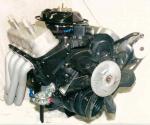
here's a couple of pics. sorry for the ****-poor focus on the 2nd pic, but it's the only pic i got of that specific area at this time. i'll see if i can grab another shot tomorrow...
the rear of the GM TPI manifold actually has provisions interconnecting the LH & RH rear cylinder head water outlets (4th pic). FWIW, the Edelbrock manifold duplicates this feature.


the rear of the GM TPI manifold actually has provisions interconnecting the LH & RH rear cylinder head water outlets (4th pic). FWIW, the Edelbrock manifold duplicates this feature.
Safety Car

Joined: Aug 2009
Posts: 3,752
Likes: 276
From: Melbourne, Victoria, Australia
Cast iron block and alloy heads, dissimilar metals = galvanic action and electrolysis.
My 85 iron block and iron heads with metal shim head gasket = reliability, she has done 141,000 miles and going strong.
I do remember my early work vehicles, when Ford began with putting alloy heads on cast iron blocks back in the late eighties and early nineties.
They were failing within warranty and the heads were corroded beyond repair even though corrosion inhibitors were used.
I did tell the mechanics they should insert sacrificial elements, as any mechanically minded person who understands what happens to dissimilar metals would think of.
(Hot water services have them so they can last the warranty period)
My 85 iron block and iron heads with metal shim head gasket = reliability,
she has done 141,000 miles and going strong.I do remember my early work vehicles, when Ford began with putting alloy heads on cast iron blocks back in the late eighties and early nineties.
They were failing within warranty and the heads were corroded beyond repair
even though corrosion inhibitors were used. I did tell the mechanics they should insert sacrificial elements, as any mechanically minded person who understands what happens to dissimilar metals would think of.
(Hot water services have them so they can last the warranty period)
Last edited by gerardvg; Jun 8, 2012 at 07:17 AM.
Thread Starter
Racer
Joined: Mar 2011
Posts: 304
Likes: 0
From: Victoria Australia
I got the kit from Pontiworld and I believe the gasket kit is from Felpro and was assured they are for the alloy headed engine.
rpoL98,
Yep the car is converted to right hand drive. Brake booster and heater box have been reversed. I will have to find some pics of my engine bay. Not sure which hose you are talking about. The engine and manifold as far as I know are left as per original left hand drive Corvettes.
gerardvg,
Yes I had an EF Falcon that blew a gasket at 210k. Nothing wrong with the heads but gasket gave up as I started to see coolant one day at the back of the block near the firewall. Interested to hear more about this sacrificial element and how do you put this in the cooling? Agree about this alloy head / iron block conundrum. I use to think alloy heads for V8's are the business, seems to make even a bullet proof small block V8 have an Achilles heal.
My heads are still at the machine shop. Since its public holidays the heads will not be back at the earliest next Tuesday. Not too worried as the car is in good hands.
Last edited by XR_Strider_GuY; Jun 8, 2012 at 07:30 AM.

Le Mans Master
Joined: May 2006
Posts: 7,708
Likes: 266
From: indy indiana
g-day. What most of us yanks do not realize ( they all know of the switched steering wheel) is that the SHIFTER is in the same place but one has to use the left hand to shift. That and making turns were the hardest part for me. That and I lept walking to the (ours) drivers side to get in and finding no streeing wheel.
Pro
Joined: Jun 2005
Posts: 583
Likes: 61
From: USA
the hose i'm referring to is the one that's coming of the 45* brass fitting screwed into the 1/8" NPT hole at the rear of the manifold, between the distributor hold down clamp and the EGR cross-over hole. there's a steel line coming out of that brass fitting. about a foot away, a rubber hose is hose-clamped to that steel line, which then goes into a steel T on the heater hose.
Thread Starter
Racer
Joined: Mar 2011
Posts: 304
Likes: 0
From: Victoria Australia
the hose i'm referring to is the one that's coming of the 45* brass fitting screwed into the 1/8" NPT hole at the rear of the manifold, between the distributor hold down clamp and the EGR cross-over hole. there's a steel line coming out of that brass fitting. about a foot away, a rubber hose is hose-clamped to that steel line, which then goes into a steel T on the heater hose.


Le Mans Master
Joined: Dec 2000
Posts: 7,839
Likes: 22
From: San Diego, Ca
I've posted about the issue extensively and GM's Bulletin (long since edited) addressing the issue with a redesign of the 113 head. Common on everything built using these heads, most were weeping towards the end of the warranty and enough of those claims were denied generating a lawsuit or two that were posted at the NTHSA web site when I first came across it over 10 years ago. The issue becomes really prominent around 50,000 miles when the gasket just finally gives it up.
Your biggest problem will be the condition of the block. The longer it weeps, the more it wears a groove in the deck and there's nothing that can be done about that (short of a new short block). That's probably why the problem continues to show up on these motors even though they've had the head gasket replaced.
GM's Bulletin alleges that the galvanic corrosion was set up by misalignment of the intake manifold gasket and the redesigned head simply provides a counterbore for intake gasket retainers. That's to maintain perfect alignment of the gasket during assembly. It was only used on the '91, though the design is on replacement heads which are used on the ZZ4 long block. '91's don't seem to appear around here with the problem quite as often, but they do show up from time to time.
My own opinion is that the intake manifold gasket - which uses Restrictors to keep coolant at the rear of the heads longer - simply keeps the crappy stuff sitting back there (once it becomes crappy and it doesn't take very long for that to happen once you start pumping exhaust in it). That's why they always blow out at #7. The F-Body, which doesn't use the Restrictors, doesn't seem to have high incidence of head gasket failures, but who knows. I know that GM has long since stopped designing much of anything that flows coolant through the intake though they had gasket failures on the 3.1's which caused them to suck oil and composite intakes which fracture and fall apart quite frequently.
Your biggest problem will be the condition of the block. The longer it weeps, the more it wears a groove in the deck and there's nothing that can be done about that (short of a new short block). That's probably why the problem continues to show up on these motors even though they've had the head gasket replaced.
GM's Bulletin alleges that the galvanic corrosion was set up by misalignment of the intake manifold gasket and the redesigned head simply provides a counterbore for intake gasket retainers. That's to maintain perfect alignment of the gasket during assembly. It was only used on the '91, though the design is on replacement heads which are used on the ZZ4 long block. '91's don't seem to appear around here with the problem quite as often, but they do show up from time to time.
My own opinion is that the intake manifold gasket - which uses Restrictors to keep coolant at the rear of the heads longer - simply keeps the crappy stuff sitting back there (once it becomes crappy and it doesn't take very long for that to happen once you start pumping exhaust in it). That's why they always blow out at #7. The F-Body, which doesn't use the Restrictors, doesn't seem to have high incidence of head gasket failures, but who knows. I know that GM has long since stopped designing much of anything that flows coolant through the intake though they had gasket failures on the 3.1's which caused them to suck oil and composite intakes which fracture and fall apart quite frequently.