Service Engine Soon Code 32


Thread Starter
Advanced

Joined: Aug 2012
Posts: 59
Likes: 0
From: Seattle WA
 Service Engine Soon Code 32
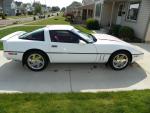
Been getting alot of awesome help lately on the forum for my new '93 vette. Latest issue, I was cruising home from work yesterday and the Service Engine light came on. Learned how to check the codes and a 32 popped out. When I restarted the engine, the light was gone, and driving in to work today it never came on. From my research on here it would appear that my EGR valve is stuck, and needs to be cleaned or replaced. Two questions...
First, I got a Service Manual on Ebay that is on the way, so is this something doable to a willing but fairly novice DIY? If so, how long would it likely take?
Secondly, I was planning on taking the new car across the state to Eastern Washington, about 600 miles round trip this weekend. Will doing this before fixing the EGR cause any trouble, or should it be fixed before any extended driving? Basically am I going to hurt anything driving with a faulty EGR?
On a side note, I did just pass emissions here in WA when I registered the car. As far as I can tell the valve helps control the emissions levels. Thought it was odd that this didn't caused some issues.
Also, wanted to note that when I take my foot off the gas in first or second after accelerating, I get some exhaust popping. Don't so much mind the sound, but I was wondering if these would be related and if it indicates something that would hurt the car? I know it could also be an exhaust leak, but I have yet to get dizzy or sick so I figure it probably isn't harming me.
Thanks,
Richard
First, I got a Service Manual on Ebay that is on the way, so is this something doable to a willing but fairly novice DIY? If so, how long would it likely take?
Secondly, I was planning on taking the new car across the state to Eastern Washington, about 600 miles round trip this weekend. Will doing this before fixing the EGR cause any trouble, or should it be fixed before any extended driving? Basically am I going to hurt anything driving with a faulty EGR?
On a side note, I did just pass emissions here in WA when I registered the car. As far as I can tell the valve helps control the emissions levels. Thought it was odd that this didn't caused some issues.
Also, wanted to note that when I take my foot off the gas in first or second after accelerating, I get some exhaust popping. Don't so much mind the sound, but I was wondering if these would be related and if it indicates something that would hurt the car? I know it could also be an exhaust leak, but I have yet to get dizzy or sick so I figure it probably isn't harming me.
Thanks,
Richard
Last edited by rjschwar; Aug 29, 2012 at 12:20 PM.

Melting Slicks


Joined: Jul 2005
Posts: 2,649
Likes: 863
Typically exhaust "popping" on decel means air is leaking into the exhaust. It certainly could be a bad EGR gasket, or a bad EGR valve, a leak in the AIR plumbing on the exhaust system or a leak elsewhere in the exhaust system.
Cleaning the EGR isn't too terribly complicated. Remove it, clean with a wire brush, removing as much "crud" as possible. While it's off, check to see the diaphram isn't trashed with a small hand vacuum pump. You probably want to pick up a new EGR gasket before you start the job - sometimes they come off in reusable shape - sometimes they don't.
As for it's purpose in life - years ago - auto engineers found that one of the primary couses of NoX emissions was high peak flame temp - so someone had the idea to inject some echaust gas back into the engine which won't burn to lower the NoX emissions. EGR is not active except in high vacuum conditions, and with an LT motor - not until the car is warm and up to about 20 MPH. I disconnected the EGR valve on a track car and ran it that way for literally years until the motor came out for a few "upgrades". The LT4's didn't use EGR valves at all - they managed to squeak by with a slightly warmer cam that had just at tick more duration, and that helped dilute the new intake mixture at highway speeds. As long as you're not leaking vacuum - (and if you were - the Check Engine light wouldn't go out), I wouldnt worry about taking a road trip with the car, but If I were you - spend a few minutes EGR cleaning before you go on the trip.
Cleaning the EGR isn't too terribly complicated. Remove it, clean with a wire brush, removing as much "crud" as possible. While it's off, check to see the diaphram isn't trashed with a small hand vacuum pump. You probably want to pick up a new EGR gasket before you start the job - sometimes they come off in reusable shape - sometimes they don't.
As for it's purpose in life - years ago - auto engineers found that one of the primary couses of NoX emissions was high peak flame temp - so someone had the idea to inject some echaust gas back into the engine which won't burn to lower the NoX emissions. EGR is not active except in high vacuum conditions, and with an LT motor - not until the car is warm and up to about 20 MPH. I disconnected the EGR valve on a track car and ran it that way for literally years until the motor came out for a few "upgrades". The LT4's didn't use EGR valves at all - they managed to squeak by with a slightly warmer cam that had just at tick more duration, and that helped dilute the new intake mixture at highway speeds. As long as you're not leaking vacuum - (and if you were - the Check Engine light wouldn't go out), I wouldnt worry about taking a road trip with the car, but If I were you - spend a few minutes EGR cleaning before you go on the trip.

Intermediate
Joined: Jun 2010
Posts: 32
Likes: 1
From: Temperance MI
Purple -
I am also having EGR (code 32) errors in my '91. I have replaced the EGR valve and solenoid. I went to Carlisle a couple weeks ago and one of the mechanics suggested replacing the MAP sensor (grasping at straws). None of the above has corrected the problem. According to the mechanic at Carlise, the computer doesn't look at EGR unless the car is at highway speeds - thus, no error with in-town driving. I have not had any engine problems with the lite on or off- engine runs smooth as silk. I am open to any ideas or suggestions. - Thanks!
I am also having EGR (code 32) errors in my '91. I have replaced the EGR valve and solenoid. I went to Carlisle a couple weeks ago and one of the mechanics suggested replacing the MAP sensor (grasping at straws). None of the above has corrected the problem. According to the mechanic at Carlise, the computer doesn't look at EGR unless the car is at highway speeds - thus, no error with in-town driving. I have not had any engine problems with the lite on or off- engine runs smooth as silk. I am open to any ideas or suggestions. - Thanks!

Race Director


Joined: Apr 2002
Posts: 10,036
Likes: 346
From: Anaheim CA
Error code 32 is an EGR SYSTEM error. I capitalized SYSTEM because everything has to be working or you'll get the error code. That includes the vacuum lines, EGR solenoid, EGR valve and the EGR "sensor".
The ECM commands EGR by applying a ground to the EGR solenoid. You need to have 12 volts at the solenoid for it to work. Also the wiring must be good. The EGR solenoid applies vacuum to the EGR valve, so the vacuum lines must be hooked up and not split, broken, etc. The EGR valve opens and applies exhaust gases to the intake manifold. The EGR valve can become frozen by carbon and the vacuum diaphragm can leak. There are two ways that the system lets the ECM know that it is working, depending on the year. Early c4s have an EGR tube from the passenger side exhaust manifold to the intake manifold. There is a temperature switch mounted in that tube. If the switch does not close when the ECM commands EGR it will set error code 32. On later cars with speed density systems, the ECM monitors the MAP sensor for a change in manifold pressure to determine that the EGR valve opened.
You need to look at ALL the pieces of the system to find out what is not working.
The ECM commands EGR by applying a ground to the EGR solenoid. You need to have 12 volts at the solenoid for it to work. Also the wiring must be good. The EGR solenoid applies vacuum to the EGR valve, so the vacuum lines must be hooked up and not split, broken, etc. The EGR valve opens and applies exhaust gases to the intake manifold. The EGR valve can become frozen by carbon and the vacuum diaphragm can leak. There are two ways that the system lets the ECM know that it is working, depending on the year. Early c4s have an EGR tube from the passenger side exhaust manifold to the intake manifold. There is a temperature switch mounted in that tube. If the switch does not close when the ECM commands EGR it will set error code 32. On later cars with speed density systems, the ECM monitors the MAP sensor for a change in manifold pressure to determine that the EGR valve opened.
You need to look at ALL the pieces of the system to find out what is not working.