





Flexplate Conversion 153 to 168 tooth ???

Thread Starter
Racer


Joined: Nov 2008
Posts: 321
Likes: 2
From: Auburndale FL
 Flexplate Conversion 153 to 168 tooth ???
Encountered a problem with my engine rebuild, my new flexplate is 168 tooth which is what was ordered. It seems though my original flex plate is 153 tooth, so can one simply replace the starter with a staggered bolt configuration and move on or do I need to go figure out how to get a new flexplate balanced to work with my new motor?
Engine is an 87 L98 with a new 383 rotating assembly, heads etc. Thanks in advance for any insight on the best way to rectify this problem.
Engine is an 87 L98 with a new 383 rotating assembly, heads etc. Thanks in advance for any insight on the best way to rectify this problem.

Team Owner


Joined: Sep 2003
Posts: 25,389
Likes: 2,741
I would think you could use a "quality" Hitachi style mini-starter. Most of those are capable of being used on 153 and 168 tooth flywheels. I'm not familiar with the various header options and don't know if that creates an issue or NOT. I would think a full size offset mount would certainly interfere!
Safety Car


Joined: Aug 2009
Posts: 3,751
Likes: 276
From: Melbourne, Victoria, Australia

They come with 4 bolt holes so will fit small or large ring gears, i needed the extra clearance from the long tube headers. The only side affect is the small starters are a bit noisier due to the gear reduction.


Team Owner


Joined: Sep 2003
Posts: 20,179
Likes: 673
From: Freedom is never more than one generation away from extinction.
St. Jude '03 thru '24

Le Mans Master

Joined: May 2004
Posts: 5,866
Likes: 60
From: Hellinois
Finalist 2020 C4 of the Year - Modified
I'm using the chevy 400 engine flexplate on my 383 for the external balance. I am running a ministarter for the 168 tooth flexplate. Here's a problem you will encounter, the Corvette trans case is slightly different where the dust cover bolts on so a bigger dust cover will not work and your original will not fit with the bigger flexplate, it will rub. I took my dust cover and sat it on top of a vise with the jaws open a couple inches. I then formed a rounded bulge with a ball peen hammer so it will clear the flexplate. Work slow, a soft aluminum dust cover can be "modified" very quickly with a ball peen. I just formed a raised area from side to side and although it may not be pretty it is not seen and does it's job well. Or, you can bolt it on, fire up the engine and in a matter of minutes, the flexplate will make it's own slot in the cover for clearance.  Just kidding.
Just kidding.
Team Owner
Joined: Sep 2003
Posts: 25,389
Likes: 2,741
This most recent post brought to mind something I believe a friend years ago did to solve the situation. Haven't thought about one since then. Is the flex-plate used for your initial build a 400 - 168 tooth "not-modified"? There's plates for both early 2 pc rear mains and the image below for 1 pc rear main.
A balancing plate:
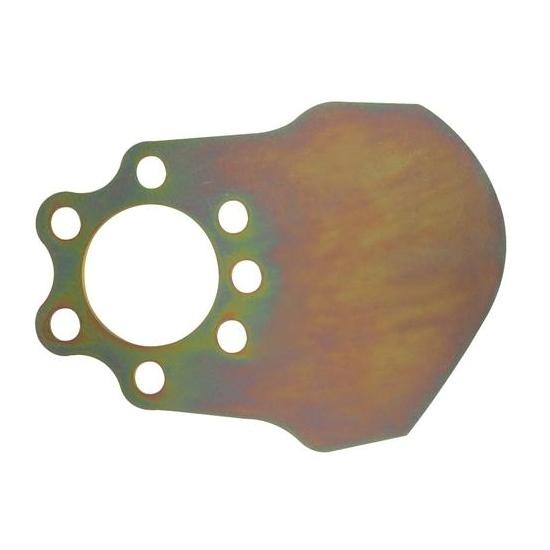
A link to it:
http://www.speedwaymotors.com/1986-9...ate,18271.html
A balancing plate:
A link to it:
http://www.speedwaymotors.com/1986-9...ate,18271.html
Last edited by WVZR-1; Dec 26, 2012 at 10:11 AM.
Le Mans Master
Joined: May 2004
Posts: 5,866
Likes: 60
From: Hellinois
Finalist 2020 C4 of the Year - Modified
That item could have saved me some money and time if I could have just remembered they existed. I had read about them some time back when I was still drag racing, (70's) and just forgot about them. This a great idea for an external balanced engine in a Vette just because of the clearance problem I mentioned above.
Corvette Stories
The Best of Corvette for Corvette Enthusiasts

10 Reasons the C6 Z06 is Still A Performance Benchmark After 20 Years
Joe Kucinski
How Much Horsepower Every Corvette Engine "LOST" in 1972
Joe Kucinski
Top 10 DOs and DON'Ts for Protecting Your Convertible Top!
Michael S. Palmer
Top 10 Most Explosive Corvettes Ever Made: Power-to-Weight Ratio Ranked!
Joe Kucinski
150 hp to 1,250 hp: Every Corvette Generation Compared by the Specs That Matter
Joe Kucinski
8 Coolest Corvette Pace Cars (and Replicas) of All Time
Verdad Gallardo
Top 10 Corvette Engines RANKED by Peak Torque (70+ Years of Muscle!)
Joe Kucinski
Corvette ZR1X Will Be Pacing the Indy 500, And Could Probably Race, Too!
Verdad Gallardo
Top 10 Corvettes Coming to Mecum Indy 2026!
Brett Foote
Team Owner
Joined: Sep 2003
Posts: 25,389
Likes: 2,741
That item could have saved me some money and time if I could have just remembered they existed. I had read about them some time back when I was still drag racing, (70's) and just forgot about them. This a great idea for an external balanced engine in a Vette just because of the clearance problem I mentioned above.
Thread Starter
Racer
Joined: Nov 2008
Posts: 321
Likes: 2
From: Auburndale FL
I just ordered a starter yesterday, so my next question was going to be about the dust cover and if it would still fit. I guess I am going to be using a little persuasion in the form of a ballpean hammer.
I like the posted link to the add-on weight above but I am concerned being a shade tree type mechanic that my new flex-plate was balanced with my crank as part of the 383 rotating assembly I bought. So I am not sure what the potential impact or problems would be with going a different route and not using that flex plate.
As for dust covers, would one off of a different car work? Maybe a Caprice or something like that? Just a crazy thought.....
I like the posted link to the add-on weight above but I am concerned being a shade tree type mechanic that my new flex-plate was balanced with my crank as part of the 383 rotating assembly I bought. So I am not sure what the potential impact or problems would be with going a different route and not using that flex plate.
As for dust covers, would one off of a different car work? Maybe a Caprice or something like that? Just a crazy thought.....
Le Mans Master
Joined: May 2004
Posts: 5,866
Likes: 60
From: Hellinois
Finalist 2020 C4 of the Year - Modified
You're doing the right thing using the flexplate that was included with the rest of the balanced assembly. No, there is no other option as to dust covers, like I said, the Corvette case is made differently so the others won't fit but I can't remember now just what the problem was. I believe the mounting holes closest to the block were in a different spot and the contour of the case does not match any dust cover other than the Vette one.
Like I said, just work slow and it will take no time to get a raised area for clearance. It will have to be about 3/16 to 1/4 inch high to clear the flexplate.
If anyone else does know of an alternative dust cover I'd like to know about it myself.
Like I said, just work slow and it will take no time to get a raised area for clearance. It will have to be about 3/16 to 1/4 inch high to clear the flexplate.
If anyone else does know of an alternative dust cover I'd like to know about it myself.
Last edited by Midnight 85; Dec 27, 2012 at 08:56 AM.
Team Owner
Joined: Sep 2003
Posts: 25,389
Likes: 2,741
There either is a very large weight on the flex-plate or there isn't! That's pretty much it. A visual inspection should answer the question. Ask the builder if there's doubt. A direct fit cover is not an option that I'm aware of.
Experienced builders should NOT tamper with an externally balanced flex-plate/flywheel do to the possible requirement of a replacement being required down the road. My thoughts anyway! A call to the builder again would answer that.
Experienced builders should NOT tamper with an externally balanced flex-plate/flywheel do to the possible requirement of a replacement being required down the road. My thoughts anyway! A call to the builder again would answer that.
Last edited by WVZR-1; Dec 27, 2012 at 09:11 AM.
Team Owner
Joined: Sep 2003
Posts: 25,389
Likes: 2,741
Let me ask a silly question here. If the OP's build is on an '87 1 piece RMS then it's already externally balanced and the original should suffice. Yes/No?
A GMPP 383 calls for a 14088765 F/P in the build specs. That's the same as any '86+ 1 piece RMS.
If there was any reason for concern couldn't you just have the two flex-plates compared for match balance?
A GMPP 383 calls for a 14088765 F/P in the build specs. That's the same as any '86+ 1 piece RMS.
If there was any reason for concern couldn't you just have the two flex-plates compared for match balance?
Team Owner
Joined: Sep 2003
Posts: 25,389
Likes: 2,741
An early 2 piece rear main has a different mounting pattern to the crank. Since '86 1 piece RMS all flywheel/flex-plate SBC have been externally balanced. The OP mentions '87 but never actually stated "factually" that it was done on his '87 block! I'm just a bit confused!
OP should respond with an answer I'd think!
Team Owner
Joined: Sep 2003
Posts: 20,179
Likes: 673
From: Freedom is never more than one generation away from extinction.
St. Jude '03 thru '24
Or is the mechanical advantage of the larger gear your objective?
Seems to me the ECM doesn't start delivering fuel/spark until the engine reaches a specific RPM. Like 400-600...
Using the larger gear may cause for longer start cycles.
If that will even matter ......


Team Owner
Joined: Sep 2003
Posts: 25,389
Likes: 2,741
Why not take your brand new, unused flex plate to a local trans shop and swap them for a 153 and be done with it?
Or is the mechanical advantage of the larger gear your objective?
Seems to me the ECM doesn't start delivering fuel/spark until the engine reaches a specific RPM. Like 400-600...
Using the larger gear may cause for longer start cycles.
If that will even matter ......
Or is the mechanical advantage of the larger gear your objective?
Seems to me the ECM doesn't start delivering fuel/spark until the engine reaches a specific RPM. Like 400-600...
Using the larger gear may cause for longer start cycles.
If that will even matter ......
Thread Starter
Racer
Joined: Nov 2008
Posts: 321
Likes: 2
From: Auburndale FL
Hey all, sorry been a busy couple of days.
Thanks again for all the discussion.
I ordered the 383 rotating assembly with the flexplate. When I was researching for my order the first thread I found stated "87 vettes came factory with 168 tooth flex plates". So I stopped my research there and ordered the flex plate with my assembly, I was very surprised when I put the flex plate on the other day and discovered it was not the same as what came off my car.
So I started researching and asking questions, needless to say I found a bunch of other threads which all state 153 tooth flex plate for 87 vette.
This is how I ended up asking about the flex plate. The block is my original L98 2 bolt main block, my "new flex plate" does have a large weight attached to it, and yes I do have my original flex plate lying in the garage. But as I stated previously I didn't think I could just use it since the rotating assembly was balanced with the larger flex plate.
My new starter will arrive tomorrow and with luck the motor will be back in the car by the end of day tomorrow.
Thanks again....
Thanks again for all the discussion.
I ordered the 383 rotating assembly with the flexplate. When I was researching for my order the first thread I found stated "87 vettes came factory with 168 tooth flex plates". So I stopped my research there and ordered the flex plate with my assembly, I was very surprised when I put the flex plate on the other day and discovered it was not the same as what came off my car.
So I started researching and asking questions, needless to say I found a bunch of other threads which all state 153 tooth flex plate for 87 vette.
This is how I ended up asking about the flex plate. The block is my original L98 2 bolt main block, my "new flex plate" does have a large weight attached to it, and yes I do have my original flex plate lying in the garage. But as I stated previously I didn't think I could just use it since the rotating assembly was balanced with the larger flex plate.
My new starter will arrive tomorrow and with luck the motor will be back in the car by the end of day tomorrow.
Thanks again....
Team Owner
Joined: Sep 2003
Posts: 25,389
Likes: 2,741
Hey all, sorry been a busy couple of days.
Thanks again for all the discussion.
I ordered the 383 rotating assembly with the flexplate. When I was researching for my order the first thread I found stated "87 vettes came factory with 168 tooth flex plates". So I stopped my research there and ordered the flex plate with my assembly, I was very surprised when I put the flex plate on the other day and discovered it was not the same as what came off my car.
So I started researching and asking questions, needless to say I found a bunch of other threads which all state 153 tooth flex plate for 87 vette.
This is how I ended up asking about the flex plate. The block is my original L98 2 bolt main block, my "new flex plate" does have a large weight attached to it, and yes I do have my original flex plate lying in the garage. But as I stated previously I didn't think I could just use it since the rotating assembly was balanced with the larger flex plate.
My new starter will arrive tomorrow and with luck the motor will be back in the car by the end of day tomorrow.
Thanks again....
Thanks again for all the discussion.
I ordered the 383 rotating assembly with the flexplate. When I was researching for my order the first thread I found stated "87 vettes came factory with 168 tooth flex plates". So I stopped my research there and ordered the flex plate with my assembly, I was very surprised when I put the flex plate on the other day and discovered it was not the same as what came off my car.
So I started researching and asking questions, needless to say I found a bunch of other threads which all state 153 tooth flex plate for 87 vette.
This is how I ended up asking about the flex plate. The block is my original L98 2 bolt main block, my "new flex plate" does have a large weight attached to it, and yes I do have my original flex plate lying in the garage. But as I stated previously I didn't think I could just use it since the rotating assembly was balanced with the larger flex plate.
My new starter will arrive tomorrow and with luck the motor will be back in the car by the end of day tomorrow.
Thanks again....
Good-luck with the install there guy!
Last edited by WVZR-1; Dec 28, 2012 at 05:50 PM.