


Crankcase vent options/questions......

Thread Starter
Racer


Joined: Jan 2002
Posts: 337
Likes: 0
From: Southern California
 Crankcase vent options/questions......
Recently I noticed that my L98 throttle body (TB) and plenum had what appeared to be 'excessive' oil in them. I don't know all the technical details of the crankcase vent system but it appears that there's a passenger side valve cover (VC) vent connected to the TB, and a driver's side VC vent connected to the intake manifold (I/M) with an in-line PCV valve.
I don't like the idea of sucking/blowing oil from the valve covers into the intake system but I know that it has the benefit of relieving crankcase pressure and even providing a crankcase vacuum. I've even seen crankcase "evacuation systems" advertised wherin a V-belt driven vacuum pump creates a vacuum in the crankcase, supposedly to increase power, blah, blah, blah....
So I'm trying to weigh a few options and would like anyone's input who knows the technical details of the tradeoffs as follows:
Option 1) Leave everything alone. Yes some oil ends up in the intake system, but it provides a vacuum to the crankcase which helps the rings seal, reduces oil leaks, and increases power.
Option 2) Vent only the passenger side VC and plug the port on the TB. A compromise in which no oil ends up in the plenum or runners but the crankcase is still vented to the I/M. Probably provides less vacuum to the crankcase.
Option 3) Vent both the passenger and driver's side VC and plug the ports on the TB and I/M. No vacuum whatsoever to the crankcase but also no more oil into either the TB or the I/M.
If I decide to vent one or both VCs then that brings up another question. Vent the VCs directly with the little breathers/filters that plug right into the valve covers, or run hoses from the VCs to an overflow tank and then just vent the tank? :crazy:
Venting the VCs directly is faster, easier, and less expensive but if they'll spit oil onto the VCs during racing then it's not acceptable. :nonod:
I suppose the bottom line to the trade-off is that if the valve covers (crankcase) are no longer connected to the intake then you lose crankcase vaccum but eliminate crankcase oil from entering the cylinders through the intake system.
WHICH IS WORSE??? :eek: :confused: :crazy:
If anyone has any experience in this arena then please let me know. Thanks.
:seeya
I don't like the idea of sucking/blowing oil from the valve covers into the intake system but I know that it has the benefit of relieving crankcase pressure and even providing a crankcase vacuum. I've even seen crankcase "evacuation systems" advertised wherin a V-belt driven vacuum pump creates a vacuum in the crankcase, supposedly to increase power, blah, blah, blah....
So I'm trying to weigh a few options and would like anyone's input who knows the technical details of the tradeoffs as follows:
Option 1) Leave everything alone. Yes some oil ends up in the intake system, but it provides a vacuum to the crankcase which helps the rings seal, reduces oil leaks, and increases power.
Option 2) Vent only the passenger side VC and plug the port on the TB. A compromise in which no oil ends up in the plenum or runners but the crankcase is still vented to the I/M. Probably provides less vacuum to the crankcase.
Option 3) Vent both the passenger and driver's side VC and plug the ports on the TB and I/M. No vacuum whatsoever to the crankcase but also no more oil into either the TB or the I/M.
If I decide to vent one or both VCs then that brings up another question. Vent the VCs directly with the little breathers/filters that plug right into the valve covers, or run hoses from the VCs to an overflow tank and then just vent the tank? :crazy:
Venting the VCs directly is faster, easier, and less expensive but if they'll spit oil onto the VCs during racing then it's not acceptable. :nonod:
I suppose the bottom line to the trade-off is that if the valve covers (crankcase) are no longer connected to the intake then you lose crankcase vaccum but eliminate crankcase oil from entering the cylinders through the intake system.
WHICH IS WORSE??? :eek: :confused: :crazy:
If anyone has any experience in this arena then please let me know. Thanks.
:seeya
Drifting


Joined: Jun 2001
Posts: 1,704
Likes: 459
From: Mass Mass
Re: Crankcase vent options/questions...... (C4racing)
I'll pass on a word of caution, if you have a year corvette that uses an MAF to sense the air flow into the engine, this tube intentionally feeds into the throttle body so that the air sucked in by the PVC valve is measured by the MAF sensor. If you block the pipe and put a breather in the passenger side valve cover, the air going throught the PVC system is not accounted for and your system will act like it has a vacuum leak, block learn numbers will be very high at idle 150+, and your idle and part throttle quality with suffer.
Plug the entire PVC system and vent both sides, if you go that way, but when I tried this the car always smelled like oil inside from the fumes.
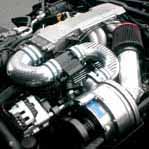
I couldn't leave the system stock because with the supercharger I was blowing the oil stick out.
I rigged up a system that uses the stock pvc system under normal driving , but only under boost it vents the passenger valve cover to the air. I designed and machined my own valve with a K&N on it, that is boost activated.
If you don't have to mess with this, you might be better of leaving it stock.
Plug the entire PVC system and vent both sides, if you go that way, but when I tried this the car always smelled like oil inside from the fumes.
I couldn't leave the system stock because with the supercharger I was blowing the oil stick out.
I rigged up a system that uses the stock pvc system under normal driving , but only under boost it vents the passenger valve cover to the air. I designed and machined my own valve with a K&N on it, that is boost activated.
If you don't have to mess with this, you might be better of leaving it stock.
Thread Starter
Racer
Joined: Jan 2002
Posts: 337
Likes: 0
From: Southern California
Re: Crankcase vent options/questions...... (SuperL98)
Maybe I don't understand your point but several of the things you mentioned in your post don't make sense to me.
I do have a MAF sensor but the passenger side VC vent goes into the TB after the MAF so the MAF doesn't see any of the crankcase gasses.
The PCV valve is on the driver's side and goes into the intake manifold, after the plenum and runners.
I'm hoping my car won't smell like oil (fumes) if I add a separate vent system but my primary concern is whether or not the lack of crankcase vacuum will have a negative affect on engine performance due to increased crankcase pressure and poorer sealing of the piston rings. :rolleyes:
Anyone else have any input? :)
(cool idea about the boost-activated vent valve though :cheers: )
:seeya
I'll pass on a word of caution, if you have a year corvette that uses an MAF to sense the air flow into the engine, this tube intentionally feeds into the throttle body so that the air sucked in by the PVC valve is measured by the MAF sensor.
If you block the pipe and put a breather in the passenger side valve cover, the air going throught the PVC system is not accounted for and your system will act like it has a vacuum leak, block learn numbers will be very high at idle 150+, and your idle and part throttle quality with suffer.
Plug the entire PVC system and vent both sides, if you go that way, but when I tried this the car always smelled like oil inside from the fumes.
Anyone else have any input? :)
(cool idea about the boost-activated vent valve though :cheers: )
:seeya

Burning Brakes

Joined: Apr 2002
Posts: 934
Likes: 0
From: MO
Re: Crankcase vent options/questions...... (C4racing)
On my LT1 I noticed the same, I put a screw in breather where the oil cap
use to be. Hasn't leaked any oil out of it.
Oh, I did leave the tube hooked up to the T/B still.
[Modified by James94LT1, 10:54 PM 6/23/2002]
use to be. Hasn't leaked any oil out of it.
Oh, I did leave the tube hooked up to the T/B still.
[Modified by James94LT1, 10:54 PM 6/23/2002]
Thread Starter
Racer
Joined: Jan 2002
Posts: 337
Likes: 0
From: Southern California
Re: Crankcase vent options/questions...... (James94LT1)
If one end of the tube is still attached to the TB, then where is the other end? Somehow attached to the screw in breather you added, or just hanging in the air?
:seeya
:seeya
Thread Starter
Racer
Joined: Jan 2002
Posts: 337
Likes: 0
From: Southern California
Re: Crankcase vent options/questions...... (James94LT1)
Got it James94LT1! :yesnod:
Did you ever look in the TB or plenum before and after you added the oil filler cap breather?
If so, was there a noticable difference in the amount of oil in the TB and plenum?
Thanks. :seeya
Did you ever look in the TB or plenum before and after you added the oil filler cap breather?
If so, was there a noticable difference in the amount of oil in the TB and plenum?
Thanks. :seeya
Burning Brakes
Joined: Apr 2002
Posts: 934
Likes: 0
From: MO
Re: Crankcase vent options/questions...... (C4racing)
I haven't looked into it since I added the breather. Its all apart right now so I'll check in my TB and see. Intake didn't look to bad but you really can't tell on it. Before I had straight oil under the T/B Cover itself. I'll have to take it off and look.
Corvette Stories
The Best of Corvette for Corvette Enthusiasts

Every 2027 Corvette Engine Explained
Joe Kucinski
Designer Imagines A Corvette That Looks More Like a Corvette Than the Corvette
Verdad Gallardo
10 Ugly Corvettes That We Still Kinda Love
Joe Kucinski
Top 10 Most Expensive Corvettes Ever Sold on Bring A Trailer
Brett Foote
10 Things Every Corvette Owner Needs (2026 Edition)
Michael S. Palmer
8 Most "Only Corvette Owners Understand" Quirks and Problems
Pouria Savadkouei
10 Reasons the C6 Z06 is Still A Performance Benchmark After 20 Years
Joe Kucinski
How Much Horsepower Every Corvette Engine "LOST" in 1972
Joe Kucinski
Top 10 DOs and DON'Ts for Protecting Your Convertible Top!
Michael S. Palmer
Drifting
Joined: Jun 2001
Posts: 1,704
Likes: 459
From: Mass Mass
Re: Crankcase vent options/questions...... (C4racing)
Any air that ends up in the cylinders needs to go throught the MAF and be measured for the PROM calibration to be right.
The path of air for the PVC system at high vacuum (idle and part throttle) is through the air cleaner, then the MAF, then a port in the throttle body before the butterflies, thru the hose (passenger side) your talking about, then the crankcase to the driver side PVC valve, out the PVC hose to the intake manifold and into the cylinders (system measures and accounts for it).
At low vacuum (full throttle) , no vacuum so no airflow in the normal direction (through the PVC system), if you build up pressure in the crankcase the flow will reverse and blow back into the throttle body through the hose in question. This is where your junk is coming from.
The air flow with an added breather (high vacuum) is in through the breather, through the crankcase, then the PVC, etc. etc. to the cylinder. Never sees the MAF and you, in essence, have a vacuum leak to the calibration in the PROM.
The path of air for the PVC system at high vacuum (idle and part throttle) is through the air cleaner, then the MAF, then a port in the throttle body before the butterflies, thru the hose (passenger side) your talking about, then the crankcase to the driver side PVC valve, out the PVC hose to the intake manifold and into the cylinders (system measures and accounts for it).
At low vacuum (full throttle) , no vacuum so no airflow in the normal direction (through the PVC system), if you build up pressure in the crankcase the flow will reverse and blow back into the throttle body through the hose in question. This is where your junk is coming from.
The air flow with an added breather (high vacuum) is in through the breather, through the crankcase, then the PVC, etc. etc. to the cylinder. Never sees the MAF and you, in essence, have a vacuum leak to the calibration in the PROM.
Thread Starter
Racer
Joined: Jan 2002
Posts: 337
Likes: 0
From: Southern California
Re: Crankcase vent options/questions...... (SuperL98)
Sorry SuperL98 but this is absolutely not true:
I've owned this car since it was new and I can guarantee you that from the factory no PCV (not PVC, btw) or any other type of vent hoses have ever been introduced into the intake upstream of the MAF sensor. If crankcase blow-by gasses end up in the TB or IM there is no way that the MAF sensor can measure this gas flow.
I'm sure that the experts at GM knew how to account for the air flow through the vent hoses and PCV valve when they were writing the code for the ECM PROM but in no way is this air flow measured directly by the MAF sensor.
If you look at my original post you'll see that my concern is not about a properly functioning PCV system but about what to do about all the oil that's showing up in my TB. It's the excess crankcase pressure I'm worried about.
This makes me think that there might be another option to my original post:
Option 4) Replace the "L" in the passenger side VC with a "T". One leg of the "T" goes to the current hose connected to the TB. The other leg of the "T" goes to an overflow/catch tank with a breather on it. The key here would be to add 2 check valves as follows.
One check valve in the line from the VC to the TB would only allow fresh air to flow from the TB to the VC and then into the crankcase (when crankcase has no relative pressure). This check valve would not allow reverse flow of crankcase blow-by gasses to go back to the TB, and thus no oil could end upin the TB.
But in order not to build up excessive crankcase pressure the tank/breather I mentioned would have to be added. The new hose from the passenger VC "T" to the overflow tank/breather would have a check valve that would only allow flow from the VC to the tank. This way no outside air could be sucked into the engine via the added breather.
The only problem I can see is that air could flow from the TB to the VC "T" and then right out the breather on the tank. I doubt this would happen though since the pressure at the overflow tank/breather would have to be lower than the pressure in the TB plus the air would have to be forced past BOTH springs in the check valves. Granted the check valves would theoretically allow flow in this direction, but the springs do provide some resistance.
Now that I think I might have a solution maybe I just need to try Option 4. The worst thing that can happen is that it doesn't work and I'm out the cost of 2 check valves, a piece of hose, and an overflow tank. :eek:
Any other comments are still welcome. :yesnod:
:seeya
[Modified by C4racing, 10:01 PM 6/24/2002]
Any air that ends up in the cylinders needs to go throught the MAF and be measured for the PROM calibration to be right.
I'm sure that the experts at GM knew how to account for the air flow through the vent hoses and PCV valve when they were writing the code for the ECM PROM but in no way is this air flow measured directly by the MAF sensor.
If you look at my original post you'll see that my concern is not about a properly functioning PCV system but about what to do about all the oil that's showing up in my TB. It's the excess crankcase pressure I'm worried about.
This makes me think that there might be another option to my original post:
Option 4) Replace the "L" in the passenger side VC with a "T". One leg of the "T" goes to the current hose connected to the TB. The other leg of the "T" goes to an overflow/catch tank with a breather on it. The key here would be to add 2 check valves as follows.
One check valve in the line from the VC to the TB would only allow fresh air to flow from the TB to the VC and then into the crankcase (when crankcase has no relative pressure). This check valve would not allow reverse flow of crankcase blow-by gasses to go back to the TB, and thus no oil could end upin the TB.
But in order not to build up excessive crankcase pressure the tank/breather I mentioned would have to be added. The new hose from the passenger VC "T" to the overflow tank/breather would have a check valve that would only allow flow from the VC to the tank. This way no outside air could be sucked into the engine via the added breather.
The only problem I can see is that air could flow from the TB to the VC "T" and then right out the breather on the tank. I doubt this would happen though since the pressure at the overflow tank/breather would have to be lower than the pressure in the TB plus the air would have to be forced past BOTH springs in the check valves. Granted the check valves would theoretically allow flow in this direction, but the springs do provide some resistance.
Now that I think I might have a solution maybe I just need to try Option 4. The worst thing that can happen is that it doesn't work and I'm out the cost of 2 check valves, a piece of hose, and an overflow tank. :eek:
Any other comments are still welcome. :yesnod:
:seeya
[Modified by C4racing, 10:01 PM 6/24/2002]
Drifting
Joined: Jun 2001
Posts: 1,704
Likes: 459
From: Mass Mass
Re: Crankcase vent options/questions...... (C4racing)
Had a kid in the shop shoot these of an old throttle body.


This PVC vent hose goes to the front of the butterflies, it is downstream of the MAF and all the air going through the PVC system does get measure by the MAF (GM knows what they are doing - I agree)
Blowby gases, I agree, come up this hose (under power) and make the mess you are having trouble with.
Just trying to help you, not **** you off!
BTW look at the Moroso checkvalve for their crankcase evacuation system. It might be a good checkvalve for the system you suggest. High flow, big ports, low cracking pressure, temp resistent. Summit MOR-97800 @ $18.99 each.
I'll leave you be ..... good luck
This PVC vent hose goes to the front of the butterflies, it is downstream of the MAF and all the air going through the PVC system does get measure by the MAF (GM knows what they are doing - I agree)
Blowby gases, I agree, come up this hose (under power) and make the mess you are having trouble with.
Just trying to help you, not **** you off!
BTW look at the Moroso checkvalve for their crankcase evacuation system. It might be a good checkvalve for the system you suggest. High flow, big ports, low cracking pressure, temp resistent. Summit MOR-97800 @ $18.99 each.
I'll leave you be ..... good luck
Thread Starter
Racer
Joined: Jan 2002
Posts: 337
Likes: 0
From: Southern California
Re: Crankcase vent options/questions...... (SuperL98)
Hey Super L98, sorry if it seemed like I was yelling with the all bold text....guess it got turned on but then never got turned off and made half the post seem like I was yelling. :nonod:
Anyway, some of your info was on the mark but some of it read like my factory service manual that was also wrong. :eek: (I guess some of the factory engineers have their act together, but some of the service and parts manual writers, well, let's say I've found a number of mistakes over the years :yesnod: ) It's just that we all need accurate info in order to make accurate decisions.
So no harm, no foul. I still haven't decided whether to plug the I/M and TB and just vent the VCs to a catch tank/breather or to modify the system as per Option 4 above.
Without any input from people who know the technical details of the system or who have "been there and done that" I'll just give it my best guess.
:seeya
[Modified by C4racing, 10:13 PM 6/24/2002]
Anyway, some of your info was on the mark but some of it read like my factory service manual that was also wrong. :eek: (I guess some of the factory engineers have their act together, but some of the service and parts manual writers, well, let's say I've found a number of mistakes over the years :yesnod: ) It's just that we all need accurate info in order to make accurate decisions.
So no harm, no foul. I still haven't decided whether to plug the I/M and TB and just vent the VCs to a catch tank/breather or to modify the system as per Option 4 above.
Without any input from people who know the technical details of the system or who have "been there and done that" I'll just give it my best guess.
:seeya
[Modified by C4racing, 10:13 PM 6/24/2002]

Drifting


Joined: Aug 2000
Posts: 1,316
Likes: 0
From: Houston, TX
Re: Crankcase vent options/questions...... (James94LT1)
I was having the same oiling problem into my plenum. I added a modified Moroso oil separator tank into the PCV system to collect the oil, then only air goes back to the plenum, not oil
Thread Starter
Racer
Joined: Jan 2002
Posts: 337
Likes: 0
From: Southern California
Re: Crankcase vent options/questions...... (HWoods)
HWoods, how did you modify the Moroso tank?
Did you just put it in the line from the passenger side VC to the TB?
Was it a sealed tank or did it have a breather on it?
Thanks. :seeya
Did you just put it in the line from the passenger side VC to the TB?
Was it a sealed tank or did it have a breather on it?
Thanks. :seeya
Drifting
Joined: Aug 2000
Posts: 1,316
Likes: 0
From: Houston, TX
Re: Crankcase vent options/questions...... (C4racing)
Moroso breather tank was modified by Energy Dynamics of Fort Worth. http://www.theoldone.com It was made for Honda Race cars that specifically had this type of problem. It has two inlets vs the stock tank one inlet. It can use the PCV to return air back to the engine or it can use a breather instead of the PCV.
Thread Starter
Racer
Joined: Jan 2002
Posts: 337
Likes: 0
From: Southern California
Re: Crankcase vent options/questions...... (HWoods)
Hwoods, thanks for the link to the site regarding the modified Moroso tank. Similar to the custom one I just had made. One question though.
Do you have the breather element on your tank and if so, how do you keep outside air from going back into the intake manifold (through the crankcase and then past the PCV valve) under high manifold vacuum conditions?
The system you describe seems to do a good job of venting crankcase pressure, but I don't see how it keeps outside air (not accounted for by the MAP/MAF sensor) from entering the intake manifold. If I understand the whole crankcase vent system correctly, sucking in unaccounted for air into the intake would cause the car to run lean since the ECM doesn't know anything about the presence of this extra air and thus won't add any additional fuel. :eek:
Do you have the breather element on your tank and if so, how do you keep outside air from going back into the intake manifold (through the crankcase and then past the PCV valve) under high manifold vacuum conditions?
The system you describe seems to do a good job of venting crankcase pressure, but I don't see how it keeps outside air (not accounted for by the MAP/MAF sensor) from entering the intake manifold. If I understand the whole crankcase vent system correctly, sucking in unaccounted for air into the intake would cause the car to run lean since the ECM doesn't know anything about the presence of this extra air and thus won't add any additional fuel. :eek:
