



Dash Coolant Temp Different than ECM Temp

Thread Starter
Racer


Joined: Sep 2001
Posts: 266
Likes: 7
From: Sumner WA
 Dash Coolant Temp Different than ECM Temp
I'm sure one of the bright minds on this forum knows what my latest problem is. I mentioned in another post that I had my '88 L98 engine rebuilt to factory specs and the coolant temperature on the dash is reading much higher than the coolant temperature the ECM was reporting on the scan tool. I took it back to the shop and they replaced the water pump, thermostat (again), and all the coolant sensors. It made no difference. So the shop owner spent a lot of time convincing me that my dash gauges were wrong and even showed me the temp on the scan tool and using an infrared thermometer. OK fine, I guess the damned gauge is wrong. So I've been driving the car like this for about 2 weeks now. The gauge was 245+ but the car seemed to be driving fine and never boiled over. Until last night. The gauge finally hit 260 and the red idiot light came on and then it started shooting up quickly from there. By the time I got it shut off the gauge read 299. Apparently that's as high as it will go. The engine was pinging pretty bad and blew coolant. I called the shop and told them I'm having it towed back. I have a bad feeling some serious damage was caused from 2 weeks of high temperatures and the grand finale of finally boiling over.
Which brings me to my questions.
1. What could cause the dash gauge to read much differently than the ECM? (they are different sensors, I know that).
2. What could cause a freshly rebuilt engine to overheat?
(with the rebuild also came new thermostat, water pump, hoses, tested radiator)
Ron
Which brings me to my questions.
1. What could cause the dash gauge to read much differently than the ECM? (they are different sensors, I know that).
2. What could cause a freshly rebuilt engine to overheat?
(with the rebuild also came new thermostat, water pump, hoses, tested radiator)
Ron

Drifting

Joined: May 2013
Posts: 1,736
Likes: 31
From: Reno Nevada
The dash sensor is in the passenger side head, and the ecm sensor is in the front of the intake. The hottest point for coolant is just as it exits the intake manifold, so in most cases the ecm should always be showing hotter than the dash. Mine in the Winter will show 160 at the head, but is 180+ at the ECM's CTS. In the summer the head shows 180, and about 187 at the CTS.
Sorry to hear about your troubles, but if you paid someone to do this then they can do it again.
Sorry to hear about your troubles, but if you paid someone to do this then they can do it again.
Thread Starter
Racer
Joined: Sep 2001
Posts: 266
Likes: 7
From: Sumner WA
They replaced the thermostat twice
They sent the radiator out to be tested so I assume they removed the leaves (at least the shop owner and I discussed the need to remove all the crap)
Is it possible to have a brand new head gasket on a freshly rebuilt engine be bad out of the gate?
The primary fan came on when the ECM read 228 as programmed. I don't know what temperature the secondary fan came on.
They sent the radiator out to be tested so I assume they removed the leaves (at least the shop owner and I discussed the need to remove all the crap)
Is it possible to have a brand new head gasket on a freshly rebuilt engine be bad out of the gate?
The primary fan came on when the ECM read 228 as programmed. I don't know what temperature the secondary fan came on.

Le Mans Master


Joined: Dec 2000
Posts: 7,839
Likes: 22
From: San Diego, Ca
The only Trouble Codes for the Coolant Temp Sensor are at the Extremes. There's nothing to show garbage which could be high resistance in 20 plus year old wiring, a worn out Sensor, or a bum ECM. Any Scan should start with it Cold so you can compare that number to ambient and the Air Intake Sensor (they all need to be the same or real close). From there, you can start it and follow it to the thermostat, which when it opens, cut it back a few degrees. After that, it should rise to the fan threshold and when that kicks on, it should cool back down and maintain that cooler temp until the fan kicks off.
The Gage is fed by similar (both of these Sensors are Thermistors meaning their resistance decreases as they heat up so more of the reference voltage reaches ground). The voltage drop is read/interpreted as temp. The extremes for your Gage are LO and 300 (or maybe 299). Test the Sensor by disconnecting the harness at the Sensor. The circuit is now open so there's no drop and the Display should show LO. Ground the wire on the engine and all of the reference is gone, so the Display should indicate 300. Actual Temps, given the different location of the Sensors, should follow the Coolant Temp Sensor with a small variance of about 5 degrees. Large differences (assuming the Coolant Temp Sensor checked out) would be a Faulty Sensor, High Resistance in the Wiring, and/or a crapped out Display.
Ok - you're mechanic seems to have missed it. Sounds like he went textbook in the Shop, but he needed to drive it (or put it on a Dyno) to see what it did in the real world with the Scanner hooked up. Whatever caused it, without actually looking at it, appears to be on his dime.
The Gage is fed by similar (both of these Sensors are Thermistors meaning their resistance decreases as they heat up so more of the reference voltage reaches ground). The voltage drop is read/interpreted as temp. The extremes for your Gage are LO and 300 (or maybe 299). Test the Sensor by disconnecting the harness at the Sensor. The circuit is now open so there's no drop and the Display should show LO. Ground the wire on the engine and all of the reference is gone, so the Display should indicate 300. Actual Temps, given the different location of the Sensors, should follow the Coolant Temp Sensor with a small variance of about 5 degrees. Large differences (assuming the Coolant Temp Sensor checked out) would be a Faulty Sensor, High Resistance in the Wiring, and/or a crapped out Display.
Ok - you're mechanic seems to have missed it. Sounds like he went textbook in the Shop, but he needed to drive it (or put it on a Dyno) to see what it did in the real world with the Scanner hooked up. Whatever caused it, without actually looking at it, appears to be on his dime.
Safety Car


Joined: Aug 2009
Posts: 3,749
Likes: 275
From: Melbourne, Victoria, Australia
The temperature sensor in the head does not usually survive once the engine has overheated, be it a blown hose or just got hot.
Have been there done that!! the old sensor will be way of and show a lot higher temp than actual, check the oil temp that is usually a little lower than the coolant temp.
Go buy a new temp sender and check the area between the radiator and condenser that usually fills with leaves.
(corvettes are like vacuum cleaners on the highway .. all the trash gets deposited between the radiator and condenser).
Check your lower radiator hose has the spring inside to prevent it collapsing when the engine revs up, believe me if there is a gap of only a few inches that has no spring to the radiator it will collapse and block the flow to the water pump.
Check the link below for a mesh screen to prevent your Corvette from being a highway cleaner.
http://www.ebay.com/itm/84-91-CORVETTE-C4-ALUMINUM-MESH-RADIATOR-SCREEN-NEW-/290401657970?pt=Motors_Car_Truck_Parts_Accessories&hash=item439d49a472&vxp=mtr
Have been there done that!! the old sensor will be way of and show a lot higher temp than actual, check the oil temp that is usually a little lower than the coolant temp.
Go buy a new temp sender and check the area between the radiator and condenser that usually fills with leaves.
(corvettes are like vacuum cleaners on the highway .. all the trash gets deposited between the radiator and condenser).
Check your lower radiator hose has the spring inside to prevent it collapsing when the engine revs up, believe me if there is a gap of only a few inches that has no spring to the radiator it will collapse and block the flow to the water pump.
Check the link below for a mesh screen to prevent your Corvette from being a highway cleaner.
http://www.ebay.com/itm/84-91-CORVETTE-C4-ALUMINUM-MESH-RADIATOR-SCREEN-NEW-/290401657970?pt=Motors_Car_Truck_Parts_Accessories&hash=item439d49a472&vxp=mtr
Thread Starter
Racer
Joined: Sep 2001
Posts: 266
Likes: 7
From: Sumner WA
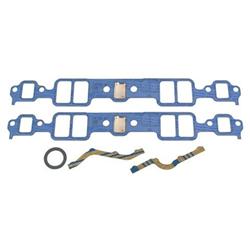
I have an idea of what I think could be the problem. What do you think of this. If the intake manifold gaskets were put on the wrong sides, then the water passages in the rear would be open while the passages in the front would be blocked. Would this cause the coolant to flow incorrectly and also cause the sensor in the front of the intake manifold to read cooler than the sensors in the heads? Wouldn't this also cause the engine to run too warm and possibly overheat? I towed the car back to the shop and suggested they pull the intake. I suggested it back when I first picked it up and they blew me off. But I think it would make sense from what I'm seeing.
Your thoughts?
Your thoughts?
Corvette Stories
The Best of Corvette for Corvette Enthusiasts

150 hp to 1,250 hp: Every Corvette Generation Compared by the Specs That Matter
Joe Kucinski
8 Coolest Corvette Pace Cars (and Replicas) of All Time
Verdad Gallardo
Top 10 Corvette Engines RANKED by Peak Torque (70+ Years of Muscle!)
Joe Kucinski
Corvette ZR1X Will Be Pacing the Indy 500, And Could Probably Race, Too!
Verdad Gallardo
Top 10 Corvettes Coming to Mecum Indy 2026!
Brett Foote
Top 10 C9 Corvette MUST-HAVES to Fix These C8 Generation Flaws!
Michael S. Palmer
10 Revolutionary 'Corvette Firsts' Most People Don't Know
Joe Kucinski
5 Reasons to Upgrade to an LS6-Powered Corvette; 5 Reasons to Stay LT2
Michael S. Palmer
2027 Corvette vs The World: Every C8 vs Its Closest Competitor
Joe Kucinski
Thread Starter
Racer
Joined: Sep 2001
Posts: 266
Likes: 7
From: Sumner WA


Race Director


Joined: Sep 2003
Posts: 16,836
Likes: 337
From: Database Error Indiana
Le Mans Master
Joined: Dec 2000
Posts: 7,839
Likes: 22
From: San Diego, Ca
Restrictors were used on the Vette only with a bypass hose to provide additional cooling at the rear of the heads. F Body L98's don't use them and seem to have fewer blown head gaskets or the gasket weepage that almost always shows up at #7. My theory is that once galvanic corrosion sets in (per GM it starts because of misaligned leaking intake gaskets), the coolant simply sits behind that restriction and eats up the head gasket. Anyway, if you use the F-body non restricted intake gasket you can plug up the bypass hose - or just do away with it since it's no longer made.
Le Mans Master
Joined: Dec 2000
Posts: 7,839
Likes: 22
From: San Diego, Ca
It overheats - Service Manual instructed you to do just that for a couple of years; corrected by Service Bulletin. More on the TPI differences are outlined here: http://www.hotrodlane.cc/PDFFILES/TPIStory.pdf