






Injector swap questions

Thread Starter
Pro


Joined: Aug 2011
Posts: 504
Likes: 117
From: Allentown Pa
 Injector swap questions
Hello,
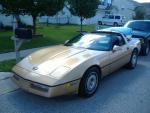
1987 Corvette Auto, 55000 original miles. I began my fuel injector swap on Sunday on my 1987 Corvette coupe. 3 1/2 hours later..busted knuckles and hands later, the fuel rail came out. While I am there I am going to put in a new fuel pressure regulator. I am also going to take out the valve covers and freshen them up as the paint is chipping everywhere. I was told that the covers are magnesium.. Will I run into any issues because of this? What is the best way to remove the existing paint? I was going to have them sandblasted but wonder if paint stripper will work. Also, any tips on painting them? This is not a show car but I do want to freshen it up while i'm there. Anything else I should do at this point?
Thanks again for any suggestions.
Kevin
1987 Corvette Auto, 55000 original miles. I began my fuel injector swap on Sunday on my 1987 Corvette coupe. 3 1/2 hours later..busted knuckles and hands later, the fuel rail came out. While I am there I am going to put in a new fuel pressure regulator. I am also going to take out the valve covers and freshen them up as the paint is chipping everywhere. I was told that the covers are magnesium.. Will I run into any issues because of this? What is the best way to remove the existing paint? I was going to have them sandblasted but wonder if paint stripper will work. Also, any tips on painting them? This is not a show car but I do want to freshen it up while i'm there. Anything else I should do at this point?
Thanks again for any suggestions.
Kevin
Le Mans Master


Joined: May 2006
Posts: 7,708
Likes: 266
From: indy indiana
WARNING.. do NOT USE the acid they use to clean concrete off bricks.. getting old and cant remember the darn name of it. It will ignite or explode after a short time mixed with each other.
I am just winding up the injector job..be very careful of the 9th injector.. called the cold start injector, do not lose the O-rings on that tube. Use care when putting the top back on the fuel pump pressure regulator.. easy to warp. Be sure to check for leaks for a few minutes b4 you start engine.
I am just winding up the injector job..be very careful of the 9th injector.. called the cold start injector, do not lose the O-rings on that tube. Use care when putting the top back on the fuel pump pressure regulator.. easy to warp. Be sure to check for leaks for a few minutes b4 you start engine.

Race Director

Joined: Apr 2002
Posts: 10,036
Likes: 346
From: Anaheim CA
My experience with the valve covers is that the castings are really bad. I thought I had chipped paint, but it was craters in the surface of the valve covers. I guess you could fill those. I didn't and it shows...
Thread Starter
Pro
Joined: Aug 2011
Posts: 504
Likes: 117
From: Allentown Pa
Thanks for the replies. In reference to the o-rings on the #9 injector tube..how many are there and were are they? I'll go check to be sure. Getting ready to put the valve covers back on tomorrow and want to be sure of the torque specifications. Can anyone give me the specs? Thanks for all the help. Thanks to Jon at FIC for the injectors, gaskets, and FPR.
Safety Car

Joined: Apr 2011
Posts: 3,660
Likes: 22
when you refer to the 9th injector, are you talking about the injector itself? or the inj fuel feed line at the rear of the rail that side?
each will have an O-ring. The fuel feed line to the Cold start injector will have a "barrel" o-ring. The name is self explanatory...That one WILL leak fuel if that ring is damaged or the feed line is not inserted fully into the rail before the nut is tightened.
Its my sincere hope that you also rebuilt the rails with NEW O-rings, since THAT is where the external fuel leaks originate. There is an aging o-ring under the end of every pipe in that rail system...If the rails were twisted or tweaked while removing, after 25 years, what shape do you believe those O-rings to be in after being immersed in alcohol blended fuels? They harden and then they crack when manipulated as the rails twist around when being lifted off stuck injectors.
To save yourself a LOT of heartache, mount the rails on the injectors and "snap-set" the rails in place. If you do not hear a VERY audible POP when doing this by bouncing on the rails HARD to POP the 8 injectors and their NEW O-rings in place, then you screwed up. Hopefully you greased the injectors and their O-rings with vasoline to aid in this "setting" procedure.
IF you DO get that POP,...signaling the correct fitment of the injectors up, inside the rails, then proceed to bolt the rails down, connect the fuel lines with NEW O-rings, connect the 9th inj aka CS injector, and wipe the area down well. Turn the KEY to ON to charge the rails...do this 3 times WITH your fuel pressure test gauge connected to the rails and WATCH it. When you get the fuel pressure built to 40 psi or close, (got to cycle the pump to purge the air out of the rails)turn the key OFF and get in there with your face and sniff and LOOK for fuel leaks. Use a Kleenex tissue to wipe around EACH injector to search for wet spots. A Kleenex will detect ANY gas on the surface that has leaked out way before you can see it on a finger tip.. You do this BECAUSE you want to find any leaks NOW, before you reconnect the rest of the parts and assemble the intake runners and plenum. Another TIP....smear a lite film of Never-Seize on the runner and plenum gaskets to prevent them from sticking to the aluminum next time....
the CS injector itself should have an o-ring seal or possibly a gasket of some sort. In any case there must be some form of a seal., otherwise how could it seal and not be a vacuum leak? after all, it IS a direct pathway to the intake where vacuum pulls in the fuel spray it supplies and helps the cold engine find reason to run until warmth allows the leaning of the AFR. Look for a groove in the inj body. A generic o-ring from a kit should be ok but it won't be alcohol proof...your call. ALL the rings in the fuel system need to be Viton. If your inj purchase came from Jon, nothing to fear. His stuff is good and correct,.
If I knew where MY FSM was, I'd be able to give more detail, so you'd better consult yours to be sure. BTW, it has all the specs for torque and seal size, etc.
Great books for the true Corvette enthusiast. Can't buy any other 2 books for $30 any place else that I'm aware of...
Good luck
each will have an O-ring. The fuel feed line to the Cold start injector will have a "barrel" o-ring. The name is self explanatory...That one WILL leak fuel if that ring is damaged or the feed line is not inserted fully into the rail before the nut is tightened.
Its my sincere hope that you also rebuilt the rails with NEW O-rings, since THAT is where the external fuel leaks originate. There is an aging o-ring under the end of every pipe in that rail system...If the rails were twisted or tweaked while removing, after 25 years, what shape do you believe those O-rings to be in after being immersed in alcohol blended fuels? They harden and then they crack when manipulated as the rails twist around when being lifted off stuck injectors.
To save yourself a LOT of heartache, mount the rails on the injectors and "snap-set" the rails in place. If you do not hear a VERY audible POP when doing this by bouncing on the rails HARD to POP the 8 injectors and their NEW O-rings in place, then you screwed up. Hopefully you greased the injectors and their O-rings with vasoline to aid in this "setting" procedure.
IF you DO get that POP,...signaling the correct fitment of the injectors up, inside the rails, then proceed to bolt the rails down, connect the fuel lines with NEW O-rings, connect the 9th inj aka CS injector, and wipe the area down well. Turn the KEY to ON to charge the rails...do this 3 times WITH your fuel pressure test gauge connected to the rails and WATCH it. When you get the fuel pressure built to 40 psi or close, (got to cycle the pump to purge the air out of the rails)turn the key OFF and get in there with your face and sniff and LOOK for fuel leaks. Use a Kleenex tissue to wipe around EACH injector to search for wet spots. A Kleenex will detect ANY gas on the surface that has leaked out way before you can see it on a finger tip.. You do this BECAUSE you want to find any leaks NOW, before you reconnect the rest of the parts and assemble the intake runners and plenum. Another TIP....smear a lite film of Never-Seize on the runner and plenum gaskets to prevent them from sticking to the aluminum next time....
the CS injector itself should have an o-ring seal or possibly a gasket of some sort. In any case there must be some form of a seal., otherwise how could it seal and not be a vacuum leak? after all, it IS a direct pathway to the intake where vacuum pulls in the fuel spray it supplies and helps the cold engine find reason to run until warmth allows the leaning of the AFR. Look for a groove in the inj body. A generic o-ring from a kit should be ok but it won't be alcohol proof...your call. ALL the rings in the fuel system need to be Viton. If your inj purchase came from Jon, nothing to fear. His stuff is good and correct,.
If I knew where MY FSM was, I'd be able to give more detail, so you'd better consult yours to be sure. BTW, it has all the specs for torque and seal size, etc.
Great books for the true Corvette enthusiast. Can't buy any other 2 books for $30 any place else that I'm aware of...
Good luck
Last edited by leesvet; Sep 29, 2014 at 11:41 PM.

Safety Car
Joined: Jan 2014
Posts: 4,017
Likes: 492
From: Poughkeepsie New York
I second this approach due to the horrible castings on the magnesium valve covers. This way you will end up with a smooth finish as opposed to a very pitted one. Sanding the fins is a PAIN.
Corvette Stories
The Best of Corvette for Corvette Enthusiasts

Top 10 Most Expensive Corvettes Ever Sold on Bring A Trailer
Brett Foote
10 Things Every Corvette Owner Needs (2026 Edition)
Michael S. Palmer
8 Most "Only Corvette Owners Understand" Quirks and Problems
Pouria Savadkouei
10 Reasons the C6 Z06 is Still A Performance Benchmark After 20 Years
Joe Kucinski
How Much Horsepower Every Corvette Engine "LOST" in 1972
Joe Kucinski
Top 10 DOs and DON'Ts for Protecting Your Convertible Top!
Michael S. Palmer
Top 10 Most Explosive Corvettes Ever Made: Power-to-Weight Ratio Ranked!
Joe Kucinski
150 hp to 1,250 hp: Every Corvette Generation Compared by the Specs That Matter
Joe Kucinski
8 Coolest Corvette Pace Cars (and Replicas) of All Time
Verdad Gallardo
Thread Starter
Pro
Joined: Aug 2011
Posts: 504
Likes: 117
From: Allentown Pa
Thank you for the replies. And thanks Leesvet for the detailed direction. Yes I got my kit from Jon. I have not installed the injectors or replaced the o-rings in the rail. Are enough o-rings included with the kit? That is where I am at next so I want to be sure.
Thanks again,
Kevin
Thanks again,
Kevin
Thread Starter
Pro
Joined: Aug 2011
Posts: 504
Likes: 117
From: Allentown Pa
UPDATE: I have finally completed my injector swap this past weekend. Glad to say that there are no leaks and the Vette started up right away. After a bit of rough running it smoothed out and runs reasonable well..better than when I first began. I do have a small vacuum leak at the booster connection at the back of the plenum and I couldn't get the passenger side inside riser bolt tight. Got it somewhat but gave up. Does anyone have any ideas on how to get this tighter? Do they make a longer T40 tool to get in there. In hindsight I should have tightened it before installing the plenum but thought I needed the play in the riser. Another question I have. The car ran well when I drove it around several times the day I finished...went out this morning and it cranked but no start. After several attempts I gave and went to work. It dawned on me that I don't think I heard the fuel pump relay prime..so I went home and turned the key. I heard the pump prime and the car started right up. My question is could the relay be finicky? Just seems ironic that it happened now and never before. Overall I'm happy and thanks to Jon at FIC for the parts and guidance. Any help would be appreciated
Safety Car
Joined: Apr 2011
Posts: 3,660
Likes: 22
Ummm.....the bolt, I should have mentioned that this should NOT be attempted unless you have a handful of extensions and other misc socket adaptors and tools.
I use 1/4" drive to do the runners and a air ratchet or cordless driver to zip the plenum bolts out. Plenum and TB come of in less than 5 minutes on mine.
To get to those inside runner bolts, you gotta have some extensions and a good wobble joint...and I use the 1/4" because it will fit past the EGR. Long extension and its cake.
regarding the relay, a FPR can stick and act up, but its often just the connection or the wire to the relay. If you DO end up replacing the relay, get some silicone grease and coat the plug so it seals out any moisture. That will help keep the new relay alive.
The engine should run the fuel pump after several seconds of cranking...the system is designed to RUN even if the fuel relay is in your pocket. Once 4 psi oil pressure is built up from cranking that should send power to the pump and it should fire up and run.
I use 1/4" drive to do the runners and a air ratchet or cordless driver to zip the plenum bolts out. Plenum and TB come of in less than 5 minutes on mine.
To get to those inside runner bolts, you gotta have some extensions and a good wobble joint...and I use the 1/4" because it will fit past the EGR. Long extension and its cake.
regarding the relay, a FPR can stick and act up, but its often just the connection or the wire to the relay. If you DO end up replacing the relay, get some silicone grease and coat the plug so it seals out any moisture. That will help keep the new relay alive.
The engine should run the fuel pump after several seconds of cranking...the system is designed to RUN even if the fuel relay is in your pocket. Once 4 psi oil pressure is built up from cranking that should send power to the pump and it should fire up and run.
Last edited by leesvet; Oct 13, 2014 at 10:03 PM.
Thread Starter
Pro
Joined: Aug 2011
Posts: 504
Likes: 117
From: Allentown Pa
Ummm.....the bolt, I should have mentioned that this should NOT be attempted unless you have a handful of extensions and other misc socket adaptors and tools.
I use 1/4" drive to do the runners and a air ratchet or cordless driver to zip the plenum bolts out. Plenum and TB come of in less than 5 minutes on mine.
To get to those inside runner bolts, you gotta have some extensions and a good wobble joint...and I use the 1/4" because it will fit past the EGR. Long extension and its cake.
regarding the relay, a FPR can stick and act up, but its often just the connection or the wire to the relay. If you DO end up replacing the relay, get some silicone grease and coat the plug so it seals out any moisture. That will help keep the new relay alive.
The engine should run the fuel pump after several seconds of cranking...the system is designed to RUN even if the fuel relay is in your pocket. Once 4 psi oil pressure is built up from cranking that should send power to the pump and it should fire up and run.
I use 1/4" drive to do the runners and a air ratchet or cordless driver to zip the plenum bolts out. Plenum and TB come of in less than 5 minutes on mine.
To get to those inside runner bolts, you gotta have some extensions and a good wobble joint...and I use the 1/4" because it will fit past the EGR. Long extension and its cake.
regarding the relay, a FPR can stick and act up, but its often just the connection or the wire to the relay. If you DO end up replacing the relay, get some silicone grease and coat the plug so it seals out any moisture. That will help keep the new relay alive.
The engine should run the fuel pump after several seconds of cranking...the system is designed to RUN even if the fuel relay is in your pocket. Once 4 psi oil pressure is built up from cranking that should send power to the pump and it should fire up and run.
Thread Starter
Pro
Joined: Aug 2011
Posts: 504
Likes: 117
From: Allentown Pa
Just a quick question about a part I need to replace. I've looked at Corvette Central and can not find it. I mentioned earlier that I stripped the connector at the back of the plenum..the one that ends up going to the brake booster. It is on but I have a vacuum leak now. Can anyone tell me what this part is and where I can get it? I guess I need both parts..the one in the plenum and the nut that holds the line tight. Any help would be appreciated
Kevin
Kevin
Thread Starter
Pro
Joined: Aug 2011
Posts: 504
Likes: 117
From: Allentown Pa
Additional information
Additional findings with this injector swap. My warn start issue related to my previous injector leak down has been corrected with my new injectors...but my hesitation when warm persists. I checked my fuel pressure with the following results:
Key turned to " on" without starting - pressure jumped to 42 PSI then right down to 0
Turned the key and the car started right away and the fuel pressure remained at a steady 37 PSI
Steady and slow acceleration the PSI went to 35 PSI
Motor turned off and the PSI went to 40 PSI for a second or two then right down to 0
Several test starts and the car starts right away.
Is it time for a new fuel pump, and could this cause my nagging hesitation. I believe the hesitation is warm related as it does not do it when cold and the first few minutes of driving. I checked and do not see any vacuum leaks
Any suggestions would be appreciated
Kevin
Key turned to " on" without starting - pressure jumped to 42 PSI then right down to 0
Turned the key and the car started right away and the fuel pressure remained at a steady 37 PSI
Steady and slow acceleration the PSI went to 35 PSI
Motor turned off and the PSI went to 40 PSI for a second or two then right down to 0
Several test starts and the car starts right away.
Is it time for a new fuel pump, and could this cause my nagging hesitation. I believe the hesitation is warm related as it does not do it when cold and the first few minutes of driving. I checked and do not see any vacuum leaks
Any suggestions would be appreciated
Kevin
Drifting

Joined: Jun 2013
Posts: 1,590
Likes: 60
From: ft myers FL/Munising MI
If the fuel pressure is dropping that quickly after pressure comes up, you're probably blowing a fuel line out of the pulsator...It should stay up for a few minutes....this usually happens after a fuel pump install when the connector lines aren't connected properly....check your FPR...

Thread Starter
Pro
Joined: Aug 2011
Posts: 504
Likes: 117
From: Allentown Pa
Kevin
Safety Car
Joined: Apr 2011
Posts: 3,660
Likes: 22
LOOK at the FPR dick and plunger. The little disc at the end of the assy will be slick, shiny as a new dime. It MUST be because that is what holds the pressure in the system when it seats against the regulator bottom. This is how it holds pressure so it can get to the injectors.
If you listen to the clowns at the counter, you will be there buying parts each day.....and returning about half of what they sell you. I can assure you that not a one of them heard of the "bad" FPR diaphragms being sold for the C4 regulator....
Look for 2 things....
the rubber must be thin and smooth, flimsy. No texture of a cloth like feel that's been rubber coated. Its a thin rubber film. Very flimsy.
The small disc MUST be slick, smooth, shiny on the side that seats against the regulator body. IF it has ANY machine marks, lines, or edges, its NOT GOOD because it cannot seal with those lines or marks in the seat. It MUST be smooth and shiny, polished.
YES, a bad regulator diaphragm seat CAN and WILL cause low fuel pressure. That's NOT saying that IS definitely the problem. LOOK closely at the diaphragm and look for defects.
A pump can produce 40 psi at key ON< but that does not mean it can keep producing 40 psi as the RPM increase....that's where the FAIL often happens with pumps. They can't keep up with engine demand.
If you listen to the clowns at the counter, you will be there buying parts each day.....and returning about half of what they sell you. I can assure you that not a one of them heard of the "bad" FPR diaphragms being sold for the C4 regulator....
Look for 2 things....
the rubber must be thin and smooth, flimsy. No texture of a cloth like feel that's been rubber coated. Its a thin rubber film. Very flimsy.
The small disc MUST be slick, smooth, shiny on the side that seats against the regulator body. IF it has ANY machine marks, lines, or edges, its NOT GOOD because it cannot seal with those lines or marks in the seat. It MUST be smooth and shiny, polished.
YES, a bad regulator diaphragm seat CAN and WILL cause low fuel pressure. That's NOT saying that IS definitely the problem. LOOK closely at the diaphragm and look for defects.
A pump can produce 40 psi at key ON< but that does not mean it can keep producing 40 psi as the RPM increase....that's where the FAIL often happens with pumps. They can't keep up with engine demand.
Last edited by leesvet; Oct 28, 2014 at 08:12 PM.
Thread Starter
Pro
Joined: Aug 2011
Posts: 504
Likes: 117
From: Allentown Pa
LOOK at the FPR dick and plunger. The little disc at the end of the assy will be slick, shiny as a new dime. It MUST be because that is what holds the pressure in the system when it seats against the regulator bottom. This is how it holds pressure so it can get to the injectors.
If you listen to the clowns at the counter, you will be there buying parts each day.....and returning about half of what they sell you. I can assure you that not a one of them heard of the "bad" FPR diaphragms being sold for the C4 regulator....
Look for 2 things....
the rubber must be thin and smooth, flimsy. No texture of a cloth like feel that's been rubber coated. Its a thin rubber film. Very flimsy.
The small disc MUST be slick, smooth, shiny on the side that seats against the regulator body. IF it has ANY machine marks, lines, or edges, its NOT GOOD because it cannot seal with those lines or marks in the seat. It MUST be smooth and shiny, polished.
YES, a bad regulator diaphragm seat CAN and WILL cause low fuel pressure. That's NOT saying that IS definitely the problem. LOOK closely at the diaphragm and look for defects.
A pump can produce 40 psi at key ON< but that does not mean it can keep producing 40 psi as the RPM increase....that's where the FAIL often happens with pumps. They can't keep up with engine demand.
If you listen to the clowns at the counter, you will be there buying parts each day.....and returning about half of what they sell you. I can assure you that not a one of them heard of the "bad" FPR diaphragms being sold for the C4 regulator....
Look for 2 things....
the rubber must be thin and smooth, flimsy. No texture of a cloth like feel that's been rubber coated. Its a thin rubber film. Very flimsy.
The small disc MUST be slick, smooth, shiny on the side that seats against the regulator body. IF it has ANY machine marks, lines, or edges, its NOT GOOD because it cannot seal with those lines or marks in the seat. It MUST be smooth and shiny, polished.
YES, a bad regulator diaphragm seat CAN and WILL cause low fuel pressure. That's NOT saying that IS definitely the problem. LOOK closely at the diaphragm and look for defects.
A pump can produce 40 psi at key ON< but that does not mean it can keep producing 40 psi as the RPM increase....that's where the FAIL often happens with pumps. They can't keep up with engine demand.
Thanks for your response and I hope to hear from you soon
Kevin