






Using Drilled/Slotted Brake Rotors?

Drifting


Joined: Apr 2005
Posts: 1,461
Likes: 378
From: Bellinum Wa

No I'm not post whoring if that's what you mean. I was in the middle of posting a description of my own personal facts when my laptop decided it needed to update and I lost everything but the top of the post and it sent my unfinished thread
I've had 6 cars with D&S rotors. I've had 2 with slotted only also
Currently have a Mercedes R230 with D&S.
Currently have a 4Runner with D&S
Had a Mercedes W208 430 with D&S
Silverado 1500 2WD w 4/6 drop
Toyota JZX Twin turbo with a 1JZ VVTI 357 rwhp
6 spd C5 Roadster with D&S and Kevlar/Carbon pads w/Goodridge SS lines
What do you want to know?
I've had 6 cars with D&S rotors. I've had 2 with slotted only also
Currently have a Mercedes R230 with D&S.
Currently have a 4Runner with D&S
Had a Mercedes W208 430 with D&S
Silverado 1500 2WD w 4/6 drop
Toyota JZX Twin turbo with a 1JZ VVTI 357 rwhp
6 spd C5 Roadster with D&S and Kevlar/Carbon pads w/Goodridge SS lines
What do you want to know?
Last edited by Hary Gahtoe; Jan 9, 2015 at 02:15 AM.
Drifting
Joined: Apr 2005
Posts: 1,461
Likes: 378
From: Bellinum Wa
I'll start with the C5 you'll likely relate to more.
I didn't get stress cracks. Even though there times I drove it like I stole it.
The rotors are 1 piece in the whole package. Heat and wear are transmitted to the rotors so a cheap or thinner rotor already is at a disadvantage. If you use lower price pads that contain high content organic material with metal (Copper) in it for bite your chances of cracking went up over 50%.
If you use quality rotors with a Carbon, Ceramic or better yet Kevlar your chances are greatly reduced.
Quality in terms of the materials used is important. Machining counts big also. As in the Slots and hugely important is HOW they machine the holes. Look at pictures of a rotor on a Porsche 911 and see if you notice anything different than on a cheap ebay rotor. True high end rotors tend shy away from a combo D&S and just do drilled. I'm talking factory like new ZO6 not Willwood or aftermarket add ons
Also, only one guy mentioned noise. Having done multiple disciplines of D&S replacements I can say they a horribly noisy. Only slotted are slightly increased in noise over OEM
I didn't get stress cracks. Even though there times I drove it like I stole it.
The rotors are 1 piece in the whole package. Heat and wear are transmitted to the rotors so a cheap or thinner rotor already is at a disadvantage. If you use lower price pads that contain high content organic material with metal (Copper) in it for bite your chances of cracking went up over 50%.
If you use quality rotors with a Carbon, Ceramic or better yet Kevlar your chances are greatly reduced.
Quality in terms of the materials used is important. Machining counts big also. As in the Slots and hugely important is HOW they machine the holes. Look at pictures of a rotor on a Porsche 911 and see if you notice anything different than on a cheap ebay rotor. True high end rotors tend shy away from a combo D&S and just do drilled. I'm talking factory like new ZO6 not Willwood or aftermarket add ons
Also, only one guy mentioned noise. Having done multiple disciplines of D&S replacements I can say they a horribly noisy. Only slotted are slightly increased in noise over OEM
Melting Slicks


Joined: Jun 1999
Posts: 2,931
Likes: 127
From: Ashland Alabama
Well personal experience proved to me the use for the slotted/drilled rotors. I live on the side of cheaha mountain. If you go to the top with a motorcycle and use none drilled or slotted rotors and come back down the afore mentioned mountain you will lose all brakes before reaching the bottom of the mountain if you don't stop and let your brakes cool off first on a particular road here.
If you have drilled or slotted rotors you can get down the mountain without stopping. Its actually that simple to test. The brakes fade horribly on bikes with solid smooth rotors.
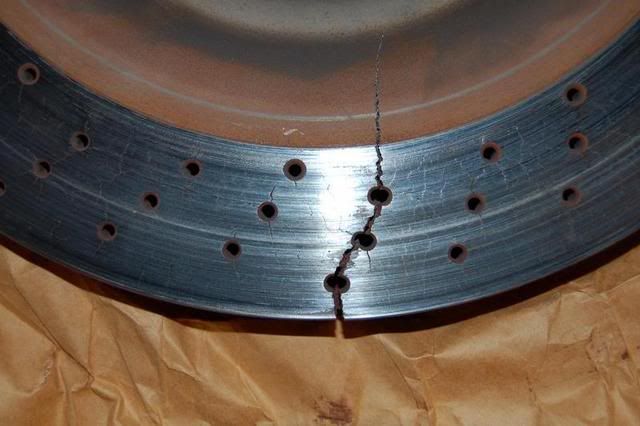
Now back to that slotted vs drilled part. Ive seen so many of the drilled ones crack its not funny. To start with we were drilling the rotors by hand. These of course cracked very badly very often. The purchased ones were far better than the ones we hand drilled ourselves but they cracked or deform similar to the pic posted earlier in this thread. The slotted rotors came out awhile later. I cant remember how many years later but later. No one had problems with these.
Ive seen similar cracking on the drilled car rotors too. Ive also seen 2 shatter but its impossible to tell for sure if the drilling was responsible for the shattered ones to be honest.
I think what caused to problem with coming down that mountain normal or racing was the massive amounts of heat. You just don't work brakes on a flat track or normal twisty road as you do on 10 miles plus of downhill road.
If you have drilled or slotted rotors you can get down the mountain without stopping. Its actually that simple to test. The brakes fade horribly on bikes with solid smooth rotors.
Now back to that slotted vs drilled part. Ive seen so many of the drilled ones crack its not funny. To start with we were drilling the rotors by hand. These of course cracked very badly very often. The purchased ones were far better than the ones we hand drilled ourselves but they cracked or deform similar to the pic posted earlier in this thread. The slotted rotors came out awhile later. I cant remember how many years later but later. No one had problems with these.
Ive seen similar cracking on the drilled car rotors too. Ive also seen 2 shatter but its impossible to tell for sure if the drilling was responsible for the shattered ones to be honest.
I think what caused to problem with coming down that mountain normal or racing was the massive amounts of heat. You just don't work brakes on a flat track or normal twisty road as you do on 10 miles plus of downhill road.
Drifting
Joined: Apr 2005
Posts: 1,461
Likes: 378
From: Bellinum Wa
I did the same thing with a CB750. We put a twin caliper setup on it and I drilled it.
I did notice slight cracking ( like 1/64th or so)
Years later I realized the diameter is a big factor even more so the style of chamfering. It can reduce surface tension of the brake pad as it passes over the whole reducing heat and metal fatigue.
The reason we drilled was more for water removal. Wet pads cause water to not allow effective braking force until the water heats up and dissipates
I did notice slight cracking ( like 1/64th or so)
Years later I realized the diameter is a big factor even more so the style of chamfering. It can reduce surface tension of the brake pad as it passes over the whole reducing heat and metal fatigue.
The reason we drilled was more for water removal. Wet pads cause water to not allow effective braking force until the water heats up and dissipates
Drifting


Joined: Dec 2007
Posts: 1,672
Likes: 8
From: Sumter South Carolina
Same debate that happens once every month here on the forum. If you truly race you know drilled are no good. Ask all the pad dealers. If you drive only street you will prob be fine even spirited driving. On street you may think you are driving equivalent to a race car but you most definitely are not even close. 1. Street tires don't have the grip, 2. You can't have the road to do lap after lap. It is in spurts.
As for the mountain thing, motorcycles are a totally different thing. Their disks are cast from factory with the holes just like Ferrari or Porsche. If they are cast that way they are not weakened.
Street car, go for it, but you are kidding yourself when you say it helps. Race car, I can crack a set of cheap blanks in a couple of sessions if I don't move the car after I come back to the pits. I can break a set of slots in one run with a race pad. I've done it back when I didn't know. Now I can go take pics of all my blanks I've broken (about 10) over the past year that haven't been hauled to the scrap yard yet.
Your pad determines braking characteristics. I'd say rotor is not even a factor on a street car. But they look cooler with the slots and drilled!!! Rice on!
As for the mountain thing, motorcycles are a totally different thing. Their disks are cast from factory with the holes just like Ferrari or Porsche. If they are cast that way they are not weakened.
Street car, go for it, but you are kidding yourself when you say it helps. Race car, I can crack a set of cheap blanks in a couple of sessions if I don't move the car after I come back to the pits. I can break a set of slots in one run with a race pad. I've done it back when I didn't know. Now I can go take pics of all my blanks I've broken (about 10) over the past year that haven't been hauled to the scrap yard yet.
Your pad determines braking characteristics. I'd say rotor is not even a factor on a street car. But they look cooler with the slots and drilled!!! Rice on!
Drifting
Joined: Apr 2005
Posts: 1,461
Likes: 378
From: Bellinum Wa
Generalizations are merely that.
Pictures shown (and honestly I'm not defending or against D&S) are catastrophic failure. Also looks like the lowest possible grade of rotors on what appears to be a 4WD truck.
Using low grade materials results in poor and even dangerous conditions.
We're lying if we say more than 5% ? of the guys here use there cars for racing. So the remaining 95% has needs and results extremely different. Meaning normal street use builds up a lot of material on the rotor and slotted (more than D&S) help keep the pads clean. The off gas or venting thing is not "as" relevant due to new technology in pad materials like Ceramics and Carbon and Kevlar. Which have a fantastic side benefit of reducing heat and allowing a higher force coefficient.
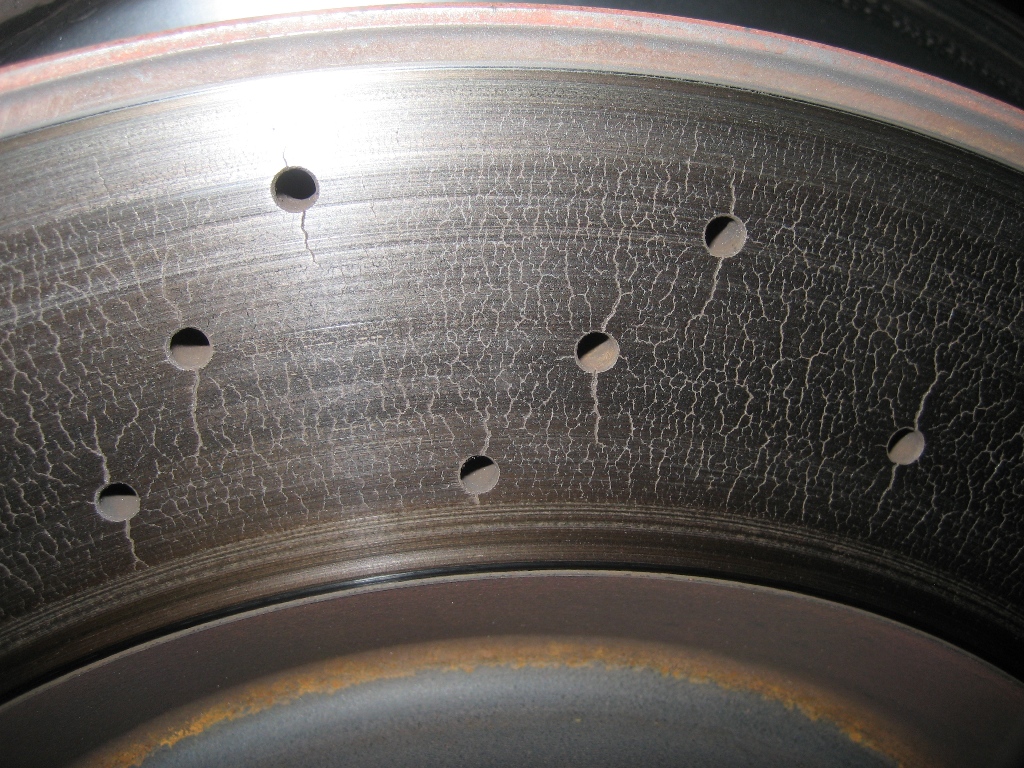
Can a D&S rotor get hairline cracks? Sure. Will a quality high carbon rotor with a new gen Ceramic pad set pull your car down in shorter distance than an OEM set? Yes, but a new high carbon plain rotor with the same pad will stop a mere couple feet further.
It all boils down to owners taste.
D&S will self clean your pads and help us in wetter climates in critical initial emergency braking? Yes
Will D&S sound like a rattle snake every time you come to a stop? Yes
Some owners might be better off with plain rotors and SS flex brake lines.
Pictures shown (and honestly I'm not defending or against D&S) are catastrophic failure. Also looks like the lowest possible grade of rotors on what appears to be a 4WD truck.
Using low grade materials results in poor and even dangerous conditions.
We're lying if we say more than 5% ? of the guys here use there cars for racing. So the remaining 95% has needs and results extremely different. Meaning normal street use builds up a lot of material on the rotor and slotted (more than D&S) help keep the pads clean. The off gas or venting thing is not "as" relevant due to new technology in pad materials like Ceramics and Carbon and Kevlar. Which have a fantastic side benefit of reducing heat and allowing a higher force coefficient.
Can a D&S rotor get hairline cracks? Sure. Will a quality high carbon rotor with a new gen Ceramic pad set pull your car down in shorter distance than an OEM set? Yes, but a new high carbon plain rotor with the same pad will stop a mere couple feet further.
It all boils down to owners taste.
D&S will self clean your pads and help us in wetter climates in critical initial emergency braking? Yes
Will D&S sound like a rattle snake every time you come to a stop? Yes
Some owners might be better off with plain rotors and SS flex brake lines.
Last edited by Hary Gahtoe; Jan 9, 2015 at 06:17 PM. Reason: Potato/ Potato (po tah to)
Corvette Stories
The Best of Corvette for Corvette Enthusiasts

Every 2027 Corvette Engine Explained
Joe Kucinski
Designer Imagines A Corvette That Looks More Like a Corvette Than the Corvette
Verdad Gallardo
10 Ugly Corvettes That We Still Kinda Love
Joe Kucinski
Top 10 Most Expensive Corvettes Ever Sold on Bring A Trailer
Brett Foote
10 Things Every Corvette Owner Needs (2026 Edition)
Michael S. Palmer
8 Most "Only Corvette Owners Understand" Quirks and Problems
Pouria Savadkouei
10 Reasons the C6 Z06 is Still A Performance Benchmark After 20 Years
Joe Kucinski
How Much Horsepower Every Corvette Engine "LOST" in 1972
Joe Kucinski