When you click on links to various merchants on this site and make a purchase, this can result in this site earning a commission. Affiliate programs and affiliations include, but are not limited to, the eBay Partner Network.
My LT4 with 35,000 on it is leaking oil at the front of motor. I get about a 3 inch puddle after every drive. I was in under neath it and cleaned everything up that I could, and found more of a mess on the passenger side of block than drivers. Drivers side was still pretty dirty though. I suspect front seal and am gearing up to start the repair. My question is what else should be done during the repair in order to do it right the first time. This car is all original as it sits and gets driven around 50-100 miles per week in the summer. Should I do all the seals while I'm in there or just what's leaking. Should I do the timing cover, and/or oil pan? What about opti, the 96 is supposed to be the best right? Should I throw a new water pump on as well, it doesn't show any signs of problems as is. New plug wires? This car isn't getting sold and I'm willing to pay for quality and reliability. Thanks in advance!
My LT4 with 35,000 on it is leaking oil at the front of motor. I get about a 3 inch puddle after every drive. I was in under neath it and cleaned everything up that I could, and found more of a mess on the passenger side of block than drivers. Drivers side was still pretty dirty though. I suspect front seal and am gearing up to start the repair. My question is what else should be done during the repair in order to do it right the first time. This car is all original as it sits and gets driven around 50-100 miles per week in the summer. Should I do all the seals while I'm in there or just what's leaking. Should I do the timing cover, and/or oil pan? What about opti, the 96 is supposed to be the best right? Should I throw a new water pump on as well, it doesn't show any signs of problems as is. New plug wires? This car isn't getting sold and I'm willing to pay for quality and reliability. Thanks in advance!
a 96 with only 35,000 miles? that's quite a find. congratulations. That's a great motor / car combo.
What people don't realize with older (yeah it's almost twenty years old) cars with low miles is that while strictly mechanical,,,and by that I mean metal...parts and systems don't deteriorate over time...anything made of rubber or some synthetic rubber like material, will degrade over time. So in your situation I would not worry about replacing a lot of mechanical items; but here is what I would suspect:
oil leak at the front of the engine? well the timing chain cover has three oil seals, water pump drive, opti, and crankshaft. I would suspect...given the amount of oil leaking that it's the crankshaft seal, but it could be any or all three. The seals are cheap, it's just the labor to get to them that's intense, or if someone does it for you, expensive.
IF the CRANKSHAFT SEAL is leaking, the biggest stumbling block is removing the crank hub since it has to come off before the timing chain cover can be removed.
Any of the timing chain cover seals can be replaced with the cover on the engine. On mine I removed the timing chain cover and replaced all three seals with the timing chain cover on the bench, but this was to get access to a stretched timing chain on my high mile LT4....I don't suspect that on your engine that there is any reason to have that concern. Also removal of the timing chain cover disturbs the oil pan gasket, which now implys the need to remove the pan in order to replace the gasket, which again on my engine was something I wanted to do since I replaced the rod and main bearings and oil pump....again something that's a non issue with your engine.
Replace the pan gasket? no these gaskets are really robust and except for maybe tightening the oil pan bolts an extra quarter turn or so, shouldn't need any attention. Worse comes to worse, the oil pan gasket can be revisited at a later date without disturbing or redoing anything else.
If you have an original Opti well lucky you. You can remove the Opti cover and with electra clean, clean any traces of carbon tracking, corrosion or deposits from the terminals, think conventional distributor cap maintenance here. Remove the rotor and reset the rotor hold down screws with a drop of Loctite, In addition to the O ring, reinstall the distributor cap with a little RTV to ensure a good seal against moisture.
What can and did fail on my Opti was not the Opti itself, but what is called the vavumn harness...two bit words for some vacumn lines, one was cut by the serpentine belt and the other, larger, was oil soaked to the point it had softened and collapsed...the late, last generation ventilated Optiis are very reliable, and you should have no trouble with yours...but these hoses have to be intact.
I would replace the water pump, simply because the seal (and bearing) are twenty years old, and even with fresh coolant changes over the years, they are bound to have deteriorated and once the water pump begins to leak...well the Opti is likely the next to go.
Replace the spark plug wires? definitely; even if the engine ran great, once you start pulling and twisting on old wires the conductor and insulators gets disturbed and a million little fractures occur and what was a "good" wire, ain't such a good wire no more.
Serpentine belt? definitely.
Radiator hoses? definitely.
Thermostat? definitely.
I'd inspect both the serpentine belt tensioner and idler, and if either bearing seem to be the least bit rough or noisy, I'd replace one or both
; they're cheap and can be a source of annoying noise from the front of the engine.
The biggest part of the job is going to be cleaning the mess the oil leak has caused over the years; the danger here is that the front spring is directly below the oil leak, and while oil shouldn't hurt it, some strong detergents and cleaners will attack it; grease cutting dish soap, a pressure washer and a lot of patience will get the job done, just be easy around anything electrical, even connectors in the wiring harness, sure GM calls them "Weather Tight"...they didn't call them "waterproof".
I found multiple cans of brake cleaner to be an excellent grime and gunk remover...just don't get it in your eyes, ask me how I know!
Good luck and color me green with envy
Last edited by mtwoolford; Apr 18, 2015 at 01:28 PM.
Thanks so much for the GREAT reply! Iv'e got basic mechanical experience, but this will be my first in depth work done on this car. I think working on the car is half the fun of owning it, even with the inevitable headaches that go with it. Besides the Kent moore hub puller, are there any other specialty tools that will be needed during this?
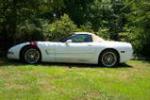
Here is a picture of the car all cleaned up. I believe I got a steal when buying it!
There is a crank position sensor on the lower passenger side of the front cover on the LT4 and from your description that would be the first place I would look. Congrats on a really beautiful looking LT4/C4.
I have a 95 model with 95000 on the clock as of today. I do most of my own work and lucky enough to have a heated shop to work in so, that said, when she (sweet-thing) turned 10 years old, just because of the age I sat her on stand stands during the winter and replaced the following:
1. opti spark
2. water pump
3. serp belt
4. All hoses
5. Plugs
6. Plug wires.
7. Radiator Found signs of a leak I did not know I had.
I guess it is a matter of opinion, but the car is 19 years old and take it from an old man, with age nothing works like it used to,
Good luck and let us know what you find and decide to do.
Besides the Kent moore hub puller, are there any other specialty tools that will be needed during this?
Haven't used a Kent Moore hub puller; just be sure it is designed to remove an LT1 / LT4 hub and not a conventional small block balancer;
It's a little hard to explain, but the LT hub sets on the end of the crank like a hat. This is how I remove mine:
Remove damper from hub
go to the hardware store and get a series of 7/16th FINE thread capscrews of various lengths
screw a short one into the crankshaft snout; there should be some distance from the face of the hub to the shoulder of the head of the capscrew; install a conventional puller so that the hub is pulled out until it contacts the underside of the head of the capscrew;
remove the capscrew, replace with a longer one, reset the puller and repeat
do this a couple of times and the hub will be off
be forewarned that the LT hub is NOT located by a keyway...so use a paint pen to mark the hub orientation to the crankshaft snout; or another way, with number one piston at TDC the little triangle on the hub should be pointing up at the 12 O Clock position;
There is a Key, its just long enough to locate the lower timing chain sprocket on the crank....but since you have a 96, first year for a reluctor wheel, it extends out past the timing chain sprocket 1/8th of a inch or so to locate the reluctor wheel. When everything goes back together MAKE CERTAIN the reluctor wheel does not shift off this little nub of the key...and yes this key is 96 specific, so don't lose it!!
Personally, if I had the timing chain cover off, I'd use some contact cement on the back of the reluctor wheel to make certain it doesn't shift around while everything else is being assembled.
Just to throw in my experience on my LT4:
The water pump seal is the first place for an oil leak, followed by the Optispark seal, then the crankshaft seal....oh...and yeah toss the crack sensor O ring in there somewhere.
After getting the water pump off you can see better as to which seal is proabably leaking. If you decide to remove the cover, then the oil pan must be removed first, which requires the starter to be removed prior along with the oil, oil filter, oil level sensor, inspection plate and various wire harness clips. Also the crank has to have the front counterweight up so the pan will slide back and down.
The major difficulity is getting the hub off; a puller works fine, but the steering rack fluid line is in the way, so this has to be loosen to raise it up in order to get the puller bolt under it and to the hub....all the while power steering fluid is dripping so have a shallow pan under; only takes a few minutes to get the hub off, so only a small amount of power steering fluid drips out.
Replace all the seals in the timing cover since they all come in the FelPro kit. Be sure to read-up on how to install the water pump drive shaft once the cover is back on. Also use the FelPro one piece oil pan gasket. I still put a dab of RTV in the corner, but many install dry. Very tight fit of gasket into bottom of timing cover; I used some silicon spray on the timing cover pan gasket groove to get the gasket to slide in easier.
Plan on a full day for the job, especially doing it the first time.
Well, I started wrenching this afternoon, with the hope of getting down to the seals to see what the issue was. Everything was going great right up until time to remove the crank pulley/harmonic dampener. The dang pulley is stuck to the hub, and wont budge! I've been smacking it around for the last 2 hours with a hammer and wooden dowel, but no movement. I've soaked the backside with PB Blaster and still no luck. Any suggestions as to how to remove this stuck pulley?
The dang pulley is stuck to the hub, and wont budge! I've been smacking it around for the last 2 hours with a hammer and wooden dowel, but no movement. I've soaked the backside with PB Blaster and still no luck. Any suggestions as to how to remove this stuck pulley?
did you remove the three mounting bolts? You're not the first to have trouble; keep rotating and smacking; don't just keep whacking in the same spot.
Update: Soaked the pulley overnight with PB blaster, then went out and bought a 3# sledge at menards. 5 minutes with the sledge, and the pulley popped right off, getting out between the hub and steering rack was a whole other problem, but it eventually came. Once the opti was pulled, it was very clear that it was indeed the crank seal leaking. Opti seal was dry, as was water pump seal. I wont be able to work on the car again until Friday, so in the meantime I'll gather up my parts and keep "Researching" on this incredible forum. Thanks for your guys help so far!
Update: Soaked the pulley overnight with PB blaster, then went out and bought a 3# sledge at menards. 5 minutes with the sledge, and the pulley popped right off, getting out between the hub and steering rack was a whole other problem, but it eventually came. Once the opti was pulled, it was very clear that it was indeed the crank seal leaking. Opti seal was dry, as was water pump seal. I wont be able to work on the car again until Friday, so in the meantime I'll gather up my parts and keep "Researching" on this incredible forum. Thanks for your guys help so far!
Sorry a bit late now but I soaked mine and just barely loosened the bolts the a coulple quick starts and broke free I put some antizease on it when I put it back make sure you know what your doing before takeing the hub off and get a new bolt do not reuse!!!!!!
Great find. Now if you don't want to pull the timing chain cover, which disturbs the pan gasket, once the hub is off there should be enough room between the seal and the crank snout to work in a seal puller and begin working the old seal out; some flat screwdrivers of various sizes and some patience can usually get the old seal out, you can destroy the old seal in the process, just be careful not to nick (or worse), the timing chain cover or the crankshaft snout.
when I install these seals, I use a light coat of RTV on the O.D. of the seal and (opinions vary here) a light coat of grease on the inside lip of the seal.
With the hub out, examine the hub for any wear on the sealing surface that may have caused the old seal to fail; if it is damaged, rather than replacing the hub, any small block chevy "front seal repair kit" can be used, This consists of a vey thin, very hard stainless steel sleeve that fits over the outside of the hub and a properly repaired hub is, (in my opinion at least), superior to a new hub. Install the sleeve with a light coat of RTV on its inner surface between it and the hub
Thanks again to all who off offered advice on here so far! I would never have had the confidence to do this project myself if it wasn't for all the info on this forum. I have some pics (poor phone quality) of the opti opened up and was just looking for opinion on whether to replace cap and rotor or just clean it up, loctite the rotor, and RTV seal the cap.
I squeezed in some time working on the car tonight. The good news is, I got the hub off with no problem, and crank seal removed without problem. The bad news is I am having one hell of a time installing the new crank seal. I've already ruined the new seal, and will have to get another. I put a thin coat of RTV around edge, and tried tapping it in with hammer, and it kept popping out, what are you guys using to put these in?
The bad news is I am having one hell of a time installing the new crank seal. I've already ruined the new seal, and will have to get another. I put a thin coat of RTV around edge, and tried tapping it in with hammer, and it kept popping out, what are you guys using to put these in?
As the guy at the parts counter would say, " just get a bigger hammer"..(and I get to sell more parts)
seriously don't beat on it with a hammer, even if it goes in, the seal housing is gonna get dented / deformed by direct hammer blows.
Get something that will distribute the force over the entire circumference of the seal, it could be a deep socket, pipe nipple (brass or pvc preferred), and a brass hammer or plastic mallet. Once the seal gets started in straight, it will install easily. But if it gets cocked and you beat on it trying to straighten it out....well I guess you know the answer to that
All seals have been replaced and hub pressed back on. Waiting on new plug wires and water pump, before I go any further. Should the opti seal inner lining be oiled before installing opti or keep it dry?



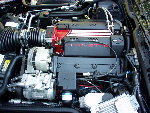


 LT4 Repair, input needed.


 well lucky you. You can remove the Opti cover and with electra clean, clean any traces of carbon tracking, corrosion or deposits from the terminals, think conventional distributor cap maintenance here. Remove the rotor and reset the rotor hold down screws with a drop of Loctite, In addition to the O ring, reinstall the distributor cap with a little RTV to ensure a good seal against moisture.















 make sure you know what your doing before takeing the hub off and get a new bolt do not reuse!!!!!!


