


 That's called "back bleeding". That is my "go to" method for all SMALL hydraulic systems; clutch, dirt bike/snowmobile/motorcycle brakes, etc. Works great, no tools.

Question about clutch bleed procedure

Thread Starter
Instructor


Joined: Nov 2009
Posts: 241
Likes: 4
From: rochester ny
 Question about clutch bleed procedure
I am going to replace the clutch hydraulics in my car before I take it out in the spring and have a question about the procedure. There seems to be a contradiction in the fsm on how to do it and I don't want to damage my new parts! I noticed a bit of black gunk in the master (po put in wrong fluid perhaps?) and I don't think the slave is disengaging completely to allow full engagement of the clutch. After sitting overnight the clutch bites hard and holds nice but after a bunch of shifts the clutch begins to slip a little bit
It clearly states to remove the slave cylinder from the bell housing when bleeding (so it can be held with the bleed screw at the highest point etc.) But a couple paragraphs down in the section talking about clutch replacement it says to ensure the clutch isn't depressed when the slave is not bolted in as it can damage the slave cylinder
My plan was to just remove slave cylinder, gravity bleed a little bit, have my buddy pump and hold the pedal a bunch of times while I open and close the bleeder then bolt the slave cylinder back in
In upstate NY we finally got our winter this week and here I was hoping to be driving my new vette by the end of February
It clearly states to remove the slave cylinder from the bell housing when bleeding (so it can be held with the bleed screw at the highest point etc.) But a couple paragraphs down in the section talking about clutch replacement it says to ensure the clutch isn't depressed when the slave is not bolted in as it can damage the slave cylinder
My plan was to just remove slave cylinder, gravity bleed a little bit, have my buddy pump and hold the pedal a bunch of times while I open and close the bleeder then bolt the slave cylinder back in
In upstate NY we finally got our winter this week and here I was hoping to be driving my new vette by the end of February

Team Owner


Joined: Aug 2004
Posts: 21,543
Likes: 3,216
From: Park City Utah
If your clutch is slipping, you have other issues.
It clearly states to remove the slave cylinder from the bell housing when bleeding (so it can be held with the bleed screw at the highest point etc.) But a couple paragraphs down in the section talking about clutch replacement it says to ensure the clutch isn't depressed when the slave is not bolted in as it can damage the slave cylinder

Safety Car


Joined: Aug 2013
Posts: 4,430
Likes: 609
From: Minneapolis Mn
I had the master and slave replaced in my 86 right after buying it over 2 years ago. He had the instructions from the FSM and failed to get all the air out of the system. After failing to get all the air out for several days, I took a crack at it. I found an item on YouTube on how to use a brake bleeder tip and hose to get the air out, it was a partial success but not 100%. I worked with a former GM mechanic and he gave me a tip which I tried and succeeded. You pump the clutch pedal several times and hold the clutch down for about 5 minutes. This is to give the air time to work back up the hose to the loop directly above the master cylinder. At the end of the time, slide your foot off the clutch and let it pop back up on it's own, forcing the air out of the line back into the master cylinder. I did it a total of 2 times and at the end the clutch was rock solid, it worked for me.
Thread Starter
Instructor
Joined: Nov 2009
Posts: 241
Likes: 4
From: rochester ny
Awesome thanks for all the advice! I'll do the reverse bleed to get it close and then try the back bleeding and see where that gets me.
I want to put the new hydraulics in before I start driving it and then if the clutch isn't right I'll yank it next month. I spent most of the day today cleaning the driveway so it might be a while until I get any of the vettes back home
I want to put the new hydraulics in before I start driving it and then if the clutch isn't right I'll yank it next month. I spent most of the day today cleaning the driveway so it might be a while until I get any of the vettes back home
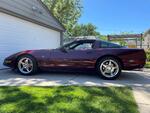
Drifting


Joined: May 2007
Posts: 1,426
Likes: 165
From: Motor City
Awesome thanks for all the advice! I'll do the reverse bleed to get it close and then try the back bleeding and see where that gets me.
I want to put the new hydraulics in before I start driving it and then if the clutch isn't right I'll yank it next month. I spent most of the day today cleaning the driveway so it might be a while until I get any of the vettes back home
I want to put the new hydraulics in before I start driving it and then if the clutch isn't right I'll yank it next month. I spent most of the day today cleaning the driveway so it might be a while until I get any of the vettes back home
I've got a buddy that lives in Rochester, you all got a lot of snow!
Corvette Stories
The Best of Corvette for Corvette Enthusiasts

Every 2027 Corvette Engine Explained
Joe Kucinski
Designer Imagines A Corvette That Looks More Like a Corvette Than the Corvette
Verdad Gallardo
10 Ugly Corvettes That We Still Kinda Love
Joe Kucinski
Top 10 Most Expensive Corvettes Ever Sold on Bring A Trailer
Brett Foote
10 Things Every Corvette Owner Needs (2026 Edition)
Michael S. Palmer
8 Most "Only Corvette Owners Understand" Quirks and Problems
Pouria Savadkouei
10 Reasons the C6 Z06 is Still A Performance Benchmark After 20 Years
Joe Kucinski
How Much Horsepower Every Corvette Engine "LOST" in 1972
Joe Kucinski