When you click on links to various merchants on this site and make a purchase, this can result in this site earning a commission. Affiliate programs and affiliations include, but are not limited to, the eBay Partner Network.
Someone posted this link on another forum I frequent. Given the dependence on electrical connections we have in the fuel injected Corvette world I thought it might have value to post the link here. I hope I'm not breaking any rules here. I guess if I am someone will rip me a new one - sounds exciting!
That's a very interesting article. In addition to the info about electrical connections, the info on the thermal applications in heat sinks is also applicable to most of our C4s: think about ignition modules. Thanks for posting this!
ive always been under the impression that any grease keeps the moistire and contaminents out of an electrical connection.
i recall looking at the bottom of my icm and seeing grease likely to conduct heat. its nice to see that silicon grease and thermal paste if applied similarly (thin wipe) are virtually the same for heat conductivity.
From: Las Vegas - Just stop perpetuating myths please.
Thx for the article. But I what I read in it is contrary to what I have seen used in some applications. The Austrian/German made Rotax motors (CanAm 3 wheelers among other applications) use a silicone based heat conductive grease on the spark plugs ($150 for 4oz tube) so I'm not convinced of that articles testing methods.
That and I need more time to read the whole article.
I do see a lot of mis-uses for the dielectric grease as many imply application on the conductors where it shouldn't be but it's real help is on the boots of plug wires. Now there are greases used on some conductors like firewall connectors that I haven't been able to identify myself but you know they have to be non-conductive there while preventing arching and contact corrosion. The grease I have seen there is a mucky brown that's not on any parts store shelf that I can find.
cardo didnt the posted link say it was infact useful to transmit heat? very close to “thermal paste” if applied thinly. perhaps why the tube was so small and expensive.
From: Las Vegas - Just stop perpetuating myths please.
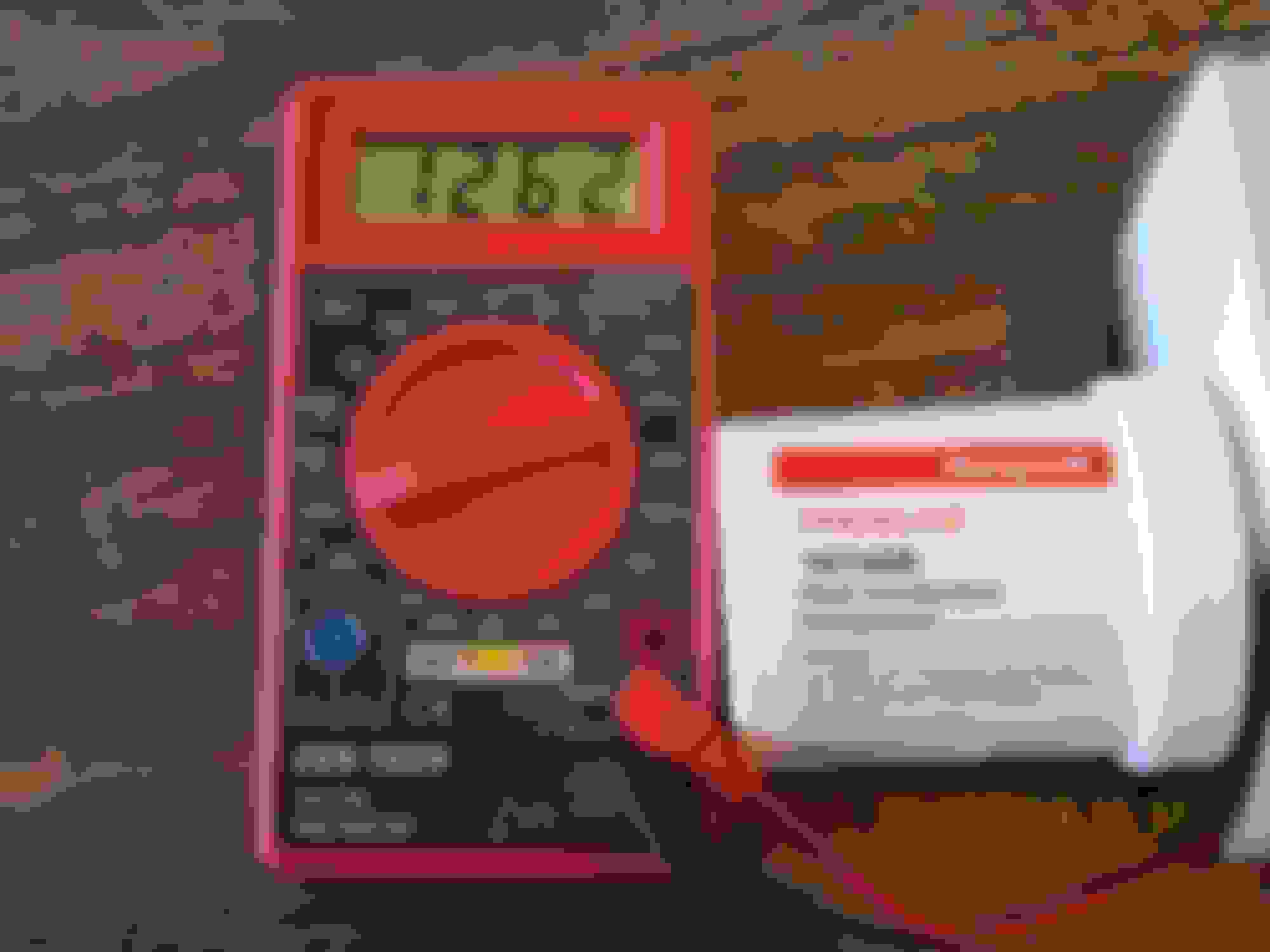
measured the resistance just for fun
So I took the time to read the full article just once and it reads like the clear silicone dielectric grease is the best all around heat conductive and non-conductive coating to prevent corrosion. I like how he says beware of using anti-seize on spark plugs because it will cause the insulator to fail if contaminated while it is helpful on the threads of the spark plug. That's something very good to know.
So I wanted to ad some pix of measuring the resistance my new jar of heat conductive grease which looks to have the undesirable power metal in it. I think I need to make several separate posts to display the measuring process. So to start with I measured my lead resistance and then my body resistance from hand to hand. I don't think my "free with purchase" Harbor Freight meter was accurate as normally my body resistance is less than 100 ohms but today is was 1.3 mega ohms. Just couldn't find my better meter. meter lead resistance less than 1 ohm my body resistance from hand to hand = 1.3 mega ohm
From: Las Vegas - Just stop perpetuating myths please.
more measurements
And now here is the dielectric grease label and resistance measurement. heat conductive grease container label heat conductive grease resistance greater than 2 mega ohm
Finally just for fun I measure resistance on some petroleum jelly.
petroleum jelly resistance greater than 2 mega ohm
Last edited by cardo0; Jul 8, 2019 at 12:37 AM.
Reason: Stupid auto correct!








 Dielectric Grease Article