




switching to run flats 1995

Thread Starter
Intermediate

Joined: Aug 2019
Posts: 29
Likes: 2
 switching to run flats 1995
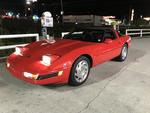
I have the normal tires on my 1995 convertible. I will need new tires in the spring . my question is , can I switch to run flats without having the low tire pressure sensor? I could then save some weight by getting rid of the spare tire .

Le Mans Master


Joined: Sep 2013
Posts: 6,192
Likes: 750
From: near the thumb in the mitten
I wouldn't use run flats they have very stiff sidewalls and will effect ride quality. They are also more difficult to change. Some shops won't cover rim damage during change over. Just carry the jack and a can of " fix a flat" if you want to lose the spare snd carrier. Tire plug kit and a 12v compressor would be better, than fix a flat. Years ago Uniroyal made a self sealing tire. You would think someone would make and sell that type of tire now.

Le Mans Master

Joined: Dec 2005
Posts: 8,546
Likes: 927
From: Communist Colorado

Driving a C4 with R-F tires on it is like riding in a freight train car.... Theyre noisy and not forgiving.... If you like to push the car into turns and have some fun, these tires are not for you... There is a night and day difference between R-F and good regular tires. Dont do it man!!

Race Director

Joined: Sep 2001
Posts: 14,648
Likes: 750
From: NEwhere Ohio
No issues with using run flats without sensors.
the sensor requirement is pretty much for old grandma who would not recognize a flat tire.
all of us are in tune enough with our rides to notice something different in ‘performance, handling, ride quality or ‘noise’ when a tire goes flat.
when i drove a flat goodyear runflat tire (as part of a demo), i noticed a big difference in ‘noise’.
it sounded flat, didnt corner well in one direction (i think the lf tire was the one they flattened and in right turns it wanted to understeer bad).
i also wouldnt do run flats bc they add unsprung weight. The worst kind of weight. Youll need to give more throttle coming off the clutch (if its a stick).
the old run flats also didnt last long bc all road forces went into the tread (vs the sidewall which usually absorbs part of the road shock).
bridgestone makes a ‘driveguard’ runflat that mitigates a lot of these disadvantages. But its not an ultra high performance tire. Its meAnt for more mom in the minivan and I doubt it comes in our size.
the sensor requirement is pretty much for old grandma who would not recognize a flat tire.
all of us are in tune enough with our rides to notice something different in ‘performance, handling, ride quality or ‘noise’ when a tire goes flat.
when i drove a flat goodyear runflat tire (as part of a demo), i noticed a big difference in ‘noise’.
it sounded flat, didnt corner well in one direction (i think the lf tire was the one they flattened and in right turns it wanted to understeer bad).
i also wouldnt do run flats bc they add unsprung weight. The worst kind of weight. Youll need to give more throttle coming off the clutch (if its a stick).
the old run flats also didnt last long bc all road forces went into the tread (vs the sidewall which usually absorbs part of the road shock).
bridgestone makes a ‘driveguard’ runflat that mitigates a lot of these disadvantages. But its not an ultra high performance tire. Its meAnt for more mom in the minivan and I doubt it comes in our size.
Last edited by dizwiz24; Nov 3, 2019 at 02:51 PM.

Melting Slicks

Joined: May 2018
Posts: 2,090
Likes: 599
From: Question Government
Keep in mind that Fix A Flat type sealers only work on small nail/screw punctures, usually not on slices larger than a 1/2", and not at all on a large side wall damage. If you're only driving locally it's an option to carry this with no spare, but better have the spare for long trips. However, who cares about a little weight unless you're racing your Vette?
Race Director
Joined: Apr 2003
Posts: 17,697
Likes: 1,666
From: moraga ca
No issues with using run flats without sensors.
the sensor requirement is pretty much for old grandma who would not recognize a flat tire.
all of us are in tune enough with our rides to notice something different in ‘performance, handling, ride quality or ‘noise’ when a tire goes flat.
when i drove a flat goodyear runflat tire (as part of a demo), i noticed a big difference in ‘noise’.
it sounded flat, didnt corner well in one direction (i think the lf tire was the one they flattened and in right turns it wanted to understeer bad).
i also wouldnt do run flats bc they add unsprung weight. The worst kind of weight. Youll need to give more throttle coming off the clutch (if its a stick).
the old run flats also didnt last long bc all road forces went into the tread (vs the sidewall which usually absorbs part of the road shock).
bridgestone makes a ‘driveguard’ runflat that mitigates a lot of these disadvantages. But its not an ultra high performance tire. Its meAnt for more mom in the minivan and I doubt it comes in our size.
the sensor requirement is pretty much for old grandma who would not recognize a flat tire.
all of us are in tune enough with our rides to notice something different in ‘performance, handling, ride quality or ‘noise’ when a tire goes flat.
when i drove a flat goodyear runflat tire (as part of a demo), i noticed a big difference in ‘noise’.
it sounded flat, didnt corner well in one direction (i think the lf tire was the one they flattened and in right turns it wanted to understeer bad).
i also wouldnt do run flats bc they add unsprung weight. The worst kind of weight. Youll need to give more throttle coming off the clutch (if its a stick).
the old run flats also didnt last long bc all road forces went into the tread (vs the sidewall which usually absorbs part of the road shock).
bridgestone makes a ‘driveguard’ runflat that mitigates a lot of these disadvantages. But its not an ultra high performance tire. Its meAnt for more mom in the minivan and I doubt it comes in our size.
Corvette Stories
The Best of Corvette for Corvette Enthusiasts

Corvette ZR1X Will Be Pacing the Indy 500, And Could Probably Race, Too!
Verdad Gallardo
Top 10 Corvettes Coming to Mecum Indy 2026!
Brett Foote
Top 10 C9 Corvette MUST-HAVES to Fix These C8 Generation Flaws!
Michael S. Palmer
10 Revolutionary 'Corvette Firsts' Most People Don't Know
Joe Kucinski
5 Reasons to Upgrade to an LS6-Powered Corvette; 5 Reasons to Stay LT2
Michael S. Palmer
2027 Corvette vs The World: Every C8 vs Its Closest Competitor
Joe Kucinski
10 Most Common Corvette Problems of the Last 20 Years!
Joe Kucinski
5 MOST and 5 LEAST Popular Corvette Model Years in History!
Joe Kucinski
2027 Corvette Buyer's Guide: Everything You Need to Know!
Joe Kucinski
Race Director
Joined: Sep 2001
Posts: 14,648
Likes: 750
From: NEwhere Ohio
This is wrong. Unless you are cornering, there is no difference if a run flat has no air vs 30psi. I was on a freeway with my C7Z06 Michelin MPSSZP when the low pressure light went on. The sun was behind me coming into the driver's window lighting up the dash. I must have been driving for a few miles at 70 mph. The inside of the tire was toast but at least I made it off the bridge. There was absolutely no change in ride or noise when the tire lost air. I could have driven 70 mph for an hour until the tire blew if I didn't have the dash warning.
umm there most certainly was in my situation.
in your situation was tire completely flat?
Im betting it still had 15 psi in it or so. Maybe by the time you pulled over it was 0 by the time you checked it.
i cant speak for the vette sizes but the p205/65r15 tire that was on the car (nissan maxima) I drove - it was very obvious at 0 psi.
Last edited by dizwiz24; Nov 4, 2019 at 02:46 PM.
Race Director
Joined: Apr 2003
Posts: 17,697
Likes: 1,666
From: moraga ca
umm there most certainly was in my situation.
in your situation was tire completely flat?
Im betting it still had 15 psi in it or so. Maybe by the time you pulled over it was 0 by the time you checked it.
i cant speak for the vette sizes but the p205/65r15 tire that was on the car (nissan maxima) I drove - it was very obvious at 0 psi.
in your situation was tire completely flat?
Im betting it still had 15 psi in it or so. Maybe by the time you pulled over it was 0 by the time you checked it.
i cant speak for the vette sizes but the p205/65r15 tire that was on the car (nissan maxima) I drove - it was very obvious at 0 psi.