






1996 LT1 93 Octane Sunoco

Instructor


Joined: Feb 2005
Posts: 158
Likes: 29

You're misunderstanding. No production car requires premium but some cars (including the Corvette) can advance or retard the timing based on which octane fuel you use with a knock sensor. If it senses knock because you used lower octane fuel, the timing will be retarded and you will get reduced power and reduced fuel economy. The Corvettes do take advantage of this but you may not notice a difference in power if you're driving around like a grandpa. From my experience, you can get up to 10% better fuel economy IF you use and your car recommends premium. So for non Corvettes, my rule of thumb is to buy premium if its 10% or less more than regular. For Corvettes I always use premium. But premium is not a waste for Corvettes if you value better fuel economy and more power.

Melting Slicks


Joined: Mar 2008
Posts: 2,989
Likes: 198
From: Meriden CT
If you suck air in at any temperature above 0*K it has external heat energy in the combustion chamber. That is the most technically correct answer there is. I also showed were someones referenced engine's own manual said use some external method or expected extended cranking times... read has to build up some heat. If you don't think an engine retains heat from compression cycle to compression cycle I just don't know how else to explain it. If you can't understand a hot chamber contributes to resulting detonation in a gas motor 
Sorry, I don't feel the need to write an extended term paper for every comment. Heat in any engine contributes to ignition, warm engines start and run easier because of this (unless something else is wrong).
Then there is this...
"A diesel engine is started by driving it from some external power source until conditions have been established under which the engine can run by its own power. The simplest starting method is to admit air from a high-pressure source—about 1.7 to nearly 2.4 megapascals—to each of the cylinders in turn on their normal firing stroke. The compressed air becomes heated sufficiently to ignite the fuel. Other starting methods involve auxiliary equipment and include admitting blasts of compressed air to an air-activated motor geared to rotate a large engine’s flywheel; supplying electric current to an electric starting motor, similarly geared to the engine flywheel; and applying a small gasoline engine geared to the engine flywheel. The selection of the most suitable starting method depends on the physical size of the engine to be started, the nature of the connected load, and whether or not the load can be disconnected during starting"
The bold being what I am getting at... heat needs to build for conditions to be right. Sorry if an off the cuff comment or a quick reply misstated my position... My position still remains heat must be present in a diesel in some form or another before it will just fire off. Same as heat building in a gasoline motor will contribute to pre-ingition. So do read this as I agree a diesel engine can start on its own after enough compression cycles have occurred for the conditions to be right.
I picked that as it was the coldest place I ever was with my diesel for an extended stop. Even after remaining plugged in, it was not too happy to run for about 10 minutes.
Sorry, I don't feel the need to write an extended term paper for every comment. Heat in any engine contributes to ignition, warm engines start and run easier because of this (unless something else is wrong).
Then there is this...
"A diesel engine is started by driving it from some external power source until conditions have been established under which the engine can run by its own power. The simplest starting method is to admit air from a high-pressure source—about 1.7 to nearly 2.4 megapascals—to each of the cylinders in turn on their normal firing stroke. The compressed air becomes heated sufficiently to ignite the fuel. Other starting methods involve auxiliary equipment and include admitting blasts of compressed air to an air-activated motor geared to rotate a large engine’s flywheel; supplying electric current to an electric starting motor, similarly geared to the engine flywheel; and applying a small gasoline engine geared to the engine flywheel. The selection of the most suitable starting method depends on the physical size of the engine to be started, the nature of the connected load, and whether or not the load can be disconnected during starting"
The bold being what I am getting at... heat needs to build for conditions to be right. Sorry if an off the cuff comment or a quick reply misstated my position... My position still remains heat must be present in a diesel in some form or another before it will just fire off. Same as heat building in a gasoline motor will contribute to pre-ingition. So do read this as I agree a diesel engine can start on its own after enough compression cycles have occurred for the conditions to be right.
I picked that as it was the coldest place I ever was with my diesel for an extended stop. Even after remaining plugged in, it was not too happy to run for about 10 minutes.

Le Mans Master


Joined: Aug 2017
Posts: 6,943
Likes: 1,490
From: New Jersey
You're misunderstanding. No production car requires premium but some cars (including the Corvette) can advance or retard the timing based on which octane fuel you use with a knock sensor. If it senses knock because you used lower octane fuel, the timing will be retarded and you will get reduced power and reduced fuel economy. The Corvettes do take advantage of this but you may not notice a difference in power if you're driving around like a grandpa. From my experience, you can get up to 10% better fuel economy IF you use and your car recommends premium. So for non Corvettes, my rule of thumb is to buy premium if its 10% or less more than regular. For Corvettes I always use premium. But premium is not a waste for Corvettes if you value better fuel economy and more power.
Premium is something like 50 cents more a gallon here. Outside of the vette (which I confirmed doesn't like anything less than 89 with my prior tune with minimal, approximately 26 degrees, timing advance) I've logged no appreciable mpg change tank to tank going back and forth to work. They always fall within the standard deviation no matter how conservative I try to drive with premium.
The vette shows knock counts even on 93 although I've confirmed that to be mostly driveline noise as it happens on shifts and is only 1 or 2 counts. On 89 it was a couple hundred counts a drive not 20. And on 89 it would visibly pull several degrees of timing to quell that where as the 93 does not...
So again... it depends.

Instructor
Joined: Aug 2019
Posts: 146
Likes: 26
So the correct way to go about this is to run 2 tanks. One regular and one premium and record timing events and how much it is reduced through the driving on each. The ECM will never add timing. It will only subtract timing so if the tune is optimized on premium then yes it will perform better. If it is not then you will notice literally no difference.
Premium is something like 50 cents more a gallon here. Outside of the vette (which I confirmed doesn't like anything less than 89 with my prior tune with minimal, approximately 26 degrees, timing advance) I've logged no appreciable mpg change tank to tank going back and forth to work. They always fall within the standard deviation no matter how conservative I try to drive with premium.
The vette shows knock counts even on 93 although I've confirmed that to be mostly driveline noise as it happens on shifts and is only 1 or 2 counts. On 89 it was a couple hundred counts a drive not 20. And on 89 it would visibly pull several degrees of timing to quell that where as the 93 does not...
So again... it depends.
Premium is something like 50 cents more a gallon here. Outside of the vette (which I confirmed doesn't like anything less than 89 with my prior tune with minimal, approximately 26 degrees, timing advance) I've logged no appreciable mpg change tank to tank going back and forth to work. They always fall within the standard deviation no matter how conservative I try to drive with premium.
The vette shows knock counts even on 93 although I've confirmed that to be mostly driveline noise as it happens on shifts and is only 1 or 2 counts. On 89 it was a couple hundred counts a drive not 20. And on 89 it would visibly pull several degrees of timing to quell that where as the 93 does not...
So again... it depends.
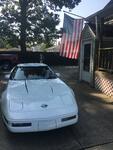
Thread Starter
Instructor
Joined: May 2020
Posts: 159
Likes: 17
From: Northeast, Ohio
1996 LT1 93 Octane Sunoco
I've always used when possible Sunoco or Shell for all my vehicles. With that said, for my newly acquired Corvette I've chosen to use only the highest street use gasoline available which is 93 octane. What brand is preferred?
Question is the benefits.. like quicker throttle response, more get up and go, cleaner engine/fuel system, reduced maintenance costs etc. Would I need to occasional use "race" higher octane like 100? What about additives, pretty sure I read somewhere they are not needed/required due to possible damage.
Appreciate any comments/discussions.
Please keep on topic.. Appreciate the discussion but all I want to know is about Sunoco 93 Octane and LT1 Engines..
Tons of good information posted and will continue to fuel up with Sunoco 91 octane or higher per owner manual and No, I will not give anyone monies to anyone saying I am wasting by buying 93 octane.
Question is the benefits.. like quicker throttle response, more get up and go, cleaner engine/fuel system, reduced maintenance costs etc. Would I need to occasional use "race" higher octane like 100? What about additives, pretty sure I read somewhere they are not needed/required due to possible damage.
Appreciate any comments/discussions.
Please keep on topic.. Appreciate the discussion but all I want to know is about Sunoco 93 Octane and LT1 Engines..
Tons of good information posted and will continue to fuel up with Sunoco 91 octane or higher per owner manual and No, I will not give anyone monies to anyone saying I am wasting by buying 93 octane.

Team Owner


Joined: Aug 2004
Posts: 21,543
Likes: 3,216
From: Park City Utah
I've always used when possible Sunoco or Shell for all my vehicles. With that said, for my newly acquired Corvette I've chosen to use only the highest street use gasoline available which is 93 octane. What brand is preferred?
Question is the benefits.. like quicker throttle response, more get up and go, cleaner engine/fuel system, reduced maintenance costs etc. Would I need to occasional use "race" higher octane like 100? What about additives, pretty sure I read somewhere they are not needed/required due to possible damage.
Appreciate any comments/discussions.
Please keep on topic.. Appreciate the discussion but all I want to know is about Sunoco 93 Octane and LT1 Engines..
Tons of good information posted and will continue to fuel up with Sunoco 91 octane or higher per owner manual and No, I will not give anyone monies to anyone saying I am wasting by buying 93 octane.
Question is the benefits.. like quicker throttle response, more get up and go, cleaner engine/fuel system, reduced maintenance costs etc. Would I need to occasional use "race" higher octane like 100? What about additives, pretty sure I read somewhere they are not needed/required due to possible damage.
Appreciate any comments/discussions.
Please keep on topic.. Appreciate the discussion but all I want to know is about Sunoco 93 Octane and LT1 Engines..
Tons of good information posted and will continue to fuel up with Sunoco 91 octane or higher per owner manual and No, I will not give anyone monies to anyone saying I am wasting by buying 93 octane.
No likely
Only if the engine requires it. You can check this by checking for "knock counts" with a scan tool. If it has knock counts, you could gain power with a higher octane fuel.
No.
Not likley.
No you wouldn't. Waste of money.

Do proper maintenance and the car will cruise right on by 300k miles.
Corvette Stories
The Best of Corvette for Corvette Enthusiasts

Top 10 Most Expensive Corvettes Ever Sold on Bring A Trailer
Brett Foote
10 Things Every Corvette Owner Needs (2026 Edition)
Michael S. Palmer
8 Most "Only Corvette Owners Understand" Quirks and Problems
Pouria Savadkouei
10 Reasons the C6 Z06 is Still A Performance Benchmark After 20 Years
Joe Kucinski
How Much Horsepower Every Corvette Engine "LOST" in 1972
Joe Kucinski
Top 10 DOs and DON'Ts for Protecting Your Convertible Top!
Michael S. Palmer
Top 10 Most Explosive Corvettes Ever Made: Power-to-Weight Ratio Ranked!
Joe Kucinski
150 hp to 1,250 hp: Every Corvette Generation Compared by the Specs That Matter
Joe Kucinski
8 Coolest Corvette Pace Cars (and Replicas) of All Time
Verdad Gallardo
Melting Slicks
Joined: Mar 2008
Posts: 2,989
Likes: 198
From: Meriden CT
Melting Slicks
Joined: Mar 2008
Posts: 2,989
Likes: 198
From: Meriden CT
 and dunno..