When you click on links to various merchants on this site and make a purchase, this can result in this site earning a commission. Affiliate programs and affiliations include, but are not limited to, the eBay Partner Network.
Right, the inside clearance is where you'll encounter the interference. IME, any more backspacing than 8" on an 88-96 car will cause interference inside in the rear, and for a 84-87 car that backspacing limit should be about 7.25". An 11" wheel with 50mm offset will have 7.96" backspacing, so that's likely to be the issue for you. IME, with the car off the ground you may not see any interference. But when you drop it on the ground and start driving on it, you'll probably get the inside corner of the tire touching the trailing arm bracket. You might get the sidewall touching the trailing arms themselves, but I'm not sure. Up front, the interference will of course be when you approach full steering lock. On my car, I actually seemed to get away with more backspacing up front than in the rear, though.
RE your laws, it's going to depend on how they measure "stick out past the guards." Also, you wrote "wheels," which would give some wiggle room to work with; but if the law is that sidewalls can't be outside the fenders then 11/315 is going to be really hard to make work. IME, with properly fitted 11/315s, the edge of the tread is about even with the top of the fender edge, but the middle of the sidewall where it bulges out on most tires will protrude past the fender edge. If you can't run 50mm offset due to inside interference, then the Grand Sport flares would be one obvious solution: GM tacked them on specifically to make the Grand Sport street legal in the US for the same reason.
PS - I know you can figure this stuff out on your own! I'm just trying to give you a head start on what to check for when you try those wheels and tires.
Yep I agree with everything you say. It’s the backspacing that will probably be my Issue but the wheels were cheap enough that it is worth a try. When I said wheels I really meant tyres, How that’s measured is probably up to the cop on the side of the road in terms of spoiling your day. I can potentially get the wheels modified ie essentially have a spacer welded to the back of them or I could just sell them. Either way I’ll check it out and hen it get time and post the results.
22offset will put the wheels to far out. Using C4 ZR1 rear rims (17x11) with stock 36 offset and 315 tires (on front or rear), the tires will stick out a little bit past the fendors.
You got to ask what your car use is. If just street driving, they'd work, they'd just stick out,
But if you racing, some sanction bodies don't allow the tires to stick out past the fender. Scrutineers usually let the ZR1's 1/2" hangover scrape through inspection, because its close enough and not obvious.
But you add another inch or half inch further, the wheel probably wouldn't pass race inspection, unless you put on third party fendor flares.
I wouldn't get a 22 offset rim, if I were you. Just asking for trouble. You could always see if manufacturer would custom cut the rim offset down. Some will.
a 10.5" rim is narrower, but to realize that 1/2" narrower width, you'd need to also drop down to 305 tires.
Youre better off going for a higher offset and making it back up with Spacers if needed, if you cant find what you want in offset in 40 - 36 range..
Ok, thanks for helping with that. So the ZR1’s wheels already stick out about a half inch and these would stick out probably a quarter inch further than that even too. Plus I think the fronts would be out a little further than the rears. I will call them soon and see if they can make them in the right offset, I do know they make them custom drilled and will put whatever finish you want on them so hopefully they will do that too.
I actually just found a picture of them on member hugavet’s car. I like the looks of them, but I’d want them in chrome and he has a post where he did say they stick out an inch in the rear so you guys were right about that. He used the 9.5”s in the front and they fit. I know the 9.5” would fit after seeing his but I know I’d be wanting the 315 tire always so I shouldn’t get the skinnier wheel.
Ok, thanks for helping with that. So the ZR1’s wheels already stick out about a half inch and these would stick out probably a quarter inch further than that even too. Plus I think the fronts would be out a little further than the rears. I will call them soon and see if they can make them in the right offset, I do know they make them custom drilled and will put whatever finish you want on them so hopefully they will do that too.
I actually just found a picture of them on member hugavet’s car. I like the looks of them, but I’d want them in chrome and he has a post where he did say they stick out an inch in the rear so you guys were right about that. He used the 9.5”s in the front and they fit. I know the 9.5” would fit after seeing his but I know I’d be wanting the 315 tire always so I shouldn’t get the skinnier wheel.
I’m thinking maybe I will get the 19x10.5” wheel since the 22mm offset probably won’t work. Those come in a 30 mm offset. I was checking tire sizes and they make the fire hawk Indy 500 in 325/30r19 and I think those would be great if they would fit. I still need to pull the wheels sometime like you said, I just haven’t got around to it. This picture is with 19 inch wheels but I don’t know the tire size. They don’t look wide enough to be 325’s. Those wheels are the hre p101’s that look just like the esr rf2’s.
I’m thinking maybe I will get the 19x10.5” wheel since the 22mm offset probably won’t work. Those come in a 30 mm offset. I was checking tire sizes and they make the fire hawk Indy 500 in 325/30r19 and I think those would be great if they would fit. I still need to pull the wheels sometime like you said, I just haven’t got around to it. This picture is with 19 inch wheels but I don’t know the tire size. They don’t look wide enough to be 325’s. Those wheels are the hre p101’s that look just like the esr rf2’s.
That tire size is too wide for the wheel and too tall for a C4. The correct size for that combo would be 305/30/19, and there are lots of choices in that size.
That tire size is too wide for the wheel and too tall for a C4. The correct size for that combo would be 305/30/19, and there are lots of choices in that size.
oh, I always start to think the tire will be the same height when you change the width. I’ve never understood why the height changes when you change the width number, it should be the same height as long as it is 30r19 it seems like. You’re sure that tire wouldn’t work though? It says it’s .6” taller than stock, which I didn’t think would be a difference and the recommended rim size is 11-12 so I figured the 1/2” smaller than 11” would be fine. I thought these tires would be nice if they would fit because I want them to be as wide as possible but not if it will cause problems of course. That 19x10.5” wheel should work with the 30mm offset though right? https://m.tirerack.com/tires/tires.j...omCompare1=yes
oh, I always start to think the tire will be the same height when you change the width. I’ve never understood why the height changes when you change the width number, it should be the same height as long as it is 30r19 it seems like. You’re sure that tire wouldn’t work though? It says it’s .6” taller than stock, which I didn’t think would be a difference and the recommended rim size is 11-12 so I figured the 1/2” smaller than 11” would be fine. I thought these tires would be nice if they would fit because I want them to be as wide as possible but not if it will cause problems of course.
The middle number of a tire size (30, in this case), is an aspect ratio rather than an absolute dimension. It means that the sidewall height is 30% of the section width. So a 325/30 has a sidewall height of 97.5mm (325*0.30), whereas the 305/30 has a sidewall height of 91.5. The range of stock diameters for a C4 wheel was 25.6-26.1". The latter was the base tire in later years and was aimed at comfort rather than performance. Taller is not better for performance. A taller tire raises the car's center of gravity and roll center, both of which increase weight transfer and therefore hurt cornering and braking performance. I've seen a C4's lap times get worse when switching to a wider and taller tire. Also, a tire that's squeezed onto a narrower wheel than recommended will usually not perform as well as a narrower tire that fits the wheel properly. Manufacturers publish rim width recommendations for a reason. I've seen this a million times, too. You can physically mount it - it's just not a good idea. Finally, the combination of a wider/taller tire makes it more likely that you'll have issues with it rubbing somewhere. That rear tire fitment on hugavet's purple car that you posted in #24 has massive interference problems: his fenders are cutting a line into the tread. That's partly because they don't have enough offset, partly because they are too wide, and partly because they are too tall. You'll be hitting at least two of the same issues as his trifecta.
Finally, there's the matter of appearance. This is obviously a matter of opinion rather than fact. But that purple car as well as the green car you posted pics of both look ridiculous to me. They look like caricatures of C4s, like people used to airbrush on hot rodders' t-shirts in the 1970s. A C4 is a teeny and perfectly proportioned car in comparison to C5+ cars, and doesn't benefit from the ginormous diameters that modern cars need in order to hide their ponderous proportions. The following pic is my car (recently sold to a friend) on 18x11 wheels with 315/30/18 tires front and rear (25.6" diamter). Do you really think the purple and green cars look better with their oversize rear wheels/tires? I can guarantee you they won't perform nearly as well! 305/30/19s would have 1" taller wheels and 1/2" more tire diameter than mine. You be the judge.
That 19x10.5” wheel should work with the 30mm offset though right?
I think so, but I've never done this on an early C4. 32-36mm is usually what's recommended for an 11" wheel on these cars with 315 tires. It's going to be close or slightly poke on the outside, but I'm predicting you'll have enough room with a 10.5" wheel and 305 tires. With a 325 tire, all bets are off.
Also the only tyres I know of that specify their size in overall diameter and not aspect ratio are racing slicks. That is because race car gearing is critical to perforce and often needs to be changed depending on the race track.
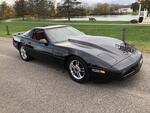
Ok, I understand. Thanks for telling me exactly what you thought. I will just look for 305 tires when I buy them then. That explains the tire sizes better than what I have known, I never could figure out why the height changes with the width but now I get it. I’m not buying them right now, I just wanted to figure out which ones I want for when I do save enough to buy them. I will like the 305’s a lot better than the stock tire size. They aren’t skinny from the factory, but I have always liked the looks a lot better when I see 305 or 315 on a c4, especially when you open the hood. I’m sure the grip will be better too. Thanks for the help, I was looking for an answer like that when I started this thread so I would know what would fit and what wouldn’t. Esr said they would charge $650 to make them in chrome by the way and I know I want chrome, I have always thought that looks the best on a black car especially. Here is my wheels now but they are staring to chip off some on the edges, and they are 16 inch so I wasn’t able to get as wide of a tire as I wanted when we got new tires for it. These came on the car when we bought it.
Ok, I understand. Thanks for telling me exactly what you thought. I will just look for 305 tires when I buy them then. That explains the tire sizes better than what I have known, I never could figure out why the height changes with the width but now I get it. I’m not buying them right now, I just wanted to figure out which ones I want for when I do save enough to buy them. I will like the 305’s a lot better than the stock tire size. They aren’t skinny from the factory, but I have always liked the looks a lot better when I see 305 or 315 on a c4, especially when you open the hood. I’m sure the grip will be better too. Thanks for the help, I was looking for an answer like that when I started this thread so I would know what would fit and what wouldn’t. Esr said they would charge $650 to make them in chrome by the way and I know I want chrome, I have always thought that looks the best on a black car especially. Here is my wheels now but they are staring to chip off some on the edges, and they are 16 inch so I wasn’t able to get as wide of a tire as I wanted when we got new tires for it. These came on the car when we bought it.
Wide 16s are getting really scarce. I should add that 315/35/17 don't offer many choices for street tires these days, and neither do 315/30/18s. In practice, most 305/30/19s are very close in tread width (as opposed to section width) to a 315/30/18. And there are lots of options in 305/30/19. I'd prefer 17s or 18s for a C4 just for looks (obviously a lot of people don't agree with that), but for a true street tire with a section width starting in "3," the 19s are where it's at these days. If you chose to run an 18" wheel, then a 295/35/18 will still be pretty wide and it's about the same diameter (26.1") as the 305/30/19. The picture below is of a friend of mine's 87 C4 with 305/30/19s on all four corners. There's more info about Chris' car at the link, including a nice video about the car. Note that he has them mounted on 12.5" wheels, which is very extreme and won't fit without serious massaging of the inner fender liners. So you should stick with 10.5-11" wheels. But this gives you some idea of the look and how wide they really are. He is destroying everyone in the Optima Challenge GTV class with these tires, so the width offers plenty of grip!
Everything that Matt posted is accurate and golden advice. But I'll add...
- Although, 305 is the correct ideal tire size for 10.5 rims, there are plenty of people who have fit 315s onto 10.5 rims fine. (no comment on whether that actually performs better or not)
- If I ever bought "new" after market rims for my C4, the size I would buy is most likely 18x10.5. So I feel 85CRVET was on the right track with is original target size. You just need a rim or a manufacturer that can provide the correct offset.
- one advantage of 10.5, is that its the largest legal size without penalty for many stock or slightly modified stock classes. C4 maz rim being 9.5", and rules usually allow for + or - 1".
- 18" rims allows for largest size of most third party HP brake kits (like Willwood 14".)
- If you use an 18" rim, and have excess height clearance, I'd argue that performance would be better achieved filling that gap by lowering the car, apposed to raising the tire.
- Many people do expensive differencial rear gear upgrades to get more torque for racing. Another way to accomplish the same thing more easily, is to use shorter tires than stock. That's more viable with 16, 17 or 18" rims, and near impossible with 19".
- I've been very happy with my Nitto tires. They still make many of the C4 sizes. There are a lot of threads suggesting that Nitto tires are just OK, and not a top contender tire, and Im certainly not a top contender driver. But the Nittos still work better than many, and a good enough option to fit needed rim sizes.
- One good reason to do otherwise, and consider a C5/C6 rim/tire size (18-19") for your C4, is the option to find race tire scrubs cheap.
- Lastly, If buying new, don't over look the possibility to have a manufacturer cut your rim to a custom offset size. Many will.
I haven't followed my own advice on rims. Im using mostly 17x11 w/ 325 or 17x9.5s w/ 285. But that's because I bought used, which cost justified my decision of compromise. And I tend to favor the nostalgia of classic stock over performance.
I believe Tires are the upgrade that makes the 2nd most largest impact of anything someone can upgrade. But the 1st is driver skill set. And it will be a long time before my driving will know the subtle difference between a half inch tire/rim difference.
When the tire makes the difference more than the driver/driving does, I'd suggest going even further. Put in the fender flairs, and 235-245s wide, and really make the tires count.
There have been many cases where 275s were on the winners circle's car, beating wider tires. Some have suggested that's because wider isn't always better. Narrower has less friction that can slow car and/or turning.
However, I've never believed the result were due to a narrower tire. I'm betting it was more driver skill, or driver more familiar with the balance of their car.
I've always been a fan of matched set on all 4 wheels. And why I tend to favor tire sizes based on what will fit the front.
Interesting thoughts. I'm going to just comment on the areas where I somewhat disagree, or want to clarify.
Originally Posted by tdereggi
- Although, 305 is the correct ideal tire size for 10.5 rims, there are plenty of people who have fit 315s onto 10.5 rims fine. (no comment on whether that actually performs better or not)
There are almost no street tire options in 315/30/19 sizes, and they are 26.5" tall. So this size is not nearly as viable an option as 305/30/19. For 315/30/18 or 315/35/17, again there are almost no true street tire options, although there are some killer competition tires. Kind of depends on the intended purpose for the car. If going 18s for the street, I'd recommend 295/35/18 as the best option for lots of choices. Those are still wide.
- one advantage of 10.5, is that its the largest legal size without penalty for many stock or slightly modified stock classes. C4 maz rim being 9.5", and rules usually allow for + or - 1".
I'm assuming you're referring to NCCC Group 1 rules. I admit I had to look that up just now because I always was up in Group 3. That's such a strange rule! SCCA Street classes allow +-1" in diameter, but width must remain what the car came with. Go figure...
- I've been very happy with my Nitto tires. They still make many of the C4 sizes. There are a lot of threads suggesting that Nitto tires are just OK, and not a top contender tire, and Im certainly not a top contender driver. But the Nittos still work better than many, and a good enough option to fit needed rim sizes.
Just to be clear here, someone autocrossing or running a road course would be far, far faster running something like a BFG Rival S, Bridgestone RE71R, or Yokohama A052 in a narrower size than running a Nitto 555 G2 in a wider size that wasn't offered in the other tires. For that matter, one would be way faster on a Continental ExtremeContact Sport or Micheline PS4 in a narrower size. This depends on whether or not times really matter to someone, of course.
There have been many cases where 275s were on the winners circle's car, beating wider tires. Some have suggested that's because wider isn't always better. Narrower has less friction that can slow car and/or turning.
However, I've never believed the result were due to a narrower tire. I'm betting it was more driver skill, or driver more familiar with the balance of their car.
Yep, for traction on dry pavement, wider is always better if all else stays equal (diameter especially), and assuming the wheel is wider to go with it. The only exception would be track tires that specifically have to get hot to work, where a narrow tire but "switch on" faster. But that's hardly an issue here.
I was thinking that I’d get the 18 inch because I thought I like them best, but now I’m not sure if I like 18 or 19 better. And I like the RF2 wheel the best but it only comes in the right offset in 19” so I will get the 19”. That 305 tire is wide on that race car, I know I will like them now, the wheel actually looks too wide for the tire though but it must work good like that. I was looking at tires and I think I found the ones I like. The kumho ecsta v720 tires come in 305/30r19 and everyone gave them really good reviews other than some saying the tread doesn’t last really long but I don’t drive that much anyway. I like the tread style too, I think a sports car should have an aggressive tread design. I have the federal ss 595 tires right now. The wheels would be the last visual thing I want to change on the car, I’m about to get the high rise hood installed from acivette and after the wheels I would want it lowered to have just a small gap between them and to level the front and rear. I think it will look really good like that, thanks for helping me make up my mind. I will be sure to post pictures too, it won’t be for a while that I buy the wheels but I just wanted to decided on what I wanted so I can save for them.
That 305 tire is wide on that race car, I know I will like them now, the wheel actually looks too wide for the tire though but it must work good like that.
Those wheels (12.5!) really are too wide for the tires per the manufacturer's recommended rim widths. Chris has always done things a little different. He can drive a car though, and doesn't take half measures! I wouldn't typically recommend more than 11" on a C4 with stock fenders and fender liners. The 10.5s you're looking at will fit these tires very well.
I was looking at tires and I think I found the ones I like. The kumho ecsta v720 tires come in 305/30r19 and everyone gave them really good reviews other than some saying the tread doesn’t last really long but I don’t drive that much anyway. I like the tread style too, I think a sports car should have an aggressive tread design. I have the federal ss 595 tires right now.
Those Kumhos will be quite soft and sticky. You can't drive them in below-freezing temps, or you risk cracking the compound. My guess is that they won't be very good in the rain, either. And they will be noisy. They will grip like suction cups in the dry, though. These are essentially autocross competition tires, although they are street legal - they are direct competitors for the Bridgestone RE71Rs that Chris Ramey has on his car in that video. Whether they make sense for you or not depends on how you plan to use the car. If you plan any longer drives, or drives in the rain, or drives with your wife...they might not be exactly what you're looking for. If you plan to autocross or just carve canyons, then they are fine (I'm not sure these are legal for Street class in SCCA, though).
OTOH, if you want a tire that's still very sticky (about a half step down from the Kumho) in the dry, but is also awesome in the rain and grips well down to about freezing temp (but still shouldn't be driven when it's colder, or in snow/ice), then two best choices by far are the Continental ExtremeContact Sport and Michelin Pilot Sport 4S. These are tires you can really street drive. And they are still really fast. In fact, many autocrossers use them for rainy or cool competitions.
If you need something that's truly all-season, the Cooper Zeon RS3-G1 is probably a good bet. It's a step or two down from the Conti and Michelin in dry or wet grip, but you can drive it in the coldest temps or in snow/ice (though it's not nearly as grippy there as a true snow tire).
So this gives you an idea of some choices depending on your intended use for the car.
I think it will look really good like that, thanks for helping me make up my mind. I will be sure to post pictures too, it won’t be for a while that I buy the wheels but I just wanted to decided on what I wanted so I can save for them.
I was reading the reviews for the kumho tire and a few said they didn’t plan on them being good in the rain like you said, but they were surprised at how well they did. Most others said they did good and I think the only one I saw that wasn’t about them being good in the rain is that they just said they were average in the rain. I don’t corner hard or anything and don’t go to tracks so I don’t really need a tire really grippy but when I get the engine mods done that I want to do then I will be taking it to the drag strip to see what time it gets and I would want a sticky tire for that. The noise wouldn’t bother me because my exhaust is really loud so I doubt I could hear them at all anyway. I did see the Continental and Michelin ones you were saying but I just really liked the tread design of the kumho and those look kind of plain to me. The car is in a garage in the bad winter months so I wouldn’t drive much at all below freezing, but I did have one question. Would they be ok to sit in the cold weather? Because the garage isn’t heated and I’ve never had summer tires before but I thought others have said they don’t do as bad in the cold as the manufacture says, but you just shouldn’t drive them much because you won’t have grip.
I really don't know how good any of these will be for drag launches. None of them are really made for that. Typically you'd want a much smaller-diameter wheel and a tire with more sidewall (but not more diameter) to get the best launch. Once the car is rolling, these will probably hook up well, though.
I don't care about grip in winter. These tires will definitely lose grip, but you can always account for that in your driving. The problem is that the soft tread compound gets very stiff in cold weather and can crack if you move or flex the tire. If the car isn't moved at all, and you don't add or subtract air to them, then this isn't a danger. You just can't do anything that flexes the tread or sidewalls at all, or you risk damage. If you can do that, then go for it. The problem is that most people are like you: they don't drive much in below-freezing temps. I'm saying that you literally can't drive any. You can't even scoot the car a couple feet forward to back to get something out of the garage when it's below freezing. You also can't jack the car up, or inflate the tires, while they are that cold. Most people with tires like this have a second set of all-seasons or winter tires for those months, and put these in the basement until warm weather returns.
On the tread noise, you'll hear it. I had a pretty loud C4, and I could hear my Toyo R888s over everything else. It may not matter to you. I'm just saying that you'll hear them.
I really don't know how good any of these will be for drag launches. None of them are really made for that. Typically you'd want a much smaller-diameter wheel and a tire with more sidewall (but not more diameter) to get the best launch. Once the car is rolling, these will probably hook up well, though.
I don't care about grip in winter. These tires will definitely lose grip, but you can always account for that in your driving. The problem is that the soft tread compound gets very stiff in cold weather and can crack if you move or flex the tire. If the car isn't moved at all, and you don't add or subtract air to them, then this isn't a danger. You just can't do anything that flexes the tread or sidewalls at all, or you risk damage. If you can do that, then go for it. The problem is that most people are like you: they don't drive much in below-freezing temps. I'm saying that you literally can't drive any. You can't even scoot the car a couple feet forward to back to get something out of the garage when it's below freezing. You also can't jack the car up, or inflate the tires, while they are that cold. Most people with tires like this have a second set of all-seasons or winter tires for those months, and put these in the basement until warm weather returns.
On the tread noise, you'll hear it. I had a pretty loud C4, and I could hear my Toyo R888s over everything else. It may not matter to you. I'm just saying that you'll hear them.
I figured a smaller diameter wheel would be best, I don’t mean I need the best but I just meant I want a tire that does have good grip for when I do go to the drag strip. I don’t think the tread noise would bother me at all, but I will decide for sure on tires later whenever I am ready to get them. Would the continental or Michelin’s be like that too and you can’t move them in the winter since they are summer tires too? I will probably just keep my wheels I have now if so and put them on in the cold weather then because I would probably have to move it back and forth a few times.