When you click on links to various merchants on this site and make a purchase, this can result in this site earning a commission. Affiliate programs and affiliations include, but are not limited to, the eBay Partner Network.
There are a few threads out there about using just an LT1 intake or LT1 heads on the SBC short block. Most of them covered the bulk of what was needed to make this work but with the passing of time most have fell dormant or broken. This will be the parts, engineering and expected challenges in taking on this project. So where to start, how about here? The why.
It did not take long after getting my 1990 Z51 coupe up and running to realize it was lacking something my 1994 Firebird Formula had, power. The torque was great but that ran out at 4500rpm and it fell on its face. This was bringing back bad memories of my V6 firebird doing the same.( 3.4L V6) The obvious difference of a TPI vs an LT1 is the runner length and I was set on fixing that. The options are plenty but at a cost. The most strait forward are a TPIS miniram with fuel rail that will set you back a healthy amount. Edelbrock has the Pro-Flo that requires an LS style throttle body and a custom fuel system. Holley sells the Stealth ram that like the other 2 needs some creative fuel management and to clear a Corvette hood there is some machine work required. After all this I came across old post from other forums about adapting the LT1 intake to a Gen 1 engine. After a trip to the local junk yard on a 50% off weekend I had an intake and that's where it all began 2 years ago.
What do you need to know make this work:
LT1 intake from a 1994 or newer engine. 1992-93 use a rear corssover making this much more difficult
LT1 heads have a few different sets out there, #374 and #561 both can be found on the F and Y body cars. #374 have a bit more material for you to port if you want to go that way but as cast flow about the same.
Reverse flow is not an issue. The argument of reverse flow cooling being an issue shows a misunderstanding of how it actually works. The coolant on an LT1 hits the heads first that is all. This does pose a steam issue if you do not incorporate a vent system. The L98 has a steam vent on the rear even with standard cooling so this is not a new idea. We will be using the standard cooling system for this application not needing to worry about the steam vent if you don't want to.
Pluming is going to drive you nuts, just saying.
It is highly encouraged to do this with a speed density car( 90-91 use a MAP sensor not a MAF that is your difference) as the older MAF cars use a very restrictive air tube.
Your stock cam is not going to get the most out of this combo. The duration is to short and your lift is too low to make the most of the new setup. You will have the engine down to the block might as well do it now.
For parts I used an intake from a 1995 Buick Roadmaster, heads from a 1997 Trans Am ( Cast # 561), a Comp Cams 08-503-8 cam, an external thermostat and adjustable water neck from Summit and a mess of fittings. 4x -12AN to barb fittings from summit, 1x 3/4" right angle and 1x 3/4" Tee from Oreilly's for coolant. For fuel after a few different options I settled on two M16 to -6AN and two -6 to hose end with EFI rated soft line to a modified Firebird fuel rail.There where a hand full of custom one off parts made and I will do my best to document them as we get to them.
The first thing I started on was the intake as I had it for about 6 months without the plans to do heads as well. To make the intake work for a TPI engine with original heads you have to tackle a few hurdles. The distributor has no place to go, the bolts are at the wrong location and angle and there is no coolant passage to get the steaming hot coolant out. Most of my initial plans came from here.
I had decided to move the coolant out to the rear of the intake and was sure with enough effort my large cap HEI distributor could work. I was right on one of these at least. You can see both holes but the coolant port was becoming an issue. It took removing the entire EGR block but the Large cap HEI does in fact fit. We will get to the challenges this provides later. Using a 3d printed template to align everything and get close.
The mock up block you see is a 5* angle to allow the distributor to sit in its normal resting position. I then proceeded to cut the 5* shim and begin planning to attach the parts together.
This will take some time to finish so please be patient. I will continue to add in the next few days.
Last edited by Space387; Jun 29, 2020 at 12:57 AM.
Here’s some pics of the distributor hole and coolant connections on my modded LT1 intake install. Distributor angle is 4 deg. Make sure you get the distributor height correct or it will bind on the oil pump.
Here’s some pics of the distributor hole and coolant connections on my modded LT1 intake install. Distributor angle is 4 deg. Make sure you get the distributor height correct or it will bind on the oil pump.
That is much cleaner than mine, nice work.
Some of other things I did to the intake was to remove the extra material for the EGR and Idle air passages for the primary purpose of weight and asthetics. this is why Mine looks like a TPIS mini ram at first glance.
By removing the IAC passages there was a bit of cutting required behind the throttle body to close off the port going down and open it to the main plenum.
When all the cutting stopped it came in to a weight of 22lbs, considerably lighter than the TPI intake.
Although not the order I tackled this project the next challenge is routing the fuel system. Because I refused to buy a small cap HEI, the fuel lines are rather tight. To avoid the risk of running a fuel line over the exhaust and maintain the ability to return to stock if ever needed I resorted to a set of M16x1.5 O-ring to -6AN adapters with a set of -6 to hose end connectors.
The fuel line I went with is AN-6 (3/8 ID) safe for all types of fuels including Ethanol up to 350psi. For the extra few bucks knowing it is not going to fail is worth it. The fuel lines you get from most parts houses are clearly labeled not for fuel injection because they are only rated to 50PSI. The fuel in line routs directly to the passenger side rail without too much fuss. It is highly suggested to add a fuel test probe to the rail itself allowing you to remove the one that is part of the hard line. My main reason was the hard line put it downward at an odd angle making access very difficult. On the driver side the pressure regulator is mounted at an angle regardless of what you get the rail from. If from an F body its pointed to the left, from a corvette its to the right. Both create interference with the large cap distributor. I took the original bracket and with a little cutting and welding re positioned it to make the regulator upright clearing the distributor. I promise that is not the regulator on the final build.
One detail to keep in mind if you are stubborn like me you will have to clock the distributor back ( counter clockwise) 1 tooth to grant you clearance from the connector and the vacuum line. The regulator I went with is adjustable and puts the vacuum port on the side facing the distributor so that became a challenge.
There is one last challenge with the intake, and that is throttle linkage. I have a 6spd so there is no TV cable to deal with, for those with a 700R4 the bracket wont be too much different you will just have to shorten that cable too. For me I used the TPI bracket and cut it to be a bit smaller. I also relocated one of the tabs inboard about 1/2 an inch to align the cables better with the pulley. TPI bracket on the left, LT1 on the right. The tab seen on the top left corner of the TPI was cut off at the bend and welded roughly 1/2 in closer to the cables. The remaining bracket
Both cables need to be shortened to make this fit. The large loop for cruise control will also not fit due to the reduced distance between the bracket and the throttle. To shorten the throttle cable you can either get under the dash and add spacers to the pedal to take up the slack or cut the cable. I opted for the latter and used a single 20Gau barrel connector without the plastic casing. The crimp tool I used is for Metri-pack terminals giving me a squared connector when done. Im sure any good crimping tool will work just be sure to test it well before driving. To accommodate for the cruise control I used a 20 Gau eyelet connector. After cutting off the loop and some of the plastic sheathing I measured and cut the wire to length, slid the eyelet over it and tack welded the wire tip to prevent fraying. DO NOT CRIMP THE EYELET. The cruise control does not have as much travel as the gas pedal and will bind or damage the solenoid if you force it to follow the throttle plate. to complete the fit I had to bend the eyelet so the wire passed under the post
The rest is just plumbing the vacuum lines how ever suits you best. I reused the EVAP ports on the throttle body for signal and outlet to maintain the same hard lines used with a TPI. For PCV you can reuse the passenger side vent line with a little massaging and the driver side can use one of the available ports. You will have to cover the large PCV on the intake if you choose to not use it. That hole is a 1 1/8th inch hole and replacement grommets always need to be modified to fit. The MAP sensor is relocated to a hard point on the intake, you can buy the special grommet for this too or just use some vacuum hose and trim it down to fit.This leaves the brake booster the HVAC signal and the fuel pressure regulator all of which should have an open port to use. I reused some of the hard line for my brake booster to save buying a fitting.
Next will be the heads and cooling system.
Last edited by Space387; Jul 11, 2020 at 01:07 PM.
With the intake out of the way there are 2 major items left to sort out, The heads and cooling. If you go the way I have shown above not modifying the intake mounts or adding coolant ports you have to go with a set of LT1 heads. The more popular ones you will find in aluminum are the 374 casting number and the 561 casting number. For stock flow numbers they are within 1-2cfm favoring the 561. If you plan to port them the 374 heads are supposed to have thicker walls allowing more aggressive porting. Your mileage may vary.
I came across a set of 561 heads for cheap and without knowing the difference bought them without knowing much about the car they came from.
These where ported to 180cc intake, 74cc exhaust and 54cc chambers.
Now if you look in the bottom left and right corner of the heads there is a rather large pair of cooling ports. They are used to introduce coolant into the heads from the water pump directly to allow the "reverse flow cooling" to happen. If left open they will conveniently make all the milkshakes in your oil pan you could ever want. The fix is to plug them. I made 1/8th inch plugs from 6063 aluminum I got from Lowes but you can use 6061 if you have it or if some one is comfortable with a tig welder just use filler rod. My concern about the filler rod is if there is any porosity you will have a leak. I did look at other options including braising the plates in but the machinist who was going to mill and clean my heads was excited to weld the plates for me, so, win. Top are the LT1 heads to go on and below are the 113 heads from my L98
As you can see the bolt holes are all the same from one head to another as well as most of the coolant ports. There are 2 on each side that the 113 heads that the LT1 heads do not.
The smaller of the two needs to be drilled. I am not sure about the larger of the two being safe or useful to drill with there not being a coolant passage over it going to the intake. At this point I do not see an issue and the other builds I have sen seem to go the same way of not drilling the larger hole. At this point the heads could be bolted on but there is a missing part, a coolant out port. I opted for a set of -12AN hose barbs on the forward faces right where the vent holes where, this probably could have been adjusted a hair by fitting them with the accessory brackets to reduce the cutting on the brackets.
I was given the option of screw in but I suggested welding them on because I wanted to make absolutely sure I was not going to have a leak. For anyone looking to do this I suggest having the -12AN threaded fitting over a barb to allow the use of a 90* fitting. That is one of my hind site discoveries I made while pluming the coolant lines. With this taken care of you can now actually bold these heads to a Gen 1 small block and all your bases are covered. I do recommend using the remaining steam ports as steam ports to get any air from the back of the heads. This will also make it available to switch to a reverse flow system by using an external pump and come creative pluming.
The last major hurdle is adding a thermostat and closing up the loop. For this I went with an external housing from Summit designed for -12AN fittings. Once again a hind site moment that I should have also got a -12 Tee to clean up the pluming but I was not planning to have the thermostat as close to the engine as I did.
Now this thing looks a lot smaller on the website when you are buying it, Its rather big. For those who don't know the AN sizes are simply how many 16th the inside diameter of the orifice you are working with, so the barbs are 3/4 inch inside diameter. The original idea was to mount this against the radiator but I had more issues with its location than it solved. Second idea was to place it under the intake bolted strait to the water pump. Now it kinda worked but the issue of air inlet and pulley clearance became too much. I ended up going with an offset location, even with the pump mount but to the passenger side. There is a lovely hole in the accessory brackets here keeping it close to the height of the radiator and reasonable close to the engine.
Here you can see the NPT to barb fitting I used for the steam port on the back. Considered using this side for coolant out but the space was too small for the -12 size I wanted to run.
In doing this I removed the throttle body heater hose and routed it to the tee on the passenger side of the thermostat housing. By doing this I maintain the use of my heater core and clean up the pluming. To make this work I added a 3/4 inch hole to the AC bracket to pass the hose through. You can also see where the bracket was cut to allow the coolant port to fit. With the addition of a new upper hose the system is completed. burping was not too hard and I have not had any cooling issues so far. In the image you can also see why I said it is better to use an AN fitting on the head, look at the driver side head where the coolant line comes out. to make the turn I had to use a 90* nylon fitting for coolant. It is not my first choice and it had to be shortened a little to fit so, things to keep in mind. This is the end of hard parts that had to be modified for the most part. There is some work required to make the electrical system play nice and that will be the next post including my progress on tuning.
Last edited by Space387; Jul 22, 2020 at 12:32 PM.
Here’s some pics of my fuel system mods.
For the inlet side I used 6an fittings on the fuel filter and return line to attach stainless braided hose. At the rail on the inlet is a 6an swivel 90 threaded into the end of the rail.
On the outlet side I used an Aeromotive adjustable regulator and made a bracket to mount it on the side of the rail because of the big cap hei. It is connected to the rail with a threaded swivel 90 and a 90 elbow. The return line is a 6 am fitting in the regulator to the stainless braided line.
For the throttle cable bracket. I used some of the original bracket and welded some new pieces to it to mount it to the top of the fuel rail.
IBVETN2 your whole project looks much cleaner than mine, well done. Its nice to see other ways people have approached the same problems and dealt with them. I noticed your last post you mentioned the wedge was 4* not 5. In doing g some work today I think i see that based on wear marks on my shim. Looks like I have to make a new one.
For the coolant return, I came from the rear of the intake with 10an fittings and hose . I used the aeroquip socketless push on. I designed and made a thermostat housing to bring the 2 hoses together and to have a place for the temp sensors. I’m using a thermokooler 160 thermostat and drilled 4 1/8 inch holes in the flange for bypass to get hot water to it quicker so it will open before the engine gets too hot, since it is a little ways away from the engine. The rest, is a fabricated stainless steel pipe and a cut up original radiator hose.
I also used an LT1 bleeder screw in the top of my thermostat housing to bleed the air out.
I originally fired the engine with just those coolant hoses, but thought I was getting steam pockets or hot spots in the front of the heads. Checked all over with an infrared thermometer. Since I didn’t want to remove intake to do more machine work, I fabricated a steel plate to sit on top of the intake and fasten to the front where the throttle body goes. I used a mag base drill to drill and tap 1/8”npt over the front coolant ports in the heads and used 4an fittings and hose to loop around front of intake and connected together on drivers side with a 4x4x6 an Y fitting and ran a 6an hose over to the thermostat housing.
Passenger side.
Drivers side.
I do encourage anyone with experience doing this kind of swap or questions about the process I may have overlooked please post away. I would like this to become an up to date location for people interested to see how this can be done.
I noticed your last post you mentioned the wedge was 4* not 5. In doing g some work today I think i see that based on wear marks on my shim. Looks like I have to make a new one.
I got that info from a spec manual that the machine shop had on engine blocks. Are to going to cut the shim from aluminum?
One thing I would do differently next time would be to move the distributor hold down to the other side. It’s really tight there with the coolant fitting exiting in the same area
I got that info from a spec manual that the machine shop had on engine blocks. Are to going to cut the shim from aluminum?
One thing I would do differently next time would be to move the distributor hold down to the other side. It’s really tight there with the coolant fitting exiting in the same area
Yes I have a few 1/4in plates of t6061 I can work from. Do you have the heights in that manual by chance? If I'm going to remake it I want to be sure its right.
Yes I have a few 1/4in plates of t6061 I can work from. Do you have the heights in that manual by chance? If I'm going to remake it I want to be sure its right.
No, it didn't have a height for the distributor.
Here's what I did. I cut 2 identical 4deg. blocks that fit into the engine block in place of the main bearing caps. That tilted the block over on the 4deg angle needed. I had the block in my CNC machining center with the heads bolted on. I installed the old TPI manifold and centered over the distributor hole and set the height off of the mounting pad for the distributor. I remover the old TPI and bolted the LT1 intake on and proceeded to machine distributor hole location and height the same as the old TPI.
If you have some way to measure the old TPI distributor pad thickness, you should be able to get close.
OK, I did my LT#? conversion on my basic L98 engine setup over ten years ago....and I had a welder buddy who can weld aluminum to concrete and make it STICK!!!......so the major diff I spotted on the LT intake you used and mine is the large rect. holes on either side of the mani as cast.....I can't imagine such a HUGE change between LT1 and LT4.....I know nothing...just that on my mani the holes not there.....
SO of course I cut the egr crap outta the way and back filled the mani with plaster, and sealed it off with waterproof coating and RTV around the edges in back near the HEI....and removed the entire back section so to mate up with a cut section off an old carb manifold.....and welded up......simple enough job for him, really as just set up a pair of gaskets, located and aligned with bolts, hole angles having been changed, and clamped in place on the mani. then the back piece located and clamped to the gaskets.....once tacked in place gaskets removed from project and welding finished up.......
In back since L98 had rear plumbing coming forward, two little fittings in back two hoses, T fitting and hose forward......close but fits under HEI with no issues.....in front the mani had no crossover or stat housing, so a remote stat housing hanging off rear top of rad, holes drilled, fitted with alum welded fittings to screw in a brass L fitting getting the hoses facing forward on each side, the adjustable FP reg is from the TPI and so mounted on pass side of mani near the mani pressure sensor.....it has 24 lbs injectors 43.5 psi, L98 cam 1.6 roller rockers, 52mm tbody......the trans kickdown goes off the throttle lever under the dash....
From: Las Vegas - Just stop perpetuating myths please.
Something I don't see is any AN fittings on the mrvett conversion and I can appreciate that. Those AN fittings while looking nice are expensive. Expensive enough to make the cost of conversion more expensive than just using better heads on a GEN I block - even with a performance intake. My self I like flare fittings. They fought WWII on flare fittings and I don't think they even had compression fittings back then. Now general aviation aircraft do use a different angle flare than automotive - but handmade flare fittings can still do the job for modest pressures like EFI.
Something I don't see is any AN fittings on the mrvett conversion and I can appreciate that. Those AN fittings while looking nice are expensive. Expensive enough to make the cost of conversion more expensive than just using better heads on a GEN I block - even with a performance intake. My self I like flare fittings. They fought WWII on flare fittings and I don't think they even had compression fittings back then. Now general aviation aircraft do use a different angle flare than automotive - but handmade flare fittings can still do the job for modest pressures like EFI.
I could have used hose barbs, rubber hose and worm drive clamps, but I lean on my car pretty hard on the track and the last thing I want is a fuel line failure. I didn’t spend nearly as much on fittings as a new set of heads cost.
What I can appreciate about doing this is the craftsmanship it takes for the design, machining and welding involved in this.
From: Las Vegas - Just stop perpetuating myths please.
Oh didn't want to flame you, your conversion is exceptional quality and workmanship. Just wanted to warn others 'bout the cost of AN fittings and there are other connections available that are much less expensive. I think to many hobbyists get influenced in an expensive way and you see them everywhere not just fuel lines - heater hoses and radiator hoses. And those large AN fittings are very expensive while some of them are sue-do fittings that just cover the actual clamp on the radiator hose. Actually what I'm saying is this AN fitting use has become big business for a couple of companies while it's not any easier to fabricate than good old flare - maybe even more difficult.
BTW I think your distributor hole placement is impressive and wish I could do one like that.
The mystery to ME is the difference between the casting the OP used and the one I used......I ASSume the diff is between LT1 and 4...........so witch is witch?? mine was painted red, and so I just touched it up a little, but obviously no red on the OP induction......
the diffs between the two casting is much more than I imagined.....anyone have a clue as to WHY??
The mystery to ME is the difference between the casting the OP used and the one I used......I ASSume the diff is between LT1 and 4...........so witch is witch?? mine was painted red, and so I just touched it up a little, but obviously no red on the OP induction......
the diffs between the two casting is much more than I imagined.....anyone have a clue as to WHY??
There is no difference in the castings. Go back and re read everything that he did to the casting. He cut the sides of the casting out to remove the passages from the bottom of the plenum and welded to seal it off. It makes it look more like a Mini Ram.
Actually what I'm saying is this AN fitting use has become big business for a couple of companies while it's not any easier to fabricate than good old flare - maybe
if you were using 45deg flare fittings would you use steel tubing instead of rubber hose?



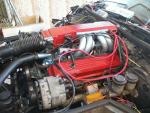

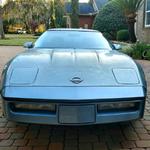


 L98/LT1 hybrid