When you click on links to various merchants on this site and make a purchase, this can result in this site earning a commission. Affiliate programs and affiliations include, but are not limited to, the eBay Partner Network.
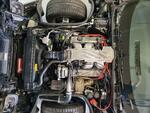
First off, let me start off by saying I'm new to the C4 world, and I am by no means an expert. I've gone a near-stock 1990 L98, and I've been looking for intake mods that keep the TPI aesthetic and provide extra "vroom" in the process. Unfortunately, a lot of the web resources and external links in the forum are long gone, and most of the fun aftermarket parts are floating around the classifieds. Now before you say "there are lots of good thread about this already," I would like to agree, but I would also say there is a lot of conflicting information. I found this video online, and I thought it was very interested. Obviously there are some caveats to the test (for instance 383 vs 350), but in general, I think the data is very interesting. Especially the AS&M Runners test with the stock intake. I'm curious what you guys think!
All TPI-style intakes with ~25" total runner length are hobbled by out-of-phase resonance that will cap their power production at 4500-5000rpm, depending on the exact porting/siamezing/application. If you already have that and don't want to spend money, then I can sort of see reusing it. But if you are going to spend real money, such as on a FAST intake or AS&M runners, then forget about long-runner intakes. They will kill power, and power is what determines how fast your vehicle accelerates. They also foreshorten your usable powerband, giving you a less flexible engine that requires more shifting to stay in the fat part of the power band. Seriously, look at the number you just posted: which two intakes give by far the most power on the exact same engine? If you want to extend your RPM range an extra 1000rpm and gain a ****-ton of power in the process, you should look for a MiniRam (the Steal Ram won't fit under a C4 hood, unfortunately).
The only real issue with that test is that it isn't a stock setup. If you back to back all those intakes on a stock setup you'll more than likely see that just the swap isn't worth that much because the cam and heads can't take advantage of the increased breathability provided by most of them. The stock setup is set up to work pretty well with what you have. Personally from that test, I like the super ram the best, its a good trade between the top end of the mini ram and the lower end boost of the stock setup. But that power band stays flat and fat pretty much everywhere on that setup. If I were doing track events with long straights or needed the top end, the mini is the obvious choice.
Figure this, every time you shift gears, I'm using a manual for this, you drop your rpms by about 1500 rpms. Look at your peak on all those and slide back 1500 from there. Whats going to be fastest at the top. Whats going to be fastest just having fun. Depending where you peak out on power you can determine which is best for you.
I forgot to make the distinction between that test engine and a stock one. However, my last sentence referred more to that. However, I will say that I agree that on an L98 with stock heads and cam (or anything close those), the SuperRam probably would not limit the top end at all and might even bump up the low-RPM power a bit. It would be a solid choice and makes quite a visual statement under the hood. I think they're not cheap or easy to find these days, though.
All TPI-style intakes with ~25" total runner length are hobbled by out-of-phase resonance that will cap their power production at 4500-5000rpm, depending on the exact porting/siamezing/application. If you already have that and don't want to spend money, then I can sort of see reusing it. But if you are going to spend real money, such as on a FAST intake or AS&M runners, then forget about long-runner intakes. They will kill power, and power is what determines how fast your vehicle accelerates. They also foreshorten your usable powerband, giving you a less flexible engine that requires more shifting to stay in the fat part of the power band. Seriously, look at the number you just posted: which two intakes give by far the most power on the exact same engine? If you want to extend your RPM range an extra 1000rpm and gain a ****-ton of power in the process, you should look for a MiniRam (the Steal Ram won't fit under a C4 hood, unfortunately).
Thanks for the response! I agree that the Ram intakes are by far the biggest gains. I have no intention of racing, so an improvement to the existing engine that doesn't kill the low end grunt is most appealing to me. The SuperRam, though it loses a little bit of torque down low, seems to be the best of both worlds.
The only real issue with that test is that it isn't a stock setup. If you back to back all those intakes on a stock setup you'll more than likely see that just the swap isn't worth that much because the cam and heads can't take advantage of the increased breathability provided by most of them. The stock setup is set up to work pretty well with what you have. Personally from that test, I like the super ram the best, its a good trade between the top end of the mini ram and the lower end boost of the stock setup. But that power band stays flat and fat pretty much everywhere on that setup. If I were doing track events with long straights or needed the top end, the mini is the obvious choice.
Figure this, every time you shift gears, I'm using a manual for this, you drop your rpms by about 1500 rpms. Look at your peak on all those and slide back 1500 from there. Whats going to be fastest at the top. Whats going to be fastest just having fun. Depending where you peak out on power you can determine which is best for you.
I've got the manual as well. I think the thing I've come to love about this car the most is the low end torque. My buddy calls it the "perfect grocery getter" which used to offend me, but now I'm all onboard. The L98 tops out so fast, but I figure if I could get more of what I already love, then I'd be happy. The SuperRam is definitely appealing, although hard to find. I'm not opposed to it, but I'm still feeling out all my options. Thanks for the input!
I'll add what little I can to this topic. My 85 has a stock bottom end but the top end has:AFR 180s, a Comp Cams XFI camshaft, a 52mm throttle body, ported and siamesed SLP runners and plenum (siameseing runs approximately 1/2 way down the runner tubes) and an Edelbrock High Flow base that had had no porting work done. The car is turbocharged and has aftermarket EFI. (That doesn't matter much as far as data about runner length is concerned) The advertised operating range of this camshaft is 1,800-5,800 RPMs.
I just had the car tuned by TPIS on their hub dyno. The horsepower starts to peak at 5,300 RPMs even though the camshaft should push a little higher in the RPMs. I am fairly certain this is due to the long runner length of the TPI intake. It does have a nice, relatively flat torque curve though. (Makes for a nice, tame driver with good manners at part throttle but can still get moving in a hurry. Thankfully, my car has a manual transmission.)
As nice as the power under the curve is, I am still strongly considering changing to a Miniram in my future quest for even more power. I shouldn't lose any of the "low end grunt" that the TPI is known for (particularly not with the turbocharger) and that should allow my peak power RPM to shift higher, allowing the engine to make even more horsepower.
Of course, I will lose the look of the TPI, (which I personally really like) but will gain much more power as a result.
If horsepower is what you're after, I would strongly suggest considering the Miniram.
I'm actually thinking that a First TPI intake might be the way to go for me. It seems like a great all-in-one optimization of the TPI setup while keeping the overall aesthetics intact. Don't tell anyone, but I had to sneak over to that nasty nasty ThirdGen forum...
I'll add what little I can to this topic. My 85 has a stock bottom end but the top end has:AFR 180s, a Comp Cams XFI camshaft, a 52mm throttle body, ported and siamesed SLP runners and plenum (siameseing runs approximately 1/2 way down the runner tubes) and an Edelbrock High Flow base that had had no porting work done. The car is turbocharged and has aftermarket EFI. (That doesn't matter much as far as data about runner length is concerned) The advertised operating range of this camshaft is 1,800-5,800 RPMs.
I just had the car tuned by TPIS on their hub dyno. The horsepower starts to peak at 5,300 RPMs even though the camshaft should push a little higher in the RPMs. I am fairly certain this is due to the long runner length of the TPI intake. It does have a nice, relatively flat torque curve though. (Makes for a nice, tame driver with good manners at part throttle but can still get moving in a hurry. Thankfully, my car has a manual transmission.)
As nice as the power under the curve is, I am still strongly considering changing to a Miniram in my future quest for even more power. I shouldn't lose any of the "low end grunt" that the TPI is known for (particularly not with the turbocharger) and that should allow my peak power RPM to shift higher, allowing the engine to make even more horsepower.
Of course, I will lose the look of the TPI, (which I personally really like) but will gain much more power as a result.
If horsepower is what you're after, I would strongly suggest considering the Miniram.
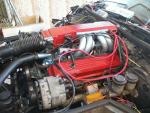
That look awesome! Don't even get me started on the turbo lust.
When you're ready to pull off those runners, hit me up!
That look awesome! Don't even get me started on the turbo lust.
When you're ready to pull off those runners, hit me up!
Unfortunately, those graphs have nothing in common with a n/a TPI implementation. As delivered, the TPI engines provided no more torque/power off idle than the uber-short-runner LT engines that followed. None. That's really important to understand. They provide a spike in torque centered at about 3000rpm, and only about 1000rpm wide. Below that they were no better than short runners, and above that they were shockingly worse. All the porting or fat-runner magic in the world doesn't change that much - they might move the spike up 500rpm or so, but they can't eliminate the cliff that happens afterward. That cliff is purely related to runner length and resonance, not cross-section size or obstructions. This all goes for the FIRST intake as well.
I do understand the appeal to aesthetics of a TPI setup. If that's your primary goal, then go for it. But I wouldn't spend tons of money on a new TPI-style intake or pieces. I just think it's a crime to spend well over $1k on something that functionally hobbles your engine. I can't fathom it. If you can get some fat or siamesed runners cheap, and then polish your intake, that could be a good way to go. Or, if aesthetics is the goal and you don't mind a little work, buy a Holley Stealth Ram and polish it; then either get a hood with a taller "dome" in the middle or do the work of modifying the top of the intake to fit under the stock hood (there are threads here about that). That would look pretty awesome and function extremely well.
Unfortunately, those graphs have nothing in common with a n/a TPI implementation. As delivered, the TPI engines provided no more torque/power off idle than the uber-short-runner LT engines that followed. None. That's really important to understand. They provide a spike in torque centered at about 3000rpm, and only about 1000rpm wide. Below that they were no better than short runners, and above that they were shockingly worse. All the porting or fat-runner magic in the world doesn't change that much - they might move the spike up 500rpm or so, but they can't eliminate the cliff that happens afterward. That cliff is purely related to runner length and resonance, not cross-section size or obstructions. This all goes for the FIRST intake as well.
I do understand the appeal to aesthetics of a TPI setup. If that's your primary goal, then go for it. But I wouldn't spend tons of money on a new TPI-style intake or pieces. I just think it's a crime to spend well over $1k on something that functionally hobbles your engine. I can't fathom it. If you can get some fat or siamesed runners cheap, and then polish your intake, that could be a good way to go. Or, if aesthetics is the goal and you don't mind a little work, buy a Holley Stealth Ram and polish it; then either get a hood with a taller "dome" in the middle or do the work of modifying the top of the intake to fit under the stock hood (there are threads here about that). That would look pretty awesome and function extremely well.
I agree. That's with 5 pounds of boost, not the engine pulling the air in on its own. I'm pretty sure the horsepower peak would be anywhere from 200-500 rpms lower on my engine if it weren't for the turbocharger. The torque curve would probably be less impressive as well. (That would be a cool experiment. My EFI is speed density so theoretically one could disconnect the turbocharger from the intake and make a pull on the dyno to see how the numbers change.)
I won't lose any of the grunt down low if I change to the Miniram.
Its a shame. I really, really like how my engine looks when I open the hood and keeping an intake system that effectively cripples my power potential just because of that is, well, stupid.
As long as one understands the limitations involved, my particular intake setup isn't terrible if you're looking for a "period correct" look. But it also isn't great by any stretch of the imagination.
I ran a SuperRam for a number of years. It was a great street/strip manifold. Good torque and hp for almost all applications. I switched to a miniram because my car turned into a strip only bracket car. The miniram was quicker in the quarter by 1.5 tenths on the same motor.
I do understand the appeal to aesthetics of a TPI setup. If that's your primary goal, then go for it. But I wouldn't spend tons of money on a new TPI-style intake or pieces. I just think it's a crime to spend well over $1k on something that functionally hobbles your engine. I can't fathom it. If you can get some fat or siamesed runners cheap, and then polish your intake, that could be a good way to go. Or, if aesthetics is the goal and you don't mind a little work, buy a Holley Stealth Ram and polish it; then either get a hood with a taller "dome" in the middle or do the work of modifying the top of the intake to fit under the stock hood (there are threads here about that). That would look pretty awesome and function extremely well.
Thanks for the ideas! There is something special about TPI look that is very nostalgic to me, so I have a hard time totally moving away from that. Nostalgia is the reason I have the car in the first place.
I ran a SuperRam for a number of years. It was a great street/strip manifold. Good torque and hp for almost all applications. I switched to a miniram because my car turned into a strip only bracket car. The miniram was quicker in the quarter by 1.5 tenths on the same motor.
If you're chasing power, it's about as good as it gets from my research!
I ran a Large Tube Runner Big Mouth Manifold for years in AutoX and some time trial. But the car setup main focus was AutoX so gearing was focused on AutoX. For smaller courses the Large Tube Runner set up had an advantage due to being able to promote more torque coming off corners at low rpms. However, get to National size courses, the short runner MiniRam has the advantage and that can be seen on a dragstrip too because more power is produced in higher rpms and you can stay in a gear longer and still pull past 6500rpm. So, the MiniRam is the better intake to use in this case for big autox courses and on the track, but for the street I would stick with the Long Tube Runner intake. And, the new Fast Intake is nothing more than the Large Tube Runner set up except it uses a mono blade throttle body vs the dual blade style.
For those that are looking at this thread for the results of the testing, the link below breaks down the results from the original article published in the February of 2005 edition of Super Rod magazine. There’s info on the outputs of the different intakes based on RPM and some graphs overlaying the results along with a lot of discussion about the different intakes https://www.thirdgen.org/forums/tpi/...feb-super.html
Originally Posted by MatthewMiller
That cliff is purely related to runner length and resonance, not cross-section size or obstructions. This all goes for the FIRST intake as well.
I agree that the power band and “cliff” can’t change much if using the stock GM type TPI runner systems – especially on stock heads and even aftermarket heads and intakes (based on the GM style TPI) won’t help much. However, while the runner length is the main contributor to the steep RPM and power drop off point, the diameter of the runner does affect the peak RPM capability for both TQ and HP.
Concerning the FIRST, the inherently bad runner to base and base to runner transition points of the stock type TPI intake systems have been eliminated with the FIRST and an unported base can flow over 300cfm. The amount of flow doesn’t really help the limitation of the runner length, but does give the engine the potential to make a lot more power under the limit (more beneficial to larger engines). The inside diameter (ID) of a stock FIRST runners is 1.75” (area 2.4”). This targets peak torque around 4800rpm for a 350 (1200rpm more than a stock TPI), 4400rpm for a 383, and 4200rpm for a 406. The FIRST’s MCSA of the base (1.85” runner opening) is 2.69” and the runners can also be opened up to that – this bumps the peak TQ target RPM to around 4900 for a 383 and 4600 for a 406.
While the FIRST’s runner length (a little shorter than a stock TPI) still limits peak HP RPM and determines the tuned RPM band, due to the large ID of the FIRST runners it allows HP to peak at a higher RPM - the larger diameter of the runner also widens the tuned torque curve range. Another benefit of the larger diameter runners is you can select a cam to make peak TQ at the “target” RPM based on the runner’s MCSA. For instance, opening up the runners to 1.85” ID will target peak TQ for a 406 at 4600rpm. If you cam for that, it’s almost like adding an additional TQ peak giving the sense of extending the tuned TQ curve even more.
This one (second input box) shows the relation between optimal runner length AND area (a function of diameter) based on engine size and cam duration. http://www.wallaceracing.com/runnertorquecalc.php
With that said, there is no question that a short/shorter runner intake will make more peak HP than a long/longer runner intake. If you cam, gear, and stall for the short/shorter runner it will always perform better at the drag strip compared to a long/longer runner intake. Close ratio manual transmissions also favor short/short runner intakes. However, it’s possible that a long/longer runner intake like the FIRST can deliver similar and sometimes better results at the drag strip when atop a milder combination with a wide ratio automatic transmission, lower than “optimal” stall converter, and lower numerical rear gears – especially in heavier vehicles.
With that said, there is no question that a short/shorter runner intake will make more peak HP than a long/longer runner intake. If you cam, gear, and stall for the short/shorter runner it will always perform better at the drag strip compared to a long/longer runner intake. Close ratio manual transmissions also favor short/short runner intakes. However, it’s possible that a long/longer runner intake like the FIRST can deliver similar and sometimes better results at the drag strip when atop a milder combination with a wide ratio automatic transmission, lower than “optimal” stall converter, and lower numerical rear gears – especially in heavier vehicles.
I'm going to disagree here. The short-runner intake will provide a wider torque and power curve than the TPI-length runners, all else being equal. It is far more suited to wider gear spacing and less use of shifting overall. The TPI intake makes for a peakier engine, since it lops at least 1000rpm off the useful RPM range of any engine. The short-runner intake also provides more average power for the same reason. You're equating short-runner intakes to peaky engines that only make power at very high RPMs, but that is not accurate. A stock L98 made no more torque off idle than the LT1. It only made more torque for a narrow band around it's torque peak, and then the aforementioned cliff took place. The LT1 provided a much broader and flatter torque curve and was equally strong off idle, while extending usefully for an extra 1000rpm.
Originally Posted by BadSS
With that said, there is no question that a short/shorter runner intake will make more peak HP than a long/longer runner intake. If you cam, gear, and stall for the short/shorter runner it will always perform better at the drag strip compared to a long/longer runner intake. Close ratio manual transmissions also favor short/short runner intakes. However, it’s possible that a long/longer runner intake like the FIRST can deliver similar and sometimes better results at the drag strip when atop a milder combination with a wide ratio automatic transmission, lower than “optimal” stall converter, and lower numerical rear gears – especially in heavier vehicles.
Originally Posted by MatthewMiller
I'm going to disagree here. The short-runner intake will provide a wider torque and power curve than the TPI-length runners, all else being equal. It is far more suited to wider gear spacing and less use of shifting overall. The TPI intake makes for a peakier engine, since it lops at least 1000rpm off the useful RPM range of any engine. The short-runner intake also provides more average power for the same reason. You're equating short-runner intakes to peaky engines that only make power at very high RPMs, but that is not accurate. A stock L98 made no more torque off idle than the LT1. It only made more torque for a narrow band around it's torque peak, and then the aforementioned cliff took place. The LT1 provided a much broader and flatter torque curve and was equally strong off idle, while extending usefully for an extra 1000rpm.
Note that I bolded "like the FIRST" as I agree with what you're saying comparing a stock GM/TPI with a LT1 intake on a stock engine. However, I wasn't talking about a stock set up when I referenced the FIRST. The comparison below confirms that the shorter runner StealthRam performs much better than a highly ported GM based TPI/SLP intake on a relatively mild combination. However, I had to run the StealthRam up to 6400 RPM to get the best times in 1st and 6200 rpm in 2nd for a higher shift recovery rpm (you wouldn't have to do this with a close ratio manual transmission). Put on the FIRST and was able to run quicker times (lower mph though) shifting at 5800/5600. It would lay about 2ft of rubber shifting 1st at 5600 (had to raise it to 5800) and ran the same times shifting as high as 6,000 - so I shifted it at the lower RPMs to retain the ETs.
1986 IROC. Flat-top 355, TFS G1 heads, 218/228-110 cam, TH350, 3,000 stall, 3.23 gears, 26x11 ET Streets. Similar weather conditions and same track.
TPI / SLP Intake (fully ported GM base and fully ported SLP runners siamesed about 1/2 way down)
88*F / 29.92 barometric pressure / 86 percent humidity
VERY heavy burnout, foot brake off idle, staggered throttle launch (pumping the gas well past the 60ft mark), 5,500/5,500 shifts. Practically impossible to launch with the base timing at 10-degrees - had to drop it to 8-degress to get enough traction to break into the 12s.
60ft------ 1/8 ET -----MPH ------ 1/4 ET ----- MPH
1.873 --- 8.268 ----- 83.94 ---- 12.953 --- 104.40
Holley StealthRam (minor clean-up, rolled the top edges on the base intake)
85*F / 29.92 barometric pressure / 89 percent humidity
Heavy burnout, foot-brake 1,800 rpm – full throttle launch with heavy burnout, 6400/6200 rpm shifts. A blind monkey could launch the car after a decent burnout,,, no traction problems.
60ft------ 1/8 ET -----MPH ------ 1/4 ET ----- MPH
1.803 --- 8.133----- 86.27 ---- 12.673 --- 107.84
FIRST (box stock, even used the older gasket that overlapped the runners)
83*F / 29.92 barometric pressure / 84 percent humidity
Heavy burnout, foot-brake 1800 rpm, near full throttle launch, moderate traction problems. 5800/5600 rpm shifts
60ft------ 1/8 ET -----MPH ------ 1/4 ET ----- MPH
1.707 --- 7.992 ----- 85.53 ---- 12.599 --- 106.70
Designer Imagines A Corvette That Looks More Like a Corvette Than the Corvette
Slideshow: A Jaguar designer's personal project imagines what a modern front-engined Corvette might look like if Chevrolet revisited the golden age of the Stingray.






 TPI Mega Test