


 welcome to your new brotherhood. semper fi
A few noob questions

Thread Starter
5th Gear

Joined: Jun 2021
Posts: 5
Likes: 0
From: Russellville, KY
 A few noob questions
I have a few questions that I have done some preliminary searches on but can't seem to find a thread. I recently got an '85 Z51 and am not sure what the previous owner's have or have not done to the vehicle and there are some quirks that I'm not sure are related to any modifications. There is a strange exhaust note at say 60 in 4th where it sounds like accelerating, but in too high of a gear, kind of a lugging sound. This is a fairly constant sound even at a constant cruise. It seems to be on the driver side only, I'm hoping it isn't some sort of manifold or exhaust issue.
Also, I noticed there is an aftermarket distributor installed and the stock plenum has been removed to allow for the installation, which leads me to believe it is larger than stock. Is there any way to tell if any engine modifications have been made without taking it to a tune shop or anything like that? I just don't want to be running on a bad tune or it needs something I am overlooking.
I guess a shorter question would be, what little things can I do as a solid look and check before driving further or harder than I already have?
Also, I noticed there is an aftermarket distributor installed and the stock plenum has been removed to allow for the installation, which leads me to believe it is larger than stock. Is there any way to tell if any engine modifications have been made without taking it to a tune shop or anything like that? I just don't want to be running on a bad tune or it needs something I am overlooking.
I guess a shorter question would be, what little things can I do as a solid look and check before driving further or harder than I already have?
Pro


Joined: Dec 2018
Posts: 733
Likes: 424
From: Wisconsin
2023 Corvette of the Year Finalist - Modified
2022 C4 of the Year Winner - Modified
Finalist 2020 C4 of the Year - Modified
Do you mean that the cover at the rear of the plenum that would normally cover the distributor has been removed?
It might help if you post a few pictures of the engine bay.
It might help if you post a few pictures of the engine bay.
Thread Starter
5th Gear
Joined: Jun 2021
Posts: 5
Likes: 0
From: Russellville, KY
Yes, the rear cover has been removed for fitment. I will try to get some pictures this evening of the engine bay and there may be some other things that stand out to more veteran owners.

Safety Car


Joined: May 2001
Posts: 4,759
Likes: 1,647
From: Fairfax Virginia
Welcome to the Corvette Forum MC 0321!
First and foremost you need to have a set of the Factory Service Manuals for your particular year Corvette. They are available in hard copy for ~$80 and $25 on Ebay, I have heard Rockauto also sells them for a great price.
I purchased a old Snap On MT2500 Scanner and now I have a much easier time as I can see the problems in real time. A good scanner is the best tool for trouble shooting on a C4. You can buy a cable and use a software driven program to see your Car's sensors.
The fuel pressure is a good place to start with most C4's. A fuel filter change might be warranted if it has not been done yet. That is part of a tune up anyway in my book.
In the dark some night open the hood and run the engine, some cars provide you with a show of sparks jumping around. If you see sparks you need Spark Plug Wires as well as plugs. Just be sure to use a little anti-seize on the plug threads to keep them from sticking or galling. This is more important on the aluminum headed Corvettes that came along after the iron head cars were made.
What you describe sounds like fueling or it could be partially blocked catalytic converter. A partially blocked catalytic is a partial plug that starts to limit the engine from being able to accelerate at higher speeds.
You might want to start by doing a general "Tune Up" on the vehicle and making sure everything is working the way it was intended. New Plugs, wires, distributor cap and rotor and occasionally the coil itself.
The Oxygen sensor has a "fairly short" useful life and should be replaced every 24 months or 50k miles, the newer cars use Heated Oxygen sensors which last twice as long as the Un-heated variety. Since the O2 is so important on your Corvette It might be worth replacing it if you don't know how old it really is. Old Oxygen sensors have their signals get narrower and slower which can eventually cause drive-ability issues.
A partially plugged exhaust will try to force more air out the O2 hole versus the basic ~5 psi of air that normally comes out. This is an easy test while changing the O2.
On this Forum there is a profile section that you can fill out with what you know about your Corvette. This really helps us not ask for the same information over and over, it helps both of us!
First and foremost you need to have a set of the Factory Service Manuals for your particular year Corvette. They are available in hard copy for ~$80 and $25 on Ebay, I have heard Rockauto also sells them for a great price.
I purchased a old Snap On MT2500 Scanner and now I have a much easier time as I can see the problems in real time. A good scanner is the best tool for trouble shooting on a C4. You can buy a cable and use a software driven program to see your Car's sensors.
The fuel pressure is a good place to start with most C4's. A fuel filter change might be warranted if it has not been done yet. That is part of a tune up anyway in my book.
In the dark some night open the hood and run the engine, some cars provide you with a show of sparks jumping around. If you see sparks you need Spark Plug Wires as well as plugs. Just be sure to use a little anti-seize on the plug threads to keep them from sticking or galling. This is more important on the aluminum headed Corvettes that came along after the iron head cars were made.
What you describe sounds like fueling or it could be partially blocked catalytic converter. A partially blocked catalytic is a partial plug that starts to limit the engine from being able to accelerate at higher speeds.
You might want to start by doing a general "Tune Up" on the vehicle and making sure everything is working the way it was intended. New Plugs, wires, distributor cap and rotor and occasionally the coil itself.
The Oxygen sensor has a "fairly short" useful life and should be replaced every 24 months or 50k miles, the newer cars use Heated Oxygen sensors which last twice as long as the Un-heated variety. Since the O2 is so important on your Corvette It might be worth replacing it if you don't know how old it really is. Old Oxygen sensors have their signals get narrower and slower which can eventually cause drive-ability issues.
A partially plugged exhaust will try to force more air out the O2 hole versus the basic ~5 psi of air that normally comes out. This is an easy test while changing the O2.
On this Forum there is a profile section that you can fill out with what you know about your Corvette. This really helps us not ask for the same information over and over, it helps both of us!
Thread Starter
5th Gear
Joined: Jun 2021
Posts: 5
Likes: 0
From: Russellville, KY


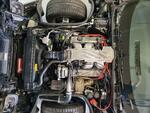
A few quick photos of under the hood. I do have a service manual that may turn in to some light reading in the future. I noticed some "dress up" brackets and parts, and it looks like the heads have some bubbling paint, were they not metallic stock?
@ctmccloskey I honestly know very little about the car other than the suspension package. A quick history is that my wife's aunt purchased it, but passed very shortly after taking delivery. My father purchased it from the estate to keep it in the family and has kept it running and stored for the last few years. He fixed some of the loose switches and had the A/C updated, but outside of that I'm a little in the dark. This is going to remain in the family for as long as possible, so I am willing to do the little TLC work. I will methodically work through the systems as you suggested. So far it has been a blast, but I don't want to hurt it by not seeing something simple.
Thanks for the input so far.
Pro
Joined: Dec 2018
Posts: 733
Likes: 424
From: Wisconsin
2023 Corvette of the Year Finalist - Modified
2022 C4 of the Year Winner - Modified
Finalist 2020 C4 of the Year - Modified
Looking at your pictures I would hazard to guess that the engine is stock. I see an aftermarket cap on the distributor and the shorter cover for the rear of the plenum as that cap/coil is taller than the stock one. The exhaust manifolds are stock instead of being replaced with headers so it is likely that the heads and camshaft are stock as well.
As far as the sound you're hearing during cruising: I would guess that what you are hearing is just exhaust drone. It is possible that the exhaust or mufflers were replaced with aftermarket which can amplify drone in these cars.
As far as the sound you're hearing during cruising: I would guess that what you are hearing is just exhaust drone. It is possible that the exhaust or mufflers were replaced with aftermarket which can amplify drone in these cars.
Safety Car
Joined: May 2001
Posts: 4,759
Likes: 1,647
From: Fairfax Virginia
I would concur about the likely hood of your engine being fairly stock. The Engine looks like somebody took care of the Corvette and that is always a good thing. I see that your valve covers are starting to loose their paint. They are not so easy to remove but can be removed and repainted for a much nicer engine appearance. I bought the paint from Corvette Central and resprayed my set years ago.
The corrugated pipe on the passengers side on my 1988 C4 is part of the EGR system and it has a heat shield cover that goes over it. If yours is not part of the EGR disregard this but that tube can burn you badly when the engine is hot. My EGR failed and burned the cover off the corrugated pipe.
With your car being older than mine I would also do a close check on the Hose that attaches to your Throttle Body and make sure it is completely leak free. You don't want any air leaking in between the Mass Air Flow Sensor and the Throttle Body or it might affect the drive-ability of the Corvette. It appears in one picture top be sliding off the throttle body.
I like the warning sticker on your ignition coil! The coil is clearly NOT the original but if it works so be it. Be very careful around those as they can really zap you, it might be enough to mess with the Heart! I have the DUI version of the cap and coil.
At some point if you have the time I would do a compression test and store it away for future reference. I do the Compression wet and dry and have even done a leak down test on it.
The drone that your exhaust is so nicely making for you is likely where a person installed an aftermarket exhaust that happens to drone on Corvettes. I have a set of Chambered Pipes which don't have any mufflers on them. It sounds nice with no drone on my C4. Sometimes the drone is made worse with the removal of the catalytic converter. I removed my original and replaced it with a Higher flowing unit from Summit Racing when I put my Cat back Chambered Pipe system on the Corvette.
Thank you for your Service to our Country!
The corrugated pipe on the passengers side on my 1988 C4 is part of the EGR system and it has a heat shield cover that goes over it. If yours is not part of the EGR disregard this but that tube can burn you badly when the engine is hot. My EGR failed and burned the cover off the corrugated pipe.
With your car being older than mine I would also do a close check on the Hose that attaches to your Throttle Body and make sure it is completely leak free. You don't want any air leaking in between the Mass Air Flow Sensor and the Throttle Body or it might affect the drive-ability of the Corvette. It appears in one picture top be sliding off the throttle body.
I like the warning sticker on your ignition coil! The coil is clearly NOT the original but if it works so be it. Be very careful around those as they can really zap you, it might be enough to mess with the Heart! I have the DUI version of the cap and coil.
At some point if you have the time I would do a compression test and store it away for future reference. I do the Compression wet and dry and have even done a leak down test on it.
The drone that your exhaust is so nicely making for you is likely where a person installed an aftermarket exhaust that happens to drone on Corvettes. I have a set of Chambered Pipes which don't have any mufflers on them. It sounds nice with no drone on my C4. Sometimes the drone is made worse with the removal of the catalytic converter. I removed my original and replaced it with a Higher flowing unit from Summit Racing when I put my Cat back Chambered Pipe system on the Corvette.
Thank you for your Service to our Country!
Corvette Stories
The Best of Corvette for Corvette Enthusiasts

Top 10 Most Expensive Corvettes Ever Sold on Bring A Trailer
Brett Foote
10 Things Every Corvette Owner Needs (2026 Edition)
Michael S. Palmer
8 Most "Only Corvette Owners Understand" Quirks and Problems
Pouria Savadkouei
10 Reasons the C6 Z06 is Still A Performance Benchmark After 20 Years
Joe Kucinski
How Much Horsepower Every Corvette Engine "LOST" in 1972
Joe Kucinski
Top 10 DOs and DON'Ts for Protecting Your Convertible Top!
Michael S. Palmer
Top 10 Most Explosive Corvettes Ever Made: Power-to-Weight Ratio Ranked!
Joe Kucinski
150 hp to 1,250 hp: Every Corvette Generation Compared by the Specs That Matter
Joe Kucinski
8 Coolest Corvette Pace Cars (and Replicas) of All Time
Verdad Gallardo
Thread Starter
5th Gear
Joined: Jun 2021
Posts: 5
Likes: 0
From: Russellville, KY
Thanks for all of the input. Looks like my winter project is going to start a little early. As much as I want to drive it, I'd rather know everything is in a good place.
And I missed it before, Semper Fi @Sleazy Rider .
And I missed it before, Semper Fi @Sleazy Rider .