When you click on links to various merchants on this site and make a purchase, this can result in this site earning a commission. Affiliate programs and affiliations include, but are not limited to, the eBay Partner Network.
I might have missed it, but I hadn't seen anyone mention this method of creating a little drop in the rear, so I thought I would share.
The entire suspension is getting a refresh over the winter, with coilovers coming in a few months, so I was just going in to replace the rear differential housing bushings. I had to disconnect the rear spring to get it down anyway. I figured while I was in there I would move the spacer on the top of each side of the spring mounts to the bottom just to drop the rear down a tad. As I was putting it together, I realized that if I install the castle nuts upside down, the threads just reach to the bottom of the nut and the cotter pin will still go through the hole. I figure this probably nets another 1/2 of length on the bolt. If you're looking for a free way to get about 3/4" drop, try moving the spacers and reversing the castle nuts.
Are there any threads at all showing on the under side of that nut now? Or, is the nut only partially threaded on to the bolt, leaving threads of the nut exposed? Considering that you are relying on the pull through force, not the shear strength of that bolt and nut and the forces that are put on the end of that leaf spring during driving, you would want to see at least one full thread exposed for safety.
Yeah like others have said this might be a little risky. I'm all for saving a buck and thinking outside the box but this one might be a little unsafe. You can pick up quality longer bolts from a lot of sources that would give you the same drop and still have lots of thread sticking out the bottom. When I did mine I used lock nuts instead of castle.
This moves more of the load beyond the pin hole, where the tensile strength of the bolt is reduced. I wouldn't do it.
Live well,
SJW
The tensile strength of the bolt is way, way, WAY. higher than the car will ever need. WAY higher. It's something like 80,000 lbs. The rear of the car weights ~1500 lbs. One side is ~800 lbs. So.....
Are there any threads at all showing on the under side of that nut now? Or, is the nut only partially threaded on to the bolt, leaving threads of the nut exposed? Considering that you are relying on the pull through force, not the shear strength of that bolt and nut and the forces that are put on the end of that leaf spring during driving, you would want to see at least one full thread exposed for safety.
I should have taken a better picture of the bottom. The threads come just to the bottom of the castle nut. There aren't any unsued threads on the nut. The bolt is basically flush with the bottom of the nut.
The tensile strength of the bolt is way, way, WAY. higher than the car will ever need. WAY higher. It's something like 80,000 lbs. The rear of the car weights ~1500 lbs. One side is ~800 lbs. So.....
With all due respect, Tom, a few observations:
I don't know what grade that bolt is, but presuming it's a grade 8 bolt, as it probably should be, its tensile strength is a little over 21,000 lbs. This, of course, is its strength before it's been cross-drilled for the cotter pin. The cross-drilling substantially reduces the tensile strength at any point beyond the hole. That's not an issue if it's nutted above the pin hole, but very much an issue of the nut is beyond the pinhole.
Granted, the rear of the car might weigh ~800 lbs/side. But that's a static load, and it also doesn't consider the pre-load on the spring. And, more importantly, it's the maximum dynamic load that must dictate the required tensile strength of the bolt. This would require us to add the load imparted by the spring at its maximum deflection (with the suspension bearing down a fully-compressed bump stop). And, we also haven't considered a safety factor. For a critical, load-caryring suspension fastener, I would think it should be a minimum of 2, which would halve the effective tensile strength, which has already been further compromised by the cross-drilling if it's nutted beyond the pin hole.
Would that bolt break in service, as shown in the photo, nutted below the pin hole? Maybe not. But, I wouldn't try it.
No, it wouldn't. We know the spring rate and we know the travel, so we can calc the MAX load imparted on the bolt, by the spring....it's not going to come any where near 21,000 lbs.
Let's examine this a bit...
The stock bolt is a 14mm. If we spend about 5 seconds and do a search, we find that FASTENAL sells 14mm grade 10.9 bolts. You'll see, if you look, that it has a minimum tensile strength of 159,839 PSI. It has to hold 1 corner of a 3300 lb car up. Add GVWR and call it 1/4 of 4000 lbs., so 1000 lbs for the corner. Now add spring rate to the bump stops (~500 lb/inch times 2 inches)...that's ~2000 lbs...but let's call it 2500 lbs to be generous. 2500lbs. What was the rating on that 14mm bolt? 159,839 PSI. Area of 14mm circle is .237" sq. So...159,839 x.237=37,881 lbs of tensile strength (plus a margin of error engineered in by the mfg'er), for a ~2500 lb max/peak load. Think that will hold up one, rear corner of the car? I'm going to go ahead and say that "It's gonna be O.K.".
I'd have to wonder when you're going to have more than 37,881 lbs on one corner of the car.....and not simply smash the car into oblivion.
EDIT: you're right that none of ^that takes into account the pin's hole, but note that we could calc the area of the hole too, and then recalc the area of what's left and thus the tensile strength of what's left....I bet it's still way, WAY over ~2500 lbs. I mean, w/o the hole we have a ~35,000 lb margin PLUS the margin engineered into the fastener!
.
Last edited by Tom400CFI; Oct 21, 2021 at 08:27 PM.
Without getting into tencal strengths and so on that's been covered , GM Designed the bolt a sertain length calculating it will take so much compression/preload of spring from first contact. So if you reduce the preload to get the lower effect wouldn't that effect the handling make it spongy and soft
At a minimum with the lost travel and softer rate you would probably have a much better chance of hitting the bump stops
Last edited by s carter; Oct 22, 2021 at 11:38 AM.
Without getting into tencal strengths and so on that's been covered , GM Designed the bolt a sertain length calculating it will take so much compression/preload of spring from first contact. So if you reduce the preload to get the lower effect wouldn't that effect the handling make it spongy and soft
No. People confuse themselves by thinking that unscrewing the bolts is "reducing preload" on the spring. It's not. That is an impossibility b/c of the weight of the car, sitting on that spring. The car's weight doesn't change and thus, the "preload" on the spring doesn't change either. What does change is the elevation of the sprung mass of the rear of the car.
Originally Posted by s carter
At a minimum with the lost travel and softer rate you would probably have a much better chance of hitting the bump stops
No. Yes.
You don't have a softer rate. The spring's rate hasn't changed at all, and can't change. The only way to change the spring's rate is to change the spring to one with a different rate. So by adjusting the ride height, you're not getting a softer rate.
BUT...."yes", you DO increase the likely hood of hitting the bump stops, simply because you've moved the knuckle closer to the bump stop, at rest. That leaves less travel in jounce available before hitting the stop, than when set at a higher ride height, so yes, it's more likely that you'll bottom the suspension on the stops.
So you've done this mod as well? If so how many years have you had your car like this without an issue?
..... I probably ran the lock nuts for 10-12 years ... when I installed the stiff , flat BMF then BMH rear springs ... the car was too low with longer bolts so I went back to using the stockers and since the diff was in and out fairly often ,
I got tired of dealing with cotter pins and replaced the castle nuts with stovers .....





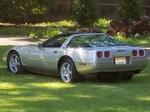



 Small Drop in Rear - Reverse Castle Nut