




Question for 4+3 owners

Thread Starter
Advanced


Joined: Dec 2020
Posts: 71
Likes: 19
From: CNY
 Question for 4+3 owners
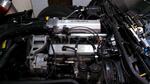
So, when you are coming to a stop with your 4+3 car, either downshifting or throw it in neutral and coasting does the idle speed stay elevated until completely stopped and speeedometer says 0 or does it immediately go to 800rpms? Mine stays @1000-1300rpm until I am stopped and speedometer goes to 0, then drops to 800rpm. Base timing is correct, minimum idle and tps has been set, new iac, throttle body is not sticking (new bbk 52mm). The shaft on the original was very worn.
Just curious if this is normal, or if I need to hunt down another issue. Thanks!
Just curious if this is normal, or if I need to hunt down another issue. Thanks!
Melting Slicks

Joined: Aug 2003
Posts: 3,395
Likes: 393
From: Lakeville MI
This is not unique to 4+3 cars. Idle speed PID control is only enabled below 1.8 mph.
In my own car I have idle speed PID control enabled below 40 mph so it works a bit like a low speed cruise control while idling in any gear and it also provides some early anti-stall protection when the clutch is engaged. Admittedly, this setting is a bit excessive, since 800 rpm in 4th gear O/D is only 28 mph with my gearing and tire size.
Note: my VSS signal can be a bit noisy due to RFI, so this setting also provides for stable idle speed control if the VSS is dancing around while stationary. My battery cables run inside the driver's side rocker panel near the VSS signal wires which makes it more prone to interference.
Here's an example log of an 88 4+3 car (which happens to be a Callaway) coming to rest with closed throttle and clutch disengaged:
https://datazap.me/u/tequilaboy/1988...2811-2613-2663
Note the IAC motor position with respect to the vehicle speed and engine rpm signals. It takes quite awhile (5-10 seconds) for the idle to settle down once PID control is initiated at zero mph in this example.
In my own car I have idle speed PID control enabled below 40 mph so it works a bit like a low speed cruise control while idling in any gear and it also provides some early anti-stall protection when the clutch is engaged. Admittedly, this setting is a bit excessive, since 800 rpm in 4th gear O/D is only 28 mph with my gearing and tire size.
Note: my VSS signal can be a bit noisy due to RFI, so this setting also provides for stable idle speed control if the VSS is dancing around while stationary. My battery cables run inside the driver's side rocker panel near the VSS signal wires which makes it more prone to interference.
Here's an example log of an 88 4+3 car (which happens to be a Callaway) coming to rest with closed throttle and clutch disengaged:
https://datazap.me/u/tequilaboy/1988...2811-2613-2663
Note the IAC motor position with respect to the vehicle speed and engine rpm signals. It takes quite awhile (5-10 seconds) for the idle to settle down once PID control is initiated at zero mph in this example.
Last edited by tequilaboy; Jul 1, 2022 at 05:40 PM.
Melting Slicks
Joined: Aug 2003
Posts: 3,395
Likes: 393
From: Lakeville MI
I do like DFCO, but like most features it can benefit from some tuning in order to make it more predictable and effective.
In maf cars, DFCO (or Deceleration Fuel Cut Off) is triggered by the load (LV8) falling below an activation threshold of about 30 counts with some minor year to year tuning variation. This is a very light load condition, that may never occur, or take some time to occur depending upon the rpm, tps and IAC behavior along with the MAF flow (and calibration). This load condition must be fulfilled continuously for 1.75 seconds before the fuel is cut.
I like to raise the DFCO activation (LV8) threshold to something like 40-50 counts in order to make it more likely to activate and be more predictable when lifting the throttle. The 1.75 second delay timer is just about right allowing for crisp entry and increased engine braking without being overly digital and annoying, which can happen if following the throttle too quickly. A 1 second delay can be annoying in normal driving, so I've settled on the factory setting of 1.75 seconds.
Here's an old log showing a DFCO event example: https://datazap.me/u/tequilaboy/driv...32-11845-11856
Interesting to note is how long it takes for the O2 sensor signal to respond to no fuel...about a 1 second delay before going lean, so keep in mind that the O2 will always be a bit behind what's happening in the cylinders.
In maf cars, DFCO (or Deceleration Fuel Cut Off) is triggered by the load (LV8) falling below an activation threshold of about 30 counts with some minor year to year tuning variation. This is a very light load condition, that may never occur, or take some time to occur depending upon the rpm, tps and IAC behavior along with the MAF flow (and calibration). This load condition must be fulfilled continuously for 1.75 seconds before the fuel is cut.
I like to raise the DFCO activation (LV8) threshold to something like 40-50 counts in order to make it more likely to activate and be more predictable when lifting the throttle. The 1.75 second delay timer is just about right allowing for crisp entry and increased engine braking without being overly digital and annoying, which can happen if following the throttle too quickly. A 1 second delay can be annoying in normal driving, so I've settled on the factory setting of 1.75 seconds.
Here's an old log showing a DFCO event example: https://datazap.me/u/tequilaboy/driv...32-11845-11856
Interesting to note is how long it takes for the O2 sensor signal to respond to no fuel...about a 1 second delay before going lean, so keep in mind that the O2 will always be a bit behind what's happening in the cylinders.
Thread Starter
Advanced
Joined: Dec 2020
Posts: 71
Likes: 19
From: CNY
The fuel cutoff is not as bothersome to me, like barkingdogs said you anticipate when it will happen and push in the clutch when slowing to a stop.
Would a heated O2 respond quicker? I had to put one in my 86 because of random, well kind of a predictable code 13 under light load cruising when it cooled off too much.
Would a heated O2 respond quicker? I had to put one in my 86 because of random, well kind of a predictable code 13 under light load cruising when it cooled off too much.
Corvette Stories
The Best of Corvette for Corvette Enthusiasts

How Much Horsepower Every Corvette Engine "LOST" in 1972
Joe Kucinski
Top 10 DOs and DON'Ts for Protecting Your Convertible Top!
Michael S. Palmer
Top 10 Most Explosive Corvettes Ever Made: Power-to-Weight Ratio Ranked!
Joe Kucinski
150 hp to 1,250 hp: Every Corvette Generation Compared by the Specs That Matter
Joe Kucinski
8 Coolest Corvette Pace Cars (and Replicas) of All Time
Verdad Gallardo
Top 10 Corvette Engines RANKED by Peak Torque (70+ Years of Muscle!)
Joe Kucinski
Corvette ZR1X Will Be Pacing the Indy 500, And Could Probably Race, Too!
Verdad Gallardo
Top 10 Corvettes Coming to Mecum Indy 2026!
Brett Foote