


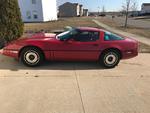



84 High Oil Pressure

Thread Starter
Advanced


Joined: Dec 2008
Posts: 82
Likes: 2
 84 High Oil Pressure
I had a shop convert my stock 350 to a 383. Ever since, the oil pressure starts out at 80 psig and after warming up is around 50 - 60 psig at idle (700 rpm). Cruising at 1800 to 2000 rpm, the pressure goes back up to 80 psig. I thought my pressure sender was bad so I replaced it with a MasterPro part # 2-8128, It reads 80 (full scale) when I turn the key but before starting the engine. The old sender reads 2 - 5 psig when I turn the key but before starting. This is the second MasterPro sender I've tried and they both do the same thing. When I put the old sender back in, the readings are as before so I don't think its a bad connection unless the wiring is different for the new senders.
Ever since the conversion, the engine burns about a quart of oil per tank of gas. I've asked several shops about it and I usually get the reply that some rebuilds just run loose. I am past the ability to remove the engine again to have it looked at so I just keep adding oil (15w-40 was recommended by the rebuild ship). As we said in my younger days, "Fill up the oil and check the gas."
My questions for the Forum are:
1. Is this higher pressure normal for a 383?
2. Do I have the correct replacement sender for a 1984?
Thank you for your replies.
Don
Ever since the conversion, the engine burns about a quart of oil per tank of gas. I've asked several shops about it and I usually get the reply that some rebuilds just run loose. I am past the ability to remove the engine again to have it looked at so I just keep adding oil (15w-40 was recommended by the rebuild ship). As we said in my younger days, "Fill up the oil and check the gas."
My questions for the Forum are:
1. Is this higher pressure normal for a 383?
2. Do I have the correct replacement sender for a 1984?
Thank you for your replies.
Don
Melting Slicks


Joined: Mar 2002
Posts: 2,876
Likes: 764
From: Sligo PA
When the shop built your 383 did they put in a high pressure pump? 80 psi isn't a bad thing, mine hits 70 psi sometimes. But the oil consumption is the part that would concern me. How many miles are on the new motor? Was it broken in properly? Also the 15w-40 isn't doing you any favors. After break in I would swap that out for 5w-30 and see what happens.
Thread Starter
Advanced
Joined: Dec 2008
Posts: 82
Likes: 2
When I tested out the new oil pressure sender, all I did was plug it into the harness. After doing some research I found the sender is grounded through the threaded end. When I connected the threaded end to ground, the pressure read 0 when I turned the key. After screwing the sender into the fitting connected to the manifold, I started the engine and the oil pressure was around 70. Problem 2 solved.
A high pressure pump was installed by the shop so I guess pressure around 70 is ok. Problem 1 answered. I use 15w-40 because that was recommended by the shop. There is probably about 1000 miles on the engine since the rebuild. Its been about 7 years since the rebuild. I got my private pilot's license soon after the rebuild and didn't have time for the Corvette. I followed whatever the shop recommended for the break-in.
Thank you for your responses.
A high pressure pump was installed by the shop so I guess pressure around 70 is ok. Problem 1 answered. I use 15w-40 because that was recommended by the shop. There is probably about 1000 miles on the engine since the rebuild. Its been about 7 years since the rebuild. I got my private pilot's license soon after the rebuild and didn't have time for the Corvette. I followed whatever the shop recommended for the break-in.
Thank you for your responses.
Melting Slicks
Joined: Dec 2009
Posts: 2,236
Likes: 286
They are recommending 15w40 because is a diesel oil with more additives for friction protection. You can use a 10w30 diesel oil. As far as the oil consumption, I'd look into oil being sucked up at the intake ports in the valley. You can try thicker intake gaskets.
Melting Slicks
Joined: Mar 2002
Posts: 2,876
Likes: 764
From: Sligo PA
A couple other things to consider here. When they built the motor what kind of rings were used? Did they use a plated steel top ring? I had a similar issue with mine. Some steel top rings have a long break in period. During this time you will see a lot of oil consumption. For a basic 383 build I doubt this is whats going on. Steel top rings are really needed for high compression or power adders. Otherwise ductile Iron works just fine.
2nd is this oil recommendation. I 100% agree with ex-x-fire in that the diesel oil has a slew of additives and really is some amazing technology as far as oil is concerned. But most shops recommend this kind of oil for break in for a lot of reasons. But at this point I would pour in a traditional 10w-30 or a 5w-30. Watch your oil pressure very closely and see what happens.
2nd is this oil recommendation. I 100% agree with ex-x-fire in that the diesel oil has a slew of additives and really is some amazing technology as far as oil is concerned. But most shops recommend this kind of oil for break in for a lot of reasons. But at this point I would pour in a traditional 10w-30 or a 5w-30. Watch your oil pressure very closely and see what happens.

Le Mans Master


Joined: Aug 2017
Posts: 6,941
Likes: 1,490
From: New Jersey
A couple other things to consider here. When they built the motor what kind of rings were used? Did they use a plated steel top ring? I had a similar issue with mine. Some steel top rings have a long break in period. During this time you will see a lot of oil consumption. For a basic 383 build I doubt this is whats going on. Steel top rings are really needed for high compression or power adders. Otherwise ductile Iron works just fine.
2nd is this oil recommendation. I 100% agree with ex-x-fire in that the diesel oil has a slew of additives and really is some amazing technology as far as oil is concerned. But most shops recommend this kind of oil for break in for a lot of reasons. But at this point I would pour in a traditional 10w-30 or a 5w-30. Watch your oil pressure very closely and see what happens.
2nd is this oil recommendation. I 100% agree with ex-x-fire in that the diesel oil has a slew of additives and really is some amazing technology as far as oil is concerned. But most shops recommend this kind of oil for break in for a lot of reasons. But at this point I would pour in a traditional 10w-30 or a 5w-30. Watch your oil pressure very closely and see what happens.
Corvette Stories
The Best of Corvette for Corvette Enthusiasts

Top 10 Most Expensive Corvettes Ever Sold on Bring A Trailer
Brett Foote
10 Things Every Corvette Owner Needs (2026 Edition)
Michael S. Palmer
8 Most "Only Corvette Owners Understand" Quirks and Problems
Pouria Savadkouei
10 Reasons the C6 Z06 is Still A Performance Benchmark After 20 Years
Joe Kucinski
How Much Horsepower Every Corvette Engine "LOST" in 1972
Joe Kucinski
Top 10 DOs and DON'Ts for Protecting Your Convertible Top!
Michael S. Palmer
Top 10 Most Explosive Corvettes Ever Made: Power-to-Weight Ratio Ranked!
Joe Kucinski
150 hp to 1,250 hp: Every Corvette Generation Compared by the Specs That Matter
Joe Kucinski
8 Coolest Corvette Pace Cars (and Replicas) of All Time
Verdad Gallardo
Le Mans Master
Joined: Aug 2017
Posts: 6,941
Likes: 1,490
From: New Jersey
If you go to a lighter oil viscosity I would use a ZDDP additive. Unless you use somethijg like rotella in the 10w-30 type. That should be fine. I'd lean to the side of caution on it though.
Thread Starter
Advanced
Joined: Dec 2008
Posts: 82
Likes: 2
Thank you for all the replies and advice. I've got a couple gallons of 15w-40 so I'll stick with that for now. It doesn't get driven at all in the winter so next spring I'll switch to a lighter weight Rotella and see what happens. I'm headed for the Eureka Springs Corvette Rally later this month so I'll see what the oil consumption is on long drives; will be taking a gallon of oil with me.

Burning Brakes


Joined: Mar 2010
Posts: 1,094
Likes: 68
From: Providence RI
Be careful with HV oil pumps. They put a lot of strain on the distributor and drive gear as that’s how they’re driven.
What dizzy gear is on the car? Stock? Carbon fiber? Bronze? What’s the gear on the cam made of?
What dizzy gear is on the car? Stock? Carbon fiber? Bronze? What’s the gear on the cam made of?

Drifting

Joined: Mar 2006
Posts: 1,263
Likes: 188
From: Wabasha Mn