When you click on links to various merchants on this site and make a purchase, this can result in this site earning a commission. Affiliate programs and affiliations include, but are not limited to, the eBay Partner Network.
Hello all,
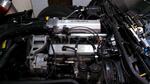
my vette was running fine, shut her off and then when I started her later in the day there is a loud clicking sound coming from what seems like the plenum. Have no idea what it is. I made a video but it won't attach here for upload. I could send it to some one on WhatsApp or Signal. Kind have to hear it to figure it out. Looking forward to any suggestions.
Mark
looks like injectors to me, there appears to me misfire. From doing my home work I know some clicking means the injectors are working, anyway tomorrow I will isolate which one or ones aren't working. Any advice would be great
Last edited by MarkB85vette; May 19, 2023 at 09:12 PM.
Thanks for the advice, I'm
getting spark and air to the number 8 cylinder which is the cold one, replaced the injector but it did not fix it, some other reason is keeping fuel out of the cylinder. The loud ticking sound in the plenum is weird too. Have to figure the fuel issue. Checked the wiring and I'm
getting current to the injector. Fluctuates up and down as it should between 12 and 20 Volts I think I'm reading that correctly.
Agreed, I was thinking a valve spring may have failed, I work out of town so I will give it a look when I head home this weekend. Thanks again for the support.
Hello all,
after pulling the valve cover I found the stud that holds the rocker arm in place sheared off on the exhaust side of the #8 cylinder. I have attached photos. Is it reasonable to drill out the old stud and install a new one. Seems straight forward to me. I replaced all of the valve seals about 500 miles ago. I followed the factory specs and once I had the push rods just tight enough to not move up and down I gave each nut a 1/2 turn. Wondering if this may have been too tight causing the failure. Please advise and have a restful Memorial day. Not all of my battle buddies came home from War
That is an interesting failure mode. Assuming that you have adequate access, I think that you can try to carefully drill the retained stud and try an EZ out. Also, I would check the pushrod to make sure it is not bent, and that the valve is not jammed.
The traditional repair for this is an oversize stud. IIRC, it is .003 larger. The bore is reamed to size, not drilled. Another alternative is to drill and tap the head for a threaded stud. The hole goes into water, so the threaded stud solution requires attention to using sealant.
To remove the old stud in place, I'd attempt to drill and tap it for 1/4-20 at least 3/4" deep. (IIRC, the max strength is 3X the major diameter.) Use a Grade 8 bolt with as long a threaded section as you can obtain. Put a nut all the way on, stack some 1/2" washers with a hard 1/4" washer on top and thread the bolt into the stud. Hold the bolt steady with a wrench, and turn the nut with another wrench to extract the stud. Add 1/2" washers as required as the stud comes out. Don't bottom the bolt in the stud with a wrench, insert it finger tight to the bottom, then back it off a 1/4 turn. If the bolt breaks off, you should be able to back the broken bolt out with a pick and try again with a new bolt. If it is installed tight, you really complicate things if the bolt breaks, and it may.
I see a witness mark in the broken stud where the rocker was contacting it, and the stud is bent. The valve adjustment was too loose, the rocker slot contacted the stud before the valve was fully open, putting the force on the stud to bend, then break it.
The weird popping in the plenum was the pressurized air rushing out into the intake at the top of the exhaust stroke when the intake valve opens. "Something wrong" on an exhaust rocker makes a distinct rhythmic popping at 1/2 engine speed in the intake; now that you've heard it, you'll know where to look the next time you hear it.
thanks for the advice, having a hard time visualizing what you described. I think I understand, I will post photos as I work this out. I appreciate the help from everyone
Thatv advice was spot on. If possible CAREFULLY put a little heat on the boss where the broken stud us when you are trying to pull it. Also you might just get away with driving a new stud in. You will find out when you try by noting how hard it drives in. If it goes in easy , forget it.
Thatv advice was spot on. If possible CAREFULLY put a little heat on the boss where the broken stud us when you are trying to pull it. Also you might just get away with driving a new stud in. You will find out when you try by noting how hard it drives in. If it goes in easy , forget it.
thanks for the response. To be clear, what you are saying is once I have a the old broken stud out, to twist in a new one, and if it is difficult to install and tight in the hole, then I'm good to go. It is slides in easily then I will need to tap and thread, and then seal to keep coolant in?
To be clear, what you are saying is once I have a the old broken stud out, to twist in a new one, and if it is difficult to install and tight in the hole, then I'm good to go. It is slides in easily then I will need to tap and thread, and then seal to keep coolant in?
No not "twist" in a new one. You will have to pound in a new one. Read this thread, granted it is from the C3 forum, but a pressed in stud is a pressed in stud. If there is not enough constricture, then the new stud will work itself out. The metal is expanded from having the old one pressed in.
Usually the bosses are spot faced prior to threading the hole so that the shoulder on the stud bottoms out (see the studs on the next link). I have seen shoulder less studs though. The issue with you trying to tap the hole is keeping the centerline of the tap aligned with the centerline of the hole. When a machine shop taps the holes (doing it the right way, unless they have an alignment fixture) the head is put on an angle plate on a machine and the tap is kept aligned using a center, either in the end of the tap itself, or a better grade tap handle. A good machinist can also get the tap going by "power tapping" it.
When I worked in shops I tapped 1000's of holes using all the above methods. If you don't keep it in alignment, then the stud screws in crooked and the rocker alignment will be off. Same with trying to ream the hole oversize for a bigger shank stud.
To do it with the head on the engine, you need an "alignment block". Watch this next video
You can do this yourself, but you will need to acquire the proper tooling, do your research and realize that there is the possibility that you could cause a worse problem than what you already have (worse = expensive).
No not "twist" in a new one. You will have to pound in a new one. Read this thread, granted it is from the C3 forum, but a pressed in stud is a pressed in stud. If there is not enough constricture, then the new stud will work itself out. The metal is expanded from having the old one pressed in.
Usually the bosses are spot faced prior to threading the hole so that the shoulder on the stud bottoms out (see the studs on the next link). I have seen shoulder less studs though. The issue with you trying to tap the hole is keeping the centerline of the tap aligned with the centerline of the hole. When a machine shop taps the holes (doing it the right way, unless they have an alignment fixture) the head is put on an angle plate on a machine and the tap is kept aligned using a center, either in the end of the tap itself, or a better grade tap handle. A good machinist can also get the tap going by "power tapping" it.
When I worked in shops I tapped 1000's of holes using all the above methods. If you don't keep it in alignment, then the stud screws in crooked and the rocker alignment will be off. Same with trying to ream the hole oversize for a bigger shank stud.
To do it with the head on the engine, you need an "alignment block". Watch this next video
You can do this yourself, but you will need to acquire the proper tooling, do your research and realize that there is the possibility that you could cause a worse problem than what you already have (worse = expensive).
this is perfect! I will indeed do my home work. These threads and video are foundational . After I retire from the Army next year I plan on doing more restorations so I consider myself in school and my C4 is my Note pad. Sounds good. So getting the correct size stud is vital. I won't be able to dig into this challenge for a couple of weeks but as I do I will reach out for support if needed. Thanks again!
this is perfect! I will indeed do my home work. These threads and video are foundational . After I retire from the Army next year I plan on doing more restorations so I consider myself in school and my C4 is my Note pad. Sounds good. So getting the correct size stud is vital. I won't be able to dig into this challenge for a couple of weeks but as I do I will reach out for support if needed. Thanks again!
I did manage to snap off the bolt, the Grade 8 boot I found did not have enough threads so I went with stainless, no joy, the stud did not move at all, see photos, heading out to try and find a grade 8 with enough threads.
Damn. Lot of work. You used sealant on those stud threads right?
May be a good idea to get a metal straight edge and lay it across the tops of the 3-4 studs next to that one and see if your new one is the same height, just in case that's a factor during valve adjustment/installation of the valve cover. You could probably get away with it being a little bit lower than the others, but you won't want it to be much higher than the studs nearby.
Thanks for the response, yes I did seal the threads, and I measured the height as well. Studs are the same. Kinda lucked out, drilling while on the car, even with a jig was tricky. I still need to go through all of the valves to ensure none are bent like the one that broke. This was ally fault. I installed new valve seals and did not set my lashings as well as I could have.
It's happened to a lot of people. Most of the time the stud/nut is too loose though, so the valve isn't opened fully. You can get away with that for a while, though the cam lobe will take a beating. It took me a while to understand what IHBD was talking about above when he mentioned that your valve adjustment was too loose. He meant that the nut was tightened too much, which meant that the pushrod preload was too high, it opened the valve too much, and then (because the rocker slot hole contacted the stud) everything bent until it broke over time. That's the way I interpreted what he wrote - since you mentioned you were having a tough time visualizing his comment.
It's happened to a lot of people. Most of the time the stud/nut is too loose though, so the valve isn't opened fully. You can get away with that for a while, though the cam lobe will take a beating. It took me a while to understand what IHBD was talking about above when he mentioned that your valve adjustment was too loose. He meant that the nut was tightened too much, which meant that the pushrod preload was too high, it opened the valve too much, and then (because the rocker slot hole contacted the stud) everything bent until it broke over time. That's the way I interpreted what he wrote - since you mentioned you were having a tough time visualizing his comment.
thanks for the message, so when I set the lashing the specs say tighten 1/2 turn to one full turn past when the push rod is snug but still can turn. I did 1/2 turn when I replaced the valve seals. Any guidance from
your experience would be appreciated.
It may not be your fault. The lifter may have collapsed for that valve. So when you set the adjustment for the stud nut, if you overdo that then the pushrod has too much preload on it and the rocker could travel too far opening the valve.
The spec I've used is tighten the stud nut 1/4-1/2 turn (180 degrees max) past zero lash as you wrote above. However, if you have a collapsed lifter there on that cam lobe below the rod, then the lifter is not up at the top of its hydraulic travel like it's supposed to be. It's bottomed out in the lifter bore. Then the normal adjustment for the stud nut is too tight.
Check out some web searches on collapsed lifter diagnosis and see if this has happened. If not, and your lifters are good, then use the 1/4-1/2 turn adjustment.
Designer Imagines A Corvette That Looks More Like a Corvette Than the Corvette
Slideshow: A Jaguar designer's personal project imagines what a modern front-engined Corvette might look like if Chevrolet revisited the golden age of the Stingray.





 Loud clicking sound coming from the Plenum