When you click on links to various merchants on this site and make a purchase, this can result in this site earning a commission. Affiliate programs and affiliations include, but are not limited to, the eBay Partner Network.
My 93 coupe A/C is blowing hot air and I am sure it leaked and needs charging. The GM R-12 sticker is still on the area near the firewall. There is no R-134 sticker that I can find. However, yesterday I went to purchase some R-12 and the guy looked at my system and told me I had R-134 valves, both HIgh and Low. I checked the valves against my other 93 and sure enough they are larger on the coupe. I texted the PO and he replied that the system had been recharged while he owned it but he did not know if it had been converted and he did not know what refrigerant was used. My questions are, 1) Is there a way to definitively check to find out which refrigerant is in the system (what remains), or failing that 2) If I put in R-134 with dye to find the leak, will I damage the system if it has R-12?
A big NEVERMIND. I found an entry in the carfax for charging the system in 2015. I called the garage in Indiana and, miraculously, they still had a record of converting the system to R-134 in June of 2015. Wonders never cease. Thanks, CarFax.
A big NEVERMIND. I found an entry in the carfax for charging the system in 2015. I called the garage in Indiana and, miraculously, they still had a record of converting the system to R-134 in June of 2015. Wonders never cease. Thanks, CarFax.
While I never discount the ability of some to do the most nonsensical and mind numbing actions, there would have been zero point in someone putting R134A adapters on if it had not been converted.
While I never discount the ability of some to do the most nonsensical and mind numbing actions, there would have been zero point in someone putting R134A adapters on if it had not been converted.
That's what I thought until I saw a youtube video of a guy who said to convert the valve because the R-12 charging hoses were not available. That introduced doubt about just assuming!
That's what I thought until I saw a youtube video of a guy who said to convert the valve because the R-12 charging hoses were not available. That introduced doubt about just assuming!
That guy doesn't know what he is talking about. R-12 and R-22 use the same fittings. R-22 is still in widespread use for residential HVAC. Hoses that will fit are a lot easier to find (and cheaper) than R-12...
Good info. I have never done any work on any A/C so am totally in new territory.
Then I would strongly, strongly suggest you take it to an AC shop. The reason you have to add refrigerant is because it leaks. What is the point in dumping gas into a system that is going to puke it out again? R134A is getting pricey. I would guess a can is 25 - 30 dollars(just guessing, I buy in a 30 lb cylinder). Two cans is 60.00. Goes a long way to paying the bill at an AC shop. Do you know how the gauges work? Do you know how to purge? Can you identify the meaning of the gauge readings? Do you have an electronic leak detector? Do you have the equipment to add dye to the charge? A good shop will pressurize with nitrogen and see the leakdown rate. Repairs can be made and you are with a warranty in your pocket.
I noted in my first post that I had a leak. I am tackling this precisely because i have never done it before. How else can I learn about it. I am quite capable of doing the research and understanding it. It's a project car.
I noted in my first post that I had a leak. I am tackling this precisely because i have never done it before. How else can I learn about it. I am quite capable of doing the research and understanding it. It's a project car.
I'm so relieved to hear of your abilities. But, answer my question please. In your first post you said "....... I am sure it leaked and needs charging." In case you missed it, I will repeat.
What is the point in dumping gas into a system that is going to puke it out again?
I noted in my first post that I had a leak. I am tackling this precisely because i have never done it before. How else can I learn about it. I am quite capable of doing the research and understanding it. It's a project car.
While I'm also a novice, I might recommend hooking up a set of gauges and seeing if the charge is low or completely gone. If there's still enough pressure, perhaps you can spray some soap solution around and locate the leak and/or put in some dye to help locate it. Though if you're going to try putting more charge in with some dye, then arbee's comments about knowing how to purge the lines are probably important.
For what it's worth, I was in your situation just a few weeks ago and also dissuaded by arbee from attempting to make repairs on my son's 1990. After obsessing over details a bit, it seems to have worked out ok. Might not last very long (it's only been operating again a few weeks), but it is within the realm of ability of a DIYer. Also, Amazon has tons of cheap Chinese-made sets that include a manifold gauge set, vacuum pump, and electronic leak detector (though I might doubt the efficacy of those) for not very much money. That's the route I went after having previously borrowed equipment from Autozone for another vehicle. Good luck.
Back when I redid my system, I bought a tank of R12. I replaced the thing inside the heater box. I took the system all apart and used the A/C flush thing to flush it all out and put in new orings, new R12 orifice and new A/C switch. I did buy a good used compressor as mine had been running on low charge and wasn't sure if it was still good. Took the replacement apart and put in new orings. I used an oil that was compatible with both R12 and R134 just in case I converted to R134 at a later date I wouldn't have to worry about trying to flush out all the old oil. And I put in a new dryer.
I did put R134 fittings on it so I didn't have to mess with it if I converted to R134 at a later date. I filled dryer with proper amount of oil. I then pulled a vacuum for three hours and had my virgin R12 added in by weight as I bought a refrigerant scale. Anyways, still blowing cold 8 years later.
While I'm also a novice, I might recommend hooking up a set of gauges and seeing if the charge is low or completely gone. If there's still enough pressure, perhaps you can spray some soap solution around and locate the leak and/or put in some dye to help locate it. Though if you're going to try putting more charge in with some dye, then arbee's comments about knowing how to purge the lines are probably important.
For what it's worth, I was in your situation just a few weeks ago and also dissuaded by arbee from attempting to make repairs on my son's 1990. After obsessing over details a bit, it seems to have worked out ok. Might not last very long (it's only been operating again a few weeks), but it is within the realm of ability of a DIYer. Also, Amazon has tons of cheap Chinese-made sets that include a manifold gauge set, vacuum pump, and electronic leak detector (though I might doubt the efficacy of those) for not very much money. That's the route I went after having previously borrowed equipment from Autozone for another vehicle. Good luck.
Thanks for the input. My plan is to put some dye in with a charge (hence, the need to charge a leaking system) and see where the leak is. If it is something I think I can fix, I will do it. if not, I will seek help. Nothing ventured, nothing gained. I am not easily dissuaded by naysayers.
Back when I redid my system, I bought a tank of R12. I replaced the thing inside the heater box. I took the system all apart and used the A/C flush thing to flush it all out and put in new orings, new R12 orifice and new A/C switch. I did buy a good used compressor as mine had been running on low charge and wasn't sure if it was still good. Took the replacement apart and put in new orings. I used an oil that was compatible with both R12 and R134 just in case I converted to R134 at a later date I wouldn't have to worry about trying to flush out all the old oil. And I put in a new dryer.
I did put R134 fittings on it so I didn't have to mess with it if I converted to R134 at a later date. I filled dryer with proper amount of oil. I then pulled a vacuum for three hours and had my virgin R12 added in by weight as I bought a refrigerant scale. Anyways, still blowing cold 8 years later.
Coulter, thanks for the info. So, I see you put R-134 valves on an R-12 system. Guess I was not totally paranoid after all. My car could have been just like yours.
I'm so relieved to hear of your abilities. But, answer my question please. In your first post you said "....... I am sure it leaked and needs charging." In case you missed it, I will repeat.
What is the point in dumping gas into a system that is going to puke it out again?
Your car, your money. Fill your boots.
The purpose is to put some refrigerant in with dye. The refrigerant so the compressor will run and the dye to see where the leak is.
Thanks for the input. My plan is to put some dye in with a charge (hence, the need to charge a leaking system) and see where the leak is. If it is something I think I can fix, I will do it. if not, I will seek help. Nothing ventured, nothing gained. I am not easily dissuaded by naysayers.
The only downside I can see to that is that you'll probably have to put in several cans of R134a before the compressor will keep running for you to inject your dye and look for leaks. By me, R134a 12oz cans are running about $15 each. Arbee's proposed method of using nitrogen would certainly be better (and more environmentally friendly), but that's maybe not as accesible for a DIY scenario.
The only downside I can see to that is that you'll probably have to put in several cans of R134a before the compressor will keep running for you to inject your dye and look for leaks. By me, R134a 12oz cans are running about $15 each. Arbee's proposed method of using nitrogen would certainly be better (and more environmentally friendly), but that's maybe not as accesible for a DIY scenario.
People should be cautioned about cans of this "R134A" being sold at places like Walmart and Autozone. 15.00 sounds exceedingly cheap considering a 30 lb bottle goes for about 600.00.(20.00/lb). Some have clever labeling with "R134A" in bold lettering and then beside it in microscopic script it says "Replacement". You must read the contents label and if it has anything listed such as Butane or any other hydrocarbon, then it is not R134A. True R134A is mostly tetrafluoroethane.
People should be cautioned about cans of this "R134A" being sold at places like Walmart and Autozone. 15.00 sounds exceedingly cheap considering a 30 lb bottle goes for about 600.00.(20.00/lb). Some have clever labeling with "R134A" in bold lettering and then beside it in microscopic script it says "Replacement". You must read the contents label and if it has anything listed such as Butane or any other hydrocarbon, then it is not R134A. True R134A is mostly tetrafluoroethane.
Some of them definitely have additives and I was just guessing on the price I paid, but it does seem to be in line. $15 for a 12oz can would be the same $20/lb. that you're paying. You can find a 3-pack of the 12oz cans on Amazon for $37.75 which works out to about $16.77/lb.
I have the remaining bottle of this same stuff and according to the information on the back, there's nothing else added: I guess Chemours can still call this "Freon" since it's their trade name? Seems like it's all 1,1,1,2-Tetrafluoroethane.
While you would expect that you're getting a discount for the higher volume purchase, perhaps your supplier is charging more for the convenience of not having to constantly switch cans?
I have the remaining bottle of this same stuff and according to the information on the back, there's nothing else added: I guess Chemours can still call this "Freon" since it's their trade name? Seems like it's all 1,1,1,2-Tetrafluoroethane.
While you would expect that you're getting a discount for the higher volume purchase, perhaps your supplier is charging more for the convenience of not having to constantly switch cans?
Possible. If I were able to, I would buy every can available within 100 miles and hang on to them for a year or two. R134A being phased out and will soon be tres expensive.
R134a is being discontinued for new production like R12? I sold my tank of R12 a few years ago as I doubt I'll own another car that came with that from the factory. And figured the stuff would become worthless as I couldn't even find a mechanic shop that would even handle it if I brought the tank in. I had to do it myself. Luckily Autozone let's you rent a vacuum pump.
My understanding is filling A/C systems is you really want to use a tank on a scale so you can do it by weight. i.e. people say those little cans are really only good for a little top up or something. And I'm not sure if those cans have oil in it? As a leak means you've also lost oil too.
R134a is being discontinued for new production like R12? I sold my tank of R12 a few years ago as I doubt I'll own another car that came with that from the factory. And figured the stuff would become worthless as I couldn't even find a mechanic shop that would even handle it if I brought the tank in. I had to do it myself. Luckily Autozone let's you rent a vacuum pump.
My understanding is filling A/C systems is you really want to use a tank on a scale so you can do it by weight. i.e. people say those little cans are really only good for a little top up or something. And I'm not sure if those cans have oil in it? As a leak means you've also lost oil too.
Not necessarily depending on the leak. If you get a large rupture, then yes, oil can be lost. But largely, leaks develop that are slow and through a seal or o-ring. This allows the gas to escape but the oil in the system is not in a gaseous state - it is liquid. The amount of oil circulating the system is minimal. Oil is not required in any other location than the compressor.



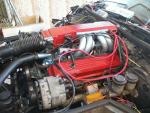




 Refrigerant in A/C 1993






 with a warranty in your pocket.