


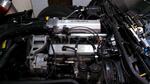






L98 Heads??

Thread Starter
Advanced


Joined: Jul 2010
Posts: 97
Likes: 12
 L98 Heads??
So, I was reading an article about heads, and discovered that apparently, the 1987 Corvette heads only have 56 to 58cc chambers. That means they must have used a dished piston, right? Is it a crappy near full bore smog dish, or a "D" cup dish?
Here all this time I was saving up for some aftermarket heads with 64cc chambers for my C4, thinking that would be an easy direct swap. However, that would lower the compression a bunch unless you milled the new heads, right?? I have never heard this addressed/mentioned before...
I calculate a direct swap, if the numbers are correct, would lose more than one full point of compression! Terrible!! Can aftermarket heads even be milled enough to go from 64 down to 56cc??
:~(
Vettepilot
Here all this time I was saving up for some aftermarket heads with 64cc chambers for my C4, thinking that would be an easy direct swap. However, that would lower the compression a bunch unless you milled the new heads, right?? I have never heard this addressed/mentioned before...
I calculate a direct swap, if the numbers are correct, would lose more than one full point of compression! Terrible!! Can aftermarket heads even be milled enough to go from 64 down to 56cc??
:~(
Vettepilot
Thread Starter
Advanced
Joined: Jul 2010
Posts: 97
Likes: 12
I think mine probably have a crack that needs welded, plus new guides, valve job, etc. Around 600 bucks into those? Add a few bucks to that and upgrade, and not fight with a machine shops seems the way to go...
Research indicates the stock head gasket is .051" and the quench is a ridiculous .075"+. A thinner .026" head gasket would help a bit in all respects, though decking the block would really be ideal. In a perfect world, you would 0 deck the block, run a .041 head gasket, and mill the heads to get to 10:1 compression or so. Better make really good friends at the machine shop for that... At that point, go ahead and mortgage the house, and build a 383. Then you've got to think, "This is all great fun, but horribly expensive--> why not just swap in a big block and get even more power, especially torque???"
Vettepilot
Research indicates the stock head gasket is .051" and the quench is a ridiculous .075"+. A thinner .026" head gasket would help a bit in all respects, though decking the block would really be ideal. In a perfect world, you would 0 deck the block, run a .041 head gasket, and mill the heads to get to 10:1 compression or so. Better make really good friends at the machine shop for that... At that point, go ahead and mortgage the house, and build a 383. Then you've got to think, "This is all great fun, but horribly expensive--> why not just swap in a big block and get even more power, especially torque???"
Vettepilot
Last edited by vetterobert; Mar 6, 2025 at 04:21 PM.
Thread Starter
Advanced
Joined: Jul 2010
Posts: 97
Likes: 12
Hey thanks? Do you have a way to accurately check the deck height for me? I need to know how far the piston sits down in the hole at true top dead center. It is probably around .025".
Thanks again,
Vettepilot
Thanks again,
Vettepilot

Pro


Joined: Sep 2024
Posts: 526
Likes: 114
No problem! And yeah, I do have the ability to get the ball park with a dial indicator. I am no pro at it, so take it with a grain of salt. When the rain in SoCal stops, I will get out there and do that.
Corvette Stories
The Best of Corvette for Corvette Enthusiasts

Top 10 Most Expensive Corvettes Ever Sold on Bring A Trailer
Brett Foote
10 Things Every Corvette Owner Needs (2026 Edition)
Michael S. Palmer
8 Most "Only Corvette Owners Understand" Quirks and Problems
Pouria Savadkouei
10 Reasons the C6 Z06 is Still A Performance Benchmark After 20 Years
Joe Kucinski
How Much Horsepower Every Corvette Engine "LOST" in 1972
Joe Kucinski
Top 10 DOs and DON'Ts for Protecting Your Convertible Top!
Michael S. Palmer
Top 10 Most Explosive Corvettes Ever Made: Power-to-Weight Ratio Ranked!
Joe Kucinski
150 hp to 1,250 hp: Every Corvette Generation Compared by the Specs That Matter
Joe Kucinski
8 Coolest Corvette Pace Cars (and Replicas) of All Time
Verdad Gallardo
Pro
Joined: Sep 2024
Posts: 526
Likes: 114
I will get to it today and report back.
Pro
Joined: Sep 2024
Posts: 526
Likes: 114
Here is what a dirty, nasty 1987 L98 piston looks like. Tiny dish.
Piston at TDC.
Deck Height compared to Piston at TDC.

25 thou looks to be right.

Piston at TDC.

Deck Height compared to Piston at TDC.
25 thou looks to be right.

Thread Starter
Advanced
Joined: Jul 2010
Posts: 97
Likes: 12
Wow!! Thank you! Thank you very much for taking the time to do that! Very kind.
I will write more later but must get ready for an appointment now. Meanwhile, is your engine original/never been apart?? What is the head gasket thickness??
More later, and thanks,
Vettepilot
I will write more later but must get ready for an appointment now. Meanwhile, is your engine original/never been apart?? What is the head gasket thickness??
More later, and thanks,
Vettepilot
Pro
Joined: Sep 2024
Posts: 526
Likes: 114
Wow!! Thank you! Thank you very much for taking the time to do that! Very kind.
I will write more later but must get ready for an appointment now. Meanwhile, is your engine original/never been apart?? What is the head gasket thickness??
More later, and thanks,
Vettepilot
I will write more later but must get ready for an appointment now. Meanwhile, is your engine original/never been apart?? What is the head gasket thickness??
More later, and thanks,
Vettepilot
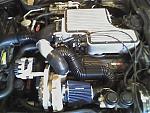
I do not believe the engine has been apart though. At least it doesn't have any oversized pistons in it. It had all the original bolts in the intake when I yanked that off. I have no idea what the head gasket thickness was either. When I slap new heads on it I am not even paying attention to that. I am going to run the Mahle kit for the whole thing and I couldn't even find the thickness of those gaskets. I suppose I could put a mic on those but that is not going to happen for a bit.
Melting Slicks

Joined: Aug 2003
Posts: 3,401
Likes: 397
From: Lakeville MI
If I can find my old (1988) pistons (which look the same as those pictured) I will try to get a liquid measurement of the dish, valve relief and chamfer volume with the piston in a ring compressor using a 10 cc syringe and/or medicine spoon.
Many sources suggest -12 cc, but I will try to measure and confirm.
Many sources suggest -12 cc, but I will try to measure and confirm.
Thread Starter
Advanced
Joined: Jul 2010
Posts: 97
Likes: 12
Ok, thanks!!
Well, my studies indicate a 051" head gasket was used. That, along with the normal .025" deck height which you see here gives us a ridiculous and useless quench distance of .076". (Anything approaching or over .060" is useless.) But seeing the full dish pistons, I understand why they were not worried about squish or quench, as with those pistons there wouldn't be any regardless. There's room for a lot of improvement here. Bolting on aftermarket heads is a problem. They are designed to have real quench, plus the common 64cc chamber size is going to lose you some precious compression.
I am quite surprised to see the dished pistons. Something is not adding up, and it looks like GM "fudged" on the reported compression ratio of the Vette. The math just does not add up. When I run all the numbers, with FLAT TOP pistons but allowing 6 cc for valve reliefs, I come up with 9.99:1 compression ratio. That corresponds with the GM specs of 10:1. But here we see DISHED pistons, so it could not have 10:1 compression. No way. Numbers don't lie.
As I said, then you bolt on heads with 64cc chambers which is 6 cc more than stock, and the compression goes lower yet. Too low for best power production.
Yeah, lots of room for improvement there. Lots! But it will cost money... dam engineers.
Vettepilot
Well, my studies indicate a 051" head gasket was used. That, along with the normal .025" deck height which you see here gives us a ridiculous and useless quench distance of .076". (Anything approaching or over .060" is useless.) But seeing the full dish pistons, I understand why they were not worried about squish or quench, as with those pistons there wouldn't be any regardless. There's room for a lot of improvement here. Bolting on aftermarket heads is a problem. They are designed to have real quench, plus the common 64cc chamber size is going to lose you some precious compression.
I am quite surprised to see the dished pistons. Something is not adding up, and it looks like GM "fudged" on the reported compression ratio of the Vette. The math just does not add up. When I run all the numbers, with FLAT TOP pistons but allowing 6 cc for valve reliefs, I come up with 9.99:1 compression ratio. That corresponds with the GM specs of 10:1. But here we see DISHED pistons, so it could not have 10:1 compression. No way. Numbers don't lie.
As I said, then you bolt on heads with 64cc chambers which is 6 cc more than stock, and the compression goes lower yet. Too low for best power production.
Yeah, lots of room for improvement there. Lots! But it will cost money... dam engineers.
Vettepilot
Thread Starter
Advanced
Joined: Jul 2010
Posts: 97
Likes: 12
The worst one I ever saw though, was the 360 Fords. I did a lot of swaps for customers, taking the 360 out of their Ford pickups and swapping the same family 390 engine in. They were always thrilled. Better overall running, better gas mileage, and very noticeably more powerful.
Ford needed to lower the compression of their Ford 390 to pass smog plus to run modern goat **** no octane gas. So they took their 390 and put a shorter stroke crank in it with no other mods. This lowered the compression and made the pistons a mile away from the head at TDC, as well as losing 30 cubic inches. They added a timing set that retarded the cam, and they retarded the ignition timing as well. They then jetted the carb so lean it would barely run, and there you had it. A real pig!!
Vettepilot
Ford needed to lower the compression of their Ford 390 to pass smog plus to run modern goat **** no octane gas. So they took their 390 and put a shorter stroke crank in it with no other mods. This lowered the compression and made the pistons a mile away from the head at TDC, as well as losing 30 cubic inches. They added a timing set that retarded the cam, and they retarded the ignition timing as well. They then jetted the carb so lean it would barely run, and there you had it. A real pig!!
Vettepilot
Thread Starter
Advanced
Joined: Jul 2010
Posts: 97
Likes: 12
Hmmm... I had some more time to run some numbers. Plus I found a mistake on my part. I had read that the CR was 10:1, but when I looked it up again, apparently GM actually specified 9.5 for the '87 Vette, not 10:1, so there's that.
So, with all the numbers in hand, and figuring a 12cc dish, I get 9.4:1 compression. Dam close to spec, but a bit lower than one might like. However, if you go to aftermarket heads with 64cc chambers, it drops to 8.8:1, which totally sucks. If you go to a .026" head gasket, it gets you back up to 9.3:1, which is better, but certainly below the 10 to 10.5:1 we would like to see. To get that, one would have to mill the heads. But with the crappy dished pistons, you have no quench, which is seriously sub-optimal...
Well, this is why some engines are better than others. Do you spend the money to make it right, or not? I would never be happy with it if I didn't.---> Flat top pistons, set .035" quench, then whatever it took with the heads to get 10:1.
Vettepilot
So, with all the numbers in hand, and figuring a 12cc dish, I get 9.4:1 compression. Dam close to spec, but a bit lower than one might like. However, if you go to aftermarket heads with 64cc chambers, it drops to 8.8:1, which totally sucks. If you go to a .026" head gasket, it gets you back up to 9.3:1, which is better, but certainly below the 10 to 10.5:1 we would like to see. To get that, one would have to mill the heads. But with the crappy dished pistons, you have no quench, which is seriously sub-optimal...
Well, this is why some engines are better than others. Do you spend the money to make it right, or not? I would never be happy with it if I didn't.---> Flat top pistons, set .035" quench, then whatever it took with the heads to get 10:1.
Vettepilot