When you click on links to various merchants on this site and make a purchase, this can result in this site earning a commission. Affiliate programs and affiliations include, but are not limited to, the eBay Partner Network.
Part of my ownership activities is daily reading what's on the forum about C4's and more specifically about the '94 C4 base.I'm going to put my thoughts out here and welcome your replies. It seems there's a fair amount of problems with the VATS and the worst sequelae to a VATS malfunction is being stranded with a no start situation. A lot of discussion about the VATS issues and remedies to these issues that leaves it unclear if it's a worthwhile consideration to preemptively bypass the VATS? Or is leaving a working VATS system well enough alone?
Is the VATS a system that will fail eventually?
Is my observation correct that there are a number of parts/components to the C4 electrical system intersecting with VATSfunctioning that can cause issues apart from a simply bypass? Are there a number of procedures necessary to completely disable VATS? Or, will a simple bypass eliminate any potential problems from VATS failure?
If a bypass eliminates VATS failure, what is the best least invasive VATS bypass approach?
Thanks as always for your generousity in sharing your wealth of knowledge.
The absolutely mandatory, #1 thing about owning a "VATS" car is to know your VATS resistance/key code! (If you loose the key(s) yer F'd! Learning the code is possible but tedious. Just know what the resistance is before you loose the key and can't measure it to know what it is.)
Measure the resistance of your key. Look up the corresponding code. Write it down somewhere that you will remember where you put it.
Another possibility is that VATS has already been "bypassed" by a previous owner or service personnel. I recently developed this simple test to determine whether VATS is dependent on the key, contacts, and wiring, or if a resistor has been installed on the wires which is the most common "bypass". It works for any year; I've tried it on 6-8 different C4s 90-96.
No key in the ignition, ignition in LOCK.
Access the passenger side fuse pane
Consult the fuse legend to determine a fuse that is hot in RUN, and one that is Hot at All Times. Hot in run are items like ECM, Injectors, Gauges, etc. Hot at all times are items like ctsy lights, tail lights, etc.
With a little jumper wire insert the jumper in the little test hole of each of the two fuses.
If successful, the car will respond like you turned the key to RUN. The fuel pump primes, the bulbs all light up, the cluster lights up, etc.
With the car powered with the jumper, look over at the SECURITY light. If SECURITY is on-solid, VATS is active. If SECURITY is OFF, VATS has been bypassed.
Remove the jumper and attempt to start the car with the key. If it cranks and runs, VATS is bypassed. If you get a solid-on SECURITY light, it doesn't crank or run, turn the key OFF. Come back in 5 minutes and try again, it should start. << If = YES, VATS is active and protecting your car.
Know your key code and resistance. If still active, VATS is a pretty good protection against drive-off theft. If anything, carry the appropriate resistor for bypass in an inconspicuous place in the car. If the key contacts or wiring at the cylinder fail (the most common VATS "failure") while on a road trip, you can install the resistor to continue your trip.
Also, understand the system. Knowledge is power. "VATS" is the most misunderstood system in a C4 Corvette. It is frequently blamed for causing issues it can't cause. The biggest thing to know is that the SECURITY light should be OFF when the key is turned to RUN. << IF the SECURITY light is solid-ON (not "flashing") in RUN, there is something wrong in the resistance. Including a "bypassed" system.
On the earlier models you can re-program the ECM (few people around here still do this) and disable/bypass the VATS starter cutout relay (connect the two fat wires going into the relay) Works perfect. Not sure what you need to do to a 1994, but the FSM has a detailed description of the system and inputs/components etc
On the earlier models you can re-program the ECM (few people around here still do this) and disable/bypass the VATS starter cutout relay (connect the two fat wires going into the relay) Works perfect. Not sure what you need to do to a 1994, but the FSM has a detailed description of the system and inputs/components etc
In the $EE code, it also has the option to turn the VATS off..
I bypassed it in my old ZR-1 because it was giving me lots of issues. These cars are getting older, pretty much classics now, and things like VATS are best put out to pasture. I haven’t done it in my current LT1 yet, but it’s on the list.
First off: thank you for the incrediblly informative replies to my thread. A lot to soak in. Gotta take a little bit of time with this. i'm going to be busier than usual through the 21st, but i will give more reply either in between then, certaly after. I have a lot to learn which is wonderful.
@IHBD i have 2 replacement keys, both ohm at 9.5. no key code on either key. did a brief search on how to find a key code, it looks like my only options to get key code are either go to dealer, a locksmith, or the build sheet might have the key code? fwiw, need to mention the ECM was replaced in 2017; i do have the ECM that the car left the factory with. Attached is what i may mistakenly think is the build sheet...? What is most time effective route to get the key code. I don't mind going to the dealer, i'm actually looking forward to do so, as the dealer is C4 friendly and i am going to make an appointment to have one of their mechanics who knows C4's do a major inspection. So if the dealer can help, that's probably the route i could go.
Key Codes and the VATS resistance that it left BG with are available from the dealer. You mention maybe a relationship so the fee might vary. None I know of will do it for 'free' unless you have a very outstanding relationship with the dealer. You'll need personal ID and registration for the car, an insurance certificate with your name and vehicle VIN will work generally also.
There's a Cadillac dealer near me that unless the car is in the shop OR they sold it originally to you WILL NOT provide the service.
Key Codes and the VATS resistance that it left BG with are available from the dealer. You mention maybe a relationship so the fee might vary. None I know of will do it for 'free' unless you have a very outstanding relationship with the dealer. You'll need personal ID and registration for the car, an insurance certificate with your name and vehicle VIN will work generally also.
There's a Cadillac dealer near me that unless the car is in the shop OR they sold it originally to you WILL NOT provide the service.
Thanks @WVZR-1 for sharing this so i can go to the dealer PREPARED!!!
What are you going to the dealer for? You know the resistance. 9.5k ohms. That's all you really need to know. Whether there is currently a bypass or not, you need to know the resistance that is burned into the CCM as it can not be changed.
Are you going to try the 60 second test I suggested to see if your car has a functioning VATS or not? Seriously, 60 seconds and a 4" scrap of wire.
The code I'm thinking of is #14 which is 9,530 ohms. This just one of the zillion charts I found with a search "VATS key codes"
There's good reason to visit the dealer if the OP isn't the original owner. The 'key call' will supply the original mechanical cut code as well as the resistance. If his current key mechanical cut code matches his keys then he only needs to carry that 4 digit number number and resistance code when traveling. If it doesn't match, most dealers should be able to read the mechanical cuts and provide a 4 digit mechanical code using their key cutting software. He'll be provided also the secondary/door code. So long as he doesn't mind the fee he should be good.
You generally do NOT want to buy a blank from a dealer though. A single blade resistance blank just because of popularity has become quite expensive, very expensive I understand from a dealer I buy from. Most dealers actually these days don't stock many single blade resistance keys. Same for the double blade resistance keys.
When I bought my 95 it only had one set of keys and the FOB. I took the ignition key to a local locksmith who was able to read the key and had a few blanks in stock. I had them cut two sets of keys for me. I forget how much I paid, but it was reasonable.
As i mentioned a couple days ago, i've been busy with work, but now have some time to address some of your comments you've been so genrous in giving my request your time. And, i need to slow down and not try to answer all the posts at once or in such a hurry.
To @IHBD, thank you always for what you write. In full transparency, i did skimmed, but did not read your post about checking to see if VATS was operable or a resistor bypass installed. Something i shall do.
@ULTM8Z what is a $EE code? And what are those screen shots taken of or from? Some sort of diagnositic tool, or...?
@WVZR-1@CorvetteRules Thank you for your comments, i'm going to reread them again, letthings soak in a bit before i ask quesitons.
And, finally again, to @IHBD Last night i got the idea to look more closely at the receipts that came with my LT1, which go all the way back to 2009, with owner #6 (I'm owner #9). i learned a number of interesting things reading through the receipts which was very rewarding in getting to appreciate a bit more of my car's ownership history. One of the very cool things i found was a receipt from a locksmith dated 6/11/24, recording the key code as "#14 VATS." So in your last post, you nailed it, #14 is the key code.
Last edited by Steve Swan; May 16, 2025 at 01:23 AM.
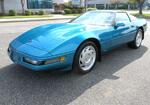
I really appreciate everyone's help. After reading/learning more, i took the easy way out after talking with Keith at PCMFORLESS. My ECM is on the way to him to delete the VATS and do their tune for $215. I'm planning on driving my '94 as often and as far as i can. Got a 1,400 miler planned for June. A local active Corvette group that i'm getting involved with. And at least a couple more trips this year. My fantasy is to wear out this Corvette before i wear out. i don't want to have to wonder when nor experience the gut shot feeling when the car dies or won't start. I like to know what i'm riding and now driving is as right as can be, so it only seemed logical to delete the VATS and not go with some add-on module or a resistor that only bypasses the key. When i get my ECM back from PCMFORLESS, i'll report in.
@IHBD i did the test you tutored me with. No resistor. Thank you. Always.
Last edited by Steve Swan; May 18, 2025 at 02:27 AM.
The absolutely mandatory, #1 thing about owning a "VATS" car is to know your VATS resistance/key code! (If you loose the key(s) yer F'd! Learning the code is possible but tedious. Just know what the resistance is before you loose the key and can't measure it to know what it is.)
Measure the resistance of your key. Look up the corresponding code. Write it down somewhere that you will remember where you put it.
Another possibility is that VATS has already been "bypassed" by a previous owner or service personnel. I recently developed this simple test to determine whether VATS is dependent on the key, contacts, and wiring, or if a resistor has been installed on the wires which is the most common "bypass". It works for any year; I've tried it on 6-8 different C4s 90-96.
No key in the ignition, ignition in LOCK.
Access the passenger side fuse pane
Consult the fuse legend to determine a fuse that is hot in RUN, and one that is Hot at All Times. Hot in run are items like ECM, Injectors, Gauges, etc. Hot at all times are items like ctsy lights, tail lights, etc.
With a little jumper wire insert the jumper in the little test hole of each of the two fuses.
If successful, the car will respond like you turned the key to RUN. The fuel pump primes, the bulbs all light up, the cluster lights up, etc.
With the car powered with the jumper, look over at the SECURITY light. If SECURITY is on-solid, VATS is active. If SECURITY is OFF, VATS has been bypassed.
Remove the jumper and attempt to start the car with the key. If it cranks and runs, VATS is bypassed. If you get a solid-on SECURITY light, it doesn't crank or run, turn the key OFF. Come back in 5 minutes and try again, it should start. << If = YES, VATS is active and protecting your car.
Know your key code and resistance. If still active, VATS is a pretty good protection against drive-off theft. If anything, carry the appropriate resistor for bypass in an inconspicuous place in the car. If the key contacts or wiring at the cylinder fail (the most common VATS "failure") while on a road trip, you can install the resistor to continue your trip.
Also, understand the system. Knowledge is power. "VATS" is the most misunderstood system in a C4 Corvette. It is frequently blamed for causing issues it can't cause. The biggest thing to know is that the SECURITY light should be OFF when the key is turned to RUN. << IF the SECURITY light is solid-ON (not "flashing") in RUN, there is something wrong in the resistance. Including a "bypassed" system.
Sorry about chiming in on this post but it's kinda relevant. I got my 1985 with tge engine removed. I rebuilt engine and have it back in. I've never felt with a VATS system but here what I discovered. I powered the car up to make sure all the interior stuff worked. The Security light came on and remained solid. When I turned the key to the crank position the SECURITY light started flashing. Does thus mean it's ok or should I expect issued when I go to crank it for the first time. Also how do you check resistance on the key. I have no idea what the key code is.
Thanks









 Considering VATS Elimination