When you click on links to various merchants on this site and make a purchase, this can result in this site earning a commission. Affiliate programs and affiliations include, but are not limited to, the eBay Partner Network.
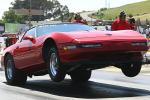
I am seeing many different opinions on what a true dyno reading is from hp at the crank. Best pull my LT4 made was 321 @ 5,500 RPM.
Taking dyno calculators & various comments into play I came up with 2 answers.
368 - 380 HP (which sounds about right, but what do I know) and 380 - 401 HP.
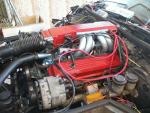
Mods are: tune, Torqhead spark conversion, Mizier high flow EWP, ported heads, ported intake, new 61mm BBK throttle body, open K&N air filter box, 165 stat, and flowmaster exhaust.
I heard wheel slippage on dyno could affect results too, which there was a bit of it in the video. I also have the dyno sheet here too. Curious to what all your thoughts are. TIA all.
Dynojet inertia dyno especially with correction factor set to CF:STD is just an ego boost. Think of it this way, the formula for actual HP is (Torque x RPM) / 5,252 in other words if you measure the exact torque, and multiply by RPM (and a constant for units of measure). This Dynojet measures rate of acceleration of a mass, and the correlation to true HP at the wheels is problematic... accelerating a mass has more variables that don't factor into true HP, but still the Dynojet is the standard that's affordable and simple to make for happy shop customers. And there's no % driverain loss that's valid, another fantasy, as powertrain uses HP that's not at all proportional to total HP produced, neither of which are properly measured accelerating a mass. Ive operated both inertia and load cell dynos, and owned/operated my own Mustang Eddy Current dyno... actually prefer the Dynojet inertia type for a simple dyno pull, and pretend that it's real HP. The inertia dyno is a pat on the back, and the eddy current load dyno is relatively a stick in the eye.
Dynojet inertia dyno especially with correction factor set to CF:STD is just an ego boost. Think of it this way, the formula for actual HP is (Torque x RPM) / 5,252 in other words if you measure the exact torque, and multiply by RPM (and a constant for units of measure). This Dynojet measures rate of acceleration of a mass, and the correlation to true HP at the wheels is problematic... accelerating a mass has more variables that don't factor into true HP, but still the Dynojet is the standard that's affordable and simple to make for happy shop customers. And there's no % driverain loss that's valid, another fantasy, as powertrain uses HP that's not at all proportional to total HP produced, neither of which are properly measured accelerating a mass. Ive operated both inertia and load cell dynos, and owned/operated my own Mustang Eddy Current dyno... actually prefer the Dynojet inertia type for a simple dyno pull, and pretend that it's real HP. The inertia dyno is a pat on the back, and the eddy current load dyno is relatively a stick in the eye.
Understood everything after the equation. I did the math and got 0.279926123. I don’t get it.
The method of measuring power by accelerating a known mass is quite valid. In fact, it's the most valid measure of power because that is the literal definition of power: how fast a machine can do a given quantity of work. If it's properly applied, the correction factor to standard conditions is a way to eliminate the variables of ambient conditions. IIRC, most stock LT4s made around 290-300rwhp, so 331 with the mods listed is not unreasonable. I agree about the driveline corrections all being wild stabs in the dark.
So I'll preface this by saying I used an eddy current dyno for my testing... but I agree that the driveline loss conversions are at best a stab in the dark. What isn't is knowing the duty cycle on my injectors at the power peak and their flow at that pressure and the horsepower it can roughly support... between those three things I get about 8% lost to drive line on the pull I use to cite my power numbers. Based on some data from apps (my local strips are all closed as well) doing segmented runs, it seems to agree with the power numbers.
The fun thing with running down the 1/4 mile is that so long as you don't spin the hell out of the tires or really short shift or over rev... the mph will be pretty consistent and thus a good true confirmation tool.
The method of measuring power by accelerating a known mass is quite valid. In fact, it's the most valid measure of power because that is the literal definition of power: how fast a machine can do a given quantity of work.
You say that all the time, and it's not quite true, as it's not true horsepower. I guess it then depends on your definition of valid, so let's be clear. It can measure power if all inertial factors are constant, and some other factors also. You also contradicted yourself: "How fast" as you've stated means speed, NOT acceleration. Work is force times distance. HP is Work per unit of time (the minute in RPM). Acceleration on the other hand is the change in velocity per change in time. Obviously you can make 1000HP loaded up on the dyno and at a steady state RPM. Where's the acceleration? Of course there's no acceleration there. There's a load cell accurately (usually within 0.01lbs) measuring load, and the RPM measurement completes the formula for true and accurate real time HP. Otherwise I can make a lot more power by adding 10psi to the rear tire pressure (obviously we are not, you will show a significan difference on the inertia dyno, not on the eddy current dyno measuring) .
For "dyno nights" you can't beat the cheap old Dynojet. But it's not directly correlating to HP in a measurement sense. For true HP, measured by the more expensive setups, it will be a lower number 9 times out of 10 especially off in higher HP race vehicle applications. That 1 out of 10 for example would be like a Diesel Dually, probably a lot less fake/inertia HP shown than actually applied to the rollers if the actual load was measured.
You say that all the time, and it's not quite true, as it's not true horsepower. I guess it then depends on your definition of valid, so let's be clear. It can measure power if all inertial factors are constant, and some other factors also. You also contradicted yourself: "How fast" as you've stated means speed, NOT acceleration. Work is force times distance. HP is Work per unit of time (the minute in RPM). Acceleration on the other hand is the change in velocity per change in time. Obviously you can make 1000HP loaded up on the dyno and at a steady state RPM. Where's the acceleration? Of course there's no acceleration there. There's a load cell accurately (usually within 0.01lbs) measuring load, and the RPM measurement completes the formula for true and accurate real time HP. Otherwise I can make a lot more power by adding 10psi to the rear tire pressure (obviously we are not, you will show a significan difference on the inertia dyno, not on the eddy current dyno measuring) .
For "dyno nights" you can't beat the cheap old Dynojet. But it's not directly correlating to HP in a measurement sense. For true HP, measured by the more expensive setups, it will be a lower number 9 times out of 10 especially off in higher HP race vehicle applications. That 1 out of 10 for example would be like a Diesel Dually, probably a lot less fake/inertia HP shown than actually applied to the rollers if the actual load was measured.
Changing the kinetic energy (K) of an object is work, and the rate at which you change that K is power. Velocity doesn't have to be held steady to get a true measure of power. You also don't need an RPM reading or knowledge of the overall gearing of the car. You just need to know the inertia being accelerated and how fast it changes from one velocity to another. An inertial dyno knows the inertia of its drum, and it measures the angular velocity of the drum at the beginning and end of a given time interval. That's all it needs to know to directly measure the power applied to the drum by the car:
Kinetic Energy (K) = 1/2 * (inertia) * (angular velocity)^2
Power = (K1-K2)/(T1-T2)
That's as direct a measure of power as you can possibly get. There's no back-calculating of power as is often suspected. If you leave the tach signal lead disconnected from the car, you'll get the same power curves and number, just plotted over MPH instead of RPM. What is true is that this is a direct measurement of the power the car is applying to the pavement (or dyno drum) rather than at the crank. But then again, the only variable the eddy current dyno takes out of the equation is the tire. It's just measure the power being applied to the wheel instead of the ground.
On dynojet
Dynojet is a standard. Similar to 1 gram standard measurement or speed of light in a vacuum. Dynojet allows us to scientifically compare vehicles on a level playing field, whether tuned to that field or not. Dynojet is the only dyno I'm aware of that is ubiquitous this way. 500rwhp on this type of dynojet and 500rwhp on that same type dynojet is the same thing, there is no fudge factor, its the same load, same roller, same technique, same microcontrollers interpretation. The dynojet solves the issue of "well my dyno says... so yours is a liar!" now you both have the same dyno and can compare numbers with confidence.
So now the both right part. Dynojet only simulates one specific load per gear, whereas vehicles encounter wide variety of load in uncommon gear ratios(ratios and situations not used on the dynojet). Each gear has its own load and rate attached. Each gear has a specific time spent at wide open throttle given that specific load, as power:distance determines how long the gear lasts in order to accelerate the tire to max engine speed. Engine brake specific, fuel type, fuel flow rate leads to how much heat as a side product there is to deal with for however long the pull(s) last. A single dynojet pass at given hp level is not going to give that kind of data, the car has to be back to back raced on a highway rolling speed with airflow supplement from speed at high output, its not a dynojet situation but it needs to be tuned and investigated for vehicles used in that fashion, above and beyond what a dynojet offers.
When the vehicle is heavier than dynojet simulated load, it will require less ign timing and some minor corrections to many tune variables. Additionally if the gear used on the dyno was 1:1 and the owner is doing long highway pulls in overdrives, this will mean additional changes to fuel and timing are needed that the dynojet tuning session did not reveal or is unable due to top speed concern/limit. These are just examples of why both are right, the actual engine tuning should be done for the vehicles true use, not for dyno results, but I never see anything wrong with getting that one perfect pass on the dynojet before tuning it back down for the actual street where things get hot and load goes up.
The dynojet is a standard load and does not represent every vehicle weight and friction situation, so care must be taken when tuning on the dynojet to keep in mind other higher load conditions and longer run/heating situations and keep the engine richer and with reduced timing far from what was optimal on the dynojet which has a relatively lighter more linear feeling load and often one is performing short single pulls for little heating with idle time to cool down on high output setups.
If you had time, research what other Bone stock LT4s did.
It will give an idea of driveline loss, for example. Air temp, engine oil temp etc will make a difference too.
My Lt1 with 1.6 RR, shorty headers, flowmaster cat back, ,LPE 2500 rpm stall and 3.73 gears did 295 on a dyno. I think the dyno was making me happy, as that made now sense.
Many variables, even when SAE is set into it.







 True Dyno Reading: 1996 LT4