


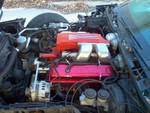





cold air induction

Thread Starter
Melting Slicks


Joined: Jan 2002
Posts: 2,238
Likes: 4
From: Milan
 cold air induction
About a month ago someone posted a link to a company that make a cold air induction system for C4. (not Varam - we are waiting for.., No SLP...)
I remember that the kit was with 3 cone filters, and the kit was provided wit a template to cut the radiator shroud.
A "mouth" just under (or instead of) the stock air dam was the inlet for the cold air.
This link was at the middle of the post (about the 5th or 6th reply).
Someone remember ?
Thanks
-beppe-
I remember that the kit was with 3 cone filters, and the kit was provided wit a template to cut the radiator shroud.
A "mouth" just under (or instead of) the stock air dam was the inlet for the cold air.
This link was at the middle of the post (about the 5th or 6th reply).
Someone remember ?
Thanks
-beppe-

Racer


Joined: Mar 1999
Posts: 292
Likes: 0
From: Vienna VA
conv90
Once my 90 was underway 25 mph+, there was no difference in outside temperature and the air at the stock air filter. Did the test with a digital thermometer. My conclusion is that the stock setup is already cold air.
The 90 has a MAP setup, which does not automatically compensate for increased airflow with speed by adding more fuel. The increased ramming effect of some so called cold air systems means leaning out your air fuel mixture, which is not a good thing, unless you are running too rich. This is not an issue for a MAF car.
My conclusion was cut the lid and go with the K&N...spend my money elsewhere.
Once my 90 was underway 25 mph+, there was no difference in outside temperature and the air at the stock air filter. Did the test with a digital thermometer. My conclusion is that the stock setup is already cold air.
The 90 has a MAP setup, which does not automatically compensate for increased airflow with speed by adding more fuel. The increased ramming effect of some so called cold air systems means leaning out your air fuel mixture, which is not a good thing, unless you are running too rich. This is not an issue for a MAF car.
My conclusion was cut the lid and go with the K&N...spend my money elsewhere.
Thread Starter
Melting Slicks
Joined: Jan 2002
Posts: 2,238
Likes: 4
From: Milan
Originally Posted by Carl90
conv90
Once my 90 was underway 25 mph+, there was no difference in outside temperature and the air at the stock air filter. Did the test with a digital thermometer. My conclusion is that the stock setup is already cold air.
The 90 has a MAP setup, which does not automatically compensate for increased airflow with speed by adding more fuel. The increased ramming effect of some so called cold air systems means leaning out your air fuel mixture, which is not a good thing, unless you are running too rich. This is not an issue for a MAF car.
My conclusion was cut the lid and go with the K&N...spend my money elsewhere.
Once my 90 was underway 25 mph+, there was no difference in outside temperature and the air at the stock air filter. Did the test with a digital thermometer. My conclusion is that the stock setup is already cold air.
The 90 has a MAP setup, which does not automatically compensate for increased airflow with speed by adding more fuel. The increased ramming effect of some so called cold air systems means leaning out your air fuel mixture, which is not a good thing, unless you are running too rich. This is not an issue for a MAF car.
My conclusion was cut the lid and go with the K&N...spend my money elsewhere.
Are you sure about the cold air?
The stock air filter location uses the air in the space between the filter and the internal side of the hood (I have not measured but I think that from the filter and the internal part of the hood there is 1 inch (or less..). the air must pass from the engine compatment before to go in the air fiilter area.
A direct (of course filtered) air flow to the intake shold be better than the stock setup.
I asked this because the product i'm referring was very good to see and for the guy that owns the product it is also good for performance.
It's not the SLP ,Not the vortex, ...Im can't find it on the search archive...
Thread Starter
Melting Slicks
Joined: Jan 2002
Posts: 2,238
Likes: 4
From: Milan
Corvette Stories
The Best of Corvette for Corvette Enthusiasts

Top 10 Most Explosive Corvettes Ever Made: Power-to-Weight Ratio Ranked!
Joe Kucinski
150 hp to 1,250 hp: Every Corvette Generation Compared by the Specs That Matter
Joe Kucinski
8 Coolest Corvette Pace Cars (and Replicas) of All Time
Verdad Gallardo
Top 10 Corvette Engines RANKED by Peak Torque (70+ Years of Muscle!)
Joe Kucinski
Corvette ZR1X Will Be Pacing the Indy 500, And Could Probably Race, Too!
Verdad Gallardo
Top 10 Corvettes Coming to Mecum Indy 2026!
Brett Foote
Top 10 C9 Corvette MUST-HAVES to Fix These C8 Generation Flaws!
Michael S. Palmer
10 Revolutionary 'Corvette Firsts' Most People Don't Know
Joe Kucinski
5 Reasons to Upgrade to an LS6-Powered Corvette; 5 Reasons to Stay LT2
Michael S. Palmer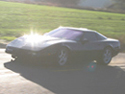
Drifting

Joined: Jun 2002
Posts: 1,491
Likes: 6
From: Portland Oregon
Racer
Joined: Mar 1999
Posts: 292
Likes: 0
From: Vienna VA
Conv90
I am positive about the cold air issue. The results surprised me. I did the test out of curiosity. I have seen lots of advertising about "cold air" and large temp drops, so I wanted to see what the temp difference was between outside air and underhood air at air filter. Of course when your car is stopped the temps go up. However, once you get moving the temp at the filter drops real fast to equal the outside temp. I suspect that the cooler air is coming from the gap in front of the stock air filter housing. I also suspect that the air near the bumper is higher pressure than the air above the filter, which may explain why you get a nice cool airflow over the filter.
I do my own chips too, but I haven't tried to see if I could tune for the ram air effect.
The problem is simple you will see more air at 5000 rpm in fourth than you will see in third. So how do you tune the fuel curve?
I have not seen any way to factor in MPH in the fuel tables, just RPM and MAP. I suspect that if you optimize the AFR to compensate for the added ram air at the higher vehicle speeds, you may have to run the car rich for the lower vehicle speeds. This costs you power at the lower vehicle speeds. You can tune a MAP car to a supercharger, because the airflow is constant at a fixed RPM (i.e., 5000). Whereas, the ram air airflow at 5000 rpm is not constant and is dependent on vehicle speed.
It is an easy test to do for yourself with a cheap digital thermometer with a remote temperature probe.
I am positive about the cold air issue. The results surprised me. I did the test out of curiosity. I have seen lots of advertising about "cold air" and large temp drops, so I wanted to see what the temp difference was between outside air and underhood air at air filter. Of course when your car is stopped the temps go up. However, once you get moving the temp at the filter drops real fast to equal the outside temp. I suspect that the cooler air is coming from the gap in front of the stock air filter housing. I also suspect that the air near the bumper is higher pressure than the air above the filter, which may explain why you get a nice cool airflow over the filter.
I do my own chips too, but I haven't tried to see if I could tune for the ram air effect.
The problem is simple you will see more air at 5000 rpm in fourth than you will see in third. So how do you tune the fuel curve?
I have not seen any way to factor in MPH in the fuel tables, just RPM and MAP. I suspect that if you optimize the AFR to compensate for the added ram air at the higher vehicle speeds, you may have to run the car rich for the lower vehicle speeds. This costs you power at the lower vehicle speeds. You can tune a MAP car to a supercharger, because the airflow is constant at a fixed RPM (i.e., 5000). Whereas, the ram air airflow at 5000 rpm is not constant and is dependent on vehicle speed.
It is an easy test to do for yourself with a cheap digital thermometer with a remote temperature probe.
Last edited by Carl90; Sep 28, 2004 at 12:41 PM.
Melting Slicks
Joined: Aug 2003
Posts: 2,101
Likes: 0
From: Orange TX
I like my Vortex ram air. I would not trust a cheap digital Thermo. I am not convinced that you would get the same temperature. It would probably depend on where you had your thermo and how long you left it there etc. It would take a lot of testing to be conclusive. Sort of like a poll it depends on who you ask and how you ask it.
Racer
Joined: Mar 1999
Posts: 292
Likes: 0
From: Vienna VA
SLOWRIDE
The digital thermometer was accurate and the test is hard to screw up. I compared it to two other thermometers. Even if it was 10 degrees off, what you care about is relative temperature difference.
When back and looked at my notes...there was no difference in outside air vs air temp at the filter above 30 mph.
Not saying that your setup isn't any better than an open lid/K&N. Just saying that your not going to see measurable HP from the difference in air temperature like many venders claim.
Love to see someone else do their own testing and come up with results that prove me wrong.http://forums.corvetteforum.com/newr...&p=1548382900#
Toe Tap
The digital thermometer was accurate and the test is hard to screw up. I compared it to two other thermometers. Even if it was 10 degrees off, what you care about is relative temperature difference.
When back and looked at my notes...there was no difference in outside air vs air temp at the filter above 30 mph.
Not saying that your setup isn't any better than an open lid/K&N. Just saying that your not going to see measurable HP from the difference in air temperature like many venders claim.
Love to see someone else do their own testing and come up with results that prove me wrong.http://forums.corvetteforum.com/newr...&p=1548382900#
Toe Tap

Le Mans Master


Joined: Oct 2002
Posts: 7,178
Likes: 1
From: Bahston Mass.
Originally Posted by conv90
That was me that posted that. I got one of those beauties a few weeks ago. What a peice of craftsmanship, it's amazing.
 That, combined with the Big Mouth Air Dam, and the front looks nice now!!
The gains on the highway sold me 100%, this thing ain't going anywhere!!

Thread Starter
Melting Slicks
Joined: Jan 2002
Posts: 2,238
Likes: 4
From: Milan
Originally Posted by Carl90
Conv90
The problem is simple you will see more air at 5000 rpm in fourth than you will see in third. So how do you tune the fuel curve?
I have not seen any way to factor in MPH in the fuel tables, just RPM and MAP. I suspect that if you optimize the AFR to compensate for the added ram air at the higher vehicle speeds, you may have to run the car rich for the lower vehicle speeds. This costs you power at the lower vehicle speeds. You can tune a MAP car to a supercharger, because the airflow is constant at a fixed RPM (i.e., 5000). Whereas, the ram air airflow at 5000 rpm is not constant and is dependent on vehicle speed.
.
The problem is simple you will see more air at 5000 rpm in fourth than you will see in third. So how do you tune the fuel curve?
I have not seen any way to factor in MPH in the fuel tables, just RPM and MAP. I suspect that if you optimize the AFR to compensate for the added ram air at the higher vehicle speeds, you may have to run the car rich for the lower vehicle speeds. This costs you power at the lower vehicle speeds. You can tune a MAP car to a supercharger, because the airflow is constant at a fixed RPM (i.e., 5000). Whereas, the ram air airflow at 5000 rpm is not constant and is dependent on vehicle speed.
.
If you are at 5,000 rpm in 3 and 5000 in 4 you are at different speed yes.
..but the problem become a tuning problem ONLY when the MAP will be higher than 100 Kpa. (we have no 100 over KPa value for VE table..)
When we are at 3000 rpm in first (no ram air effect) (not WOT) say we are at 80 map. (no real WOT)
At the same 3000 rpm level and with the same load in 4, We can be at 90 MAP due to the added ram effect. (+10Kpa)
The VE table can manage this MAP value .
If we are at WOT at 98 kpa (without ram effect)
..maybe at the same rpm level at WOT with ram effect (say we area at 130 mph) if we go in the 110 Kpa range we are aut of calibration.
-Beppe-

Advanced
Joined: Jul 2004
Posts: 98
Likes: 1
From: Maple Grove Minnesota
Pictures of my recent installation
Originally Posted by JA94vette
So...it is worth the money? And, does anyone have any pics of the engine bay and the front of the car since they've installed it?


I was very pleased with the craftsmanship as well. I believe my performance gains are quite noticeable, seems to me the highway mileage is about 2-3 mpg higher (although that will likely go down as I think I'm running lean now and will boost the fuel pressure). Installation was a snap and I think it looks great!! I thought I might have to paint the front portion black to match my car, but it's so low profile you really don't notice it and even if you do, the silver doesn't clash with the car anyways.


Le Mans Master
Joined: Oct 2002
Posts: 7,178
Likes: 1
From: Bahston Mass.
Congrats!! Mine's Black, I haven't seen one in Silver like that - I like it!!
Here's a couple shots of mine:


I wouldn't get rid of my setup for any other type, at this point, I'm VERY happy with it...
Here's a couple shots of mine:
I wouldn't get rid of my setup for any other type, at this point, I'm VERY happy with it...

Burning Brakes


Joined: Nov 2002
Posts: 807
Likes: 21
From: Los Altos CA
I have a different take on the benefits of these cold air/ram systems.
At 100 mph, the pressure boost is a simple calculation - and is about 0.17 psi or 1.2 kPa. This is only a boost of slightly more than 1 percent - not that significant. And it is only significant at the end of your run.
A bigger advantage may be in the reduced air temperature. While it seems reasonable that at 25 mph or faster, the air going into the plenum is at road temperature, this may not be the whole story. The plenum itself gets very hot and it heats the incoming air. Using a scanner, the MAT sensor reads 130 F or so on a 90 F day. The plenum is heated on the inside and the outside. If the air at idle or low speed is cooler, it stands to reason that the plenum will be cooler and so the heating effect during a run will be less. I have no estimate as to how big the actual effect is but a 10 degree cooler air will increase charge density and hence power by about 2 percent.
At 100 mph, the pressure boost is a simple calculation - and is about 0.17 psi or 1.2 kPa. This is only a boost of slightly more than 1 percent - not that significant. And it is only significant at the end of your run.
A bigger advantage may be in the reduced air temperature. While it seems reasonable that at 25 mph or faster, the air going into the plenum is at road temperature, this may not be the whole story. The plenum itself gets very hot and it heats the incoming air. Using a scanner, the MAT sensor reads 130 F or so on a 90 F day. The plenum is heated on the inside and the outside. If the air at idle or low speed is cooler, it stands to reason that the plenum will be cooler and so the heating effect during a run will be less. I have no estimate as to how big the actual effect is but a 10 degree cooler air will increase charge density and hence power by about 2 percent.
