When you click on links to various merchants on this site and make a purchase, this can result in this site earning a commission. Affiliate programs and affiliations include, but are not limited to, the eBay Partner Network.
Corvette C4 1984 Manual Swap with BMW GS6-37DZ (also works with any SBC gen 1)
Hey everyone,
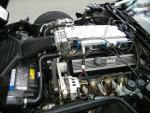
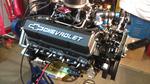
I’ve decided to start this build thread to document a pretty unique project I’m currently neck-deep in. I am swapping a BMW GS6-37DZ 6-speed manual gearbox into my 1984 Corvette C4 (Cross-Fire Injection model with SBC gen1).
My goal with this thread is to break down every single step of the process in as much detail as possible. Hopefully, this will serve as a helpful guide for anyone crazy enough to follow a similar path, or at least be an entertaining read for the community.
Part 1: The Backstory & Why BMW?
After putting a massive amount of work into a near-complete restoration of my Corvette—which included a fresh paint job, an engine rebuild, and a full transmission overhaul—I thought I was good to go.
Fast forward just 5,000 kilometers (around 3,100 miles), and disaster struck. I started hearing a loud, painful whining sound when shifting from 1st to 2nd. I pulled the transmission pan, and to my absolute disappointment, I found a completely destroyed planetary gearset. Mind you, this was a part I had just replaced with a brand-new unit during the rebuild. To make matters worse, metal shavings and debris had completely shredded the oil pump.
Rebuilding this automatic transmission (the stock 700R4) for a second time felt like throwing good money after bad. Here is the catch: I live in Germany. Finding parts for American cars here is either incredibly expensive locally, or you have to pay astronomical shipping fees plus import duties and taxes from the US, which easily doubles the cost of any repair. That’s when the idea of a manual swap entered my mind.
However, sourcing a classic American manual transmission in Europe is next to impossible. Finding a Tremec T56, a Doug Nash "4+3", or even the later C4 ZF 6-speed is like hunting for a unicorn. And buying a brand-new aftermarket Tremec kit from the States was unjustifiably expensive for this build.
Since I am in the land of BMWs, I decided to look at local options. I needed something robust, affordable, and readily available. That led me straight to the BMW GS6-37DZ—a heavy-duty 6-speed manual gearbox sourced from an E46 320d.
Part 2: The Logic Behind the GS6-37DZ (And a Tip for Higher HP Builds)
On paper, this BMW gearbox is rated by the manufacturer for 370 Nm (about 273 lb-ft) of torque. However, the reality in the car community tells a completely different story. There are countless examples of people thrashing these exact transmissions in drift missiles and track cars making well over 600 horsepower without any issues. They are incredibly bulletproof. Quick Tip: If you are reading this and planning a high-horsepower build that needs even more muscle, you can follow the exact same swap process using the GS6-53DZ transmission. That’s the big brother gearbox from BMW’s 3.0-liter diesel engines, and it can easily handle over 800 Nm (590 lb-ft) of torque all day long.
The best part about the GS6-37DZ in Europe? Nobody needs them. Supply heavily outweighs demand, which means I picked mine up for just 200 Euros. To put that into perspective, that is literally cheaper than a basic gasket and seal kit for a 700R4 automatic transmission over here!
Part 3: The Engineering Phase — 3D Scanning & Adapter Setup
Let’s dive straight into the technical side of things.
To kick off the engineering phase, I used a 3D scanner to scan both the stock 700R4 and the BMW GS6-37DZ gearboxes. I then brought both meshes into Fusion 360 to overlay and compare their dimensions. The BMW box is significantly shorter and narrower overall, though it is slightly taller in the middle section of the case. The good news? Thanks to these dimensions, the GS6 fits into the C4’s transmission tunnel perfectly with almost zero clearance modifications required.
(Note: I will attach the STL files to this post—feel free to use them for your own projects!)
Now, when it comes to bolting it up to the engine, we know that the LS bellhousing bolt pattern is nearly identical to the Gen 1 Small Block Chevy (SBC). A company called PMC Motorsport actually makes an off-the-shelf adapter kit for LS engines to BMW transmissions, which includes an adapter plate and a custom flywheel. However, because I am running the factory Gen 1 SBC (Cross-Fire), this kit is not a direct bolt-on. Both the adapter plate and the flywheel require some specific modifications to play nice with the older block.
Part 4: The Tooling Up — Buying 100-Year-Old German Machinery
Here is where the project took a bit of a crazy turn. Since I don't have access to a professional machine shop, and outsourcing custom fabrication work in Germany costs an absolute fortune, I decided to take matters into my own hands. I needed tools.
Instead of paying a shop, I went out and bought two old-school industrial machines:
An antique Maffei München lathe that is well over 100 years old.
A Ruhla Typ 58 universal milling machine from 1959.
Fortunately for me, vintage machinery like this isn’t in high demand among regular hobbyists. I managed to score both machines for just 1,800 Euros total. I then spent about 500 Euros restoring them, cleaning them up, and upgrading them with modern DRO (Digital Readout) systems.
Now, I have a fully capable setup right at home. I can fabricate or modify literally anything I need for this Corvette entirely by myself.
Part 5: Modifying the PMC Kit — Turning LS Parts into SBC Parts
The adapter plate and custom flywheel from PMC Motorsport are beautifully made pieces of engineering, machined out of high-strength 6082-T6 aluminum. However, since the kit is designed for a modern LS engine, we run into some serious dimensional differences when trying to mate it to a Gen 1 Small Block Chevy (SBC).
Here is the breakdown of the modifications I had to make on my machines:
1. The Adapter Plate
The overall block profile of a modern LS engine is physically taller at the top compared to a classic Gen 1 SBC. Because the LS bellhousing pattern extends further upward, the top section of the PMC adapter plate was too high and didn't match the SBC profile. To fix this, I set the plate up on my Ruhla milling machine and milled down the top profile so it lines up perfectly with the contours of my Cross-Fire block and clears the firewall/tunnel area.
2. The Flywheel
On a stock LS engine, the flywheel sits recessed about 1 cm (~0.4 inches) inward relative to the block's mating plane. Additionally, the crankshaft bolt pattern and the center bore size are completely different from the older Chevy engine.
To make the flywheel work, I performed three precise machining operations on my vintage machinery:
Milled 4 mm off the backside of the flywheel to correct the depth offset and get the spacing right.
Bored out the center hub diameter on the Ruhla milling machine using a boring head to ensure a perfectly snug fit over the SBC crankshaft flange.
Drilled a brand-new bolt pattern to match the SBC crankshaft using the mill's DRO for flawless indexing and accuracy.
To address the remaining 6 mm difference in the flywheel offset, I will be using a custom-machined spacer plate sandwiched between the engine block and the transmission adapter plate. This will line everything up perfectly.
Part 6: The Custom C-Beam Mount
With the engine-to-transmission mating sorted out, the next major challenge was designing the rear transmission mount. As many of you know, the C4 Corvette relies on an aluminum C-beam to rigidly connect the transmission to the differential.
Because the BMW GS6 gearbox is significantly shorter than the massive 700R4, it frees up a lot of room in the tunnel. This extra space gave me plenty of clearance to fabricate a custom heavy-duty C-beam adapter bracket.
I decided to machine the bracket out of 6082-T6 aluminum. The design consists of two main plates bound together using high-tensile Grade 10.9 fasteners:
Two M12 bolts (torqued to 80 Nm / ~59 lb-ft)
Three M10 bolts (torqued to 50 Nm / ~37 lb-ft)
By clamping these plates together at those specs, the assembly yields roughly 7 tons of shear strength. This is well beyond overkill for this application, especially considering that the rear of the transmission itself is light enough that you can easily support it with one hand when it's bolted to the engine.
Before throwing expensive aluminum onto the Ruhla milling machine for the final cuts, I went through a few rounds of 3D printing prototypes. 3D printing the bracket allowed me to test-fit everything in the car, double-check the clearances in the tunnel, and dial in the mounting geometry down to the millimeter.
Here are some photos of the fabrication process and the final bracket coming together:
Part 7: The Driveshaft Puzzle
With the transmission solidly mounted via the custom C-beam bracket, it was time to tackle the driveshaft. Because the engine and differential on a C4 are locked together by the C-beam, you normally need a slip-yoke. However, given my new setup, I needed a telescopic (collapsible) driveshaft.
Once again, getting a custom driveshaft built here in Germany would easily clear the 1,000 Euro mark, so I started hunting through parts catalogs for an OEM budget-friendly alternative.
As it turns out, the front driveshaft from a Chevrolet Blazer is an absolute perfect match for length, measuring in at 30.02 inches collapsed. You can pick one up brand new on eBay for just around $120.
Of course, it wasn’t a direct drop-in. The Blazer shaft comes equipped with 1350 and 1330 size U-joints. To make it work with my setup, I pressed those out and swapped in hybrid conversion U-joints: a MOOG 348 and a Ford Racing M4635A U-Joint Kit.
For the connection, I sourced a front companion flange from a Jeep Wrangler. To bridge the final gap between the Jeep flange and the BMW output guibo pattern, I machined a custom flange adapter out of high-strength, pre-hardened 42CrMo4 +QT (4140 Chromoly) steel. driveshaft adapter driveshaft adapter
Part 8: Pedals, Hydraulics, and the Shifter Setup
When it came to the footwork, I managed to source an OEM Corvette C4 clutch pedal and clutch master cylinder. The great news here is that the factory Corvette master cylinder plays perfectly with the BMW slave cylinder—the hydraulic ratios match up nicely, and the pedal feel is great. Tip for C4 owners doing a manual swap: You do not need to pull the entire dashboard console to install the clutch pedal assembly! That is a notorious nightmare on these cars. Instead, simply remove the upper dash pad and pull out the driver-side A/C ducting. This opens up just enough clearance to access the top two mounting bolts for the pedal bracket. However, be prepared: you will still need to feed the pedal assembly up into the footwell disassembled and put it together entirely by feel. It’s tight, but it saves an immense amount of time.
For the gear selector, I went with a budget-friendly option for now—a BMW E46 shifter assembly.
To mount it inside the Corvette, I machined a custom base bracket that bolts directly into the factory holes where the original automatic shifter assembly used to sit. Finally, I fabricated a custom shift linkage rod to connect the shifter to the GS6 gearbox. Everything lines up beautifully within the factory console opening!
Part 9: The First Start & Current Status
I’ve already started the car, and it runs and shifts beautifully! Feeling the BMW 6-speed gear gates click into place behind a Small Block Chevy engine is an absolutely incredible reward after all the hours of measuring and machining.
The heavy lifting is officially done, and now I’m down to sorting out the final loose ends:
Wiring up the reverse lights.
Calibrating and connecting the speedometer (VSS).
Reassembling the interior trim and center console.
I will continue to update this thread with detailed steps as I knock these final items off my checklist and get the interior buttoned back up.
I’m completely open to any feedback, constructive criticism, comments, or advice you guys might have. Thanks for following along, and stay tuned for more updates soon! flywheel assembly flywheel assembly
I'll leave the links to the gearbox STL files here:
https://drive.google.com/file/d/1YokWpTLjcQFDqB5k53zU9VZe9-5x5dcM/view?usp=sharing
https://drive.google.com/file/d/1aN89CikoiiMJl5kTHz-Xd5M2Cl7QrEOV/view?usp=sharing
Last edited by Volodaka; May 26, 2026 at 10:59 AM.
Great job! It looks fantastic. How do the gear ratios compare to the ZF6?
Thanks!
1 - 4.35
2 - 2.50
3 - 1.67
4 - 1.23
5 - 1
6 - 0.85
First gear is pretty short, but on the bright side, it’ll make pulling away on a hill incredibly easy without even having to touch the gas. The main reason I chose this specific gearbox was having that 6th gear. Driving on the Autobahn here in Germany, I usually cruise at around 150–160 km/h (about 93–100 mph), so having an actual overdrive gear is a massive plus to keep the RPMs reasonable. In the other hand, the Cross-Fire is a low-end torque motor; its powerband isn't actually that different from a modern diesel anyway, so the ratios should match the engine characteristics quite well. As soon as I take it out for a proper test drive, I’ll definitely report back with my driving impressions.
Last edited by Volodaka; May 26, 2026 at 05:08 PM.
Yeah, that is a low first gear. It will surprise people off the line. You could easily start in second. The trade of the double overdrive sixth that is unnecessary for the stump puller first seems ok to me.
Wow, what an impressive technical accomplishment coupled with a great write up. Thanks for going to all that effort. This is way cool to see.
Given the ratios of those tranny gears, I'd be really tempted to swap in a super long ring and pinion. The ZF that came in the '89 and later has a 0.50 overdrive and sometimes I feel like it could be even steeper.
Here are a few more photos of the completed assembly
As for the issues encountered so far: I noticed that the exhaust is slightly rubbing against the new transmission bracket. I need to bend it just a couple of degrees both in front of and behind the mount. I’m currently figuring out how to manage that without having an actual pipe bender on hand.
I couldn't find any information anywhere on how to slightly bend an exhaust pipe without relying on an angle grinder and a welder, so I came up with this method myself. I secured the exhaust to the frame of my hydraulic press using ropes, then used two old brake disks to create a makeshift die for the pipe to press against. By pressing down on the existing bend, I managed to tweak the exhaust by about 5 degrees. That was just enough to stop it from scraping the asphalt, and it also relieved some tension on the rear exhaust hanger springs. As a result, I now have a perfect 1.5 cm (~0.6 inch) clearance right beneath the transmission bracket.
I’ve completely reassembled the interior. To make sure the new shifter fits properly and there's no interference when throwing gears, I unscrewed the automatic shift indicator from the center console and trimmed out the divider next to it. I also quickly sewed up a makeshift shifter boot, which mounts exactly like the OEM boot using the factory bolts underneath the console trim panel.
I’ve put the car through its paces with a few road tests now, and I’m thrilled to report that the gearbox shifts flawlessly. The clutch bites right in the middle of the pedal travel and feels incredibly intuitive and progressive.
First gear is extremely short. On flat ground, it’s honestly much smoother to just take off in second gear to avoid that annoying weight-transfer lurch when shifting. On the flip side, taking off on steep inclines is a breeze, you can just let the clutch out without even touching the gas.
Around town at 50 km/h (~30 mph), you could technically cruise in 6th if you really wanted to, but 4th gear feels like the absolute sweet spot for comfort and responsiveness. Out on the open road, 6th gear is a beautiful cruiser. But if you drop it down into 5th or 4th and bury the throttle, the feeling is absolutely unbelievable! I’ll definitely shoot a video as soon as I get some free time.
A quick technical nuance I noticed: Since I’m running a lightweight aluminum flywheel, there is some classic gear chatter from the transmission at idle, as well as under load at low RPMs in the higher gears (5th and 6th). The lightweight flywheel just doesn’t have enough inertia to damp the engine's torsional vibrations before they hit the input shaft. This is a known characteristic of almost all single-mass lightweight flywheel setups. To quiet it down, I plan to swap the transmission fluid for a custom mix of Red Line 75W140 NS and Red Line ATF D4. In theory, this thicker blend should cushion the gear lash and eliminate most of the rattling, though honestly, it’s not loud enough to really bother me anyway.
In other words, the entire project—including two massive machine tools capable of machining any grade of steel down to a 0.01 mm tolerance—costs about the same as a bare Tremec TKX 5-speed transmission without a flywheel, pedals, or any of the conversion hardware.
Designer Imagines A Corvette That Looks More Like a Corvette Than the Corvette
Slideshow: A Jaguar designer's personal project imagines what a modern front-engined Corvette might look like if Chevrolet revisited the golden age of the Stingray.










 Corvette C4 1984 Manual Swap with BMW GS6-37DZ (also works with any SBC gen 1)