When you click on links to various merchants on this site and make a purchase, this can result in this site earning a commission. Affiliate programs and affiliations include, but are not limited to, the eBay Partner Network.
never use the same number in two cells side by side. From left to right, the number is either increasing or decreasing. The timing is never 20.0000, its going to be 19.996, 20.005, 19.955, 19.970, 20.043, etc which can cause an oscillation in output (wavy torque line). digital electronics and the time between crank trigger events is an imprecise measurement. Although it is fairly exact, its far from perfect, there is some amount of prediction and mathematical uncertainty involved. Whereas the real life physical combustion engine has no such perturbations with operating frequency (the physical model doesn't randomly gain or lose energy as some form of error percentage the way a digital, mathematical model might be susceptible to because unlike digital computations the real world always follows conservation of matter and energy), Therefore It is always best to give the digital electronics a new target between trigger events so the error is lost in the shift from one cell to the next.
Last edited by Kingtal0n; Oct 19, 2019 at 09:50 PM.
If you post the timing numbers we need to see the y-axis also because without that there is no reference.
IMHO It looks aggressive.
-usually engine timing is "all in" near 2400-2800rpm sometimes 3200 and I see upwards of 30* btdc as low as 1400rpm which makes me nervous
never use the same number in two cells side by side. From left to right, the number is either increasing or decreasing...
Whereas the real life physical combustion engine has no such perturbations with operating frequency (the physical model doesn't randomly gain or lose energy as some form of error percentage the way a digital, mathematical model might be susceptible to because unlike digital computations the real world always follows conservation of matter and energy),
UGH, where to start?
There's NO PROBLEM having the same spark advance in two RPM cells next to each other. Where the heck do you get this stuff?
You have a lot more to learn about combustion. Combustion itself is somewhat stochastic. When we instrument engines for cylinder pressure on the development dynos at the OEM, we routinely see all kinds of variation in the signal even at steady state. We see so much that we actually look at the running average of the last 100 cycles on any given cylinder before displaying the pressure trace in CAS or Indicom. Even if we gave the engine the same locked spark advance (as confirmed with a scope), we would still see some variation in resulting cylinder pressure across cycles on the same cylinder. The short story is that combustion variation is easily 1-2% in perfect conditions, so being +/-0.1* spark is not a measurable change.
NOW, back to the OP...
The biggest issue I see in the table posted above is that the tuner flatlined the spark advance with respect to load at some point. Why would you not want spark to scale with engine load? If you actually took the time to optimize the spark table, you'd find that the engine wants some continuously decreasing spark as load increases. So either this one is way over-advanced up top (likely hidden from knock by the use of Meth/Octane), or it's way under-advanced in the moderate loads (a "safe" tune?) that will result in high EGTs if you aren't running full load. Even if the combo I'm calibrating doesn't use the full range of the spark table, I prefer to continue the trend I found for spark vs load out beyond the cells I saw on the dyno. This means that if the customer ever gets a higher load (low altitude, temperate drop, pulley change on a supercharger), then the ECU will at least make a directionally correct change to try and keep up with it.
There's NO PROBLEM having the same spark advance in two RPM cells next to each other. Where the heck do you get this stuff?
You have a lot more to learn about combustion. Combustion itself is somewhat stochastic. When we instrument engines for cylinder pressure on the development dynos at the OEM, we routinely see all kinds of variation in the signal even at steady state. We see so much that we actually look at the running average of the last 100 cycles on any given cylinder before displaying the pressure trace in CAS or Indicom. Even if we gave the engine the same locked spark advance (as confirmed with a scope), we would still see some variation in resulting cylinder pressure across cycles on the same cylinder. The short story is that combustion variation is easily 1-2% in perfect conditions, so being +/-0.1* spark is not a measurable change.
NOW, back to the OP...
The biggest issue I see in the table posted above is that the tuner flatlined the spark advance with respect to load at some point. Why would you not want spark to scale with engine load? If you actually took the time to optimize the spark table, you'd find that the engine wants some continuously decreasing spark as load increases. So either this one is way over-advanced up top (likely hidden from knock by the use of Meth/Octane), or it's way under-advanced in the moderate loads (a "safe" tune?) that will result in high EGTs if you aren't running full load. Even if the combo I'm calibrating doesn't use the full range of the spark table, I prefer to continue the trend I found for spark vs load out beyond the cells I saw on the dyno. This means that if the customer ever gets a higher load (low altitude, temperate drop, pulley change on a supercharger), then the ECU will at least make a directionally correct change to try and keep up with it.
lol tells me its ok to have the same number in more than one cell,
There's NO PROBLEM having the same spark advance in two RPM cells next to each other.
turns around and tells the op not to use the same number in more than one cell
NOW, back to the OP...
The biggest issue I see in the table posted above is that the tuner flatlined the spark advance
i c wat u did there
I have fixed more than one wavy torque output oscillation by smoothing into gradually changing numbers and it is rare to see any robust factory timing map after 2002 which contains negative values along with any solid sections (unchanging) of numbers across multiple cells.
never use the same number in two cells side by side. From left to right, the number is either increasing or decreasing. The timing is never 20.0000, its going to be 19.996, 20.005, 19.955, 19.970, 20.043, etc which can cause an oscillation in output (wavy torque line). digital electronics and the time between crank trigger events is an imprecise measurement. Although it is fairly exact, its far from perfect, there is some amount of prediction and mathematical uncertainty involved. Whereas the real life physical combustion engine has no such perturbations with operating frequency (the physical model doesn't randomly gain or lose energy as some form of error percentage the way a digital, mathematical model might be susceptible to because unlike digital computations the real world always follows conservation of matter and energy), Therefore It is always best to give the digital electronics a new target between trigger events so the error is lost in the shift from one cell to the next.
This is one of the dumbest things Ive read from you.
This is one of the dumbest things Ive read from you.
Come back after you've taken dynamic systems, dynamics, and completed advanced control courses for PHD
And then you might see a glimmer, or not, of truth to the statements I have made.
During engine modelling, the second derivative of angular velocity becomes negative in the time domain if following combustion event is identical with respect to fuel and timing.
That means the rate of engine acceleration is decreasing momentarily in the time domain given two identical ignition and fuel events coincide.
Quote:
Originally Posted by Kingtal0nView Post
never use the same number in two cells side by side. From left to right, the number is either increasing or decreasing. The timing is never 20.0000, its going to be 19.996, 20.005, 19.955, 19.970, 20.043, etc which can cause an oscillation in output (wavy torque line). digital electronics and the time between crank trigger events is an imprecise measurement. Although it is fairly exact, its far from perfect, there is some amount of prediction and mathematical uncertainty involved. Whereas the real life physical combustion engine has no such perturbations with operating frequency (the physical model doesn't randomly gain or lose energy as some form of error percentage the way a digital, mathematical model might be susceptible to because unlike digital computations the real world always follows conservation of matter and energy), Therefore It is always best to give the digital electronics a new target between trigger events so the error is lost in the shift from one cell to the next. This is one of the dumbest things Ive read from you.
I agree with PODIUM
Come back after you've taken dynamic systems, dynamics, and completed advanced control courses for PHD
And then you might see a glimmer, or not, of truth to the statements I have made.
During engine modelling, the second derivative of angular velocity becomes negative in the time domain if following combustion event is identical with respect to fuel and timing.
That means the rate of engine acceleration is decreasing momentarily in the time domain given two identical ignition and fuel events coincide.
lets forget that flat lining a timing advance table is mundane way to utilize effectiveness of computer control.
And say its okay just this once just to go against somebody on the internet
lets forget that flat lining a timing advance table is mundane way to utilize effectiveness of computer control.
And say its okay just this once just to go against somebody on the internet
Nobody said anything about "flat lining" a timing table.
You said this
Originally Posted by Kingdumbass
never use the same number in two cells side by side
.
Thats what we are talking about. Quit taking so many super smart classes so you can follow along.
sigh noobs,
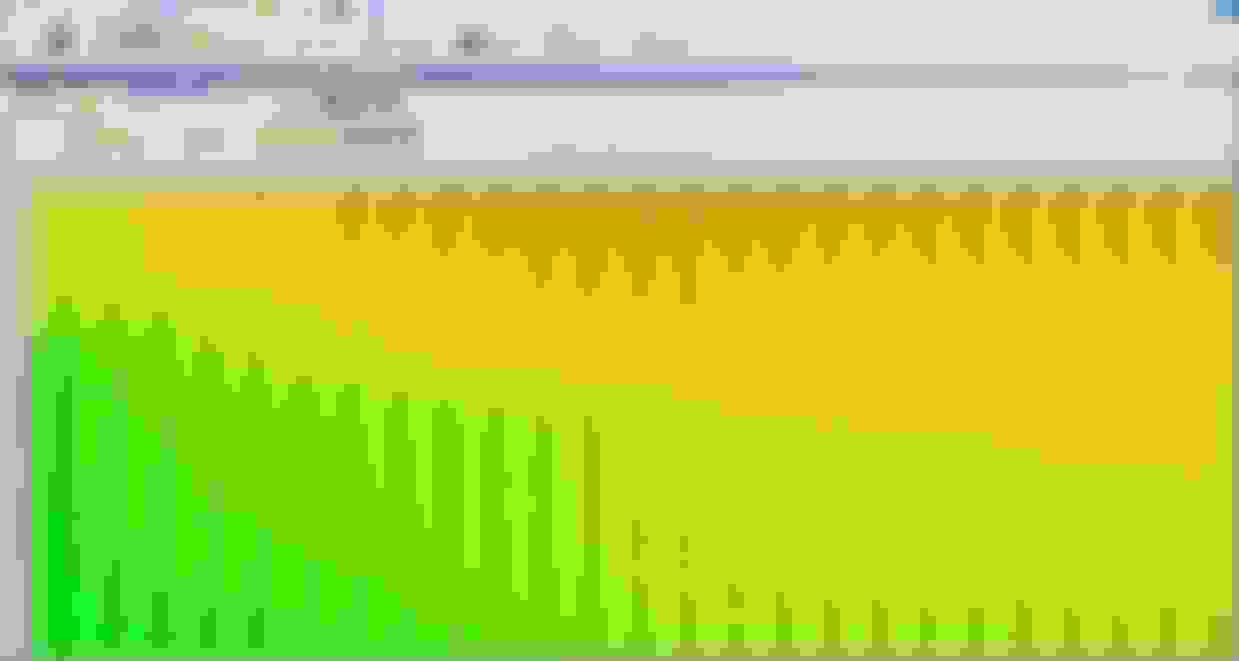
you have to increase the resolution of the table to see the true majestic beauty of a completely original GM timing table.
Behold, her true glory
An engine is a truly dynamical thing, where it is nearly impossible that two side by side cells would use the same exact timing number to the best use of the computer's control and engine's behavior.
so called "flat lines" or two identical cells only occur in places where the OEM engine was never run during the timing/behavior testing. i.e. around 6krpm the factory engine was not going much higher so it flat lines from 5600. The same is seen with pressure, naturally aspirated engines only go so far in airmass then it flatlines where the engine will never reach because "no data".
This is my main and only timing table for LS mild cam 5.3L, it works with 87 octane in the naturally aspirated region
you can laugh all you want but at the end of the day my torque lines are smooth sailing at zero smoothing and everyone else seems to have a problem with that one simple task.










 Main Spark Advance Table Feedback