




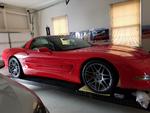

Disappointing numbers

Safety Car


Joined: Oct 2007
Posts: 4,206
Likes: 1,075
From: South Florida

The blower is a centrifugal pump. The flow rate is set by the blower, by the pump. If you modify the engine, cam, headers, head, intake, exhaust, etc... and the engine breaths better, the boost will drop and power will not increase much or at all. It depends on adiabatic efficiency of the pump at its new pressure ratio and flow rate, it may be higher or lower by a percentage or two, but the difference is negligible. The engine modifications wont make more power- they just cause boost to decrease. To make more power you need to increase the pump flow rate. This means a larger pump or faster spinning pump. Those are the only two ways to increase power.
This is what I would do.
First, you must check the efficiency of the pump, to determine whether it is working properly.
1. Measure and record the Intake Air Temperature during wide open throttle. Make sure this IAT is not rising dramatically. It should remain less than 120*F and I prefer to keep under 112*F on gasoline. Should be easy to achieve this temperature. High IAT is a sign you have something wrong, poor intercooler efficiency, or poor pump efficiency.
2. Check for boost leaking by performing a complete pressure test. The pressure test is a critical absolutely necessary test for forced induction applications. It is one of the most commonly overlooked tests by all mechanics and tuners in the world. The way the pump works is by imparting kinetic energy to air molecules, they gain vector velocity with a specific direction. This energy is directed out of the pump towards the engine. However, any leaking between pump and engine will cause loss of energy, loss of air molecules, the lost energy means lost power. This is easily a source of rapid pressure and power lost in centrifugal pump applications which is commonly overlooked.
Here is a video of how I pressure test the compressor cover for forced induction application. So you will have no doubt or trouble performing this test when done properly.
3. Finally, or perhaps firstly, you should calculate the exact flow rate of your compressor/centrifugal pump unit and determine the power it should be making. This can be done by consulting the manufacturer and comparing the blower drive speed with capability of the pump maximum output (max speed vs current speed). The max speed is the full units capability and the percentage of difference between max speed and current speed is the difference in power at its peak.
4. Calculate the flow rate of the engine to compare with the compressor.
This equation,
Cubic inches * peak RPM / 3456 = CFM
CFM is volumetric flow rate
Take CFM and multiply by 0.069 to get a rough idea of warm air MASS flow rate. Multiply volumetric efficiency by inspection, take multiple guesstimates if you want.
Now multiply the boost pressure at peak power to get total flow rate in mass flow.
And correct for drivetrain loss to get power for the tires on a dynojet.
For example,
355cid * 6000rpm / 3456 = 616CFM
616*.069 = 42.5 lb/min airflow mass rate, so the engine can flow roughly 425 horsepower BRAKE (at the flywheel) worth of air with 100% VE by 6000RPM
VE Is volumetric efficiency. If the engine has a stock camshaft the VE is likely near 70% or so by redline. A performance mild cam will give around 85% VE and a all out racing camshaft 95% to 105% is possible.
Lets assume a stock camshaft, adjust by .75 to remove 25% of the flow at peak output.
42.5 * .75 = 31.8lb/min with 75% VE adjustment for stock camshaft at 6000rpm
Now, multiply boost. Assume the engine is at atmospheric pressure sea level 14.5PSI
If we have 7PSI of boost, and 14.5PSI of atmospheric pressure then we have 7/14.5 = 48.2% increase in flow.
Take 31.8lb/min and increase by 48.2% (31.8 * 1.482) = 47.12lb/min
The 355 cid engine at 6000rpm with 75% VE at sea level using 7psi of boost will produce 471BHP
Now multiply drivetrain loss for the dynojet tire result, if we take 15% drivetrain loss,
471 * .85 = 400rwhp on the dynojet
Of course you can gain or lose many places in the calculation. Air density for example, 0.069 constant is not constant. That is a warm air temperature, not hot not cold. The IAT is a rough estimate and you can back calculate air density using real world data for example.
Next the VE isn't exactly 75%. It may 78% or 81% or whatever.
Next the drivetrain loss isnt exactly 15%. It may 12% or 18% who knows. Tire makes a difference. Strap tightness to dyno makes a difference. Humidity and temperature makes a difference. Dyno different day, different temp, different humidity, different strap, different dyno result by a couple percentage is possible .
Nevertheless, the resulting calculation will give you a ballpark estimate of real world power to the tire expectation. If you expect between HIGH and LOW say 390 to 420rwhp, and you get 350rwhp, then you can assure something is wrong. The compressor flow rate gives you expected power to the engine (and from there, tire) and the calculation of engine breathing gives you the same result at whatever boost pressure you choose, they should line up pretty closely. I've used this calculation effort on hundreds of setups from 1.8L to 7L and it always works.
This is what I would do.
First, you must check the efficiency of the pump, to determine whether it is working properly.
1. Measure and record the Intake Air Temperature during wide open throttle. Make sure this IAT is not rising dramatically. It should remain less than 120*F and I prefer to keep under 112*F on gasoline. Should be easy to achieve this temperature. High IAT is a sign you have something wrong, poor intercooler efficiency, or poor pump efficiency.
2. Check for boost leaking by performing a complete pressure test. The pressure test is a critical absolutely necessary test for forced induction applications. It is one of the most commonly overlooked tests by all mechanics and tuners in the world. The way the pump works is by imparting kinetic energy to air molecules, they gain vector velocity with a specific direction. This energy is directed out of the pump towards the engine. However, any leaking between pump and engine will cause loss of energy, loss of air molecules, the lost energy means lost power. This is easily a source of rapid pressure and power lost in centrifugal pump applications which is commonly overlooked.
Here is a video of how I pressure test the compressor cover for forced induction application. So you will have no doubt or trouble performing this test when done properly.
3. Finally, or perhaps firstly, you should calculate the exact flow rate of your compressor/centrifugal pump unit and determine the power it should be making. This can be done by consulting the manufacturer and comparing the blower drive speed with capability of the pump maximum output (max speed vs current speed). The max speed is the full units capability and the percentage of difference between max speed and current speed is the difference in power at its peak.
4. Calculate the flow rate of the engine to compare with the compressor.
This equation,
Cubic inches * peak RPM / 3456 = CFM
CFM is volumetric flow rate
Take CFM and multiply by 0.069 to get a rough idea of warm air MASS flow rate. Multiply volumetric efficiency by inspection, take multiple guesstimates if you want.
Now multiply the boost pressure at peak power to get total flow rate in mass flow.
And correct for drivetrain loss to get power for the tires on a dynojet.
For example,
355cid * 6000rpm / 3456 = 616CFM
616*.069 = 42.5 lb/min airflow mass rate, so the engine can flow roughly 425 horsepower BRAKE (at the flywheel) worth of air with 100% VE by 6000RPM
VE Is volumetric efficiency. If the engine has a stock camshaft the VE is likely near 70% or so by redline. A performance mild cam will give around 85% VE and a all out racing camshaft 95% to 105% is possible.
Lets assume a stock camshaft, adjust by .75 to remove 25% of the flow at peak output.
42.5 * .75 = 31.8lb/min with 75% VE adjustment for stock camshaft at 6000rpm
Now, multiply boost. Assume the engine is at atmospheric pressure sea level 14.5PSI
If we have 7PSI of boost, and 14.5PSI of atmospheric pressure then we have 7/14.5 = 48.2% increase in flow.
Take 31.8lb/min and increase by 48.2% (31.8 * 1.482) = 47.12lb/min
The 355 cid engine at 6000rpm with 75% VE at sea level using 7psi of boost will produce 471BHP
Now multiply drivetrain loss for the dynojet tire result, if we take 15% drivetrain loss,
471 * .85 = 400rwhp on the dynojet
Of course you can gain or lose many places in the calculation. Air density for example, 0.069 constant is not constant. That is a warm air temperature, not hot not cold. The IAT is a rough estimate and you can back calculate air density using real world data for example.
Next the VE isn't exactly 75%. It may 78% or 81% or whatever.
Next the drivetrain loss isnt exactly 15%. It may 12% or 18% who knows. Tire makes a difference. Strap tightness to dyno makes a difference. Humidity and temperature makes a difference. Dyno different day, different temp, different humidity, different strap, different dyno result by a couple percentage is possible .
Nevertheless, the resulting calculation will give you a ballpark estimate of real world power to the tire expectation. If you expect between HIGH and LOW say 390 to 420rwhp, and you get 350rwhp, then you can assure something is wrong. The compressor flow rate gives you expected power to the engine (and from there, tire) and the calculation of engine breathing gives you the same result at whatever boost pressure you choose, they should line up pretty closely. I've used this calculation effort on hundreds of setups from 1.8L to 7L and it always works.

Race Director


Joined: Dec 1999
Posts: 10,230
Likes: 885
From: Alexandria, Virginia, USA VA
just for comparison, I made 670 hp at the tire on a P1Sc procharger running a big 416 ci LS3 based engine
the p1sc I believe you will find at max spin rate will pump enough flow to drive around 800 or so hp
If you want a bit more, it's an easy and affordable upgrade
In my case I sold my P1sc kit and bought a D1x which will up the flow to support around 1075 hp
The other thing that hasn't been mentioned is belt slip. As you up the spin rate with a smaller pulley it's easy to run into belt slip issues, and indeed that maybe happening now
I'm using an A&A drive with the dedicated acc drive to hopefully eliminate that.
I think once you get it sorted you'll be wondering how to hook 550 and not be too disappointed
the p1sc I believe you will find at max spin rate will pump enough flow to drive around 800 or so hp
If you want a bit more, it's an easy and affordable upgrade
In my case I sold my P1sc kit and bought a D1x which will up the flow to support around 1075 hp
The other thing that hasn't been mentioned is belt slip. As you up the spin rate with a smaller pulley it's easy to run into belt slip issues, and indeed that maybe happening now
I'm using an A&A drive with the dedicated acc drive to hopefully eliminate that.
I think once you get it sorted you'll be wondering how to hook 550 and not be too disappointed
Race Director
Joined: Dec 1999
Posts: 10,230
Likes: 885
From: Alexandria, Virginia, USA VA
The blower is a centrifugal pump. The flow rate is set by the blower, by the pump. If you modify the engine, cam, headers, head, intake, exhaust, etc... and the engine breaths better, the boost will drop and power will not increase much or at all. It depends on adiabatic efficiency of the pump at its new pressure ratio and flow rate, it may be higher or lower by a percentage or two, but the difference is negligible. The engine modifications wont make more power- they just cause boost to decrease. To make more power you need to increase the pump flow rate. This means a larger pump or faster spinning pump. Those are the only two ways to increase power.
This is what I would do.
First, you must check the efficiency of the pump, to determine whether it is working properly.
1. Measure and record the Intake Air Temperature during wide open throttle. Make sure this IAT is not rising dramatically. It should remain less than 120*F and I prefer to keep under 112*F on gasoline. Should be easy to achieve this temperature. High IAT is a sign you have something wrong, poor intercooler efficiency, or poor pump efficiency.
2. Check for boost leaking by performing a complete pressure test. The pressure test is a critical absolutely necessary test for forced induction applications. It is one of the most commonly overlooked tests by all mechanics and tuners in the world. The way the pump works is by imparting kinetic energy to air molecules, they gain vector velocity with a specific direction. This energy is directed out of the pump towards the engine. However, any leaking between pump and engine will cause loss of energy, loss of air molecules, the lost energy means lost power. This is easily a source of rapid pressure and power lost in centrifugal pump applications which is commonly overlooked.
Here is a video of how I pressure test the compressor cover for forced induction application. So you will have no doubt or trouble performing this test when done properly.
https://www.youtube.com/watch?v=w1sb5Y1J068
3. Finally, or perhaps firstly, you should calculate the exact flow rate of your compressor/centrifugal pump unit and determine the power it should be making. This can be done by consulting the manufacturer and comparing the blower drive speed with capability of the pump maximum output (max speed vs current speed). The max speed is the full units capability and the percentage of difference between max speed and current speed is the difference in power at its peak.
4. Calculate the flow rate of the engine to compare with the compressor.
This equation,
Cubic inches * peak RPM / 3456 = CFM
CFM is volumetric flow rate
Take CFM and multiply by 0.069 to get a rough idea of warm air MASS flow rate. Multiply volumetric efficiency by inspection, take multiple guesstimates if you want.
Now multiply the boost pressure at peak power to get total flow rate in mass flow.
And correct for drivetrain loss to get power for the tires on a dynojet.
For example,
355cid * 6000rpm / 3456 = 616CFM
616*.069 = 42.5 lb/min airflow mass rate, so the engine can flow roughly 425 horsepower BRAKE (at the flywheel) worth of air with 100% VE by 6000RPM
VE Is volumetric efficiency. If the engine has a stock camshaft the VE is likely near 70% or so by redline. A performance mild cam will give around 85% VE and a all out racing camshaft 95% to 105% is possible.
Lets assume a stock camshaft, adjust by .75 to remove 25% of the flow at peak output.
42.5 * .75 = 31.8lb/min with 75% VE adjustment for stock camshaft at 6000rpm
Now, multiply boost. Assume the engine is at atmospheric pressure sea level 14.5PSI
If we have 7PSI of boost, and 14.5PSI of atmospheric pressure then we have 7/14.5 = 48.2% increase in flow.
Take 31.8lb/min and increase by 48.2% (31.8 * 1.482) = 47.12lb/min
The 355 cid engine at 6000rpm with 75% VE at sea level using 7psi of boost will produce 471BHP
Now multiply drivetrain loss for the dynojet tire result, if we take 15% drivetrain loss,
471 * .85 = 400rwhp on the dynojet
Of course you can gain or lose many places in the calculation. Air density for example, 0.069 constant is not constant. That is a warm air temperature, not hot not cold. The IAT is a rough estimate and you can back calculate air density using real world data for example.
Next the VE isn't exactly 75%. It may 78% or 81% or whatever.
Next the drivetrain loss isnt exactly 15%. It may 12% or 18% who knows. Tire makes a difference. Strap tightness to dyno makes a difference. Humidity and temperature makes a difference. Dyno different day, different temp, different humidity, different strap, different dyno result by a couple percentage is possible .
Nevertheless, the resulting calculation will give you a ballpark estimate of real world power to the tire expectation. If you expect between HIGH and LOW say 390 to 420rwhp, and you get 350rwhp, then you can assure something is wrong. The compressor flow rate gives you expected power to the engine (and from there, tire) and the calculation of engine breathing gives you the same result at whatever boost pressure you choose, they should line up pretty closely. I've used this calculation effort on hundreds of setups from 1.8L to 7L and it always works.
This is what I would do.
First, you must check the efficiency of the pump, to determine whether it is working properly.
1. Measure and record the Intake Air Temperature during wide open throttle. Make sure this IAT is not rising dramatically. It should remain less than 120*F and I prefer to keep under 112*F on gasoline. Should be easy to achieve this temperature. High IAT is a sign you have something wrong, poor intercooler efficiency, or poor pump efficiency.
2. Check for boost leaking by performing a complete pressure test. The pressure test is a critical absolutely necessary test for forced induction applications. It is one of the most commonly overlooked tests by all mechanics and tuners in the world. The way the pump works is by imparting kinetic energy to air molecules, they gain vector velocity with a specific direction. This energy is directed out of the pump towards the engine. However, any leaking between pump and engine will cause loss of energy, loss of air molecules, the lost energy means lost power. This is easily a source of rapid pressure and power lost in centrifugal pump applications which is commonly overlooked.
Here is a video of how I pressure test the compressor cover for forced induction application. So you will have no doubt or trouble performing this test when done properly.
https://www.youtube.com/watch?v=w1sb5Y1J068
3. Finally, or perhaps firstly, you should calculate the exact flow rate of your compressor/centrifugal pump unit and determine the power it should be making. This can be done by consulting the manufacturer and comparing the blower drive speed with capability of the pump maximum output (max speed vs current speed). The max speed is the full units capability and the percentage of difference between max speed and current speed is the difference in power at its peak.
4. Calculate the flow rate of the engine to compare with the compressor.
This equation,
Cubic inches * peak RPM / 3456 = CFM
CFM is volumetric flow rate
Take CFM and multiply by 0.069 to get a rough idea of warm air MASS flow rate. Multiply volumetric efficiency by inspection, take multiple guesstimates if you want.
Now multiply the boost pressure at peak power to get total flow rate in mass flow.
And correct for drivetrain loss to get power for the tires on a dynojet.
For example,
355cid * 6000rpm / 3456 = 616CFM
616*.069 = 42.5 lb/min airflow mass rate, so the engine can flow roughly 425 horsepower BRAKE (at the flywheel) worth of air with 100% VE by 6000RPM
VE Is volumetric efficiency. If the engine has a stock camshaft the VE is likely near 70% or so by redline. A performance mild cam will give around 85% VE and a all out racing camshaft 95% to 105% is possible.
Lets assume a stock camshaft, adjust by .75 to remove 25% of the flow at peak output.
42.5 * .75 = 31.8lb/min with 75% VE adjustment for stock camshaft at 6000rpm
Now, multiply boost. Assume the engine is at atmospheric pressure sea level 14.5PSI
If we have 7PSI of boost, and 14.5PSI of atmospheric pressure then we have 7/14.5 = 48.2% increase in flow.
Take 31.8lb/min and increase by 48.2% (31.8 * 1.482) = 47.12lb/min
The 355 cid engine at 6000rpm with 75% VE at sea level using 7psi of boost will produce 471BHP
Now multiply drivetrain loss for the dynojet tire result, if we take 15% drivetrain loss,
471 * .85 = 400rwhp on the dynojet
Of course you can gain or lose many places in the calculation. Air density for example, 0.069 constant is not constant. That is a warm air temperature, not hot not cold. The IAT is a rough estimate and you can back calculate air density using real world data for example.
Next the VE isn't exactly 75%. It may 78% or 81% or whatever.
Next the drivetrain loss isnt exactly 15%. It may 12% or 18% who knows. Tire makes a difference. Strap tightness to dyno makes a difference. Humidity and temperature makes a difference. Dyno different day, different temp, different humidity, different strap, different dyno result by a couple percentage is possible .
Nevertheless, the resulting calculation will give you a ballpark estimate of real world power to the tire expectation. If you expect between HIGH and LOW say 390 to 420rwhp, and you get 350rwhp, then you can assure something is wrong. The compressor flow rate gives you expected power to the engine (and from there, tire) and the calculation of engine breathing gives you the same result at whatever boost pressure you choose, they should line up pretty closely. I've used this calculation effort on hundreds of setups from 1.8L to 7L and it always works.
Racer


Joined: Aug 2006
Posts: 401
Likes: 85
From: Terre Haute Indiana
I was in a similar boat as you. Ended up being valve float. Added new springs and picked up 80rwhp by just swapping new springs. Are you still on the stockers?
Take a look at my threads about it. Its something to look into.
https://www.corvetteforum.com/forums...-ecs-novi.html
Take a look at my threads about it. Its something to look into.
https://www.corvetteforum.com/forums...-ecs-novi.html
Le Mans Master


Joined: Sep 2017
Posts: 5,215
Likes: 1,529
From: Pasadena, MD
2023 C5 of the Year Finalist - Modified
What's that car baseline? like 290-300? Add 140 for the 7lbs plus say 40 for complete exhaust? That's 470-480. Minus a little for 91 gas. I don't think 467 is that bad. I'd guess average for the car and mods.
I certainly wouldn't be disappointed.
I certainly wouldn't be disappointed.

Thread Starter
Instructor
Joined: May 2017
Posts: 144
Likes: 13
My question is most posts I’ve seen about similar setups is how are they in the 550-600 range and I’m a full 100 behind? You guys have given me some good questions to ask the tuner and identified some potential issues to investigate.

Le Mans Master
Joined: Dec 2000
Posts: 6,957
Likes: 65
From: South FL
Your numbers are not out of line, even more so supported by the fact that if you are running 91 octane the tuner likely isn't cracking it over the head with timing. Anyone telling you that they are making 600 wheel with a bone stock LS1 on 7psi is literally lying to you.
Corvette Stories
The Best of Corvette for Corvette Enthusiasts

10 Reasons the C6 Z06 is Still A Performance Benchmark After 20 Years
Joe Kucinski
How Much Horsepower Every Corvette Engine "LOST" in 1972
Joe Kucinski
Top 10 DOs and DON'Ts for Protecting Your Convertible Top!
Michael S. Palmer
Top 10 Most Explosive Corvettes Ever Made: Power-to-Weight Ratio Ranked!
Joe Kucinski
150 hp to 1,250 hp: Every Corvette Generation Compared by the Specs That Matter
Joe Kucinski
8 Coolest Corvette Pace Cars (and Replicas) of All Time
Verdad Gallardo
Top 10 Corvette Engines RANKED by Peak Torque (70+ Years of Muscle!)
Joe Kucinski
Corvette ZR1X Will Be Pacing the Indy 500, And Could Probably Race, Too!
Verdad Gallardo
Top 10 Corvettes Coming to Mecum Indy 2026!
Brett Foote
Le Mans Master
Joined: Dec 2000
Posts: 6,957
Likes: 65
From: South FL
A good cam kit matched to your combo, a ported LS6 or Fast intake, and a set of even stock 243 heads with good valvesprings will get you very close on 91. Throw some LS7 lifters in there as well as at least ARP head bolts if not studs. I'm not usually a big fan of meth injection but in lieu of 93 octane it may be something worth considering especially if you go to 243 heads which will bump compression a bit with the LS1 bottom end. Keep in mind you'll also need a pulley change because the blower will make less boost with the better flowing engine combo. With meth injection, your numbers will be easily attainable (and surpass-able) because then you can get more aggressive with timing, just make sure that tank doesn't run dry!
Safety Car
Joined: Oct 2007
Posts: 4,206
Likes: 1,075
From: South Florida
Hes probably looking at cam engine vs stock cam. If he have stock cam VE is 80%. Aftermarket cam will 95%, 15% increase in baseline
If we start 300hp add 15% increase now 345. Multiply by 1/2 and atmosphere its making an extra 100hp
But boost is lower now, from 7psi to like 3psi or 4psi instead. So the pulley needs to be increased. If he will pay close attention to the pulley which is used on those other cammed 7psi setups it will undoubtedly be higher pulled ratio, higher blower speed. Must be for more power. Blower speed = power. That is point of my post. If other setups make 7psi with 100 extra HP then the blower must be turning faster. Otherwise, air is leaking out of his setup. Which again, I show how to do pressure test in my post. All answers are there.
If we start 300hp add 15% increase now 345. Multiply by 1/2 and atmosphere its making an extra 100hp
But boost is lower now, from 7psi to like 3psi or 4psi instead. So the pulley needs to be increased. If he will pay close attention to the pulley which is used on those other cammed 7psi setups it will undoubtedly be higher pulled ratio, higher blower speed. Must be for more power. Blower speed = power. That is point of my post. If other setups make 7psi with 100 extra HP then the blower must be turning faster. Otherwise, air is leaking out of his setup. Which again, I show how to do pressure test in my post. All answers are there.

Racer

Joined: Jul 2015
Posts: 442
Likes: 103

Racer
Joined: Oct 2021
Posts: 389
Likes: 76
From: Chicago
Since u shard this info, not telling u what to do just share my info on the from my respond earlier. 17 11.7 ish. Did ur tuner try higher timing and leaning then determined he wasnt comfortable. All setups are different but i believe this will put u around what members ar saying. With timing u usually get around 25hp per degree. Like i said every engine is different. My be it plutoed out and wasn't getting anymore out of it. Ultimately if ur good with it, go with it ,but ill bet my broken crank shift u will be looking for more. If not ,ur one of the few that dont get the bug. Dont look at your shoulder because the hp bug will be lurking waiting to pounce when u cant handle the pressure.
\
\
Safety Car
Joined: Oct 2007
Posts: 4,206
Likes: 1,075
From: South Florida
No don't add timing. Never use timing to get power from boost pressure, that is a mistake, disaster. Always remove as much timing as possible until near the EGT ramp for a given fuel temp and quality for daily driver reliability. This is called minimum best timing MBT. Not to be confused with MBT mean best torque or MBT max brake torque or any other derivation of the 'MBT' terminology.
At 9.5:1 compression on 93 octane fuel, double engine power (15-17psi of boost) on modern combustion chamber (92-02 nissan/toyota or 02+ chevrolet). With less than 115*F IAT proper in 1:1 gear with dynojet acceleration (2800-3200lbs vehicles), roughly 12.5 to 13.3* btdc of timing is MBT. From 13.5 to 15* btdc there is additional 3 to 5% torque but if the cylinder/fuel/intake air warms up it will cause pressure spikes, damage pistons, particularly cast OEM brittle fracture failure of crystalline lattice, leads to failure. Looks good on dyno graph but results with eventual failure. This is a common mistake and why boost pressure has longevity concerns among uninformed. Requires alcohol fuel to take advantage of the additional timing. Not safe on gasoline. Piston oil squirts are recommended but we don't have them so additional safety is water injection, liquid to the chamber where it turns to gas near the piston, only way to protect OEM cast pistons. Look up WW2 document regarding water injection for more details.
At 9.5:1 compression on 93 octane fuel, double engine power (15-17psi of boost) on modern combustion chamber (92-02 nissan/toyota or 02+ chevrolet). With less than 115*F IAT proper in 1:1 gear with dynojet acceleration (2800-3200lbs vehicles), roughly 12.5 to 13.3* btdc of timing is MBT. From 13.5 to 15* btdc there is additional 3 to 5% torque but if the cylinder/fuel/intake air warms up it will cause pressure spikes, damage pistons, particularly cast OEM brittle fracture failure of crystalline lattice, leads to failure. Looks good on dyno graph but results with eventual failure. This is a common mistake and why boost pressure has longevity concerns among uninformed. Requires alcohol fuel to take advantage of the additional timing. Not safe on gasoline. Piston oil squirts are recommended but we don't have them so additional safety is water injection, liquid to the chamber where it turns to gas near the piston, only way to protect OEM cast pistons. Look up WW2 document regarding water injection for more details.
Safety Car
Joined: Oct 2007
Posts: 4,206
Likes: 1,075
From: South Florida
Sounds like the tuning was done extremely conservatively which is good because most tuners do not go the full mile to tune the engine with a failed alternator to check fuel pump capability and max flow rate conditional. I recommend reduce system voltage to 12.45v~ to ensure when alternator fails the pump can support the fuel requirements. Otherwise one day it will not maintain voltage and engine will go lean, it won't shut off because of alt failure, just get hot and damaged. This is advanced tuning topics and not routine.
Race Director
Joined: Dec 1999
Posts: 10,230
Likes: 885
From: Alexandria, Virginia, USA VA
no free lunch. 91 octane and low boost won't get you there. I had a dude try and tell me his 427 was making 1200 hp on 8 psi. Don't think so.
So consider what pullies you need to get to the max flow from that blower and you'll get the 800 hp at the engine it's capable of.
but you need the octane *(consider meth injection, direct port) as the way to get the engine to run at those higher cyl pressures
but don't get greedy as mentioned and add boost AND timing or you will pop the ring lands on those hyper pistons.
think CFM being processed and run the model and you'll get very close to your goals
many have pushed the stock block and gotten many miles out of stock ls1s running 650 or 700 hp. Just stay far away from detonation and give the engine more octane or you won't get far
with cent blowers, you need to pulley agressively as the flow ramp up is tied to engine speed and rather lazy getting up to max compressor flow at the higher rpms
contact procharger and look over the pulley calculator and you can figure out how hard you need to spin to make the power
lots of folks with similar combo will let you know. Budget for an innovators west or ati balancer as the stocker is not the best for blower and attending load/harmonics
So consider what pullies you need to get to the max flow from that blower and you'll get the 800 hp at the engine it's capable of.
but you need the octane *(consider meth injection, direct port) as the way to get the engine to run at those higher cyl pressures
but don't get greedy as mentioned and add boost AND timing or you will pop the ring lands on those hyper pistons.
think CFM being processed and run the model and you'll get very close to your goals
many have pushed the stock block and gotten many miles out of stock ls1s running 650 or 700 hp. Just stay far away from detonation and give the engine more octane or you won't get far
with cent blowers, you need to pulley agressively as the flow ramp up is tied to engine speed and rather lazy getting up to max compressor flow at the higher rpms
contact procharger and look over the pulley calculator and you can figure out how hard you need to spin to make the power
lots of folks with similar combo will let you know. Budget for an innovators west or ati balancer as the stocker is not the best for blower and attending load/harmonics
Thread Starter
Instructor
Joined: May 2017
Posts: 144
Likes: 13
Based on the replies, insight, and additional research it looks like ECS Alky Control Systems and a smaller pulley will get me where I want to go 6-700 range.
I’m still waiting to hear from the tuner so I can pick up the car and get his input and thoughts (was there an issue and that’s why he limited boost), I know his shop is busy but I sent an email on Friday and another this morning but didn’t get a response to either (I tried to use email so he could respond when convenient, but since that didn’t work I guess I’ll have to be that guy and call tomorrow.
I’m still waiting to hear from the tuner so I can pick up the car and get his input and thoughts (was there an issue and that’s why he limited boost), I know his shop is busy but I sent an email on Friday and another this morning but didn’t get a response to either (I tried to use email so he could respond when convenient, but since that didn’t work I guess I’ll have to be that guy and call tomorrow.
Safety Car
Joined: Oct 2007
Posts: 4,206
Likes: 1,075
From: South Florida
meth injection pump is a wear replace item. It will eventually fail and the engine will be toast. Many here have experienced failure and elsewhere.
I no longer recommend meth. You can switch to E85 or make due on gasoline. Methanol can become a time bomb the instant the pump quits
It depends how well the engine tuned and how close to the edge you are.
I use water and meth injection all the time but I also tune as if its not there and carefully monitor the condition of the pump , IAT, flow rate, and other variables anytime I plan to squeeze into a meth dependent situation. But many people are not this careful. Don't do as i do....
I no longer recommend meth. You can switch to E85 or make due on gasoline. Methanol can become a time bomb the instant the pump quits
It depends how well the engine tuned and how close to the edge you are.
I use water and meth injection all the time but I also tune as if its not there and carefully monitor the condition of the pump , IAT, flow rate, and other variables anytime I plan to squeeze into a meth dependent situation. But many people are not this careful. Don't do as i do....
Race Director
Joined: Dec 1999
Posts: 10,230
Likes: 885
From: Alexandria, Virginia, USA VA
yup, speed costs $, how fast you want to go?
as you spin the blower faster to make more power, belt slip can certainly rear it's ugly head with the old procharger drive and 6 rib
check out the a&a drive and a direct accessory drive. ECS has a direct accessory drive with a cogged belt. This allows the blower to run a much better dedicated belt drive system
You don't need the 8 rib pullies on the accessory drive. It's a very expensive swap though.
as you spin the blower faster to make more power, belt slip can certainly rear it's ugly head with the old procharger drive and 6 rib
check out the a&a drive and a direct accessory drive. ECS has a direct accessory drive with a cogged belt. This allows the blower to run a much better dedicated belt drive system
You don't need the 8 rib pullies on the accessory drive. It's a very expensive swap though.