


Frame Damage From Lift Pads?

Thread Starter
Team Owner


Joined: Sep 2000
Posts: 25,025
Likes: 2,716
From: Far NW 'burbs of Chicago
St. Jude Donor '13
 Frame Damage From Lift Pads?
Over on the C6 Forum, someone claimed that using hockey pucks or the BMW lift pads on your frame for jacking points, can cause the frame to be dished or dimpled in that area. The idea is that the pucks/pads concentrate the weight in an area that is a little too small to take the stress, and distorts the frame slightly.
Has anyone seen this problem?
Thanks.
Has anyone seen this problem?
Thanks.

Racer


Joined: Feb 2005
Posts: 342
Likes: 0
From: Kearney NE
Originally Posted by Gearhead Jim
Over on the C6 Forum, someone claimed that using hockey pucks or the BMW lift pads on your frame for jacking points, can cause the frame to be dished or dimpled in that area. The idea is that the pucks/pads concentrate the weight in an area that is a little too small to take the stress, and distorts the frame slightly.
Has anyone seen this problem?
Thanks.
Has anyone seen this problem?
Thanks.

Le Mans Master


Joined: Aug 2000
Posts: 8,762
Likes: 2
From: Murphy TX
My understanding is the tow hook areas are actually rivetted inserts in the frame. I've heard of one person pushing one of these in by jackign at that location (over 5 years+ of C5 ownership).
I've also heard plenty of anectodal discussion that lifting at these points 'twists' the frame. This is likely true to some extent - heck simple physics says it would occur.
As far as permanently distorting the frame, I would think this is unlikely; but again, this is simply anectodal.
I typically lift from the crossmembers unless I'm doing a quick tire change.
Certainly, if you are using jack stands, I'd recommend using them on the x-members than the tow hook inserts on the off chance that one of the rivets does fail (again, I've heard of one in the last 5+ years).

I've also heard plenty of anectodal discussion that lifting at these points 'twists' the frame. This is likely true to some extent - heck simple physics says it would occur.
As far as permanently distorting the frame, I would think this is unlikely; but again, this is simply anectodal.
I typically lift from the crossmembers unless I'm doing a quick tire change.
Certainly, if you are using jack stands, I'd recommend using them on the x-members than the tow hook inserts on the off chance that one of the rivets does fail (again, I've heard of one in the last 5+ years).

Pro


Joined: Mar 2004
Posts: 607
Likes: 9
From: Sandy Eggo, California
You're absolutely correct. The hard pucks can dent the frame. I used a set of the hard black plastic square jacking pucks from Eckler's. They're called jacking pads and they're the type that snap into the tie down holes and remain on the vehicle full time. They did dish the jacking points on the frame after being used only a couple of times to jack up the vehicle. This was very apparent when I had the plastic pucks removed and had Andy at A&A, install a set of rail savers. The jacking points on the frame were obviously dished upward from using the hard pucks.

Drifting

Joined: Jan 2005
Posts: 1,342
Likes: 3
From: Arlington TX
Originally Posted by Gearhead Jim
Over on the C6 Forum, someone claimed that using hockey pucks or the BMW lift pads on your frame for jacking points, can cause the frame to be dished or dimpled in that area. The idea is that the pucks/pads concentrate the weight in an area that is a little too small to take the stress, and distorts the frame slightly.
Has anyone seen this problem?
Thanks.
Has anyone seen this problem?
Thanks.
Race Director


Joined: Feb 2002
Posts: 11,622
Likes: 1,056
From: Compound in the Grove, Ga.
2026 Corvette of the Year Finalist - Unmodified
2025 C4 of the Year Winner - Unmodified
2024 C4 of the Year Finalist - Unmodified
2020 C3 of the Year Finalist - Unmodified
2019 C4 of Year Finalist (performance mods)
2018 C4 of Year Finalist
2015 C4 of the Year Finalist
St. Jude Donor '16
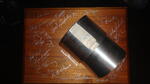
I use the aluminum ones and yes they have left dimples in the frame rails.
Corvette Stories
The Best of Corvette for Corvette Enthusiasts

Every 2027 Corvette Engine Explained
Joe Kucinski
Designer Imagines A Corvette That Looks More Like a Corvette Than the Corvette
Verdad Gallardo
10 Ugly Corvettes That We Still Kinda Love
Joe Kucinski
Top 10 Most Expensive Corvettes Ever Sold on Bring A Trailer
Brett Foote
10 Things Every Corvette Owner Needs (2026 Edition)
Michael S. Palmer
8 Most "Only Corvette Owners Understand" Quirks and Problems
Pouria Savadkouei
10 Reasons the C6 Z06 is Still A Performance Benchmark After 20 Years
Joe Kucinski
How Much Horsepower Every Corvette Engine "LOST" in 1972
Joe Kucinski
Top 10 DOs and DON'Ts for Protecting Your Convertible Top!
Michael S. Palmer
Race Director
Joined: Jul 2005
Posts: 11,308
Likes: 1
From: The Beautiful Greater Bay Area California
Originally Posted by Merlin02
You're absolutely correct. The hard pucks can dent the frame. I used a set of the hard black plastic square jacking pucks from Eckler's. They're called jacking pads and they're the type that snap into the tie down holes and remain on the vehicle full time. They did dish the jacking points on the frame after being used only a couple of times to jack up the vehicle. This was very apparent when I had the plastic pucks removed and had Andy at A&A, install a set of rail savers. The jacking points on the frame were obviously dished upward from using the hard pucks.


Race Director

Joined: Feb 2004
Posts: 11,651
Likes: 9
From: HOW FAST WAS I GOING OFFICER? Los Angeles Hating GM Dealership Service Dept.'s Since Sept. 2004
St. Jude Donor '04-'05-'06-'07
When you lift around 900 lbs from a point as small as the jacking puck... it's gonna happen.

Team Owner
Joined: Feb 2003
Posts: 37,329
Likes: 12
From: Plano Texas
CI 6-7-8-9 Veteran
CI-VI Car Show Winner
St. Jude Donor '07-'08-'09-'10-'11-'12-'13
Originally Posted by Gearhead Jim
Over on the C6 Forum, someone claimed that using hockey pucks or the BMW lift pads on your frame for jacking points, can cause the frame to be dished or dimpled in that area. The idea is that the pucks/pads concentrate the weight in an area that is a little too small to take the stress, and distorts the frame slightly.
Has anyone seen this problem?
Thanks.
Has anyone seen this problem?
Thanks.
2. To some, minimal, extent there will be 'twist' at a given point when lifting the Vette off the ground at that given point. The real question: does this cause issues - the answer is no.
As stated by others, many elect to 'jack' the Vette up, for example, at the rear suspension. It is easier to do this method, and since once jacked up you can insert floor supports this allows you to do a lot more work in a shorter time frame that lifting one area at a time.
In conclusion, I would not pay much attention to the person posting this nonsense.




Instructor
Joined: Jun 2005
Posts: 247
Likes: 0
From: Duluth Georgia
Just installed the A&A frame rails and that solves the entire problem. Just put the jack on the rail and lift anywhere. BTW, used my 1500lb motorcycle jack for the install and it worked beautifully! The frame rail balanced on the jack and both slid right under, with about 1/2" clearance.

Drifting
Joined: Oct 2004
Posts: 1,597
Likes: 1
From: Columbus, OH
See the picture below. The shades kind of blur but here is the information: GM's service information recommends lifting at the cross members as primary and at the side rails as a third option. Although there is not "second option" for lifting at the rear.

Last edited by indy300; Dec 12, 2005 at 07:54 PM.

Lifetime Member

Joined: Dec 2002
Posts: 10,702
Likes: 76
From: New Jersey
St. Jude Donor '05, '12-'13, '15-'16, '21
Originally Posted by sage666
Just installed the A&A frame rails and that solves the entire problem. Just put the jack on the rail and lift anywhere.
Bingo


Melting Slicks

Joined: Nov 2001
Posts: 3,122
Likes: 2
From: MCO
Pardon my laughing at GM's sketch  , but unless I'm not seeing it clearly, it appears they rate the bottom of the car's tires as the 4th recommended lift spot. Isn't that the part that supports the car full time while driving it down the road (and even while its parked)?
, but unless I'm not seeing it clearly, it appears they rate the bottom of the car's tires as the 4th recommended lift spot. Isn't that the part that supports the car full time while driving it down the road (and even while its parked)?
Drifting
Joined: Oct 2004
Posts: 1,597
Likes: 1
From: Columbus, OH
Originally Posted by EscapePod
Pardon my laughing at GM's sketch , but unless I'm not seeing it clearly, it appears they rate the bottom of the car's tires as the 4th recommended lift spot. Isn't that the part that supports the car full time while driving it down the road (and even while its parked)?
, but unless I'm not seeing it clearly, it appears they rate the bottom of the car's tires as the 4th recommended lift spot. Isn't that the part that supports the car full time while driving it down the road (and even while its parked)?


Le Mans Master
Joined: Sep 2003
Posts: 8,847
Likes: 795
From: Longview Texas
Kent Moore Tool makes a set of jacking pucks (part # J-43625) for GM Dealers specifically to fit the side frame on the Corvette. The only problem with them is that they are not thick enough to use a floor jack and keep the saddle from getting into the rocker panels, so I had a set of aluminum ones made at a local machine shop that is similar to the aftermarket set available.
I have used them for a couple of years now and can detect no noticeable frame deformation in the area where the pucks fit into the frame.
I have used them for a couple of years now and can detect no noticeable frame deformation in the area where the pucks fit into the frame.
Last edited by TEXHAWK0; Dec 12, 2005 at 11:17 PM.