








Nitrogen

Thread Starter
2018 Grand Sport


Joined: Nov 2005
Posts: 755
Likes: 21
From: Tarpon Springs Florida
 Nitrogen
Just put nitrogen in the tires today....Is there any great advantages other than it cuts down on the fluctuation in tire pressure during hot summer days and the Winter cold freezing days? It was free with the purchase of my new tires and wheels.


Drifting


Joined: Feb 2005
Posts: 1,643
Likes: 167
No such thing as free. You paid for it in the price of the new tires and wheels you bought. If you don't believe me, ask the store to put some of that "free" nitrogen in all the tires of your other vehicles and see what they say then. 
Melting Slicks

Joined: Sep 2006
Posts: 2,041
Likes: 4
From: Rockford Illinois
[QUOTE=sprk33;1558863903]Just put nitrogen in the tires today....Is there any great advantages other than it cuts down on the fluctuation in tire pressure during hot summer days and the Winter cold freezing days? It was free with the purchase of my new tires and wheels.
The only thing that it si good for is what you said, you wont have tire pressure flucuation like you would with normal air. Otherwise I myself wont wast the money for it, I would rather check my tire pressure regularly.
The only thing that it si good for is what you said, you wont have tire pressure flucuation like you would with normal air. Otherwise I myself wont wast the money for it, I would rather check my tire pressure regularly.

Instructor

Joined: Jul 2005
Posts: 179
Likes: 0
From: Rockwall Texas
Nitrogen filled tires won't have the water content that air filled tires do. Most aircraft use N2 in their tires for this reason. I've heard crazy stories of almost half a gallon of water held in a tire after being filled.
Corvette Stories
The Best of Corvette for Corvette Enthusiasts

Every 2027 Corvette Engine Explained
Joe Kucinski
Designer Imagines A Corvette That Looks More Like a Corvette Than the Corvette
Verdad Gallardo
10 Ugly Corvettes That We Still Kinda Love
Joe Kucinski
Top 10 Most Expensive Corvettes Ever Sold on Bring A Trailer
Brett Foote
10 Things Every Corvette Owner Needs (2026 Edition)
Michael S. Palmer
8 Most "Only Corvette Owners Understand" Quirks and Problems
Pouria Savadkouei
10 Reasons the C6 Z06 is Still A Performance Benchmark After 20 Years
Joe Kucinski
How Much Horsepower Every Corvette Engine "LOST" in 1972
Joe Kucinski
Top 10 DOs and DON'Ts for Protecting Your Convertible Top!
Michael S. Palmer


Instructor
Joined: May 2006
Posts: 228
Likes: 0
From: Washington IL
St. Jude Donor '07

Race Director


Joined: Aug 2002
Posts: 16,730
Likes: 1
From: Redacted
I own a plane and use nitrogen under high pressure in the landing gear struts, so I keep a cylinder in the garage.
Just for grins, I filled two of my tires with air from a Walmart 12v air compressor/tire filler. The other two I purged three times and filled to pressure with pure nitrogen from my cylinder.
Net result?
I challenge anyone to identify which two tires are nitrogen and which two are plain old walmart air.
They behave exactly the same WRT to temperature and pressure. No difference whatsoever.
The reason that aircraft tires are filled with nitrogen are two fold:
1. Aircraft tires are filled to much higher pressures and present a safety hazzard if a brake catches fire. (they do sometimes). Nitrogen doesn't support combustion.
2. Water etnrained in aircraft tires can freeze at the far below 0 temperatures found at high altitude.
Since my plane doesn't pose a fire hazzard or fly at jet altitudes, the only reason I have for putting nitrogen in them is because it is more convenient than lugging a compressor around.
Just for grins, I filled two of my tires with air from a Walmart 12v air compressor/tire filler. The other two I purged three times and filled to pressure with pure nitrogen from my cylinder.
Net result?
I challenge anyone to identify which two tires are nitrogen and which two are plain old walmart air.
They behave exactly the same WRT to temperature and pressure. No difference whatsoever.
The reason that aircraft tires are filled with nitrogen are two fold:
1. Aircraft tires are filled to much higher pressures and present a safety hazzard if a brake catches fire. (they do sometimes). Nitrogen doesn't support combustion.
2. Water etnrained in aircraft tires can freeze at the far below 0 temperatures found at high altitude.
Since my plane doesn't pose a fire hazzard or fly at jet altitudes, the only reason I have for putting nitrogen in them is because it is more convenient than lugging a compressor around.

Le Mans Master

Joined: Feb 2000
Posts: 5,708
Likes: 1
From: Bedford NH
Cruise-In II Veteran

That is the reason I use it. In a race tire, the DRY nitrogen (dry air would be the same) supposedly has less thermal expansion but it is a very minor effect if at all. I need a 150-250 PSI source for my Penske shocks so I have a small N2 bottle. I put it on a cheap dolly with tie-downs so now I don't need a compressor in my trailer at the track. Since I use my cordless impact wrench all of the time, the compressor is unneeded. Heck, since the N2 bottle on wheels is so convienent, I use it for my lawn tractor tires and my wife's Accord.


Administrator


Joined: Mar 2001
Posts: 368,536
Likes: 24,826
From: In a parallel universe. Currently own 2014 Stingray Coupe.
C7 of the Year - Modified Finalist 2021
MO Events Coordinator
St. Jude Co-Organizer
St. Jude Donor '03 thru '26
NCM Sinkhole Donor
CI 5, 8 & 11 Veteran
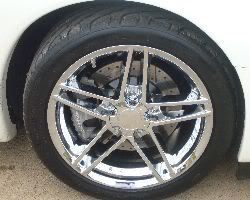
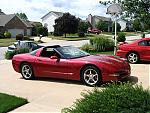
You described the benefit that it gives. Nice looking set of wheels BTW.

Race Director


Joined: Oct 2005
Posts: 10,092
Likes: 1
From: I speak the truth. Harsh but accurate. The Woodlands Texas
St. Jude Donor '09-'10
It also has to do with the tires expanding at high altitude(or so I have been told by the pilots).