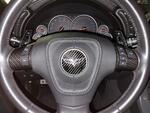


 I whant one









Vetteplane

Thread Starter
Le Mans Master

Joined: Nov 2007
Posts: 7,683
Likes: 3
From: La La land cali
St. Jude Donor '09
 Vetteplane

The use of auto engines in aircraft is not a new idea. Aviators have been installing auto engines into aircraft for a 100 years, starting with the engines from the model T to the present Chevy LS2/LS7 engine. During World War II the best of the high altitude fighter aircraft were liquid cooled and supercharged approaching 2000HP. Other similar characteristic now found on the LS2/LS7 were "V" type configuration with sodium filled valves. These high performance WWII liquid cooled engines passed on many new advancements to the then evolving liquid cooled auto industry. After WWII the commercial aviation industry embraced the concept of air cooled engines and has maintained the same designs with dual magnetos to the present date. In parallel one can observe the auto industry over 50 years evolving and advancing the liquid cooled engine both in performance and high volume production. Today one will find auto engines available, like the 366-427 Cu. In. LS2/LS7 from Chevrolet, to be in high production (millions) and utilizing modern features such as a computerized distributorless ignition as a standard feature. The end result is that one can observe the aviation industry producing thousands of 300-350 HP air cooled engines designed in the 1940’s costing $50,000-$70,000. In comparison a person will find the auto industry producing millions of a modern 350-450HP auto engine in the price range. of $5000-$6000. In conclusion, the idea of installing an auto engine in an experimental aircraft has been a popular notion, and for the past 30 years these aircraft have been growing in numbers. There are too many experimental builders converting auto engines to mention, both on the professional and amateur level. The best resources to read about these flying auto engine conversions are in the Contact Magazine books or the EAA and Kitplane magazine archives.
Just some interesting info to add to our knowledge database...


Administrator


Joined: Mar 2001
Posts: 368,522
Likes: 24,821
From: In a parallel universe. Currently own 2014 Stingray Coupe.
C7 of the Year - Modified Finalist 2021
MO Events Coordinator
St. Jude Co-Organizer
St. Jude Donor '03 thru '26
NCM Sinkhole Donor
CI 5, 8 & 11 Veteran
 plane.
Thread Starter
Le Mans Master
Joined: Nov 2007
Posts: 7,683
Likes: 3
From: La La land cali
St. Jude Donor '09

WTF??
It was the 'tech info' you were supposed to look at Homer.

You wanna see Photoshop stuff you know where to look.
Couple of pages back- "Photoshop and Vettes"
YEEEEEEHAAAAWWWW kiss my Grandma


Corvette Stories
The Best of Corvette for Corvette Enthusiasts

Every 2027 Corvette Engine Explained
Joe Kucinski
Designer Imagines A Corvette That Looks More Like a Corvette Than the Corvette
Verdad Gallardo
10 Ugly Corvettes That We Still Kinda Love
Joe Kucinski
Top 10 Most Expensive Corvettes Ever Sold on Bring A Trailer
Brett Foote
10 Things Every Corvette Owner Needs (2026 Edition)
Michael S. Palmer
8 Most "Only Corvette Owners Understand" Quirks and Problems
Pouria Savadkouei
10 Reasons the C6 Z06 is Still A Performance Benchmark After 20 Years
Joe Kucinski
How Much Horsepower Every Corvette Engine "LOST" in 1972
Joe Kucinski