




 Same here!!



Insuring a Mod' Vette

Administrator


Joined: Mar 2001
Posts: 367,725
Likes: 24,678
From: In a parallel universe. Currently own 2014 Stingray Coupe.
C7 of the Year - Modified Finalist 2021
MO Events Coordinator
St. Jude Co-Organizer
St. Jude Donor '03 thru '25
NCM Sinkhole Donor
CI 5, 8 & 11 Veteran

Welcome and congrats on becoming a supporting vendor. Thanks for the info - this stuff is really good to know.

Life Time NCM #2196


Joined: Sep 2004
Posts: 82,572
Likes: 1,684
From: Converse TX

Race Director


Joined: Sep 2003
Posts: 13,550
Likes: 6
From: Now in God's Country, the Big Sky, Montana!
Cruise-In 7-8-9-10 Veteran
St. Jude Donor '06-'07-'08-'09-'10-'11-'12

Terminal Vette Addict

Joined: Feb 2007
Posts: 1,634
Likes: 46
From: Philly PA
Quicken Baby!
Parts go in, value goes up.
Sell parts, I deduct them from the value as well.
Problem is that since its not quite a DD (extra car) but I'm not a wussie that only drives it 2 miles a year to and fro form a car show... the Grundy's of the world say I drive it too much to call it one catagory, and the other compaies say I drive it too little and have too much $$ into it to insure it as a DD.
Damned if you do, damned if you dont.
Parts go in, value goes up.
Sell parts, I deduct them from the value as well.
Problem is that since its not quite a DD (extra car) but I'm not a wussie that only drives it 2 miles a year to and fro form a car show... the Grundy's of the world say I drive it too much to call it one catagory, and the other compaies say I drive it too little and have too much $$ into it to insure it as a DD.
Damned if you do, damned if you dont.

Le Mans Master


Joined: Jun 2006
Posts: 6,478
Likes: 20
From: guthrie oklahoma
Corvette Stories
The Best of Corvette for Corvette Enthusiasts

Top 10 Corvette Engines RANKED by Peak Torque (70+ Years of Muscle!)
Joe Kucinski
Corvette ZR1X Will Be Pacing the Indy 500, And Could Probably Race, Too!
Verdad Gallardo
Top 10 Corvettes Coming to Mecum Indy 2026!
Brett Foote
Top 10 C9 Corvette MUST-HAVES to Fix These C8 Generation Flaws!
Michael S. Palmer
10 Revolutionary 'Corvette Firsts' Most People Don't Know
Joe Kucinski
5 Reasons to Upgrade to an LS6-Powered Corvette; 5 Reasons to Stay LT2
Michael S. Palmer
2027 Corvette vs The World: Every C8 vs Its Closest Competitor
Joe Kucinski
10 Most Common Corvette Problems of the Last 20 Years!
Joe Kucinski
5 MOST and 5 LEAST Popular Corvette Model Years in History!
Joe Kucinski
Thread Starter
Instructor

Joined: Apr 2008
Posts: 125
Likes: 0
LOL. That's a really good idea. Everyone should do that. Even when you do repairs for your car, keep a spreadsheet of what you did and how much it costs and for the life of the car, you can get a good idea how much it really cost you.
Race Director
Joined: Sep 2003
Posts: 13,550
Likes: 6
From: Now in God's Country, the Big Sky, Montana!
Cruise-In 7-8-9-10 Veteran
St. Jude Donor '06-'07-'08-'09-'10-'11-'12
Ya'll (or any other insurance company) would of charged me a $1000/month to insure it even with nothing on my record.
Thread Starter
Instructor
Joined: Apr 2008
Posts: 125
Likes: 0
Haha I hear you. But for the record my site is not an insurance company, it allows you to compare rates from the majority of companies and even take out a policy if you get a good price. Obviously, by comparing prices, you'll be able to get the lowest rate or know if you are getting the lowest rate right now.


Thread Starter
Instructor
Joined: Apr 2008
Posts: 125
Likes: 0
Want to know the difference?
Collectible and classic and in some cases modified cars usually have a stable value and actually appreciate over time. Because the values are stable, an "Agreed Value" insurance policy should be purchased to protect a collectible auto. With an Agreed Value policy, if your car is stolen or totaled, you will receive the Agreed Value listed in writing on your auto policy. Most standard insurance companies don't offer an Agreed Value policy.
* Actual Cash Value (ACV)This coverage can usually be provided by standard auto policies. At the time of a complete loss the insurance company claims adjuster will decide what your car is worth. You may have some input, if you do not agree with the claims adjuster, but in the end the insurance company decides the final settlement. If you don't agree with the settlement, you may have no choice except to seek legal action, or arbitration if specified by your policy agreement.
* Stated Amount or Stated Value This policy is often misunderstood, and frequently used for collector cars. Most insurance agents represent stated amount or state value policies as being the same as "Agreed Amount." It is not!
A "Stated Amount" policy usually says the insurance company will pay the lesser of: The Stated Amount or The cost to repair the covered auto not to exceed the "Stated Amount" or The "Actual Cash Value"
The "Stated Amount" helps determine the premium cost but is no guarantee of the settlement amount of the car if a total occurs. The "Actual Cash Value" is explained above and allows the claims adjuster to determine the loss often for less than the "Stated Amount". Most insurance agents are not aware of this claims detail. Many agents, unaware of the actual policy language, will insist if your collector car is stolen or totaled, you will receive the stated value. They are Wrong!
* Agreed Amount or Agreed Value Policies are the only guarantee in writing of the amount you will receive if your car is stolen or totaled. There is no "Actual Cash Value" clause in the policy. The "Agreed Amount" policy says the insurance company will pay you, the lesser of: The "Agreed Amount," or The cost to repair the covered auto, not to exceed the "Agreed Amount".
With an "Agreed Amount" auto policy, your insurance company and you must agree together what the "Agreed Amount" should be before the policy is issued. The "Agreed Amount" should represent the true market value of the car at the time the policy is written. If the market value changes during the policy period, the "Agreed Amount" can be adjusted to reflect any market changes during the policy period and should be reviewed at renewal.
Collectible and classic and in some cases modified cars usually have a stable value and actually appreciate over time. Because the values are stable, an "Agreed Value" insurance policy should be purchased to protect a collectible auto. With an Agreed Value policy, if your car is stolen or totaled, you will receive the Agreed Value listed in writing on your auto policy. Most standard insurance companies don't offer an Agreed Value policy.
* Actual Cash Value (ACV)This coverage can usually be provided by standard auto policies. At the time of a complete loss the insurance company claims adjuster will decide what your car is worth. You may have some input, if you do not agree with the claims adjuster, but in the end the insurance company decides the final settlement. If you don't agree with the settlement, you may have no choice except to seek legal action, or arbitration if specified by your policy agreement.
* Stated Amount or Stated Value This policy is often misunderstood, and frequently used for collector cars. Most insurance agents represent stated amount or state value policies as being the same as "Agreed Amount." It is not!
A "Stated Amount" policy usually says the insurance company will pay the lesser of: The Stated Amount or The cost to repair the covered auto not to exceed the "Stated Amount" or The "Actual Cash Value"
The "Stated Amount" helps determine the premium cost but is no guarantee of the settlement amount of the car if a total occurs. The "Actual Cash Value" is explained above and allows the claims adjuster to determine the loss often for less than the "Stated Amount". Most insurance agents are not aware of this claims detail. Many agents, unaware of the actual policy language, will insist if your collector car is stolen or totaled, you will receive the stated value. They are Wrong!
* Agreed Amount or Agreed Value Policies are the only guarantee in writing of the amount you will receive if your car is stolen or totaled. There is no "Actual Cash Value" clause in the policy. The "Agreed Amount" policy says the insurance company will pay you, the lesser of: The "Agreed Amount," or The cost to repair the covered auto, not to exceed the "Agreed Amount".
With an "Agreed Amount" auto policy, your insurance company and you must agree together what the "Agreed Amount" should be before the policy is issued. The "Agreed Amount" should represent the true market value of the car at the time the policy is written. If the market value changes during the policy period, the "Agreed Amount" can be adjusted to reflect any market changes during the policy period and should be reviewed at renewal.

Le Mans Master

Joined: May 2006
Posts: 6,774
Likes: 361
From: Midland TX
Want to know the difference?
With an "Agreed Amount" auto policy, your insurance company and you must agree together what the "Agreed Amount" should be before the policy is issued. The "Agreed Amount" should represent the true market value of the car at the time the policy is written. If the market value changes during the policy period, the "Agreed Amount" can be adjusted to reflect any market changes during the policy period and should be reviewed at renewal.
With an "Agreed Amount" auto policy, your insurance company and you must agree together what the "Agreed Amount" should be before the policy is issued. The "Agreed Amount" should represent the true market value of the car at the time the policy is written. If the market value changes during the policy period, the "Agreed Amount" can be adjusted to reflect any market changes during the policy period and should be reviewed at renewal.

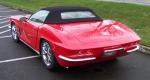

Burning Brakes


Joined: Apr 2004
Posts: 1,236
Likes: 2
From: Glendora CA
Just about all the mods I have bought from Private Parties here on the CF. Totaling well over 10K most likely closer to 20k. These have been new parts that others have choosen not to use. I dont have any kind of a recpiet for them so other than pics of the parts on the car how can I prove value. Plus alot of the parts are hidden inside of other parts like the engine and trans. Any suggestions.
Le Mans Master
Joined: May 2006
Posts: 6,774
Likes: 361
From: Midland TX
The reason I have been looking for an Agree Amount policy is because even though my 2001 is a DD, it is in pristine condition (34,000 miles). Even today when I took it to the tinting shop to get the windows tinted, two employees there asked me if it was a new 2008!
The problem is, it costs virtually the same to rebuild a C5 today from parts as it did in 2001 and yet in 2001 if I had incurred $15,000 in damage, they would have fixed it - today they would "total" it for that same amount of damage (yet the premium remains the same!). You can do $15,000 worth of damage to a C5 without even being in an accident - just cosmetic damage!
I am seeing more and more C5s that are being declared "totaled" that could be fixed in a few days.