





need help choosing oil

Thread Starter
Advanced

Joined: Jul 2010
Posts: 59
Likes: 0
From: Murrieta CA
 need help choosing oil
so i have been recommended the valvoline VR1 SAE40 race oil by a few people but i know on my c5 cap it says mobile 1 5w 30 I dont drive the car much and i have basic bolt ons with a tune... what oil should i go with? please let me know whats worked the best.....

Le Mans Master


Joined: Jun 2006
Posts: 6,979
Likes: 31
From: Wichita KS
Do NOT put 40 weight in!!! Slap the person that said that, run 5w-30 or if you live in the south you can run 10w-30 but I run 5w-30 Amsoil year round. Mobil 1 is fine too.
Clearances are tight on the LS1 and running 40 weight would decrease engine life due to it taking longer for the oil to circulate on a cold start-up (and a warm one for that matter)
Clearances are tight on the LS1 and running 40 weight would decrease engine life due to it taking longer for the oil to circulate on a cold start-up (and a warm one for that matter)
Race Director


Joined: Oct 2006
Posts: 13,404
Likes: 55
From: Glastonbury CT.
St. Jude Donor '11-'12-'13-'14-'15-'16-'17,'20, '21,'22, '23

Pro

Joined: Dec 2009
Posts: 719
Likes: 2
From: Columbia South Carolina
Go with what it says on the oil cap...............Duhhhh
And if for some reason you don't like mobile One, then put someone's else 5-30 or 0-30 synthetic in. This is not rocket science.................
And if for some reason you don't like mobile One, then put someone's else 5-30 or 0-30 synthetic in. This is not rocket science.................
Corvette Stories
The Best of Corvette for Corvette Enthusiasts

How Much Horsepower Every Corvette Engine "LOST" in 1972
Joe Kucinski
Top 10 DOs and DON'Ts for Protecting Your Convertible Top!
Michael S. Palmer
Top 10 Most Explosive Corvettes Ever Made: Power-to-Weight Ratio Ranked!
Joe Kucinski
150 hp to 1,250 hp: Every Corvette Generation Compared by the Specs That Matter
Joe Kucinski
8 Coolest Corvette Pace Cars (and Replicas) of All Time
Verdad Gallardo
Top 10 Corvette Engines RANKED by Peak Torque (70+ Years of Muscle!)
Joe Kucinski
Corvette ZR1X Will Be Pacing the Indy 500, And Could Probably Race, Too!
Verdad Gallardo
Top 10 Corvettes Coming to Mecum Indy 2026!
Brett Foote
Top 10 C9 Corvette MUST-HAVES to Fix These C8 Generation Flaws!
Michael S. Palmer
Race Director


Joined: Jan 2002
Posts: 19,557
Likes: 1,470
From: I love you & miss you Linda
2017 C7 of the Year Finalist
St. Jude Contributor
I use Mobil1 15W-50 at the track, but remove it when using the car normally and replace it with 5W-30
Instructor
Joined: Aug 2010
Posts: 154
Likes: 2
From: Genesee Co Michigan
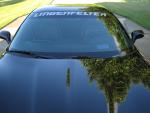
The Manual says if you run your car at 0 deg or lower use 5w-30, if you are staying ABOVE 0 deg use 10W -30. I'll bet 90% of the people using 5w-30 never see anything close to 0 deg. but by god that's what the fricking cap says! I have a Lingenfelter that is not force inducted, just a cam, valves etc. and they recommend 15w-50, I store mine all winter so the coldest I run it is probably 55 deg. I go with what Lingenfelter says, plus I like that maple smell when I pour it in Mrs. Butterworth's 15-50 racing syrup is used by all the pro's
Mrs. Butterworth's 15-50 racing syrup is used by all the pro's
Race Director
Joined: Oct 2006
Posts: 13,404
Likes: 55
From: Glastonbury CT.
St. Jude Donor '11-'12-'13-'14-'15-'16-'17,'20, '21,'22, '23
The Manual says if you run your car at 0 deg or lower use 5w-30, if you are staying ABOVE 0 deg use 10W -30. I'll bet 90% of the people using 5w-30 never see anything close to 0 deg. but by god that's what the fricking cap says! I have a Lingenfelter that is not force inducted, just a cam, valves etc. and they recommend 15w-50, I store mine all winter so the coldest I run it is probably 55 deg. I go with what Lingenfelter says, plus I like that maple smell when I pour it in Mrs. Butterworth's 15-50 racing syrup is used by all the pro's
Mrs. Butterworth's 15-50 racing syrup is used by all the pro'sYou will lose horsepower using 15-50.
You are wrong, the corvette racing doesn't use 15-50; that's not what the pro's use, per Mobil Oil, they use 0w-50.
"You say that Mobil 1 Racing oils are not for street use. Why is that? Does that mean I can't use these oils if my race car is also my daily driver?
Automotive street use oils that meet the latest industry standards are required to have a lower level of Zinc and Phosphorus anti-wear chemistries than oils formulated years ago. The latest automotive street use engine oils are designed to be compatible with emission control equipment. Mobil 1 Racing oils are formulated with anti-wear (Zinc/Phosphorus) chemistries at twice the level of automotive street oils to provide enhanced protection of highly loaded valve train systems found in some race engines. Based on the high level of anti-wear chemistries, Mobil 1 Racing oils are not recommended for street use.
Oil Viscosity and Horsepower
Viscosity is the thickness or weight of an oil. The viscosity of oil in your engine will affect horsepower or power output tremendously. Using a high viscosity oil actually puts a load on the engine because the oil pump is working harder to pump oil through the engine. A thicker oil will not necessarily improve boundary lubrication either. Boundary lubrication is the oil film on a surface. If oil temperatures are consistanly high or bearing clearances are excessive, then a higher viscosity oil may help because thicker oil will take up some space within the journal and bearings. And oil shear is less likely at higher temperatures with a higher viscosity oil. Oil shear is the point at which the oil begins to breakdown.
Thinner oil viscosity allows the engine to produce more horsepower or maintain engine specs because the oil pump is not working as hard and rotational drag is decreased.
Some people actually run their engines with the dipstick level lower than normal full or at the low mark, to increase horsepower. Although this actually does work to increase horsepower it is not recommended because some oil is burned off at high RPM and can cause starvation when taking corners. A truckmount is stationary so starvation is less likely unless levels fall too low.
Overfilling the crankcase with oil is actually worse than not enough or low oil. When the oil level is too high, aeration takes place. This is when the crankshaft whips up the oil to a foam and makes it difficult to pump oil and also starve the motor of oil. Hydraulic lifters are notorious for leaking down when aeration takes place and levels are high. When a hydraulic lifter leaks down you will hear a loud chattering sound coming from the engine at high rpm. This has happened to me a couple of times. Kill your ignition immediately when this happens because dropping RPM does not help.
777
Instructor
Joined: Aug 2010
Posts: 154
Likes: 2
From: Genesee Co Michigan
You will lose horsepower using 15-50.
You are wrong, the corvette racing doesn't use 15-50; that's not what the pro's use, per Mobil Oil, they use 0w-50.
"You say that Mobil 1 Racing oils are not for street use. Why is that? Does that mean I can't use these oils if my race car is also my daily driver?
Automotive street use oils that meet the latest industry standards are required to have a lower level of Zinc and Phosphorus anti-wear chemistries than oils formulated years ago. The latest automotive street use engine oils are designed to be compatible with emission control equipment. Mobil 1 Racing oils are formulated with anti-wear (Zinc/Phosphorus) chemistries at twice the level of automotive street oils to provide enhanced protection of highly loaded valve train systems found in some race engines. Based on the high level of anti-wear chemistries, Mobil 1 Racing oils are not recommended for street use.
Oil Viscosity and Horsepower
Viscosity is the thickness or weight of an oil. The viscosity of oil in your engine will affect horsepower or power output tremendously. Using a high viscosity oil actually puts a load on the engine because the oil pump is working harder to pump oil through the engine. A thicker oil will not necessarily improve boundary lubrication either. Boundary lubrication is the oil film on a surface. If oil temperatures are consistanly high or bearing clearances are excessive, then a higher viscosity oil may help because thicker oil will take up some space within the journal and bearings. And oil shear is less likely at higher temperatures with a higher viscosity oil. Oil shear is the point at which the oil begins to breakdown.
Thinner oil viscosity allows the engine to produce more horsepower or maintain engine specs because the oil pump is not working as hard and rotational drag is decreased.
Some people actually run their engines with the dipstick level lower than normal full or at the low mark, to increase horsepower. Although this actually does work to increase horsepower it is not recommended because some oil is burned off at high RPM and can cause starvation when taking corners. A truckmount is stationary so starvation is less likely unless levels fall too low.
Overfilling the crankcase with oil is actually worse than not enough or low oil. When the oil level is too high, aeration takes place. This is when the crankshaft whips up the oil to a foam and makes it difficult to pump oil and also starve the motor of oil. Hydraulic lifters are notorious for leaking down when aeration takes place and levels are high. When a hydraulic lifter leaks down you will hear a loud chattering sound coming from the engine at high rpm. This has happened to me a couple of times. Kill your ignition immediately when this happens because dropping RPM does not help.
777
You are wrong, the corvette racing doesn't use 15-50; that's not what the pro's use, per Mobil Oil, they use 0w-50.
"You say that Mobil 1 Racing oils are not for street use. Why is that? Does that mean I can't use these oils if my race car is also my daily driver?
Automotive street use oils that meet the latest industry standards are required to have a lower level of Zinc and Phosphorus anti-wear chemistries than oils formulated years ago. The latest automotive street use engine oils are designed to be compatible with emission control equipment. Mobil 1 Racing oils are formulated with anti-wear (Zinc/Phosphorus) chemistries at twice the level of automotive street oils to provide enhanced protection of highly loaded valve train systems found in some race engines. Based on the high level of anti-wear chemistries, Mobil 1 Racing oils are not recommended for street use.
Oil Viscosity and Horsepower
Viscosity is the thickness or weight of an oil. The viscosity of oil in your engine will affect horsepower or power output tremendously. Using a high viscosity oil actually puts a load on the engine because the oil pump is working harder to pump oil through the engine. A thicker oil will not necessarily improve boundary lubrication either. Boundary lubrication is the oil film on a surface. If oil temperatures are consistanly high or bearing clearances are excessive, then a higher viscosity oil may help because thicker oil will take up some space within the journal and bearings. And oil shear is less likely at higher temperatures with a higher viscosity oil. Oil shear is the point at which the oil begins to breakdown.
Thinner oil viscosity allows the engine to produce more horsepower or maintain engine specs because the oil pump is not working as hard and rotational drag is decreased.
Some people actually run their engines with the dipstick level lower than normal full or at the low mark, to increase horsepower. Although this actually does work to increase horsepower it is not recommended because some oil is burned off at high RPM and can cause starvation when taking corners. A truckmount is stationary so starvation is less likely unless levels fall too low.
Overfilling the crankcase with oil is actually worse than not enough or low oil. When the oil level is too high, aeration takes place. This is when the crankshaft whips up the oil to a foam and makes it difficult to pump oil and also starve the motor of oil. Hydraulic lifters are notorious for leaking down when aeration takes place and levels are high. When a hydraulic lifter leaks down you will hear a loud chattering sound coming from the engine at high rpm. This has happened to me a couple of times. Kill your ignition immediately when this happens because dropping RPM does not help.
777
Where did I say this?
"You say that Mobil 1 Racing oils are not for street use. Why is that? Does that mean I can't use these oils if my race car is also my daily driver?
Where did I say this? I think you are trying to put words in my mouth.
All I'm saying is Lingenfelter says use 15-50 and they did the work to the engine and WARANTYS IT. I think 5w-30 is too thin to run in the summer months, will it harm your engine...doubtful but you will have more oil pressure with the 10-30. Running thinner oil might get me an extra pony or two but my 443 RWHP with the thick stuff is good enough for me.
Race Director
Joined: Oct 2006
Posts: 13,404
Likes: 55
From: Glastonbury CT.
St. Jude Donor '11-'12-'13-'14-'15-'16-'17,'20, '21,'22, '23
Jim in Mich,,,,,,,,,,what you said is "....15-50 racing syrup is used by all the pro's "
Mobil oil is the "Official Lubricant of Corvette Racing," and they don't use 15-50 for racing oil.
see:
http://www.mobiloil.com/USA-English/...Qs.aspx#FAQs14
This says, Mobil does not recommend you use racing oil for a daily driver.
The OP is just looking for recommendations for engine oil in his stockish corvette ;
I am sure all of the name brand synthetics will work for him.
If your engine builder recommends 15-50 I would go by what he says, for your motor.
I have a 400 HP n/a car with 100 shot. I use 5w-30 and it works fine for me. You use 15-50 and that works for you. There is several considerations to take into account
when determining engine oil and they are all different. No one size fits all.
777
Mobil oil is the "Official Lubricant of Corvette Racing," and they don't use 15-50 for racing oil.
see:
http://www.mobiloil.com/USA-English/...Qs.aspx#FAQs14
This says, Mobil does not recommend you use racing oil for a daily driver.
The OP is just looking for recommendations for engine oil in his stockish corvette ;
I am sure all of the name brand synthetics will work for him.
If your engine builder recommends 15-50 I would go by what he says, for your motor.
I have a 400 HP n/a car with 100 shot. I use 5w-30 and it works fine for me. You use 15-50 and that works for you. There is several considerations to take into account
when determining engine oil and they are all different. No one size fits all.
777

Safety Car


Joined: Sep 2005
Posts: 4,060
Likes: 101
From: Southeast, Tennessee
St. Jude Donor '09 thru '26
 the only difference is that my preference is castrol edge at the mfgr's 5-30 recommended specs.


Instructor
Joined: Aug 2010
Posts: 154
Likes: 2
From: Genesee Co Michigan
Jim in Mich,,,,,,,,,,what you said is "....15-50 racing syrup is used by all the pro's "
Mobil oil is the "Official Lubricant of Corvette Racing," and they don't use 15-50 for racing oil.
see:
http://www.mobiloil.com/USA-English/...Qs.aspx#FAQs14
This says, Mobil does not recommend you use racing oil for a daily driver.
The OP is just looking for recommendations for engine oil in his stockish corvette ;
I am sure all of the name brand synthetics will work for him.
If your engine builder recommends 15-50 I would go by what he says, for your motor.
I have a 400 HP n/a car with 100 shot. I use 5w-30 and it works fine for me. You use 15-50 and that works for you. There is several considerations to take into account
when determining engine oil and they are all different. No one size fits all.
777
Mobil oil is the "Official Lubricant of Corvette Racing," and they don't use 15-50 for racing oil.
see:
http://www.mobiloil.com/USA-English/...Qs.aspx#FAQs14
This says, Mobil does not recommend you use racing oil for a daily driver.
The OP is just looking for recommendations for engine oil in his stockish corvette ;
I am sure all of the name brand synthetics will work for him.
If your engine builder recommends 15-50 I would go by what he says, for your motor.
I have a 400 HP n/a car with 100 shot. I use 5w-30 and it works fine for me. You use 15-50 and that works for you. There is several considerations to take into account
when determining engine oil and they are all different. No one size fits all.
777
Last edited by Jim in Mich; Oct 28, 2010 at 02:32 PM.



Team Owner

Joined: Mar 2001
Posts: 21,325
Likes: 3,841
From: small town in S.E Pa. PA
St. Jude Donor '03-'04
Here is my question
Doesn't any of these newbies read their owners manual? Or, when they buy the car, it doesnt have the owners manual. Which is really a sad commentery about the former owner. I have a journel with every thing that I have ever done to my car.. including receipts and correspondance. every sales slip,test result for every drop of oil and filter, light bulb, mod, every maintenance scheduled report.

"so i have been recommended the valvoline VR1 SAE40 race oil by a few people "
"It was recommended by several people??" Do you always hang around and listen to people who know nothing about automotive technology when it applies to your car? Several usually means more than just one person. You should stop listening to the recommendations of people who are clueless about a C5. We made that owners manual so simple, a cave man could follow it, yet, so many people have to ask and post recommendations by people who know nothing about this car.
"so i have been recommended the valvoline VR1 SAE40 race oil by a few people "
"It was recommended by several people??" Do you always hang around and listen to people who know nothing about automotive technology when it applies to your car? Several usually means more than just one person. You should stop listening to the recommendations of people who are clueless about a C5. We made that owners manual so simple, a cave man could follow it, yet, so many people have to ask and post recommendations by people who know nothing about this car.
Last edited by Evil-Twin; Oct 29, 2010 at 09:13 AM.