


School Me on Headers

Thread Starter
Race Director


Joined: Jul 2008
Posts: 17,777
Likes: 3,711
From: The Sunshine State
2022 C5 of the Year Finalist - Modified
2021 C5 of the Year Finalist - Modified
C7 of the Year - Modified Finalist 2021
Finalist 2020 C7 of the Year -- Modified
2020 C5 of the Year Finalist - Modified
C5 of Year Finalist (appearance mods) 2019
2018 C5 of Year Finalist
 School Me on Headers
As a bolt-on performance newbie, I've been reading the various threads on headers and even after secondary searches on the forum, I'm still a little confused as to the options.
In terms of brands, what is the primary difference between Kooks, LG, XS Power, SLP and others? Also, what is the performance difference or deciding factor when it comes to 1 3/4" vs. 1 7/8" headers and is what is "coating"?
Cats are required for street driving and the "No Cat" option is for track use correct? (Or in theory?!)
Also, what is the difference between a 3" X 3" vs. a 3" X 2.5" X-pipe or cross over pipe option?
Lastly, how much HP can you expect on a stock C5 LS1 with an A4 and is it worth it if you stop with new headers, new cold air intake and a tune?
Thanks!

P.S. - I was going to post this in the Tech section, however I thought I would get a better response in General.
In terms of brands, what is the primary difference between Kooks, LG, XS Power, SLP and others? Also, what is the performance difference or deciding factor when it comes to 1 3/4" vs. 1 7/8" headers and is what is "coating"?
Cats are required for street driving and the "No Cat" option is for track use correct? (Or in theory?!)
Also, what is the difference between a 3" X 3" vs. a 3" X 2.5" X-pipe or cross over pipe option?
Lastly, how much HP can you expect on a stock C5 LS1 with an A4 and is it worth it if you stop with new headers, new cold air intake and a tune?
Thanks!
P.S. - I was going to post this in the Tech section, however I thought I would get a better response in General.
Last edited by MSG C5; Jan 29, 2012 at 08:58 PM.

AKA "The CLOWN"


Joined: Feb 2010
Posts: 6,261
Likes: 13
From: Chicago South Suburbs
Al if I know you and how you are with your car, do not settle for anything that is not ceramic coated! Ceramic coating will help lower engine bay temps and they will not rust or discolor. They will look new for years to come and you will just about never wear them out. Mine have been on for 4 years and still look like the day they were installed.
As far as 1 3/4 or 1 7/8, you will have to provide some more information. Are you ever going to go with a bigger motor? Are you planning on a S/C?
1 3/4 is most common, thats what I have with 600hp, but some big HP guys go with 1 7/8.
As far as 1 3/4 or 1 7/8, you will have to provide some more information. Are you ever going to go with a bigger motor? Are you planning on a S/C?
1 3/4 is most common, thats what I have with 600hp, but some big HP guys go with 1 7/8.
Thread Starter
Race Director
Joined: Jul 2008
Posts: 17,777
Likes: 3,711
From: The Sunshine State
2022 C5 of the Year Finalist - Modified
2021 C5 of the Year Finalist - Modified
C7 of the Year - Modified Finalist 2021
Finalist 2020 C7 of the Year -- Modified
2020 C5 of the Year Finalist - Modified
C5 of Year Finalist (appearance mods) 2019
2018 C5 of Year Finalist
Al if I know you and how you are with your car, do not settle for anything that is not ceramic coated! Ceramic coating will help lower engine bay temps and they will not rust or discolor. They will look new for years to come and you will just about never wear them out. Mine have been on for 4 years and still look like the day they were installed.
As far as 1 3/4 or 1 7/8, you will have to provide some more information. Are you ever going to go with a bigger motor? Are you planning on a S/C?
1 3/4 is most common, thats what I have with 600hp, but some big HP guys go with 1 7/8.
As far as 1 3/4 or 1 7/8, you will have to provide some more information. Are you ever going to go with a bigger motor? Are you planning on a S/C?
1 3/4 is most common, thats what I have with 600hp, but some big HP guys go with 1 7/8.
First I need to complete my little paint project we discussed. I have the Caravaggio spoiler and other components sitting in my garage while I'm waiting for the painter/bodyshop to get me on his calendar.

After that, I plan to get some new wheels (CCW 505As) and install some new shocks when I have the wheels off and the car up on jack stands.
Then, hopefully around summer or fall, I plan to start upping the HP with a new cold air intake, headers/tubes, a thermal tunnel plate and a tune. I am not planning for a SC or Maggie, just some added bolt-on performance.
Thanks for the explanation on the ceramic coating. I saw some pictures of some very nice, polished coating that looks really good. Did you go with a particular color or just a polished coating?

Former Vendor
Joined: Sep 2005
Posts: 18,293
Likes: 137
From: Hazel Green, Wi www.doubledmods.com
St. Jude Donor '12-'13
Thanks Brian. I received your PM and when the time comes, I will definitely reach out to you for advice. I'm in "note taking" mode right now.
First I need to complete my little paint project we discussed. I have the Caravaggio spoiler and other components sitting in my garage while I'm waiting for the painter/bodyshop to get me on his calendar.
After that, I plan to get some new wheels (CCW 505As) and install some new shocks when I have the wheels off and the car up on jack stands.
Then, hopefully around summer or fall, I plan to start upping the HP with a new cold air intake, headers/tubes, a thermal tunnel plate and a tune. I am not planning for a SC or Maggie, just some added bolt-on performance.
Thanks for the explanation on the ceramic coating. I saw some pictures of some very nice, polished coating that looks really good. Did you go with a particular color or just a polished coating?
First I need to complete my little paint project we discussed. I have the Caravaggio spoiler and other components sitting in my garage while I'm waiting for the painter/bodyshop to get me on his calendar.
After that, I plan to get some new wheels (CCW 505As) and install some new shocks when I have the wheels off and the car up on jack stands.
Then, hopefully around summer or fall, I plan to start upping the HP with a new cold air intake, headers/tubes, a thermal tunnel plate and a tune. I am not planning for a SC or Maggie, just some added bolt-on performance.
Thanks for the explanation on the ceramic coating. I saw some pictures of some very nice, polished coating that looks really good. Did you go with a particular color or just a polished coating?

Thread Starter
Race Director
Joined: Jul 2008
Posts: 17,777
Likes: 3,711
From: The Sunshine State
2022 C5 of the Year Finalist - Modified
2021 C5 of the Year Finalist - Modified
C7 of the Year - Modified Finalist 2021
Finalist 2020 C7 of the Year -- Modified
2020 C5 of the Year Finalist - Modified
C5 of Year Finalist (appearance mods) 2019
2018 C5 of Year Finalist

Melting Slicks

Joined: Mar 2007
Posts: 2,602
Likes: 38
From: Westchester County, NY
Thanks Brian. I received your PM and when the time comes, I will definitely reach out to you for advice. I'm in "note taking" mode right now.
First I need to complete my little paint project we discussed. I have the Caravaggio spoiler and other components sitting in my garage while I'm waiting for the painter/bodyshop to get me on his calendar.
After that, I plan to get some new wheels (CCW 505As) and install some new shocks when I have the wheels off and the car up on jack stands.
Then, hopefully around summer or fall, I plan to start upping the HP with a new cold air intake, headers/tubes, a thermal tunnel plate and a tune. I am not planning for a SC or Maggie, just some added bolt-on performance.
Thanks for the explanation on the ceramic coating. I saw some pictures of some very nice, polished coating that looks really good. Did you go with a particular color or just a polished coating?
First I need to complete my little paint project we discussed. I have the Caravaggio spoiler and other components sitting in my garage while I'm waiting for the painter/bodyshop to get me on his calendar.
After that, I plan to get some new wheels (CCW 505As) and install some new shocks when I have the wheels off and the car up on jack stands.
Then, hopefully around summer or fall, I plan to start upping the HP with a new cold air intake, headers/tubes, a thermal tunnel plate and a tune. I am not planning for a SC or Maggie, just some added bolt-on performance.
Thanks for the explanation on the ceramic coating. I saw some pictures of some very nice, polished coating that looks really good. Did you go with a particular color or just a polished coating?
Thread Starter
Race Director
Joined: Jul 2008
Posts: 17,777
Likes: 3,711
From: The Sunshine State
2022 C5 of the Year Finalist - Modified
2021 C5 of the Year Finalist - Modified
C7 of the Year - Modified Finalist 2021
Finalist 2020 C7 of the Year -- Modified
2020 C5 of the Year Finalist - Modified
C5 of Year Finalist (appearance mods) 2019
2018 C5 of Year Finalist


Team Owner


Joined: Jan 2009
Posts: 73,568
Likes: 33
From: Somewhere in Mo
St. Jude Donor '09-'10, '14
I'm old school mod and I have always believed in headers, but I don't have them on my vette and don't know if I ever will. Doubtful, but I've heard some people say the gains aren't worth the cost unless you're tracking and need every extra pony you can muster.
The stock manifolds on these are fine. They aren't like they were years ago.
But if you are going to spend the money, then I agree with what blitzkrieg said.
Oh one more thing, if that's all you're going to do and not really build your engine with a cam etc, then I wouldn't spend the money myself. But I know I'm in the minority on that one.
The stock manifolds on these are fine. They aren't like they were years ago.
But if you are going to spend the money, then I agree with what blitzkrieg said.
Oh one more thing, if that's all you're going to do and not really build your engine with a cam etc, then I wouldn't spend the money myself. But I know I'm in the minority on that one.
Corvette Stories
The Best of Corvette for Corvette Enthusiasts

5 Best & 5 Worst Corvette Daily Drivers
Joe Kucinski
The Headlights of Every Corvette Generation Explained
Joe Kucinski
5 Best & 5 Most Overrated Corvette Track Packages of All Time!
Joe Kucinski
Every 2027 Corvette Engine Explained
Joe Kucinski
Designer Imagines A Corvette That Looks More Like a Corvette Than the Corvette
Verdad Gallardo
10 Ugly Corvettes That We Still Kinda Love
Joe Kucinski
Top 10 Most Expensive Corvettes Ever Sold on Bring A Trailer
Brett Foote
10 Things Every Corvette Owner Needs (2026 Edition)
Michael S. Palmer
8 Most "Only Corvette Owners Understand" Quirks and Problems
Pouria Savadkouei
Thread Starter
Race Director
Joined: Jul 2008
Posts: 17,777
Likes: 3,711
From: The Sunshine State
2022 C5 of the Year Finalist - Modified
2021 C5 of the Year Finalist - Modified
C7 of the Year - Modified Finalist 2021
Finalist 2020 C7 of the Year -- Modified
2020 C5 of the Year Finalist - Modified
C5 of Year Finalist (appearance mods) 2019
2018 C5 of Year Finalist
I'm old school mod and I have always believed in headers, but I don't have them on my vette and don't know if I ever will. Doubtful, but I've heard some people say the gains aren't worth the cost unless you're tracking and need every extra pony you can muster.
The stock manifolds on these are fine. They aren't like they were years ago.
But if you are going to spend the money, then I agree with what blitzkrieg said.
Oh one more thing, if that's all you're going to do and not really build your engine with a cam etc, then I wouldn't spend the money myself. But I know I'm in the minority on that one.
The stock manifolds on these are fine. They aren't like they were years ago.
But if you are going to spend the money, then I agree with what blitzkrieg said.
Oh one more thing, if that's all you're going to do and not really build your engine with a cam etc, then I wouldn't spend the money myself. But I know I'm in the minority on that one.
Team Owner
Joined: Jan 2009
Posts: 73,568
Likes: 33
From: Somewhere in Mo
St. Jude Donor '09-'10, '14


Race Director


Joined: Apr 2007
Posts: 18,053
Likes: 53
From: long Island NY
I would advise staying with a well known brand for sure such as AR, Kooks, LG etc. Its been more then once I have been in a mod shop and a customer brought in low priced headers he purchased elseware and the flanges look like a child made them in shop class and they leak etc. I think there is no reason not to run cats on a street car the hp differences are to small to take chances with state inspections and other headaches plus the occasional fart smell.

Racer


Joined: Sep 2000
Posts: 273
Likes: 0
From: Valley City ohio
After much research and alot of input from forum members,I just ordered a set of Kooks 1 3/4 headers and an X pipe.I found out that the difference in the mid pipe depends if you have a ZO 6.I have a 2000 A4 with a Varam air intake and Titanium exhaust for less weight.i had a tune on it last year and I was putting out 324RWHP.After I have the headers installed I will have to get another Dyno tune on it.I'm curious just how much the headers will add. I got the hole exhaust package including shipping and Jet Coating for $1750 from Maryland Speed
Last edited by vet4me; Jan 30, 2012 at 09:24 PM. Reason: more info

Supporting Vendor
Joined: Jul 2010
Posts: 8,550
Likes: 903
From: Republic of Texas
For performance gains, primary length and diameter are the two most common factors. We'll start with primary diameter.
There is a common misconception that larger primary sizes flow better because they allow more air to pass through. This is not completely accurate. Yes, a primary that was too small would be restrictive, but a larger primary causes air to flow too slowly creating a higher pressure...pressure that restricts exhaust flow.
Remember back in physics class we learned about the bernoulli effect. The smaller the pipe, the faster a fluid would flow through it and at a lower pressure.
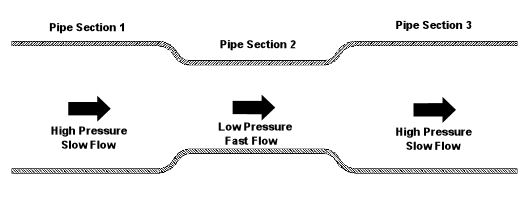
This same idea applies to the rest of your exhaust as well. For stock cube N/A cars, 1 -3/4" primaries are plenty. Similarly, a full 2.5" exhaust system is usually enough for a similar setup and it fits nicely inside the factory tunnel. Some 3" systems will hang a little lower than the 2.5" versions.
With headers, there is a "magic size" of pipe that provides enough of an opening to not be restrictive, but keeps exhaust gases moving quickly so there is the lowest possible pressure in the primary. The lower the pressure, the less resistance force the piston encounters on the exhaust stroke. In the optimal header setup, a piston might even see a vacuum on part of the exhaust stroke which pulls the piston upwards.
Since exhaust is not a consistent flow but rather a series of pulses, each pulse has a low pressure wave behind it. The design of headers with equal (or close to equal length primaries) is to a) match the distance each pulse flows to meet the collector and b) match the direction of exhaust flow in the collector. The factory exhaust manifolds to an incredibly crappy job at this by shoving all the exhaust into a single log-style manifold and (in some applications) cramming the front and rear cylinders together.
When an exhaust pulse hits the collector the negative pressure is felt by the remaining 3 primary tubes and effectively pulls other exhaust pulses along. Primary length determines the "Sweet spot" where the exhaust pulses harmonize in reaching the collector so their pulses reinforce this effect. The shorter the primary, the less time a pulse remains in the primary before it hits the collector and thus the sweet spot is in effect only at higher RPMs when the pulses are closer together. Similarly, mid-length headers have sweet spots in the mid-range of the power band and Long tube headers have the greatest effect felt lower in the power band.
It's worth noting that LG's Super pro headers with their 42" primaries are so long that they have 2 sweet spots: one where there is one pulse per primary and another (at a higher rpm) when there are 2 pulses per primary. One can hear the harmonics when the engine revs around 2000 and 4000 rpm.
A good exhaust and intake system with a good tune can net anywhere between 15 and 40hp, but the biggest difference will be torque. You will defiantly be able to feel more power when you put your foot into it.
There is a common misconception that larger primary sizes flow better because they allow more air to pass through. This is not completely accurate. Yes, a primary that was too small would be restrictive, but a larger primary causes air to flow too slowly creating a higher pressure...pressure that restricts exhaust flow.
Remember back in physics class we learned about the bernoulli effect. The smaller the pipe, the faster a fluid would flow through it and at a lower pressure.
This same idea applies to the rest of your exhaust as well. For stock cube N/A cars, 1 -3/4" primaries are plenty. Similarly, a full 2.5" exhaust system is usually enough for a similar setup and it fits nicely inside the factory tunnel. Some 3" systems will hang a little lower than the 2.5" versions.
With headers, there is a "magic size" of pipe that provides enough of an opening to not be restrictive, but keeps exhaust gases moving quickly so there is the lowest possible pressure in the primary. The lower the pressure, the less resistance force the piston encounters on the exhaust stroke. In the optimal header setup, a piston might even see a vacuum on part of the exhaust stroke which pulls the piston upwards.
Since exhaust is not a consistent flow but rather a series of pulses, each pulse has a low pressure wave behind it. The design of headers with equal (or close to equal length primaries) is to a) match the distance each pulse flows to meet the collector and b) match the direction of exhaust flow in the collector. The factory exhaust manifolds to an incredibly crappy job at this by shoving all the exhaust into a single log-style manifold and (in some applications) cramming the front and rear cylinders together.
When an exhaust pulse hits the collector the negative pressure is felt by the remaining 3 primary tubes and effectively pulls other exhaust pulses along. Primary length determines the "Sweet spot" where the exhaust pulses harmonize in reaching the collector so their pulses reinforce this effect. The shorter the primary, the less time a pulse remains in the primary before it hits the collector and thus the sweet spot is in effect only at higher RPMs when the pulses are closer together. Similarly, mid-length headers have sweet spots in the mid-range of the power band and Long tube headers have the greatest effect felt lower in the power band.
It's worth noting that LG's Super pro headers with their 42" primaries are so long that they have 2 sweet spots: one where there is one pulse per primary and another (at a higher rpm) when there are 2 pulses per primary. One can hear the harmonics when the engine revs around 2000 and 4000 rpm.
A good exhaust and intake system with a good tune can net anywhere between 15 and 40hp, but the biggest difference will be torque. You will defiantly be able to feel more power when you put your foot into it.
Thread Starter
Race Director
Joined: Jul 2008
Posts: 17,777
Likes: 3,711
From: The Sunshine State
2022 C5 of the Year Finalist - Modified
2021 C5 of the Year Finalist - Modified
C7 of the Year - Modified Finalist 2021
Finalist 2020 C7 of the Year -- Modified
2020 C5 of the Year Finalist - Modified
C5 of Year Finalist (appearance mods) 2019
2018 C5 of Year Finalist
For performance gains, primary length and diameter are the two most common factors. We'll start with primary diameter.
There is a common misconception that larger primary sizes flow better because they allow more air to pass through. This is not completely accurate. Yes, a primary that was too small would be restrictive, but a larger primary causes air to flow too slowly creating a higher pressure...pressure that restricts exhaust flow.
Remember back in physics class we learned about the bernoulli effect. The smaller the pipe, the faster a fluid would flow through it and at a lower pressure.
This same idea applies to the rest of your exhaust as well. For stock cube N/A cars, 1 -3/4" primaries are plenty. Similarly, a full 2.5" exhaust system is usually enough for a similar setup and it fits nicely inside the factory tunnel. Some 3" systems will hang a little lower than the 2.5" versions.
With headers, there is a "magic size" of pipe that provides enough of an opening to not be restrictive, but keeps exhaust gases moving quickly so there is the lowest possible pressure in the primary. The lower the pressure, the less resistance force the piston encounters on the exhaust stroke. In the optimal header setup, a piston might even see a vacuum on part of the exhaust stroke which pulls the piston upwards.
Since exhaust is not a consistent flow but rather a series of pulses, each pulse has a low pressure wave behind it. The design of headers with equal (or close to equal length primaries) is to a) match the distance each pulse flows to meet the collector and b) match the direction of exhaust flow in the collector. The factory exhaust manifolds to an incredibly crappy job at this by shoving all the exhaust into a single log-style manifold and (in some applications) cramming the front and rear cylinders together.
When an exhaust pulse hits the collector the negative pressure is felt by the remaining 3 primary tubes and effectively pulls other exhaust pulses along. Primary length determines the "Sweet spot" where the exhaust pulses harmonize in reaching the collector so their pulses reinforce this effect. The shorter the primary, the less time a pulse remains in the primary before it hits the collector and thus the sweet spot is in effect only at higher RPMs when the pulses are closer together. Similarly, mid-length headers have sweet spots in the mid-range of the power band and Long tube headers have the greatest effect felt lower in the power band.
It's worth noting that LG's Super pro headers with their 42" primaries are so long that they have 2 sweet spots: one where there is one pulse per primary and another (at a higher rpm) when there are 2 pulses per primary. One can hear the harmonics when the engine revs around 2000 and 4000 rpm.
A good exhaust and intake system with a good tune can net anywhere between 15 and 40hp, but the biggest difference will be torque. You will defiantly be able to feel more power when you put your foot into it.
There is a common misconception that larger primary sizes flow better because they allow more air to pass through. This is not completely accurate. Yes, a primary that was too small would be restrictive, but a larger primary causes air to flow too slowly creating a higher pressure...pressure that restricts exhaust flow.
Remember back in physics class we learned about the bernoulli effect. The smaller the pipe, the faster a fluid would flow through it and at a lower pressure.
This same idea applies to the rest of your exhaust as well. For stock cube N/A cars, 1 -3/4" primaries are plenty. Similarly, a full 2.5" exhaust system is usually enough for a similar setup and it fits nicely inside the factory tunnel. Some 3" systems will hang a little lower than the 2.5" versions.
With headers, there is a "magic size" of pipe that provides enough of an opening to not be restrictive, but keeps exhaust gases moving quickly so there is the lowest possible pressure in the primary. The lower the pressure, the less resistance force the piston encounters on the exhaust stroke. In the optimal header setup, a piston might even see a vacuum on part of the exhaust stroke which pulls the piston upwards.
Since exhaust is not a consistent flow but rather a series of pulses, each pulse has a low pressure wave behind it. The design of headers with equal (or close to equal length primaries) is to a) match the distance each pulse flows to meet the collector and b) match the direction of exhaust flow in the collector. The factory exhaust manifolds to an incredibly crappy job at this by shoving all the exhaust into a single log-style manifold and (in some applications) cramming the front and rear cylinders together.
When an exhaust pulse hits the collector the negative pressure is felt by the remaining 3 primary tubes and effectively pulls other exhaust pulses along. Primary length determines the "Sweet spot" where the exhaust pulses harmonize in reaching the collector so their pulses reinforce this effect. The shorter the primary, the less time a pulse remains in the primary before it hits the collector and thus the sweet spot is in effect only at higher RPMs when the pulses are closer together. Similarly, mid-length headers have sweet spots in the mid-range of the power band and Long tube headers have the greatest effect felt lower in the power band.
It's worth noting that LG's Super pro headers with their 42" primaries are so long that they have 2 sweet spots: one where there is one pulse per primary and another (at a higher rpm) when there are 2 pulses per primary. One can hear the harmonics when the engine revs around 2000 and 4000 rpm.
A good exhaust and intake system with a good tune can net anywhere between 15 and 40hp, but the biggest difference will be torque. You will defiantly be able to feel more power when you put your foot into it.
Melting Slicks
Joined: Jun 2010
Posts: 2,809
Likes: 3
From: Yorktown Virginia
I have Lg super pros un coated and they still look pretty good at least to me, given I have only had them for ~ 6 months the car is my DD so they see a lot of use. I dont really notice any extra heat in the passenger compartment from them either but I dont have cats so that could be part of it.
Also if Im not mistaken Lg's headers have 32 inch long primaries but I could be wrong.
Also if Im not mistaken Lg's headers have 32 inch long primaries but I could be wrong.

Race Director

Joined: May 2010
Posts: 16,574
Likes: 13
From: Winfield IN
After much debate, I finally bit the bullet and got a set of XSPower headers put on last week. I already had a Corsa Pace Car system and a Vararam intake, and with the headers added as the final piece of the puzzle, the car sounds and feels like an entirely new animal now. It has so much more of a raw feeling now and less refined (if that makes any sense) which I LOVE! I can definitely feel an increase in power, and now I can't wait to top it all off with a tune.
If you don't get them coated, ALL systems will tarnish and turn blue/brown, even if they're stainless. So, if you have a low mileage garage queen, and you're into car shows and such, I would definitely recommend getting them coated. Definitely go with high flow cats. There are really no benefits to going catless, and you will have unpleasant smells. Go with 1 3/4" primaries unless you are planning on going FI in the future.
If you don't get them coated, ALL systems will tarnish and turn blue/brown, even if they're stainless. So, if you have a low mileage garage queen, and you're into car shows and such, I would definitely recommend getting them coated. Definitely go with high flow cats. There are really no benefits to going catless, and you will have unpleasant smells. Go with 1 3/4" primaries unless you are planning on going FI in the future.
Race Director
Joined: May 2010
Posts: 16,574
Likes: 13
From: Winfield IN
The ceramic coating itself will lower engine bay temps (and consequently the heat radiating into the cockpit through the tunnel onto your legs.) The coating will also give the headers a clean and shiny look. CAI, full exhaust, and a tune are great mods for an LS1. You will not be wasting your money.
Melting Slicks
Joined: Nov 2008
Posts: 2,008
Likes: 12
From: NOLA
I have American Racing Headers 1 7/8 with 3 inch primaries and no cats...My dad has equivalent to the same setup on his C6 Z which is in my sig. I did the setup I chose because I am Forced induction. So most importantly figure out your future plans and cater to that

Melting Slicks

Joined: Mar 2002
Posts: 2,203
Likes: 63
From: Staten Island NY
I also went with XSPower. I installed a few sets and am very happy with the product, they were close to HALF the price of Kooks & LG. The money I saved went towards heads and cam project.
After I installed the headers, I had the car tuned by ECS. It made a very noticeable seat of the pants difference.
After I installed the headers, I had the car tuned by ECS. It made a very noticeable seat of the pants difference.