


C5 "Air Bridge"

Thread Starter
Racer

Joined: Mar 2013
Posts: 325
Likes: 0
 C5 "Air Bridge"
Hello all,
Relatively new C5 owner - 2003 Z06, MY with 41k miles. Decided to give myself an early birthday present. Since I'll be turning 25, I probably bring the average age of the forum down a couple of years.
But anywho, I have a question regarding the air bridge on the C5 and aftermarket intakes. Car-wise, I come from a turbocharged import background, so when designing intake piping I'm used to seeing aluminum piping with an emphasis on minimal bends.
I can deal with most reputable aftermarket intakes being plastic - I'm a fan of aluminum, but I've seen the comparisons on IATs and know there is very little difference either way. My preference would be to be blingy aluminum, but I could live with molded plastic.
What I can't understand is aftermarket intakes keeping the air bridge design instead of a standard round piping. Is there really any evidence that this flows better than regular straight piping? This doesn't seem to be a clearance issue since I see most C5 super/turbocharged guys seemingly running 3.5" intake piping with no problems.
My point being I imagine is that I'm having a hard time justifying a $300-$500 intake with, to my eyes, seemingly inferior design (coming from imports where as an example AEM aluminum intakes generally fall in the $200 range with a more complicated pipe design and more raw material) when most Corvette intake aftermarkets place the filter right where the stock one is for double the cost.
Why wouldn't someone pick up a couple of couplers, some pre-bent aluminum, and a high quality filter and make their own in an hour for 35% of the cost?
Relatively new C5 owner - 2003 Z06, MY with 41k miles. Decided to give myself an early birthday present. Since I'll be turning 25, I probably bring the average age of the forum down a couple of years.
But anywho, I have a question regarding the air bridge on the C5 and aftermarket intakes. Car-wise, I come from a turbocharged import background, so when designing intake piping I'm used to seeing aluminum piping with an emphasis on minimal bends.
I can deal with most reputable aftermarket intakes being plastic - I'm a fan of aluminum, but I've seen the comparisons on IATs and know there is very little difference either way. My preference would be to be blingy aluminum, but I could live with molded plastic.
What I can't understand is aftermarket intakes keeping the air bridge design instead of a standard round piping. Is there really any evidence that this flows better than regular straight piping? This doesn't seem to be a clearance issue since I see most C5 super/turbocharged guys seemingly running 3.5" intake piping with no problems.
My point being I imagine is that I'm having a hard time justifying a $300-$500 intake with, to my eyes, seemingly inferior design (coming from imports where as an example AEM aluminum intakes generally fall in the $200 range with a more complicated pipe design and more raw material) when most Corvette intake aftermarkets place the filter right where the stock one is for double the cost.
Why wouldn't someone pick up a couple of couplers, some pre-bent aluminum, and a high quality filter and make their own in an hour for 35% of the cost?

Race Director

Joined: Jul 2007
Posts: 18,681
Likes: 47
From: Reno is so close to Hell you can see Sparks , State Of Confusion
St. Jude Donor '12-'13-'14

Le Mans Master


Joined: Jun 2002
Posts: 5,037
Likes: 847
From: Rotonda West, FL 2015 Z51 M7 3LT
Oldtimer
Everything sold for a Corvette is sold at a ridiculous price. It IS a Corvette after all - they figure if you'll spring for the car - that you ain't too bright in the first place and won't notice that you're getting raped on the aftermarket add-ons. 
Thread Starter
Racer
Joined: Mar 2013
Posts: 325
Likes: 0


Drifting


Joined: Oct 2003
Posts: 1,932
Likes: 4
From: Warrenville Il
I'm no expert but most supercharger kits where you see a 3.5" round tube being used, the radiator has been tilted back to allow clearance between the hood and shroud for the tube running to the throttle body. There doesn't seem to be many aftermarket kits in aluminum like your looking for. I personally went with a carbon fiber bridge with an aftermarket air intake from halltech. This air intake is no longer available but they do make something similiar to it. However it doesn't pass through the radiator shroud like mine. Mine get its air from underneath the car. My guess is water ingestion concerns. In the pic my air filter is just below the shroud and can be seen from under the car.
[IMG]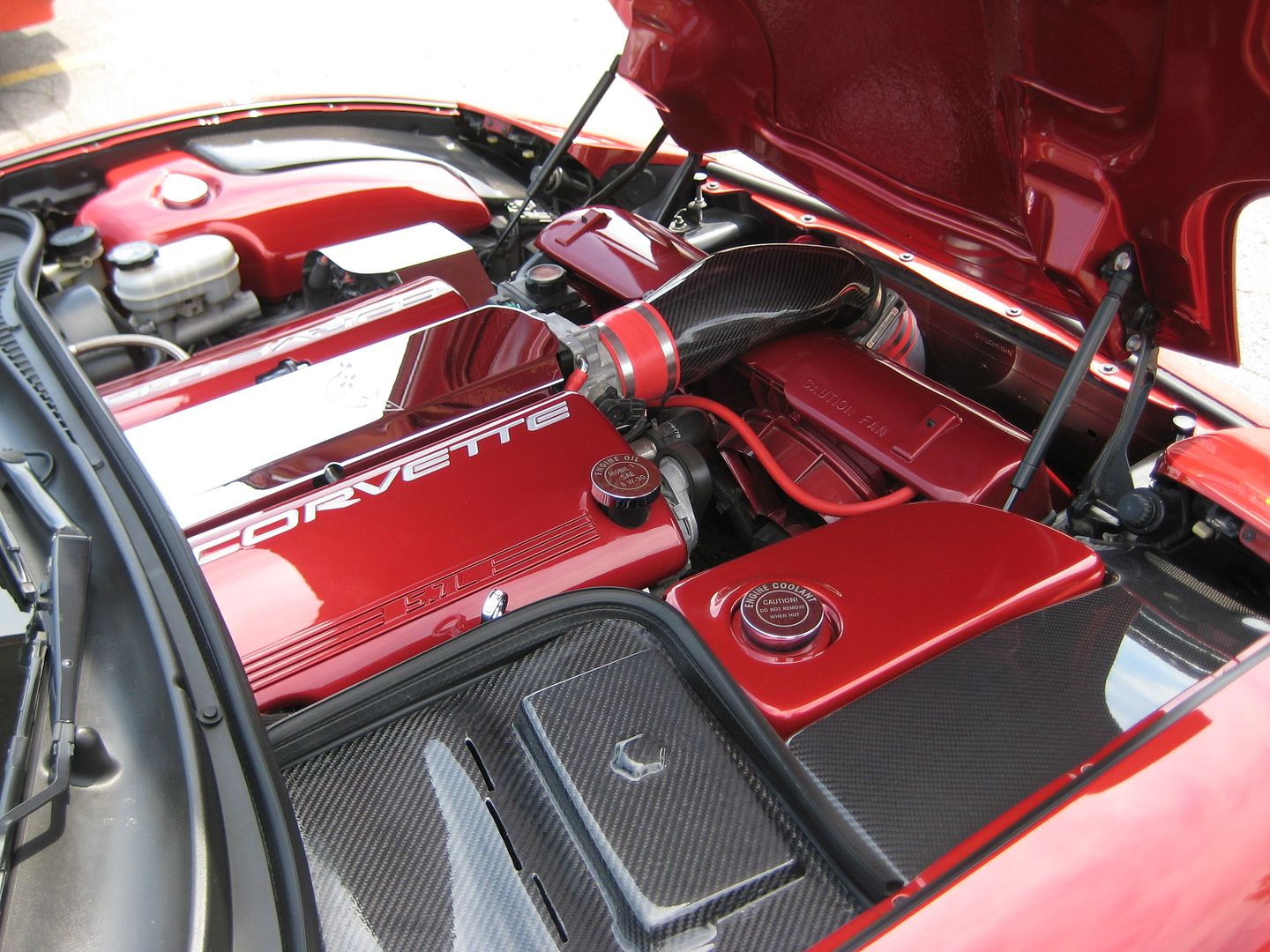 [/IMG]
[IMG]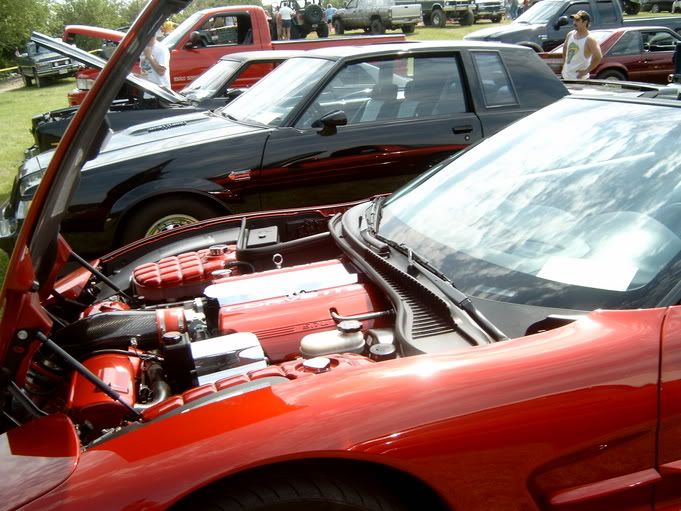 [/IMG]
[IMG]
[/IMG][IMG]
[/IMG]

Intermediate
Joined: Mar 2013
Posts: 31
Likes: 0
As a race car crew chief (SCCA) I realize that there is a tendency to want to improve on performance for obvious reasons. That said, the Corvette is a product of serious refinement by the engineers over the years and as far as I am concerned the C5/C6 (emphasis on C5 in my case) is a fantastic performing car right out of the show room. I made two decisions when I bought my coupe. 1 the only change will be to the radio so I can make use of more modern technology in that department and 2 I will drive my car daily, rain or shine, light snow etc. I do not plan to make any other changes to the car. I am definity not against others doing it differently and certainly do appreciate what some have done to their ride....
Corvette Stories
The Best of Corvette for Corvette Enthusiasts

5 Best & 5 Worst Corvette Daily Drivers
Joe Kucinski
The Headlights of Every Corvette Generation Explained
Joe Kucinski
5 Best & 5 Most Overrated Corvette Track Packages of All Time!
Joe Kucinski
Every 2027 Corvette Engine Explained
Joe Kucinski
Designer Imagines A Corvette That Looks More Like a Corvette Than the Corvette
Verdad Gallardo
10 Ugly Corvettes That We Still Kinda Love
Joe Kucinski
Top 10 Most Expensive Corvettes Ever Sold on Bring A Trailer
Brett Foote
10 Things Every Corvette Owner Needs (2026 Edition)
Michael S. Palmer
8 Most "Only Corvette Owners Understand" Quirks and Problems
Pouria Savadkouei
Race Director

Joined: Dec 2004
Posts: 13,760
Likes: 75
From: Haymarket VA
I'm not sure what you're talking about. When originally purchased at the dealer, all the original purchaser needed to do was check the 427CI option box and you can get an 4 inch aluminum intake tube included. 
Not many chose that option.

Not many chose that option.


Drifting
Joined: Oct 2009
Posts: 1,438
Likes: 4
From: Always in my lane.
Hello all,
Relatively new C5 owner - 2003 Z06, MY with 41k miles. Decided to give myself an early birthday present. Since I'll be turning 25, I probably bring the average age of the forum down a couple of years.
But anywho, I have a question regarding the air bridge on the C5 and aftermarket intakes. Car-wise, I come from a turbocharged import background, so when designing intake piping I'm used to seeing aluminum piping with an emphasis on minimal bends.
I can deal with most reputable aftermarket intakes being plastic - I'm a fan of aluminum, but I've seen the comparisons on IATs and know there is very little difference either way. My preference would be to be blingy aluminum, but I could live with molded plastic.
What I can't understand is aftermarket intakes keeping the air bridge design instead of a standard round piping. Is there really any evidence that this flows better than regular straight piping? This doesn't seem to be a clearance issue since I see most C5 super/turbocharged guys seemingly running 3.5" intake piping with no problems.
My point being I imagine is that I'm having a hard time justifying a $300-$500 intake with, to my eyes, seemingly inferior design (coming from imports where as an example AEM aluminum intakes generally fall in the $200 range with a more complicated pipe design and more raw material) when most Corvette intake aftermarkets place the filter right where the stock one is for double the cost.
Why wouldn't someone pick up a couple of couplers, some pre-bent aluminum, and a high quality filter and make their own in an hour for 35% of the cost?
Relatively new C5 owner - 2003 Z06, MY with 41k miles. Decided to give myself an early birthday present. Since I'll be turning 25, I probably bring the average age of the forum down a couple of years.
But anywho, I have a question regarding the air bridge on the C5 and aftermarket intakes. Car-wise, I come from a turbocharged import background, so when designing intake piping I'm used to seeing aluminum piping with an emphasis on minimal bends.
I can deal with most reputable aftermarket intakes being plastic - I'm a fan of aluminum, but I've seen the comparisons on IATs and know there is very little difference either way. My preference would be to be blingy aluminum, but I could live with molded plastic.
What I can't understand is aftermarket intakes keeping the air bridge design instead of a standard round piping. Is there really any evidence that this flows better than regular straight piping? This doesn't seem to be a clearance issue since I see most C5 super/turbocharged guys seemingly running 3.5" intake piping with no problems.
My point being I imagine is that I'm having a hard time justifying a $300-$500 intake with, to my eyes, seemingly inferior design (coming from imports where as an example AEM aluminum intakes generally fall in the $200 range with a more complicated pipe design and more raw material) when most Corvette intake aftermarkets place the filter right where the stock one is for double the cost.
Why wouldn't someone pick up a couple of couplers, some pre-bent aluminum, and a high quality filter and make their own in an hour for 35% of the cost?


Drifting
Joined: Mar 2011
Posts: 1,412
Likes: 15
From: Richardson TX
Pretty sure that most guys who have 4"+ aluminum intakes have the radiator tilted to provide more clearance.
My C5 has a 3" one off aluminum air bridge (without modifying the radiator, and it just BARELY clears the hood. Pretty sure it rubs the hoodliner.

My C5 has a 3" one off aluminum air bridge (without modifying the radiator, and it just BARELY clears the hood. Pretty sure it rubs the hoodliner.
Race Director
Joined: Dec 2004
Posts: 13,760
Likes: 75
From: Haymarket VA
I have a cradle from ECS that tilts the radiator and allows me to run the 4 inch tubing with my normally aspirated build. FWIW: With the stock airbridge it would pull 7-8 Kpa at full throttle. With the 4 inch tube I only drop about 1Kpa.


Drifting
Joined: Apr 2007
Posts: 1,517
Likes: 160
From: Lafayette Louisiana
Welcome and thanks for lowering the median age. No matter mods or just everyday advise you will find it friendly and good on this forum. Congrats on your C5! Enjoy!
BTW, a couple weeks ago the boys were camping and daughter-in-law wanted to take 'vette to a basket ball game. On return she said, "I first thought the Nissan (read rice burner) would stay with it, but when I really pushed it I knew there was no comparison."
BTW, a couple weeks ago the boys were camping and daughter-in-law wanted to take 'vette to a basket ball game. On return she said, "I first thought the Nissan (read rice burner) would stay with it, but when I really pushed it I knew there was no comparison."
Last edited by UM Rebel; Mar 19, 2013 at 07:31 PM.

Burning Brakes

Joined: Apr 2009
Posts: 1,163
Likes: 4
From: Concord California
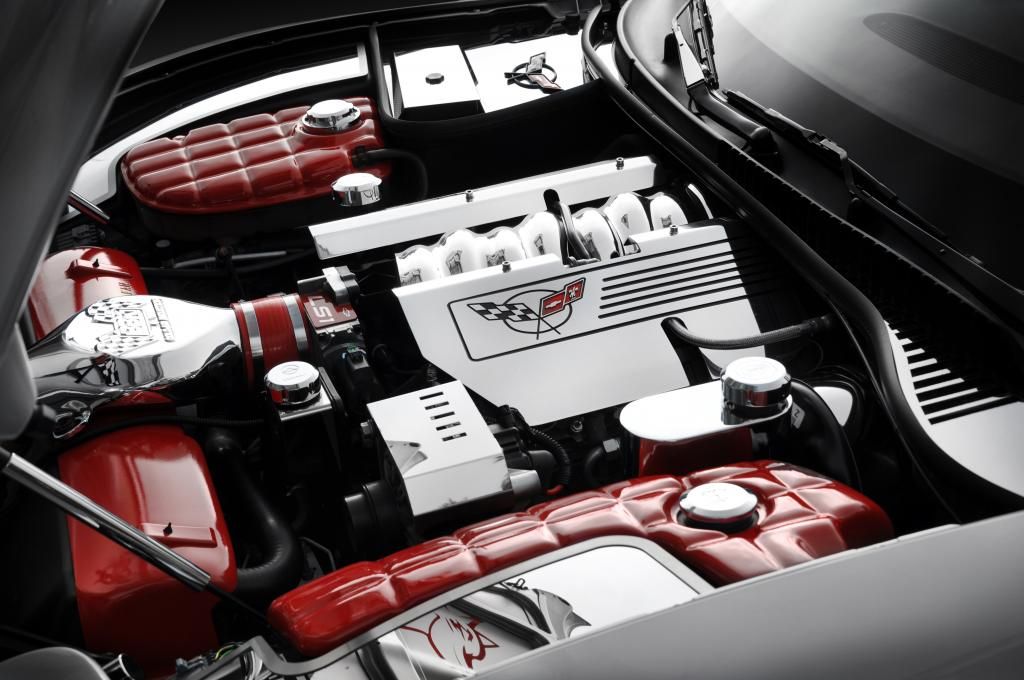
One reason for "Lack of round aluminum pipes under the hood". The C5 has a very low hood line, the air bridge you mentioned can't be round, it's wide and flaten out to fit that area over the radiator to intake, thus aftermarket just made them wider and fatter to gain more air capacity. As far as plastic, it's easier and lighter which helps cut down the weight in an already light sports car, also it doesn't hold the heat as much as aluminum. Well that's my opinion..




Le Mans Master


Joined: Mar 2004
Posts: 8,700
Likes: 298
From: Ft. Lauderdale Fl
Thread Starter
Racer
Joined: Mar 2013
Posts: 325
Likes: 0
This is good information to have - thanks for that. Doubt I'll take it that far, but just for informational's sake, did ECS sell the bracket for tilting the radiator outside of the supercharger kit to you or did you manage to scrounge it off a supercharger kit part-out?