


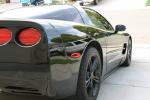



what do you guys think?

Le Mans Master


Joined: Nov 2009
Posts: 6,119
Likes: 156
From: Huntington tx

ET/ aka Bill has told anyone who cares enough, that the 160 degree thermostat is actually creating a bad operating environment inside your crankcase. That's a NO ****ter ! Go back to the 190!
Pardon me.....I was just trying to keep it real.
Pardon me.....I was just trying to keep it real.

Administrator


Joined: Mar 2001
Posts: 368,297
Likes: 24,776
From: In a parallel universe. Currently own 2014 Stingray Coupe.
C7 of the Year - Modified Finalist 2021
MO Events Coordinator
St. Jude Co-Organizer
St. Jude Donor '03 thru '25
NCM Sinkhole Donor
CI 5, 8 & 11 Veteran
I'll guess 415 rwhp. Best of luck with the tune and looking forward to seeing the numbers that you post.

Thread Starter
Burning Brakes

Joined: Jan 2013
Posts: 1,091
Likes: 1
From: Hercules CA
Hey guys got my results in... Came out to be 396/386.. Not as much as I expected but I'm happy with how she runs! Here's a clip of cold start and one of the runs
Second pull
Last edited by Kreeess; Nov 28, 2013 at 03:01 PM.

Advanced

Joined: May 2013
Posts: 87
Likes: 0
From: Summerville South Carolina
so was this a dyno/tune session or was this just a slap the cam in and find out? if you did tune what did they use? ls1edit/hptuners or did you use a handheld? curious to know as i really think you should have gotten just a little more. although the more i think about it my car made 424hp but only 383 torque. that might explain the bigger bottom end power you have.
Corvette Stories
The Best of Corvette for Corvette Enthusiasts

Top 10 Most Expensive Corvettes Ever Sold on Bring A Trailer
Brett Foote
10 Things Every Corvette Owner Needs (2026 Edition)
Michael S. Palmer
8 Most "Only Corvette Owners Understand" Quirks and Problems
Pouria Savadkouei
10 Reasons the C6 Z06 is Still A Performance Benchmark After 20 Years
Joe Kucinski
How Much Horsepower Every Corvette Engine "LOST" in 1972
Joe Kucinski
Top 10 DOs and DON'Ts for Protecting Your Convertible Top!
Michael S. Palmer
Top 10 Most Explosive Corvettes Ever Made: Power-to-Weight Ratio Ranked!
Joe Kucinski
150 hp to 1,250 hp: Every Corvette Generation Compared by the Specs That Matter
Joe Kucinski
8 Coolest Corvette Pace Cars (and Replicas) of All Time
Verdad Gallardo
Melting Slicks

Joined: Oct 2007
Posts: 2,569
Likes: 170
so was this a dyno/tune session or was this just a slap the cam in and find out? if you did tune what did they use? ls1edit/hptuners or did you use a handheld? curious to know as i really think you should have gotten just a little more. although the more i think about it my car made 424hp but only 383 torque. that might explain the bigger bottom end power you have.
Last edited by lt1z; Nov 28, 2013 at 01:13 PM.
Thread Starter
Burning Brakes
Joined: Jan 2013
Posts: 1,091
Likes: 1
From: Hercules CA
It's too bad the 5pin adapter came out short.. But 5 hp wouldn't be too noticeable anyway.. I'm very happy with the overall result and performance for what's in the car.. Head job and MAF swap is def next on the list. Thanks for all the help Matt!
Melting Slicks
Joined: Oct 2007
Posts: 2,569
Likes: 170

Next round of mods should bump it up a bit.

Thread Starter
Burning Brakes
Joined: Jan 2013
Posts: 1,091
Likes: 1
From: Hercules CA
Thread Starter
Burning Brakes
Joined: Jan 2013
Posts: 1,091
Likes: 1
From: Hercules CA
Advanced
Joined: May 2013
Posts: 87
Likes: 0
From: Summerville South Carolina
It did make more uncorrected and STD. The numbers he posted above were just all the car had in it SAE. Picked up good power under the curve while tuning though. I expect it to pick up more with an 85mm MAF and ported heads. The car is a 98 with a 3 wire MAF. Also note this was on 91 octane winter blend gas.
Melting Slicks
Joined: Oct 2007
Posts: 2,569
Likes: 170
SAE -- The SAE standard applied is a modified version of the SAE J1349 standard of June 1990. Power is corrected to reference conditions of 29.23 InHg (99 kPa) of dry air and 77 F (25°C). This SAE standard requires a correction for friction torque. Friction torque can be determined by measurements on special motoring dynamometers (which is only practical in research environments) or can be estimated. When estimates must be used, the SAE standard uses a default Mechanical Efficiency (ME) value of 85%. This is approximately correct at peak torque but not at other engine operating speeds. Some dynamometer systems use the SAE correction factor for atmospheric conditions but do not take mechanical efficiency into consideration at all (i.e. they assume a ME of 100%).
STD-- standard is another power correction standard determined by the SAE. This standard has been stable for a long time and is widely used in the performance industry. Power is corrected to reference conditions of 29.92 InHg (103.3 kPa) of dry air and 60 F (15.5°C). Because the reference conditions include higher pressure and cooler air than the SAE standard, these corrected power numbers will always be about 4 % higher than the SAE power numbers.
Now if conditions are below 77* at sea level(99-101kpa) which they were yesterday and we are at sea level then the actual recorded (uncorrected hp) will be higher then the SAE number. Meaning the car is actually making more power but we are correcting down from those conditions with a CF of less the 1.0
Now if you were to dyno a car at altitude in hot weather the actual numbers would be lower then the SAE correction spec and the correction factor would be above 1.0 resulting in an SAE number that is higher then the uncorrected number.
Given the same car and location STD numbers will always be higher then SAE since it corrects to 103 kpa and 60* (about 4%)
So these are some things to keep in mind when looking at dyno numbers. I always give the printouts in SAE because it is the industry standard, even though the STD and uncorrected numbers were above 400 for Kris yesterday. STD numbers would have been about 412/402 and uncorrected even higher since the temp was in the 50s yesterday on the dyno.
Last edited by lt1z; Nov 28, 2013 at 02:08 PM.
Advanced
Joined: May 2013
Posts: 87
Likes: 0
From: Summerville South Carolina
Let me clarify. There are two common types of correction used on a dyno. Either STD or SAE. It is widely accepted that SAE is the best one to use for comparison to others in different areas, though it doesn't make everything equal.
SAE -- The SAE standard applied is a modified version of the SAE J1349 standard of June 1990. Power is corrected to reference conditions of 29.23 InHg (99 kPa) of dry air and 77 F (25°C). This SAE standard requires a correction for friction torque. Friction torque can be determined by measurements on special motoring dynamometers (which is only practical in research environments) or can be estimated. When estimates must be used, the SAE standard uses a default Mechanical Efficiency (ME) value of 85%. This is approximately correct at peak torque but not at other engine operating speeds. Some dynamometer systems use the SAE correction factor for atmospheric conditions but do not take mechanical efficiency into consideration at all (i.e. they assume a ME of 100%).
STD-- standard is another power correction standard determined by the SAE. This standard has been stable for a long time and is widely used in the performance industry. Power is corrected to reference conditions of 29.92 InHg (103.3 kPa) of dry air and 60 F (15.5°C). Because the reference conditions include higher pressure and cooler air than the SAE standard, these corrected power numbers will always be about 4 % higher than the SAE power numbers.
Now if conditions are below 77* at sea level(99-101kpa) which they were yesterday and we are at sea level then the actual recorded (uncorrected hp) will be higher then the SAE number. Meaning the car is actually making more power but we are correcting down from those conditions with a CF of less the 1.0
Now if you were to dyno a car at altitude in hot weather the actual numbers would be lower then the SAE correction spec and the correction factor would be above 1.0 resulting in an SAE number that is higher then the uncorrected number.
Given the same car and location STD numbers will always be higher then SAE since it corrects to 103 kpa and 60* (about 4%)
So these are some things to keep in mind when looking at dyno numbers. I always give the printouts in SAE because it is the industry standard, even though the STD and uncorrected numbers were above 400 for Kris yesterday. STD numbers would have been about 412/402 and uncorrected even higher since the temp was in the 50s yesterday on the dyno.
SAE -- The SAE standard applied is a modified version of the SAE J1349 standard of June 1990. Power is corrected to reference conditions of 29.23 InHg (99 kPa) of dry air and 77 F (25°C). This SAE standard requires a correction for friction torque. Friction torque can be determined by measurements on special motoring dynamometers (which is only practical in research environments) or can be estimated. When estimates must be used, the SAE standard uses a default Mechanical Efficiency (ME) value of 85%. This is approximately correct at peak torque but not at other engine operating speeds. Some dynamometer systems use the SAE correction factor for atmospheric conditions but do not take mechanical efficiency into consideration at all (i.e. they assume a ME of 100%).
STD-- standard is another power correction standard determined by the SAE. This standard has been stable for a long time and is widely used in the performance industry. Power is corrected to reference conditions of 29.92 InHg (103.3 kPa) of dry air and 60 F (15.5°C). Because the reference conditions include higher pressure and cooler air than the SAE standard, these corrected power numbers will always be about 4 % higher than the SAE power numbers.
Now if conditions are below 77* at sea level(99-101kpa) which they were yesterday and we are at sea level then the actual recorded (uncorrected hp) will be higher then the SAE number. Meaning the car is actually making more power but we are correcting down from those conditions with a CF of less the 1.0
Now if you were to dyno a car at altitude in hot weather the actual numbers would be lower then the SAE correction spec and the correction factor would be above 1.0 resulting in an SAE number that is higher then the uncorrected number.
Given the same car and location STD numbers will always be higher then SAE since it corrects to 103 kpa and 60* (about 4%)
So these are some things to keep in mind when looking at dyno numbers. I always give the printouts in SAE because it is the industry standard, even though the STD and uncorrected numbers were above 400 for Kris yesterday. STD numbers would have been about 412/402 and uncorrected even higher since the temp was in the 50s yesterday on the dyno.
Thread Starter
Burning Brakes
Joined: Jan 2013
Posts: 1,091
Likes: 1
From: Hercules CA
Let me clarify. There are two common types of correction used on a dyno. Either STD or SAE. It is widely accepted that SAE is the best one to use for comparison to others in different areas, though it doesn't make everything equal. SAE -- The SAE standard applied is a modified version of the SAE J1349 standard of June 1990. Power is corrected to reference conditions of 29.23 InHg (99 kPa) of dry air and 77 F (25°C). This SAE standard requires a correction for friction torque. Friction torque can be determined by measurements on special motoring dynamometers (which is only practical in research environments) or can be estimated. When estimates must be used, the SAE standard uses a default Mechanical Efficiency (ME) value of 85%. This is approximately correct at peak torque but not at other engine operating speeds. Some dynamometer systems use the SAE correction factor for atmospheric conditions but do not take mechanical efficiency into consideration at all (i.e. they assume a ME of 100%). STD-- standard is another power correction standard determined by the SAE. This standard has been stable for a long time and is widely used in the performance industry. Power is corrected to reference conditions of 29.92 InHg (103.3 kPa) of dry air and 60 F (15.5°C). Because the reference conditions include higher pressure and cooler air than the SAE standard, these corrected power numbers will always be about 4 % higher than the SAE power numbers. Now if conditions are below 77* at sea level(99-101kpa) which they were yesterday and we are at sea level then the actual recorded (uncorrected hp) will be higher then the SAE number. Meaning the car is actually making more power but we are correcting down from those conditions with a CF of less the 1.0 Now if you were to dyno a car at altitude in hot weather the actual numbers would be lower then the SAE correction spec and the correction factor would be above 1.0 resulting in an SAE number that is higher then the uncorrected number. Given the same car and location STD numbers will always be higher then SAE since it corrects to 103 kpa and 60* (about 4%) So these are some things to keep in mind when looking at dyno numbers. I always give the printouts in SAE because it is the industry standard, even though the STD and uncorrected numbers were above 400 for Kris yesterday. STD numbers would have been about 412/402 and uncorrected even higher since the temp was in the 50s yesterday on the dyno.
Melting Slicks
Joined: Oct 2007
Posts: 2,569
Likes: 170
Ok, i gotcha. i used to work for a speed shop called Motion Concept Performance in North carolina (now closed) but we had a dynomite dyno and i got alot of experience using like egreddy and evoscan (import tuning software) but we always used the recommended settings (corrections for friction and baro pressure) that came with the dyno. It was the owners first dyno so means to say we had a couple long long days with one of the reps learning how to use it after we got set up. i was just trying to figure out what you were talking about. its funny though cause we had a father bring his son in with a TPI camaro and his son said he wanted a 400 hp car and he wouldn't ask for any other mods. so his dad got an arizona speed (correct me if im wrong) TPI upper and lower manifold with bigger runners, heads, cam pretty much everything except a bottom end. car made like 360 tq but only like 330 hp. his dad asked us to fudge his numbers so he didn't have to spend any more $ ha ha so i know you can set the dyno to account for different pressures and the numbers go up if thats not actually the case. anyway thanks for the schooling and clarification! Now are you guys tuning this car with software or is that just the dyno? what system is being used? I only ask because when i got my car tuned i asked if the guy could do a speed density tune so i could eliminate my MAF sensor seeing how they cost 3-400 dollars and you don't really need them for a good tune. So why not do a speed density tune, opt out for the maf and get a nice set of CNC heads and be good?
SD has it's place but just not necessary at this level, nor is a custom OS available for the 98 PCM besides 2 bar. Not to mention the extra money spent tuning would offset the MAF cost easily. I find that the 85mm 5 wire delphi maf is good to 440rwhp or so before it becomes a restriction. And since it is 2013 and not 2003 at that point I would go to a 4" housing with an LS3/7 MAF before before going to an SD tune.
I have a couple LS1/2 cars running the card style MAF with great results and no drawbacks.
Last edited by lt1z; Nov 28, 2013 at 02:45 PM.