




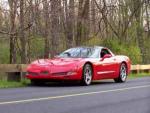







Pop up headlight observation!

Melting Slicks


Joined: Jul 2004
Posts: 3,092
Likes: 120
From: orlando florida
St. Jude Donor '15

Not just the headlights being the only variable. The increased demand on the alternator from the headlights and interior dash lighting increases drag on the motor and takes up hp as well.

Burning Brakes


Joined: Nov 2001
Posts: 955
Likes: 4
From: Union City, CA
Yeah they certainly are unaerodynamic when they're up.
However, with the headlights down, the C5 is the most aerodynamic corvette ever made, so there's that.
Also, a key advantage to pop-up headlights was that the nose could be lower and longer. The C6 has a more abrupt nose, because the headlights have to be a certain height by regulation, and if they're not pop-up, than the nose has to be taller to accommodate the higher height. The lower and more sloped nose of the C5 probably helps it be more aerodynamic than a C6.
I think eventually the "streamlined" headlights took hold aethetically, but the main killer of pop-up headlights is that in Europe, cars have to meet "pedestrian safety" criteria, along with other normal safety tests. The pedestrian safety criteria basically measures how likely a car is to hurt a pedestrian by hitting one at certain speeds. Essentially, pop-up headlights couldn't realistically meet this standard. I believe the standard started taking effect in 2004, hence no production car made since 2004 has had pop-up headlights.
Ok, I'll get off my soap box now
However, with the headlights down, the C5 is the most aerodynamic corvette ever made, so there's that.
Also, a key advantage to pop-up headlights was that the nose could be lower and longer. The C6 has a more abrupt nose, because the headlights have to be a certain height by regulation, and if they're not pop-up, than the nose has to be taller to accommodate the higher height. The lower and more sloped nose of the C5 probably helps it be more aerodynamic than a C6.
I think eventually the "streamlined" headlights took hold aethetically, but the main killer of pop-up headlights is that in Europe, cars have to meet "pedestrian safety" criteria, along with other normal safety tests. The pedestrian safety criteria basically measures how likely a car is to hurt a pedestrian by hitting one at certain speeds. Essentially, pop-up headlights couldn't realistically meet this standard. I believe the standard started taking effect in 2004, hence no production car made since 2004 has had pop-up headlights.
Ok, I'll get off my soap box now

Team Owner

Joined: Jul 2006
Posts: 22,192
Likes: 4,180
From: Kannapolis NC

Pro

Joined: May 2014
Posts: 670
Likes: 46
From: Indiana
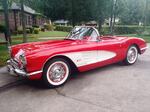
We were driving very flat US 50 across southern IL labor day weekend with the top down in our vert and when I turned the headlights on we could feel a difference in the airflow in the passenger compartment. I turned them back off and then back on again to confirm what we were feeling was indeed due to the headlights' affect on the car's aerodynamics.
Corvette Stories
The Best of Corvette for Corvette Enthusiasts

Top 10 Most Expensive Corvettes Ever Sold on Bring A Trailer
Brett Foote
10 Things Every Corvette Owner Needs (2026 Edition)
Michael S. Palmer
8 Most "Only Corvette Owners Understand" Quirks and Problems
Pouria Savadkouei
10 Reasons the C6 Z06 is Still A Performance Benchmark After 20 Years
Joe Kucinski
How Much Horsepower Every Corvette Engine "LOST" in 1972
Joe Kucinski
Top 10 DOs and DON'Ts for Protecting Your Convertible Top!
Michael S. Palmer
Top 10 Most Explosive Corvettes Ever Made: Power-to-Weight Ratio Ranked!
Joe Kucinski
150 hp to 1,250 hp: Every Corvette Generation Compared by the Specs That Matter
Joe Kucinski
8 Coolest Corvette Pace Cars (and Replicas) of All Time
Verdad Gallardo
Thread Starter
Le Mans Master

Joined: Sep 2007
Posts: 7,604
Likes: 8
From: Belleville Il
Seems to be the most logical conclusion is the cumulative affect of air temp(dense air will burn a little more fuel), alternator drag AND the lights up creating a little more drag at 75 mph. As stated before terrain and wind were non factors as no significant terrain variations in either direction and there was MORE breeze in the daytime,,almost dead calm on the way home.
Melting Slicks
Joined: Oct 2006
Posts: 2,193
Likes: 156
From: Navarre FL
You may not notice the terrain, but a difference of a few hundred feet from start to end could make a big difference. Probably wouldn't even take that much altitude variation impact mpg. Gravity's a.....

Burning Brakes

Joined: Aug 2006
Posts: 1,186
Likes: 18
From: Scottsdale Az
Pro
Joined: May 2014
Posts: 670
Likes: 46
From: Indiana
I notice that I get better mileage driving home from work that to work. (About 17 miles.) My elevation cell phone app on my phone shows home to be about 150' lower than work. I've also noticed the same thing on a longer drive to a nearby town that is about 200' higher than home. If not for that app I would have guessed half or less of that elevation change.