When you click on links to various merchants on this site and make a purchase, this can result in this site earning a commission. Affiliate programs and affiliations include, but are not limited to, the eBay Partner Network.
It is not a good idea to have a Corvette as your only car in the snow belt. Being a student you will need to get to class and if there is more than a few inches of snow you will be missing class. You can probably get a beater for less than a set of good all season/snow tires with rims. Besides, even with a good set of snow tires you will still be stranded if you get more than 4 or 5 inches of snow. Get a winter beater and only keep the car you are driving insured to save money. Sounds like a great opportunity to get into a nice extremely low mileage C5.
Why do we like Corvettes? handling, power, stopping, cool factor, everything about a Corvette does not work in the winter !!!(cold car one little bump and crack goes the weasel ) I want all these things in the winter ??? my winter DD
i'd be curious what the amount we're talking here of "what's been saved up".
and how much a 10K mile 2000 corvette's price is from "grandma/pa"?
i own a 2000 coupe, i'll let you know how it does in the winter, i have about 96K miles on it. the thing's in the shop again.
when my wife and I were first married, from '1987-90, our main car was a '79 mazda RX7. it was a cool car, 2 seater, i can't remember the mileage on it, but my wife bought it before we were married, and for the most part it ran well. winter-hmmm, it ran ok, and we went through some big snow w/ it. i should say, actually it did better in the snow than my '75 vega wagon, we were going home one snowy night, she made it up this hill, I DID NOT!!!
i guess my pt is, whatever the amount of $$ you have, maybe you should look into what kind of car that $$ will get you. sure the corvette is a cool car, it's a crazy fast car too. INS will be higher for you. but if you have 3 friends who want to go somewhere, it won't happen in your corvette. our car after the RX7 was a 1988 mazda 323, we had that car for the next 11 year, and put 160,000 miles on it. A/C still worked, had very little problems w/ it other than tires and the muffler. still had the original clutch!
i guess what i'm trying to say is maybe get the newest car you can for your money, one that will last. when you get done w/ college and have $$, you can get your fun vette (just my advice)
although from reading "all corvettes are red" they supposedly drove the prototype C5s in cold nasty weather, etc etc....and they survived.
guys who drive their sports cars in the winter months is why I have permanent white knuckles and no hair as a result of dodging them while im driving!!!!!!!!!!!!!!!!
use a 10,000 mile Corvette in the snow ?????Pure sacrilege !!!!!!!!!!!
Buy the nice Corvette and then buy a beater 4X4 truck for the winter. That's what I do here in Iowa, I drive the Corvettes in the summer and a 4X4 Expedition in the winter.
I've been caught out by snow a few times during the winter. My experience is that if you are running summer tires, find somewhere safe to park it, you WILL get stuck. With all season tires, I have made it home, but any upslope is a challenge.
To get to my home, I have to go through a pretty big "dip" in the road; the only way to get through in the snow is hit the gas going down the slope, so you have enough speed at the bottom to get up the other side without feeding power in. Feed power in, and you start sliding - usually sideways.
I drive my car all year round, but when there is snow in the forecast, it's Subaru time. And if it's serious snow, my old 5MT K1500 gets the nod. And one of those is a cheap winter beater proposition.
I've owned Vettes for better than 45 years. My first was a 64 convertible, and I drove it everyday. I lived in both Washington and (gasp) Minneapolis while owning that car. Until 1972 a Vette was my only 'driver' (I upgraded to a '65 somewhere along the way, My wife also drove a Roadrunner, If you're (not your) an experienced driver in snow you'll get by. The newer cars with traction control etc. actually handle quite well in the snow (not ice). The tires can act a bit like skis because of their width, and deep snow could easily effect the air intake. I can now afford another car and don't drive either of my C-5s in the snow, if I can help it.
However should I ever get a surprise, I wouldn't be too afraid past the momentary fears of being around idiots that don't have a clue.
Although I have not driven my C5's in the snow, I used a couple of C4's as daily drivers all year even in the winter in central Illinois. In about 5 years I put almost 100k miles on them.
In the winter my impressions match what many others have said. They should be fine for plowed roads or roads that don't have deep snow. Tires make a big difference. They are actually quite stable cars in most winter conditions as long as you drive cautiously. If you use a lot of throttle, or expect it to corner like it is summer, you will have problems.
I have gotten caught in a deep snow a couple of times. I could hear the snow dragging across the bottom of the car, but I kept it moving and I didn't get stuck. I also had some damage to one car. A truck dropped a big chunk of ice right in front of me and with traffic I could not avoid hitting it. It broke the center air dam.
The thing I hate the most is the salt. I would wash it off (including underneath) at least every week. For the most part, it worked pretty well, but I still found some rust on a few small parts like fastener screws, etc.
Although I drove them all year, they were not my only car. If it was really bad, I took my truck.
In short, you can drive them all year, but you will miss a few days unless you have another vehicle or transportation method. Here it would have been a couple days per year.
Looked for a picture of some nice ice chunks that accumulate in cars and trucks fenders and then drop off but only found this. As stated in a thread above a few of those land mines laying in the road and it will all be over for the vette, much harder than hitting a raccoon. The only thing positive I can add to this thread is that it is usually SUV's that I see in the ditch, but then again those are the only vehicles really being driven when the snow is accumulating or the road is covered in ice.
Im a College student who commutes about 25 minutes to school 4 days a week in the suburbs of Chicago. Im currently in the market for a car and I have a decent amount saved up.
My grandparents own a 2000 Corvette with 10,000 miles on it that they are considering selling to me for the money that I have. Compared to the cars that I am looking at, that is a fantastic deal.
The only problem is that it snows a lot where I live. Like I said, I commute to school.
My question is, has anyone ever experienced driving a Corvette in the snow? Will a good set of Snow tires make a difference?
I know that even if I buy it I could always sell it and, in return, get a car thats better in the snow... but if possible it would be pretty cool to be able to drive a Corvette especially at my age.
This page pulls together information on when, how much and how often Chicago, Illinois has snow.
There are data and descriptions here of how many days it snows and the total amount of snowfall that Chicago usually gets. There are also monthly and yearly counts of the days that the city normally has heavy snowstorms and deep snow accumulated on the ground. Plus there's information on when Chicago can expect the first and last snowfalls of the season.
All the numbers are averages, based on climate data gathered from 1981 to 2010 at the Chicago O'Hare International Airport.
How Often it Snows in Chicago
The O'Hare Airport has more snowy days, 28.5 a year, than other places in the Chicago area that record snowfall. Chicago's Midway Airport averages 26.7 days annually with snow, while the Botanical Gardens have 22.3 days.
Of the three locations, Midway Airport gets the most total snowfall, at 37.1 inches yearly, while the Botanical Gardens has the least amount at 33.4 inches.
This first table lists monthly and yearly totals for amount of snow and how many days it snows at least 0.1 inches (0.25 centimetres) at O'Hare.
Average total snowfall and days with fresh snow in Chicago Days Inches Centi*metres
8.2 January 10.8 27.4
6.1 February 9.1 23.1
4.3 March 5.6 14.2
0.9 April 1.2 3.0
0.2 October 0.3 0.8
1.7 November 1.2 3.0
7.1 December 8.5 21.6
28.5 Year 36.7 93.2
These averages don't show how much Chicago's snowfall varies from year to year.
In December, for instance, one in four years totals over 10.4 inches of snow. Another 25 percent of years receive less than 3.4 inches for the month.
Similarly in January, fresh snowfall in the heaviest years amounts to 15.5 inches or more, while the lightest years get five inches or less.
Snow in February ranges from over 15.1 inches in heavy snowfall years to under 2.3 inches in light years.
When Chicago Has Its First & Last Snowfalls
Over the long-term Chicago has averaged a dusting of 0.3 inches of snow during October. But in most years October has no snow. Typically, just once in every five years see snow that early.
Chicago's first snowfall of winter usually arrives in November. For at least one in four years, snow doesn't arrive until December.
The season's last snowfall typically happens in April, which most years amounts to less than a quarter inch.
Chicago is normally free of snow every year from May to September.
How Many Snowstorms Chicago Has
Chicago gets snow more often than most places in Illinois. But most days with snowfall in Chicago result in just a skiff of less than an inch left on the ground. Normally on 12 days a year at least an inch of snow lands in one day.
Snowstorms of over five inches a day occur just once a year on average. Major blizzards that dump ten inches or more in one day are rare events, happening about once a decade.
Based on this info I'd say get it and ride a bus or something the days you can't drive...
Designer Imagines A Corvette That Looks More Like a Corvette Than the Corvette
Slideshow: A Jaguar designer's personal project imagines what a modern front-engined Corvette might look like if Chevrolet revisited the golden age of the Stingray.



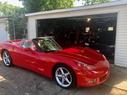


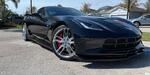


 It is not a good idea to have a Corvette as your only car in the snow belt. Being a student you will need to get to class and if there is more than a few inches of snow you will be missing class. You can probably get a beater for less than a set of good all season/snow tires with rims. Besides, even with a good set of snow tires you will still be stranded if you get more than 4 or 5 inches of snow. Get a winter beater and only keep the car you are driving insured to save money. Sounds like a great opportunity to get into a nice extremely low mileage C5.