When you click on links to various merchants on this site and make a purchase, this can result in this site earning a commission. Affiliate programs and affiliations include, but are not limited to, the eBay Partner Network.
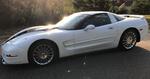
Not me, my tires. My 98, originally my Dad's, was still on the original Goodyear runflats. 19000 miles. Still plenty of tread, but as observed in many other threads, they had hardened, rode rough, were noisy, and somewhat suspect grip.
I replaced them with the Continental Extreme Contact Sport (non-runflat). I ordered them (and sensors) from TireRack and had them delivered to the local Chevy dealer for installation. For some reason they couldn't train the sensors, but suggested that I go to Tire Discount. They were able to train them, resolving my worry that I got the wrong sensors.
I picked the Continentals for their excellent wet grip ratings I've seen in the reviews. I figured all the tires have excellent dry grip, and the wet grip was more important.
I should have done it sooner. The new tires ride MUCH better than the old ones!
Be aware that if you use that fix-a-flat stuff, your new tire pressure sensor will be toast. That stuff plugs them up. I went to the sporting goods store and got a 20 oz. Co2 cylinder, a hose that is meant to connect the cylinder to a paintball gun, a 1/8" to 1/4" npt bushing and a tire chuck. Put it all together and you've got 850 PSI of instant tire inflation goodness. I've had to use this kind of setup a couple of times on the side of a busy highway. Just stick in a tire plug and air the tire up in seconds. I liked it so much I got a big 5 pound cylinder to go in the back of my pickup because the 20 oz. cylinders won't air up my big truck tires but they easily handle a car tire like ours.
If you switch to non-run flats all you need to carry with you is a small 12V compressor. Any flat or leaking tire you have can be aired up enough to get to safety. If you have catastrophic sidewall damage a run flat would have been no good anyway; you're calling a flat bed be it run flat or non-run flat.
Be aware that if you use that fix-a-flat stuff, your new tire pressure sensor will be toast. That stuff plugs them up. I went to the sporting goods store and got a 20 oz. Co2 cylinder, a hose that is meant to connect the cylinder to a paintball gun, a 1/8" to 1/4" npt bushing and a tire chuck. Put it all together and you've got 850 PSI of instant tire inflation goodness. I've had to use this kind of setup a couple of times on the side of a busy highway. Just stick in a tire plug and air the tire up in seconds. I liked it so much I got a big 5 pound cylinder to go in the back of my pickup because the 20 oz. cylinders won't air up my big truck tires but they easily handle a car tire like ours.
The fix-a-flat is labeled as safe for sensors. Hopefully true, but I wouldn't use unless the compressor alone couldn't keep it inflated.
I'm less confident about the usefulness of a plug kit. I don't see how it is possible to patch a tire without removing it. Are there jacks that can fit under a vette with a flat tire?
I just inflate the tire, listen for the leak leak to find it, grab the nail with some pliers and yank it out, stuff a plug in and then top off the pressure. Quick and easy.
Be aware that if you use that fix-a-flat stuff, your new tire pressure sensor will be toast. That stuff plugs them up. I went to the sporting goods store and got a 20 oz. Co2 cylinder, a hose that is meant to connect the cylinder to a paintball gun, a 1/8" to 1/4" npt bushing and a tire chuck. Put it all together and you've got 850 PSI of instant tire inflation goodness. I've had to use this kind of setup a couple of times on the side of a busy highway. Just stick in a tire plug and air the tire up in seconds. I liked it so much I got a big 5 pound cylinder to go in the back of my pickup because the 20 oz. cylinders won't air up my big truck tires but they easily handle a car tire like ours.
Good idea but wondering is that canister safe to leave in a hot car? How about cold weather? Tks
I just inflate the tire, listen for the leak leak to find it, grab the nail with some pliers and yank it out, stuff a plug in and then top off the pressure. Quick and easy.
If the nail is still in the tire, it will probably hold air and just have a slow leak. Why not just re-inflate with the compressor and drive to the shop?
The videos of using the patch kit that I've seen look like it is very difficult to do without removing the wheel. Especially on the rear, where only a tiny fraction of the tire circumference will be exposed.
As far as heat, I've had these cylinders in all my vehicles for years with no problem. It was 105 degrees here in Tupelo today and my pickup truck sat in the sun all day with a 5 pound cylinder inside a black toolbox - I don't even want to think about how hot it got in there today, but it didn't burst the overpressure valve.
As far as leaving the nail in there, I'd rather not. I just got back from a trip to the NC mountains around Asheville. There are some fun twisty roads there, but if I picked up a nail, I would want it out ASAP before it came out on its own and led to catastrophic tire failure. As far as using a tire plug, it's easy. Just put one of those black rope things covered in tacky stuff in the tool, coat it in more adhesive from the plug kit and push it in the hole. The hole is instantly sealed and I have driven on that kind of plug for 10's of thousands of miles without them ever leaking again. You don't have to take the tire off the car or take the tire off the rim. Just shove 'er in and air up. Kit costs $6 at Wallyworld.
You all do know that those 12V pumps are all made in China, right? China=junk. It will leave you stranded when you need it most.
Last edited by tupeloC5; Jul 21, 2017 at 10:16 PM.













 Finally retired...