




C5 Drivetrain Question

Thread Starter
Advanced

Joined: Mar 2007
Posts: 70
Likes: 0
From: Tempe AZ
 C5 Drivetrain Question
Hey everyone,
I just signed up this up this morning and before asking my questions, I'd like to introduce myself.
I come from a Honda back ground. I've owned a few Civics in the past (some slow, some faster). I've done a little bit of everything in the automotive world, from porting heads and building motors to fabrication. Jack of all trades, master of none....
I don't own a Corvette, but I've always been amazed with the performance of these cars, which is why I'ce chosen a C5 drivetrain for my up comming project.
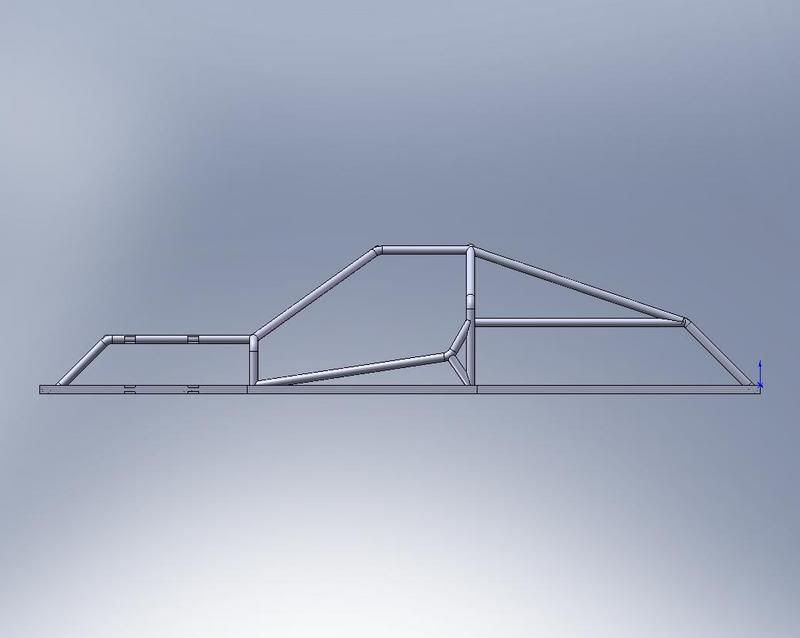
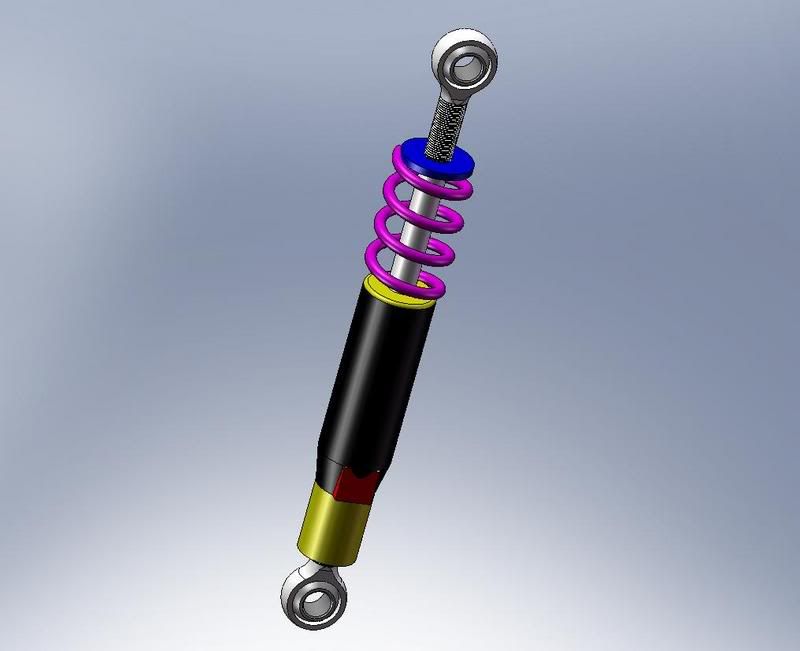
I've been designing on a mid-engine RWD vehicle in Solidworks for quite some time now. It started as something that would never leave the hard drive of my computer, but lately I've been very serious about actually building this thing. Here are a few early pictures that I have on the internet. I've changed and added a lot since then, but you should get an idea of what the project looks like from these.



Now on to my questions....
I'd like to use a fully built Gen. III small block Chevy along with the Borg Warner T-56 and the Getrag differential, basically a C5 drivetrain minus the "drive shaft tube".
Is it possible to eliminate the "drive shaft tube" and mate the engine directly to the transmission? If so, what does it take? Does the transmission bellhousing bolt to the engine streight, or is an adaptor plate required?
The engine will be twin turbo'd, making about 1000 HP. For this reason, I'd like to use an Iron block (like the LM7). I'll sacrifice better cooling capabilities for less block distortion under high power and boost, but I think it's worth it. Anyways, Do these iron blocks have the same bell housing bolt pattern as the LS1?
Also, are there any technical drawings of the transaxle unit available? I'll be designing the mounts soon and I'd like to have accurate dimensions.
I appreciate you taking the time and reading through my post!
Thanks in advance!
I just signed up this up this morning and before asking my questions, I'd like to introduce myself.
I come from a Honda back ground. I've owned a few Civics in the past (some slow, some faster). I've done a little bit of everything in the automotive world, from porting heads and building motors to fabrication. Jack of all trades, master of none....
I don't own a Corvette, but I've always been amazed with the performance of these cars, which is why I'ce chosen a C5 drivetrain for my up comming project.
I've been designing on a mid-engine RWD vehicle in Solidworks for quite some time now. It started as something that would never leave the hard drive of my computer, but lately I've been very serious about actually building this thing. Here are a few early pictures that I have on the internet. I've changed and added a lot since then, but you should get an idea of what the project looks like from these.
Now on to my questions....
I'd like to use a fully built Gen. III small block Chevy along with the Borg Warner T-56 and the Getrag differential, basically a C5 drivetrain minus the "drive shaft tube".
Is it possible to eliminate the "drive shaft tube" and mate the engine directly to the transmission? If so, what does it take? Does the transmission bellhousing bolt to the engine streight, or is an adaptor plate required?
The engine will be twin turbo'd, making about 1000 HP. For this reason, I'd like to use an Iron block (like the LM7). I'll sacrifice better cooling capabilities for less block distortion under high power and boost, but I think it's worth it. Anyways, Do these iron blocks have the same bell housing bolt pattern as the LS1?
Also, are there any technical drawings of the transaxle unit available? I'll be designing the mounts soon and I'd like to have accurate dimensions.
I appreciate you taking the time and reading through my post!
Thanks in advance!

Race Director


Joined: May 2005
Posts: 15,960
Likes: 21
From: West Norriton PA
St. Jude Donor '08
Hey everyone,
I just signed up this up this morning and before asking my questions, I'd like to introduce myself.
I come from a Honda back ground. I've owned a few Civics in the past (some slow, some faster). I've done a little bit of everything in the automotive world, from porting heads and building motors to fabrication. Jack of all trades, master of none....
I don't own a Corvette, but I've always been amazed with the performance of these cars, which is why I'ce chosen a C5 drivetrain for my up comming project.
I've been designing on a mid-engine RWD vehicle in Solidworks for quite some time now. It started as something that would never leave the hard drive of my computer, but lately I've been very serious about actually building this thing. Here are a few early pictures that I have on the internet. I've changed and added a lot since then, but you should get an idea of what the project looks like from these.
Now on to my questions....
I'd like to use a fully built Gen. III small block Chevy along with the Borg Warner T-56 and the Getrag differential, basically a C5 drivetrain minus the "drive shaft tube".
Is it possible to eliminate the "drive shaft tube" and mate the engine directly to the transmission? If so, what does it take? Does the transmission bellhousing bolt to the engine streight, or is an adaptor plate required?
The engine will be twin turbo'd, making about 1000 HP. For this reason, I'd like to use an Iron block (like the LM7). I'll sacrifice better cooling capabilities for less block distortion under high power and boost, but I think it's worth it. Anyways, Do these iron blocks have the same bell housing bolt pattern as the LS1?
Also, are there any technical drawings of the transaxle unit available? I'll be designing the mounts soon and I'd like to have accurate dimensions.
I appreciate you taking the time and reading through my post!
Thanks in advance!
I just signed up this up this morning and before asking my questions, I'd like to introduce myself.
I come from a Honda back ground. I've owned a few Civics in the past (some slow, some faster). I've done a little bit of everything in the automotive world, from porting heads and building motors to fabrication. Jack of all trades, master of none....
I don't own a Corvette, but I've always been amazed with the performance of these cars, which is why I'ce chosen a C5 drivetrain for my up comming project.
I've been designing on a mid-engine RWD vehicle in Solidworks for quite some time now. It started as something that would never leave the hard drive of my computer, but lately I've been very serious about actually building this thing. Here are a few early pictures that I have on the internet. I've changed and added a lot since then, but you should get an idea of what the project looks like from these.
Now on to my questions....
I'd like to use a fully built Gen. III small block Chevy along with the Borg Warner T-56 and the Getrag differential, basically a C5 drivetrain minus the "drive shaft tube".
Is it possible to eliminate the "drive shaft tube" and mate the engine directly to the transmission? If so, what does it take? Does the transmission bellhousing bolt to the engine streight, or is an adaptor plate required?
The engine will be twin turbo'd, making about 1000 HP. For this reason, I'd like to use an Iron block (like the LM7). I'll sacrifice better cooling capabilities for less block distortion under high power and boost, but I think it's worth it. Anyways, Do these iron blocks have the same bell housing bolt pattern as the LS1?
Also, are there any technical drawings of the transaxle unit available? I'll be designing the mounts soon and I'd like to have accurate dimensions.
I appreciate you taking the time and reading through my post!
Thanks in advance!
The inherent weak spot of the C5 is the rear differential and at the horsepower levels that you want, it will not stand up. Do a search on the forum and you'll find a lot of post about allof the breakage.

Le Mans Master

Joined: Jul 2002
Posts: 7,370
Likes: 8
From: Slave to the evil empire
Cruise-In V Veteran
St. Jude Donor '04
Corvette's of the C5 era are not transaxle designed, that is why there is a torque tube. You could use a Camaro bell housing and traditional front mount tranny to eliminate the torque tube and then just modify the Camaro's drive-shaft to fit your particular use.
The inherent weak spot of the C5 is the rear differential and at the horsepower levels that you want, it will not stand up. Do a search on the forum and you'll find a lot of post about allof the breakage.
The inherent weak spot of the C5 is the rear differential and at the horsepower levels that you want, it will not stand up. Do a search on the forum and you'll find a lot of post about allof the breakage.

The camaros and Firebirds came with a Gen III engine and a traditional trans setup or you could go with a GTO and use an LS2/T56.

Safety Car


Joined: Jul 2005
Posts: 4,275
Likes: 4
From: Vancouver WA
I just finished a class in Solidworks. That's a pretty cool CAD Solids program.
The C5 has about a perfect 50/50 front/back weight balance. What would be the advantage of going to mid engine?
Another thing about your frame, you have no clearance in the back for the axle. Whether it's a transaxle, solid, or IRS, you have to have some hump in there. I'm not saying it can't be done, but I just don't think you would want to run the axle above the frame rails.
The C5 has about a perfect 50/50 front/back weight balance. What would be the advantage of going to mid engine?
Another thing about your frame, you have no clearance in the back for the axle. Whether it's a transaxle, solid, or IRS, you have to have some hump in there. I'm not saying it can't be done, but I just don't think you would want to run the axle above the frame rails.
Thread Starter
Advanced
Joined: Mar 2007
Posts: 70
Likes: 0
From: Tempe AZ
Thanks a lot for the replies guys! I really appreciate your time.
I had no idea the rear differential on the C5 was the weak link. I'm a little disappointed now.  The reason I decided to use the Corvette drive train was the fact parts from American cars are generally "beefier" than foreign parts. A lot of high powered RWD import drag cars run the Turbo 400 transmission.
I'd like to know up to what power/torque level are the differentials reliable? What do the people with 10-second C5s do to go around this issue? I was looking in the parts forum and one particular company was offering differential upgrade packages such as cryo treating and what not. How effective are these upgrades?
If the C5 drive is not an option, I either have to go with a G50 Porsche transaxle (about $5000) or a Quaife transaxle or an Emco unit. The Quaife unit is about $20,000. I'm not sure how expensive the Emco unit is, but given that they make tranmissions for Indy, LeMans and other high end race cars, I think the price is going to be significantly more.
Hey bud,
Like I initially said in my first post, those are some early picture. I have narrowed the bottom rails in the back so they go under the transaxle. I actually didn't notice that, a friend of mind brought it to my attention.
As for why I'm going with an MR design, why wouldn't there be an advantage of going MR? Formula 1 cars, LMP1 & 2 classes, a lot of "super cars" are all MR. MR must have an advantage over FR.
Corvette's of the C5 era are not transaxle designed, that is why there is a torque tube. You could use a Camaro bell housing and traditional front mount tranny to eliminate the torque tube and then just modify the Camaro's drive-shaft to fit your particular use.
The inherent weak spot of the C5 is the rear differential and at the horsepower levels that you want, it will not stand up. Do a search on the forum and you'll find a lot of post about allof the breakage.
The inherent weak spot of the C5 is the rear differential and at the horsepower levels that you want, it will not stand up. Do a search on the forum and you'll find a lot of post about allof the breakage.
The reason I decided to use the Corvette drive train was the fact parts from American cars are generally "beefier" than foreign parts. A lot of high powered RWD import drag cars run the Turbo 400 transmission.I'd like to know up to what power/torque level are the differentials reliable? What do the people with 10-second C5s do to go around this issue? I was looking in the parts forum and one particular company was offering differential upgrade packages such as cryo treating and what not. How effective are these upgrades?
If the C5 drive is not an option, I either have to go with a G50 Porsche transaxle (about $5000) or a Quaife transaxle or an Emco unit. The Quaife unit is about $20,000. I'm not sure how expensive the Emco unit is, but given that they make tranmissions for Indy, LeMans and other high end race cars, I think the price is going to be significantly more.
I just finished a class in Solidworks. That's a pretty cool CAD Solids program.
The C5 has about a perfect 50/50 front/back weight balance. What would be the advantage of going to mid engine?
Another thing about your frame, you have no clearance in the back for the axle. Whether it's a transaxle, solid, or IRS, you have to have some hump in there. I'm not saying it can't be done, but I just don't think you would want to run the axle above the frame rails.
The C5 has about a perfect 50/50 front/back weight balance. What would be the advantage of going to mid engine?
Another thing about your frame, you have no clearance in the back for the axle. Whether it's a transaxle, solid, or IRS, you have to have some hump in there. I'm not saying it can't be done, but I just don't think you would want to run the axle above the frame rails.
Like I initially said in my first post, those are some early picture. I have narrowed the bottom rails in the back so they go under the transaxle. I actually didn't notice that, a friend of mind brought it to my attention.
As for why I'm going with an MR design, why wouldn't there be an advantage of going MR? Formula 1 cars, LMP1 & 2 classes, a lot of "super cars" are all MR. MR must have an advantage over FR.

Le Mans Master


Joined: Jun 2002
Posts: 8,352
Likes: 103
From: In the pit, trying to love someone.
I would use an LS1 based engine, a T56 out of a firebird, camaro, or a GTO and if your really want an independent rear take a look at the C4 rear end, from what I understand a Dana 44 IRS will hold quite a bit more power when built properly. Another option is the Ford 8.8, Cobras came with an independent version that can be built to handle a considerable amount of power.
Edit: a C5 rear can be beefed up to handle 10 second passes, take a look at dynotechs website. If this car will weigh less than a C5, that also has to be taken into consideration as being less stress on the rearend, in effect making it capable of holding more power.
Edit: a C5 rear can be beefed up to handle 10 second passes, take a look at dynotechs website. If this car will weigh less than a C5, that also has to be taken into consideration as being less stress on the rearend, in effect making it capable of holding more power.
Last edited by Mike94ZLT1; Mar 15, 2007 at 01:12 PM.
Race Director
Joined: May 2005
Posts: 15,960
Likes: 21
From: West Norriton PA
St. Jude Donor '08
Thanks a lot for the replies guys! I really appreciate your time.
I had no idea the rear differential on the C5 was the weak link. I'm a little disappointed now. The reason I decided to use the Corvette drive train was the fact parts from American cars are generally "beefier" than foreign parts. A lot of high powered RWD import drag cars run the Turbo 400 transmission.
I'd like to know up to what power/torque level are the differentials reliable? What do the people with 10-second C5s do to go around this issue? I was looking in the parts forum and one particular company was offering differential upgrade packages such as cryo treating and what not. How effective are these upgrades?
If the C5 drive is not an option, I either have to go with a G50 Porsche transaxle (about $5000) or a Quaife transaxle or an Emco unit. The Quaife unit is about $20,000. I'm not sure how expensive the Emco unit is, but given that they make tranmissions for Indy, LeMans and other high end race cars, I think the price is going to be significantly more.
I had no idea the rear differential on the C5 was the weak link. I'm a little disappointed now.
The reason I decided to use the Corvette drive train was the fact parts from American cars are generally "beefier" than foreign parts. A lot of high powered RWD import drag cars run the Turbo 400 transmission.I'd like to know up to what power/torque level are the differentials reliable? What do the people with 10-second C5s do to go around this issue? I was looking in the parts forum and one particular company was offering differential upgrade packages such as cryo treating and what not. How effective are these upgrades?
If the C5 drive is not an option, I either have to go with a G50 Porsche transaxle (about $5000) or a Quaife transaxle or an Emco unit. The Quaife unit is about $20,000. I'm not sure how expensive the Emco unit is, but given that they make tranmissions for Indy, LeMans and other high end race cars, I think the price is going to be significantly more.
The really fast C5's back-half their cars and put on a straight axle.
DTE (Dynotech Engineering) and Yanks has been working on a cast and billet rears to withstand the high HP and Torque. Prices will probably be somewhere in the $5K range.
Next you'll need some hardened axles and a beefed up tranny. Anything is possible, you just have to work at it.
Corvette Stories
The Best of Corvette for Corvette Enthusiasts

Top 10 Most Explosive Corvettes Ever Made: Power-to-Weight Ratio Ranked!
Joe Kucinski
150 hp to 1,250 hp: Every Corvette Generation Compared by the Specs That Matter
Joe Kucinski
8 Coolest Corvette Pace Cars (and Replicas) of All Time
Verdad Gallardo
Top 10 Corvette Engines RANKED by Peak Torque (70+ Years of Muscle!)
Joe Kucinski
Corvette ZR1X Will Be Pacing the Indy 500, And Could Probably Race, Too!
Verdad Gallardo
Top 10 Corvettes Coming to Mecum Indy 2026!
Brett Foote
Top 10 C9 Corvette MUST-HAVES to Fix These C8 Generation Flaws!
Michael S. Palmer
10 Revolutionary 'Corvette Firsts' Most People Don't Know
Joe Kucinski
5 Reasons to Upgrade to an LS6-Powered Corvette; 5 Reasons to Stay LT2
Michael S. Palmer
Thread Starter
Advanced
Joined: Mar 2007
Posts: 70
Likes: 0
From: Tempe AZ
I appreciate the replies guys!
The car won't be a drag car. The 10 second comment I made up there was to see if there were any IRS Corvettes with a beefed up rear end.
The 1000 BHP was more of a conceptual number. Most of the aftermarket transaxles I've been looking at are rated at 650-700 BHP or 550 ft-lbs of torque. It looks like I have to settle for less . I'm sure 600 WHP will be a wild ride too.
I rather not go with a C4 rear end and a traditional front mount transmission. The reason for that is the drivetrain will be extra long and the car will look like a pick up truck, rather than an MR vehicle. I'd like to have exact measurements of this setup though, it might work.
Again, I appreciate your time and input guys!
The car won't be a drag car. The 10 second comment I made up there was to see if there were any IRS Corvettes with a beefed up rear end.
The 1000 BHP was more of a conceptual number. Most of the aftermarket transaxles I've been looking at are rated at 650-700 BHP or 550 ft-lbs of torque. It looks like I have to settle for less . I'm sure 600 WHP will be a wild ride too.
I rather not go with a C4 rear end and a traditional front mount transmission. The reason for that is the drivetrain will be extra long and the car will look like a pick up truck, rather than an MR vehicle. I'd like to have exact measurements of this setup though, it might work.
Again, I appreciate your time and input guys!


Safety Car
Joined: Jul 2005
Posts: 4,275
Likes: 4
From: Vancouver WA
This is Old School, but I remember a long time ago seeing someone with a Chevy Vega Wagon take a Olds Toronodo front wheel drive with the 455 ci motor and put it in the back. They locked it so it wouldn't steer of course. lol I am pretty sure those had Trubo 400 trannys built in them. If you could find one, you might be able to make a engine adapter.
Thread Starter
Advanced
Joined: Mar 2007
Posts: 70
Likes: 0
From: Tempe AZ
Thanks bud!
I actually thought about those. First time I saw one in an old Cadillac Eldorado. I thought it was the craziest thing, LOL. They had the Turbo 325 and 425 with the weird chain drive. The problem with those is that 3 speed automatic and I'm shooting for a 6 speed manual (although I'd settle for a 5 speed).
Acura has a similar engine setup to those as well (Longitudinally mounted FWD). It's not a chain driven tranny like the TH425, but the differential housing is a part of the engine block. The transmission output shaft connects to the engine block and the differential is within the engine case, so the axles come out of the engine block. The problem with this route is the Acura engine is a V6 (and I would like a Chevy V8), and the transmissions are weak and there aren't any upgrades available for them. They do have a 6 speed from Acura Legends though.
I had another question regarding the C5 differential. Is the weakness problem the actuall differential or the housing? Quaife sells differentials for C5 Vettes. I've used Quaife differentials in Hondas and they're indestructale. There are people with over 800 whp (yes, 800 whp out of a 4 cylinder) who run these Quaife units (some along with tranny cuffs replacing the 5th gear) with no problems.
Thanks for your time!
This is Old School, but I remember a long time ago seeing someone with a Chevy Vega Wagon take a Olds Toronodo front wheel drive with the 455 ci motor and put it in the back. They locked it so it wouldn't steer of course. lol I am pretty sure those had Trubo 400 trannys built in them. If you could find one, you might be able to make a engine adapter.
Acura has a similar engine setup to those as well (Longitudinally mounted FWD). It's not a chain driven tranny like the TH425, but the differential housing is a part of the engine block. The transmission output shaft connects to the engine block and the differential is within the engine case, so the axles come out of the engine block. The problem with this route is the Acura engine is a V6 (and I would like a Chevy V8), and the transmissions are weak and there aren't any upgrades available for them. They do have a 6 speed from Acura Legends though.
I had another question regarding the C5 differential. Is the weakness problem the actuall differential or the housing? Quaife sells differentials for C5 Vettes. I've used Quaife differentials in Hondas and they're indestructale. There are people with over 800 whp (yes, 800 whp out of a 4 cylinder) who run these Quaife units (some along with tranny cuffs replacing the 5th gear) with no problems.
Thanks for your time!

Drifting

Joined: Aug 2004
Posts: 1,799
Likes: 1
From: Dayton Ohio
The weakest link is the housing. Here's a link to see DTE's latest prototype. 
http://forums.corvetteforum.com/show...e+differential
http://forums.corvetteforum.com/show...e+differential

Advanced
Joined: Oct 2006
Posts: 67
Likes: 1
From: Noblesville IN
 Interesting...
After studying the C5 drivetrain myself for a project, I don't see any reason why you couldn't make an adapter & bolt the C5 tranny directly to the bell housing somehow. Maybe I'm missing something, but the torque tube basically just spaces the engine/tranny. As its name suggests, it transfers the reaction torque between the eng/trans instead of the chassis on a conventional setup. The entire drivetrain rests on 2 engine mounts & 1 trans mount. Just make sure the input/output shafts are concentric & mounting flanges are parallel. I would still recommend some kind of flex coupling to account for misalignment. You still may need to leave little distance between the 2, as the shift mechanism exits the front of the trans through the rear torque tube flange.
I vote for a beefed up C5/C6 trans!

P.S. - I'm a limited liability thread replier!
Thread Starter
Advanced
Joined: Mar 2007
Posts: 70
Likes: 0
From: Tempe AZ
Hey, thanks a lot bud!
I'm leaning toward a C5/C6 trans as well. There was this quote from the differential housing link that BanditDude posted that made me feel very good:
I loosely modeled a gen. III SBC and mated it to a VERY rough model of the C5 trans/differential unit. The dimensions of the transmission unit are probably off by at least 2 to 3 inches, but it gives me an idea of how the drive train will lay in the frame. The tranny will probably have to be pushed back another 4-5", but I really like this lay out.
This is different frame, which is incomplete as of now. It's shorter and narrower. The frame I initially posted was literally wider than a Hummer H1. I've changed the part of the frame rails under the transaxles, so don't worry about the design flaws.


I'm leaning toward a C5/C6 trans as well. There was this quote from the differential housing link that BanditDude posted that made me feel very good:
Originally Posted by DynoTech Engineering
The old ways of thinking that an IRS driveline can't be built strong are nearing an end..
This is different frame, which is incomplete as of now. It's shorter and narrower. The frame I initially posted was literally wider than a Hummer H1. I've changed the part of the frame rails under the transaxles, so don't worry about the design flaws.
Advanced
Joined: Oct 2006
Posts: 67
Likes: 1
From: Noblesville IN
Don't forget to leave room for accessory drives & superchargers on the front of the block!
Also, you may want to run some tubing from the back of the "cab" to near the upper suspension mounts for improved rigidity.
Also, you may want to run some tubing from the back of the "cab" to near the upper suspension mounts for improved rigidity.
Thread Starter
Advanced
Joined: Mar 2007
Posts: 70
Likes: 0
From: Tempe AZ
If I ever make it, I'd probably use fiberglass or carbon fiber.
