




Cable actuated throttle body on C5?

Thread Starter
Intermediate

Joined: May 2008
Posts: 35
Likes: 0
From: Orlando FL
 Cable actuated throttle body on C5?
I've been lurking here a while but couldn't find the answer to this with the search. Can I put a cable actuated throttle body on my car and have the fly by wire tuned out of the PCM? I'm very mechanically inclined and would have no trouble with the hardware, I just don't know if the PCM can have that tuned out of it. I would use the stock TPS of course. The reason I want to do this is I don't trust this fly-by-wire nonsense and I don't like the computer telling the TB what to do. I know I can turn active handling off but I'd feel a lot safer with a cable between me and the TB. Please lets not turn this into a discussion if fly-by-wire is safe or not.

Team Owner


Joined: May 2001
Posts: 36,836
Likes: 244
From: Dear Karma, I have a list of people you missed.
St. Jude Donor '08-'09-'10-'11-'12-'13-'14-'15-'16
I've been lurking here a while but couldn't find the answer to this with the search. Can I put a cable actuated throttle body on my car and have the fly by wire tuned out of the PCM? I'm very mechanically inclined and would have no trouble with the hardware, I just don't know if the PCM can have that tuned out of it. I would use the stock TPS of course. The reason I want to do this is I don't trust this fly-by-wire nonsense and I don't like the computer telling the TB what to do. I know I can turn active handling off but I'd feel a lot safer with a cable between me and the TB. Please lets not turn this into a discussion if fly-by-wire is safe or not.
So, short of a reprogram of the PCM, which I don't think you can do here, you would have to get into the complete change-out of the PCM itself to a cable actuated system (F Body perhaps?) and re-engineering/verifying all the various sensors, etc IT requires to function. You would then be getting deeply into a systems integration issue that would be pretty complex as well as the obvious problems that could cause.
BTW, fly-by-wire is safe.


Tech Contributor


Joined: Oct 1999
Posts: 41,037
Likes: 9,801
From: Charlotte, NC (formerly Endicott, NY)
I seriously doubt you can do what you want as the APP sensor sends a signal to the TAC module, which in turn signals the TB as well as the PCM. This system also affects cruise control function as well.
So, short of a reprogram of the PCM, which I don't think you can do here, you would have to get into the complete change-out of the PCM itself to a cable actuated system (F Body perhaps?) and re-engineering/verifying all the various sensors, etc IT requires to function. You would then be getting deeply into a systems integration issue that would be pretty complex as well as the obvious problems that could cause.
BTW, fly-by-wire is safe.
So, short of a reprogram of the PCM, which I don't think you can do here, you would have to get into the complete change-out of the PCM itself to a cable actuated system (F Body perhaps?) and re-engineering/verifying all the various sensors, etc IT requires to function. You would then be getting deeply into a systems integration issue that would be pretty complex as well as the obvious problems that could cause.
BTW, fly-by-wire is safe.

If you do get it changed over then you end up with a bastardized car that will be non-maintainable to a subsequent owner. Besides they have been using Drive by Wire for 11 years now and haven't had any safety problems with it.
Bill

Melting Slicks


Joined: Feb 2001
Posts: 2,803
Likes: 358
From: Northville, MI
It can be done but you also have to change the throttle body to cable driven, get a conversion kit from one of the vendors, and then retune a few programs.
Most of the people who have done it that I have heard of are adding FI to trucks.
Most of the people who have done it that I have heard of are adding FI to trucks.

Team Owner

Joined: Jan 2004
Posts: 22,185
Likes: 65
From: NJ
My suggestion is to do some research on drive by wire and learn about the system and how it integrates into the entire vehicle. Your concerns are completely totally without merit and basis. You will also destroy (at least) the traction control with this "mod". Why the heck are people so bent on butchering the technology that makes these cars so great?

Safety Car


Joined: Aug 2000
Posts: 4,933
Likes: 30
From: San Rafael CA
I've been lurking here a while but couldn't find the answer to this with the search. Can I put a cable actuated throttle body on my car and have the fly by wire tuned out of the PCM? I'm very mechanically inclined and would have no trouble with the hardware, I just don't know if the PCM can have that tuned out of it. I would use the stock TPS of course. The reason I want to do this is I don't trust this fly-by-wire nonsense and I don't like the computer telling the TB what to do. I know I can turn active handling off but I'd feel a lot safer with a cable between me and the TB. Please lets not turn this into a discussion if fly-by-wire is safe or not.

"Early" research on DFBW (Digital Fly By Wire) systems occured in the late 1960s and early 1970 ..... see ....
http://www.nasa.gov/centers/dryden/n...-024-DFRC.html
Though there was a lot of "hidden" research for aircraft such as the F-117 Nighthawk stealth aircraft which is the first "known" production DFBW system in 1982.
Today, aircraft such as the Boeing 777 and the Airbus A320 fly entirely based on DFBW ...... as the aircraft fleet ages and aircraft such as the 757 and 767 are replaced by the upcoming Boeing 787 more and more of the US commercial aircraft fleet will be DFBW. You're not gonna fly in the future ????
DFBW is effective in many areas .... reliability ... weight reduction .... lower cost ..... every new plane being designed today for the commercial or military market is DFBW ..... the only question you should be asking is why companies like GM, Toyota, etc. have been so slow to adopt DFBW technology ????
And you want to "bypass" it ???????

Drifting


Joined: May 2005
Posts: 1,590
Likes: 1
From: Littleton Colorado
OK ... let's not discuss safety .... you seem to challenge the "effectiveness" of fly-by-wire with such a ridiculous statement as "I don't trust this fly-by-wire" nonsense" ...
"Early" research on DFBW (Digital Fly By Wire) systems occured in the late 1960s and early 1970 ..... see ....
http://www.nasa.gov/centers/dryden/n...-024-DFRC.html
Though there was a lot of "hidden" research for aircraft such as the F-117 Nighthawk stealth aircraft which is the first "known" production DFBW system in 1982.
Today, aircraft such as the Boeing 777 and the Airbus A320 fly entirely based on DFBW ...... as the aircraft fleet ages and aircraft such as the 757 and 767 are replaced by the upcoming Boeing 787 more and more of the US commercial aircraft fleet will be DFBW. You're not gonna fly in the future ????
DFBW is effective in many areas .... reliability ... weight reduction .... lower cost ..... every new plane being designed today for the commercial or military market is DFBW ..... the only question you should be asking is why companies like GM, Toyota, etc. have been so slow to adopt DFBW technology ????
And you want to "bypass" it ???????
"Early" research on DFBW (Digital Fly By Wire) systems occured in the late 1960s and early 1970 ..... see ....
http://www.nasa.gov/centers/dryden/n...-024-DFRC.html
Though there was a lot of "hidden" research for aircraft such as the F-117 Nighthawk stealth aircraft which is the first "known" production DFBW system in 1982.
Today, aircraft such as the Boeing 777 and the Airbus A320 fly entirely based on DFBW ...... as the aircraft fleet ages and aircraft such as the 757 and 767 are replaced by the upcoming Boeing 787 more and more of the US commercial aircraft fleet will be DFBW. You're not gonna fly in the future ????
DFBW is effective in many areas .... reliability ... weight reduction .... lower cost ..... every new plane being designed today for the commercial or military market is DFBW ..... the only question you should be asking is why companies like GM, Toyota, etc. have been so slow to adopt DFBW technology ????
And you want to "bypass" it ???????
Wow, and I`m glad we have drive by wire. The PCM can throw codes and let me know if there are issues, as well as integrate the pedal input in to active handling. I`d feel less safe with a cable and stepping back a few decades in reliability and safety.
The amount of changes necessary seem very large, and prone to breaking. GM put a lot of very good engineering into the C5, the more I work on mine the more I realize how good it is compared to the rest of the sports car world.
 And,you think you know better, good luck with that.
 I`d think your time would be better spent at a HPDE event to find out what the car can really do, and what the real weaknesses are... And have a TON of fun
Hope I didn`t rub you the wrong way, but you should be enjoying the car, not obsessing about non-issues. There are plenty of great projects that are fun and rewarding, but IMO this is not one of them.
Thread Starter
Intermediate
Joined: May 2008
Posts: 35
Likes: 0
From: Orlando FL
I didn't want to start a flame war but with all the comments I have to post why I don't like fly-by-wire. How's this for a reason?
[IMG]
 [/IMG]
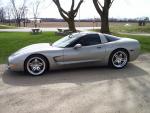
Throttle stuck at about 3/4 while I was shifting from first to second and spun the car when I let the clutch out. Got it straightened back out but the car was already in the grass so I couldn't avoid the oak tree. How do I know the throttle stuck you ask? Surely it couldn't be the fly-by-wire's fault, because as we've all read it has double redundant TPS sensors and triple redundant throttle pedal position sensors. Well being a mechanical engineer I couldn't help but do some investigatory work. I took the intake bridge off and pushed open the throttle blade. It was a little notchy, should be smooth. I took the motor off the throttle body with my T30 security torx driver. I was very impressed with the very hefty bronz gears spinning on roller bearings that I found. Once I pulled the idler gear off I wasn't too happy to find only 1 throttle return sping. I spun the motor by hand with it off the TB and heard a nice clack clack sound and it stuck and refused to spin without me reversing it a couple times. Well there's your problem. I took the back cover off the motor and found it's just a crappy drill motor dressed up in a water proof can with an automotive connector. It looks like a commutator segment lifted partially and was hanging up on the brushes. The motor only hangs up spinning in one direction. I couldn't believe GM used such beautiful overkill components to insure safety and then put a cheap piece of crap motor on it. They absolutely should have at least a stepper motor for safety.
Well sorry for the long post, but I had to explain my reasoning. Feel free to respond telling me I'm wrong, saying fly-by-wire is so wonderful and safe. I know it's a rare failure but I just don't want to trust my life to another one of these units when it's just a couple spun wrenches and a PCM tune for piece of mind. I know I'll lose cruise control and when I sell the car it will be easy to convert back to stock.
Corvette Stories
The Best of Corvette for Corvette Enthusiasts

Top 10 Most Explosive Corvettes Ever Made: Power-to-Weight Ratio Ranked!
Joe Kucinski
150 hp to 1,250 hp: Every Corvette Generation Compared by the Specs That Matter
Joe Kucinski
8 Coolest Corvette Pace Cars (and Replicas) of All Time
Verdad Gallardo
Top 10 Corvette Engines RANKED by Peak Torque (70+ Years of Muscle!)
Joe Kucinski
Corvette ZR1X Will Be Pacing the Indy 500, And Could Probably Race, Too!
Verdad Gallardo
Top 10 Corvettes Coming to Mecum Indy 2026!
Brett Foote
Top 10 C9 Corvette MUST-HAVES to Fix These C8 Generation Flaws!
Michael S. Palmer
10 Revolutionary 'Corvette Firsts' Most People Don't Know
Joe Kucinski
5 Reasons to Upgrade to an LS6-Powered Corvette; 5 Reasons to Stay LT2
Michael S. Palmer
Thread Starter
Intermediate
Joined: May 2008
Posts: 35
Likes: 0
From: Orlando FL
OK ... let's not discuss safety .... you seem to challenge the "effectiveness" of fly-by-wire with such a ridiculous statement as "I don't trust this fly-by-wire" nonsense" ...
"Early" research on DFBW (Digital Fly By Wire) systems occured in the late 1960s and early 1970 ..... see ....
http://www.nasa.gov/centers/dryden/n...-024-DFRC.html
Though there was a lot of "hidden" research for aircraft such as the F-117 Nighthawk stealth aircraft which is the first "known" production DFBW system in 1982.
Today, aircraft such as the Boeing 777 and the Airbus A320 fly entirely based on DFBW ...... as the aircraft fleet ages and aircraft such as the 757 and 767 are replaced by the upcoming Boeing 787 more and more of the US commercial aircraft fleet will be DFBW. You're not gonna fly in the future ????
DFBW is effective in many areas .... reliability ... weight reduction .... lower cost ..... every new plane being designed today for the commercial or military market is DFBW ..... the only question you should be asking is why companies like GM, Toyota, etc. have been so slow to adopt DFBW technology ????
And you want to "bypass" it ???????
"Early" research on DFBW (Digital Fly By Wire) systems occured in the late 1960s and early 1970 ..... see ....
http://www.nasa.gov/centers/dryden/n...-024-DFRC.html
Though there was a lot of "hidden" research for aircraft such as the F-117 Nighthawk stealth aircraft which is the first "known" production DFBW system in 1982.
Today, aircraft such as the Boeing 777 and the Airbus A320 fly entirely based on DFBW ...... as the aircraft fleet ages and aircraft such as the 757 and 767 are replaced by the upcoming Boeing 787 more and more of the US commercial aircraft fleet will be DFBW. You're not gonna fly in the future ????
DFBW is effective in many areas .... reliability ... weight reduction .... lower cost ..... every new plane being designed today for the commercial or military market is DFBW ..... the only question you should be asking is why companies like GM, Toyota, etc. have been so slow to adopt DFBW technology ????
And you want to "bypass" it ???????
Last edited by ragtopC5; May 10, 2008 at 11:40 PM.
Race Director


Joined: Apr 2007
Posts: 11,150
Likes: 890
From: South Western Ontario
That sucks that it hung up on you. I've had cable throttles stick too. Last cable throttle body I looked at only had one spring on it too.
The LS1 F-bodies are cable driven so look there. Same engine so something could be done computer wise. You would lose your cruise and traction control/active handling though.
What exactly should the car do if the TPS says the throttle is open but the pedal is not pressed?? I would have though it'd cut the engine off but I don't know.
Peter
The LS1 F-bodies are cable driven so look there. Same engine so something could be done computer wise. You would lose your cruise and traction control/active handling though.
What exactly should the car do if the TPS says the throttle is open but the pedal is not pressed?? I would have though it'd cut the engine off but I don't know.
Peter
Safety Car
Joined: Aug 2000
Posts: 4,933
Likes: 30
From: San Rafael CA
I don't question the safety and reliability of DFBW in aerospace. I work for a major aerospace company and am quite familiar with motion control. The difference is in aerospace any function critical to flight safety will be at least double redundant, if not triple or quadruple. GM used one motor and one throttle return spring, ie no redundancy at all! I like your examples of the F-177 and the 777. Did you know the A-10 warthog has triple redundant hydraulic systems on it's landing gear, and as a last resort cables for lowering the gear? I'm sure you know the A-10's reputation as one of the toughest most reliable air to surface combat planes. In all of the modern fighters there are two or more flight control computers that must agree before a flight surface is moved. As far as I know the vette has only 1 PCM.
That the throttle pedal has 3 position sensors (APP) and that the sensors are monitored by both the TAC and the PCM ... that the PCM will set a DTC P1125 if it senses more than one APP sensor sending "false" signals and will put the engine in REDUCED ENGINE POWER MODE........ but that a single sensor failure is addressed by allowing the TAC to control the throttle using the 2 remaining sensors ......
That the Throttle Position sensor is two sensors .... that they are monitored and that should they disagree a P1220 will set ... along with REDUCED ENGINE POWER MODE .....
Ad nauseum ....
So I'd say GM did quite a bit to make the system "redundant" and still understood that if the entire system fails you park the car. The car won't fall out of the sky if the engine dies. GM could make a "redundant" throttle ... but why ???? Cost far outweighs benefit.

Safety Car
Joined: Aug 2000
Posts: 4,933
Likes: 30
From: San Rafael CA
Gordy M thanks for answering my question.
I didn't want to start a flame war but with all the comments I have to post why I don't like fly-by-wire. How's this for a reason?
[IMG] [/IMG]
Throttle stuck at about 3/4 while I was shifting from first to second and spun the car when I let the clutch out. Got it straightened back out but the car was already in the grass so I couldn't avoid the oak tree. How do I know the throttle stuck you ask? Surely it couldn't be the fly-by-wire's fault, because as we've all read it has double redundant TPS sensors and triple redundant throttle pedal position sensors. Well being a mechanical engineer I couldn't help but do some investigatory work. I took the intake bridge off and pushed open the throttle blade. It was a little notchy, should be smooth. I took the motor off the throttle body with my T30 security torx driver. I was very impressed with the very hefty bronz gears spinning on roller bearings that I found. Once I pulled the idler gear off I wasn't too happy to find only 1 throttle return sping. I spun the motor by hand with it off the TB and heard a nice clack clack sound and it stuck and refused to spin without me reversing it a couple times. Well there's your problem. I took the back cover off the motor and found it's just a crappy drill motor dressed up in a water proof can with an automotive connector. It looks like a commutator segment lifted partially and was hanging up on the brushes. The motor only hangs up spinning in one direction. I couldn't believe GM used such beautiful overkill components to insure safety and then put a cheap piece of crap motor on it. They absolutely should have at least a stepper motor for safety.
Well sorry for the long post, but I had to explain my reasoning. Feel free to respond telling me I'm wrong, saying fly-by-wire is so wonderful and safe. I know it's a rare failure but I just don't want to trust my life to another one of these units when it's just a couple spun wrenches and a PCM tune for piece of mind. I know I'll lose cruise control and when I sell the car it will be easy to convert back to stock.
I didn't want to start a flame war but with all the comments I have to post why I don't like fly-by-wire. How's this for a reason?
[IMG]
[/IMG]Throttle stuck at about 3/4 while I was shifting from first to second and spun the car when I let the clutch out. Got it straightened back out but the car was already in the grass so I couldn't avoid the oak tree. How do I know the throttle stuck you ask? Surely it couldn't be the fly-by-wire's fault, because as we've all read it has double redundant TPS sensors and triple redundant throttle pedal position sensors. Well being a mechanical engineer I couldn't help but do some investigatory work. I took the intake bridge off and pushed open the throttle blade. It was a little notchy, should be smooth. I took the motor off the throttle body with my T30 security torx driver. I was very impressed with the very hefty bronz gears spinning on roller bearings that I found. Once I pulled the idler gear off I wasn't too happy to find only 1 throttle return sping. I spun the motor by hand with it off the TB and heard a nice clack clack sound and it stuck and refused to spin without me reversing it a couple times. Well there's your problem. I took the back cover off the motor and found it's just a crappy drill motor dressed up in a water proof can with an automotive connector. It looks like a commutator segment lifted partially and was hanging up on the brushes. The motor only hangs up spinning in one direction. I couldn't believe GM used such beautiful overkill components to insure safety and then put a cheap piece of crap motor on it. They absolutely should have at least a stepper motor for safety.
Well sorry for the long post, but I had to explain my reasoning. Feel free to respond telling me I'm wrong, saying fly-by-wire is so wonderful and safe. I know it's a rare failure but I just don't want to trust my life to another one of these units when it's just a couple spun wrenches and a PCM tune for piece of mind. I know I'll lose cruise control and when I sell the car it will be easy to convert back to stock.
If the throttle "sticks" and you lift your foot off the accelerator pedal ... a DTC P1515 is IMMEDIATELY set because the commanded throttle position ( CLOSED) and the actual throttle position ( OPEN x degrees) are different .... which (depending on how far off they disagree) will at a minimum put the engine in REDUCED POWER MODE ... to allowing only idle speed .... to complete engine cutoff (the PCM commands the fuel injectors OFF and ceases to command engine spark) .....
The redundancy to a "stuck" throttle is that the PCM also commands the fuel injectors and engine spark .... if the PCM senses a "stuck" throttle it can still kill the engine virtually instantly ... or just drop it to idle RPM instantly.
Nice try ... but no cigar .....
Last edited by BlackZ06; May 11, 2008 at 03:15 AM.
Safety Car
Joined: Aug 2000
Posts: 4,933
Likes: 30
From: San Rafael CA
That sucks that it hung up on you. I've had cable throttles stick too. Last cable throttle body I looked at only had one spring on it too.
The LS1 F-bodies are cable driven so look there. Same engine so something could be done computer wise. You would lose your cruise and traction control/active handling though.
What exactly should the car do if the TPS says the throttle is open but the pedal is not pressed?? I would have though it'd cut the engine off but I don't know.
Peter
The LS1 F-bodies are cable driven so look there. Same engine so something could be done computer wise. You would lose your cruise and traction control/active handling though.
What exactly should the car do if the TPS says the throttle is open but the pedal is not pressed?? I would have though it'd cut the engine off but I don't know.
Peter
See post directly above .... you got the right answer just thinking it through logically ......
Good thinking Peter
Thread Starter
Intermediate
Joined: May 2008
Posts: 35
Likes: 0
From: Orlando FL
I did get the reduced engine power message on the DIC immediately after the wreck. It cleared after a few ignition cycles. I haven't checked the codes yet. I understand the PCM controls fuel and spark as well as the throttle body and it makes sense it would cut fuel if the TPS and accelerator pedal did not agree but that's not what happened immediately. I didn't realize the PCM and TAC work in conjunction, I thought the PCM monitored the accelerator pedal sensors and told the TAC what position to move the TB to. I will pull the codes and see what additional information I can glean. In the mean time I guess I'll have to check ls1tech for more info on tuning fly-by-wire out of the PCM since everyone here wants to tell me I'm wrong.
Thread Starter
Intermediate
Joined: May 2008
Posts: 35
Likes: 0
From: Orlando FL
I checked my codes today and here is what I found:
P1120 H TP Sensor 1 Circuit
P1220 H TP Sensor 2 Circuit
P1516 H Command vs Actual Throttle Position Performance (TAC module)
Hmm, kind of looks like my throttle really did stick open like I said. I wouldn't doubt the PCM would wait a second or two before it cuts the throttle after setting P1516, just long enough to spin the car during a 1-2 shift. If the PCM did no filtering at all on the TP sensor signal I'm sure P1516 would be set all the time because of under hood electrical noise. There's most likely a delay and some signal conditioning so it will ignore normal noise found in all analog signals, especially since the wires are unshielded.
To Black Z06, yes I know there are two TP sensors and three sensors on the accelerator pedal, if you read my previous post I mention that.
To Chevy Guy, why do you think a well designed very simple mechanism would be less reliable than one involving several sensors, computers, gears, and a crappy mabuchi 550 look alike motor? Sure cable actuated throttles stick all the time on crappy poorly maintained cars.
P1120 H TP Sensor 1 Circuit
P1220 H TP Sensor 2 Circuit
P1516 H Command vs Actual Throttle Position Performance (TAC module)
Hmm, kind of looks like my throttle really did stick open like I said. I wouldn't doubt the PCM would wait a second or two before it cuts the throttle after setting P1516, just long enough to spin the car during a 1-2 shift. If the PCM did no filtering at all on the TP sensor signal I'm sure P1516 would be set all the time because of under hood electrical noise. There's most likely a delay and some signal conditioning so it will ignore normal noise found in all analog signals, especially since the wires are unshielded.
To Black Z06, yes I know there are two TP sensors and three sensors on the accelerator pedal, if you read my previous post I mention that.
To Chevy Guy, why do you think a well designed very simple mechanism would be less reliable than one involving several sensors, computers, gears, and a crappy mabuchi 550 look alike motor? Sure cable actuated throttles stick all the time on crappy poorly maintained cars.
Safety Car
Joined: Aug 2000
Posts: 4,933
Likes: 30
From: San Rafael CA
I checked my codes today and here is what I found:
P1120 H TP Sensor 1 Circuit
P1220 H TP Sensor 2 Circuit
P1516 H Command vs Actual Throttle Position Performance (TAC module)
Hmm, kind of looks like my throttle really did stick open like I said. I wouldn't doubt the PCM would wait a second or two before it cuts the throttle after setting P1516, just long enough to spin the car during a 1-2 shift. If the PCM did no filtering at all on the TP sensor signal I'm sure P1516 would be set all the time because of under hood electrical noise. There's most likely a delay and some signal conditioning so it will ignore normal noise found in all analog signals, especially since the wires are unshielded.
To Black Z06, yes I know there are two TP sensors and three sensors on the accelerator pedal, if you read my previous post I mention that.
To Chevy Guy, why do you think a well designed very simple mechanism would be less reliable than one involving several sensors, computers, gears, and a crappy mabuchi 550 look alike motor? Sure cable actuated throttles stick all the time on crappy poorly maintained cars.
P1120 H TP Sensor 1 Circuit
P1220 H TP Sensor 2 Circuit
P1516 H Command vs Actual Throttle Position Performance (TAC module)
Hmm, kind of looks like my throttle really did stick open like I said. I wouldn't doubt the PCM would wait a second or two before it cuts the throttle after setting P1516, just long enough to spin the car during a 1-2 shift. If the PCM did no filtering at all on the TP sensor signal I'm sure P1516 would be set all the time because of under hood electrical noise. There's most likely a delay and some signal conditioning so it will ignore normal noise found in all analog signals, especially since the wires are unshielded.
To Black Z06, yes I know there are two TP sensors and three sensors on the accelerator pedal, if you read my previous post I mention that.
To Chevy Guy, why do you think a well designed very simple mechanism would be less reliable than one involving several sensors, computers, gears, and a crappy mabuchi 550 look alike motor? Sure cable actuated throttles stick all the time on crappy poorly maintained cars.
Neither the PCM or the TAC does any "filtering". There are no "delays" built into the systems.
Picture when you mash the throttle pedal to the floor .... the PCM (as a simple example) doesn't wait even a second to "read" parameters such as current engine RPM, or to calculate the new fuel injector pulse width or to choose dwell time and spark advance/retard to meet the requested engine power increase .... all is done "real time". Same with the throttle, it is instantly commanded to a WOT position and the feedback from the TP sensors is instant.
If the PCM/TAC system didn't work in "real time" you would sense a noticeable hesitation in throttle response.
You can literally see this if you have access to a Tech2. Hook it up and look at the PCM parameters such as TP sensor 1 angle or TP sensor 2 angle .... press the accelerator pedal to the floor and watch how the angle (it is displayed as a percentage .... 0 percent is a closed throttle ..... 100 percent is wide open throttle) immediately changes with the throttle plate .... no "delay" ....
The only difference between a P1515 and a P1516 is which computer first senses the discrepancy between commanded throttle position and actual throttle position. The PCM sets the P1515 ... the TAC sets the P1516 .... so it is a a handful of processor cycles between the two computers as to which reacts first ..... there is no delay ..... the computers knew, and reacted to, the stuck throttle before you even finished getting your foot off the gas pedal.
My guess is you panicked when you lost control of the car on the upshift, kept the throttle open, and when the car struck the tree it jammed the throttle in its commanded position. When you finally took your foot off the accelerator pedal the PCM/TAC immediately threw the code and reduced the engine speed or killed it.

Last edited by BlackZ06; May 12, 2008 at 08:21 AM.

Tech Contributor

Joined: Jan 2007
Posts: 19,401
Likes: 1,143
From: Dyer, IN
I've been lurking here a while but couldn't find the answer to this with the search. Can I put a cable actuated throttle body on my car and have the fly by wire tuned out of the PCM? I'm very mechanically inclined and would have no trouble with the hardware, I just don't know if the PCM can have that tuned out of it. I would use the stock TPS of course. The reason I want to do this is I don't trust this fly-by-wire nonsense and I don't like the computer telling the TB what to do. I know I can turn active handling off but I'd feel a lot safer with a cable between me and the TB. Please lets not turn this into a discussion if fly-by-wire is safe or not.

Just a tidbit: While driving my Dad's 65' C2 (327, 365HP)under moderate acceleration, the accelerator pedal went to the floor and stayed there. The tach pegged, and I immediately turned the key off. It scared the crap out of me, because I thought I over revved the engine for sure. I popped the hood to find the spring had broken on the linkage. The C2 has a complete mechanical linkage from the pedal to the carb, but still failed. Fortunately, when we fired the car back up, she ran fine.
Last edited by lucky131969; May 12, 2008 at 02:04 PM.
Thread Starter
Intermediate
Joined: May 2008
Posts: 35
Likes: 0
From: Orlando FL
I still disagree Black Z06, I let off the throttle when upshifting so there is no way it should have spun the tires. I'm no race car driver but I do have experience driving manual rwd cars. I guaranty there absolutely is some filtering on the TP sensor signal or codes would get thrown all the time with all the under hood electrical noise. You don't understand what I'm trying to say. A filter to get rid of voltage spikes is not going to cause noticeable hesitation, we are talking about less than 1ms spikes we're trying to get rid of. There is no such thing as "real time" with digital computers, there will be a delay in the mili or microsecond range. The delay I spoke about also wouldn't cause hesitation, it just wouldn't cut fuel until after lets say at least 1 second of P1516 or P1515 being set. I have no idea if there is a delay or not but I did notice that there was. Don't forget that I did find a mechanical issue with the motor as stated in my prior posts. What both myself and my passenger experienced was the throttle sticking open causing the spin, and myself straightening the car out but unable to avoid the tree because I was on the grass. The throttle definitely did go down to idle before I hit the tree so I'm sure P1516 stepped in and caused the PCM to cut fuel. At this point if you still don't believe me I really don't care, I'm obviously not getting any valuable information from this thread any more.
Last edited by ragtopC5; May 12, 2008 at 01:58 PM.
Race Director
Joined: Apr 2007
Posts: 11,150
Likes: 890
From: South Western Ontario
I just played with the TPS. When they don't agree the computer will go to reduced power mode and service traction control and the engine can not rev above 2000rpm foot to the floor. The more it's out the more the power is cut and it seems to retard the timing to cut the power. It's pretty sensitive. Just loosen the TPS screws when it's running and the car freaks out at you. Move it a bit more and it begins to stall.
I'm betting it doesn't react completely instantly but it's pretty quick. Should not have been enough time to end up so sideways you're off the road and in the weeds.
I really have little faith in any response from Black06 for my reasons. There will be some filtering on the different signal, as you posted. There has to be to eliminate noise problems. But, the filtering will be sub-second range and the whole failure will be detected quickly. I would expect the response to be no longer than the traction control time and remember that the traction control is programmed so you can spin a bit before it begins to react. But when it does kick in the power is off pretty much immediately.
Peter
I'm betting it doesn't react completely instantly but it's pretty quick. Should not have been enough time to end up so sideways you're off the road and in the weeds.
I really have little faith in any response from Black06 for my reasons. There will be some filtering on the different signal, as you posted. There has to be to eliminate noise problems. But, the filtering will be sub-second range and the whole failure will be detected quickly. I would expect the response to be no longer than the traction control time and remember that the traction control is programmed so you can spin a bit before it begins to react. But when it does kick in the power is off pretty much immediately.
Peter